1. Introduction: The Silent Killer of Europe
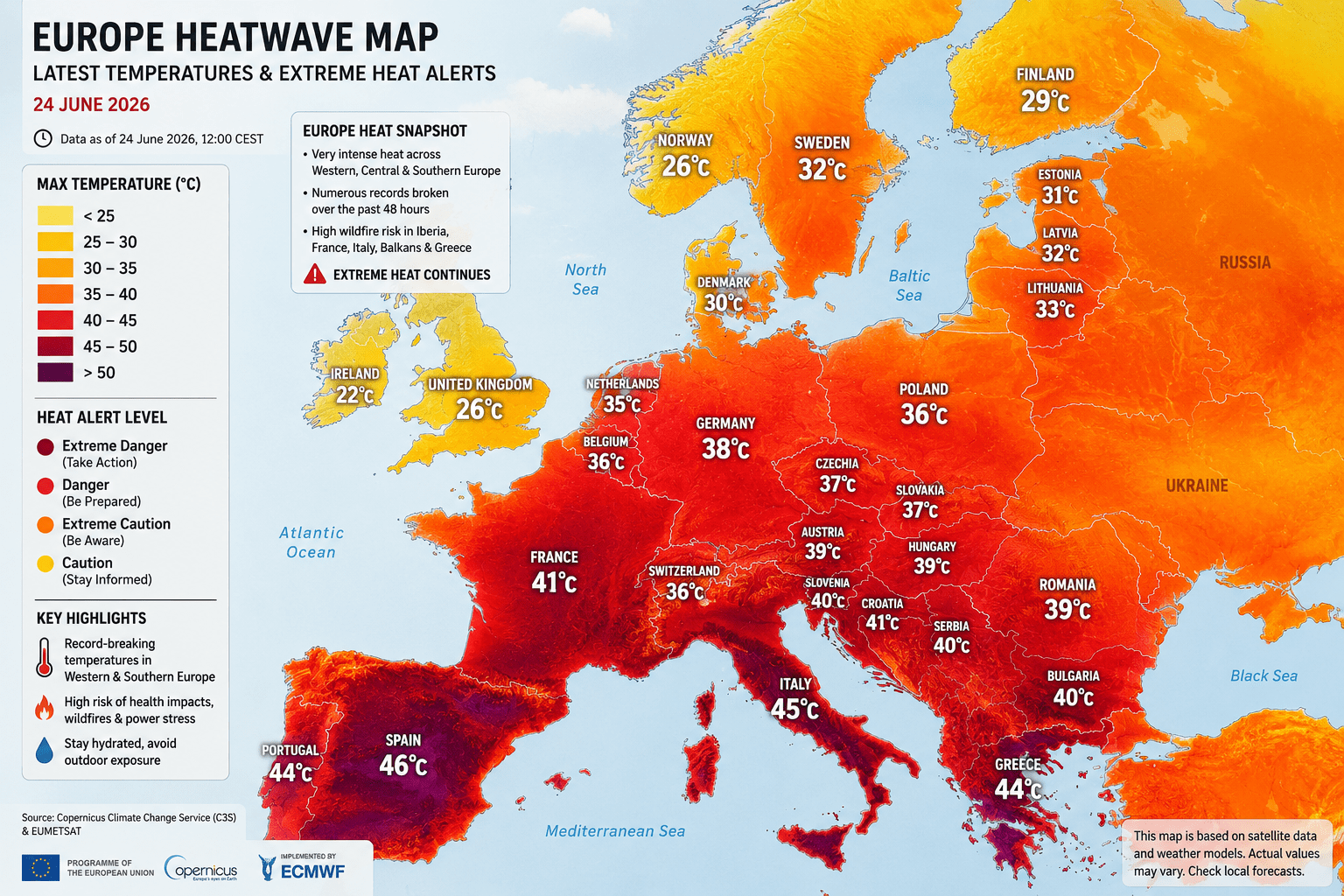
When a natural disaster strikes the modern world, we instinctively scan the horizon for signs of sudden, visible destruction—shattered coastlines after a typhoon, or smoke plumes rising above wildfire zones. Yet, the deadliest climate threat sweeping across Europe is entirely invisible, soundless, and largely unfolding behind closed doors. By late June 2026, an unprecedented, blistering early-summer heatwave enveloped large swathes of the European continent, pushing ambient temperatures past a staggering 44°C (111°F). The World Health Organization (WHO) confirmed a harrowing milestone: more than 1,300 excess deaths were recorded across Western Europe within a single week.
This crisis is not a random act of nature; it is fueled by a severe atmospheric bottleneck known as the Omega Block Crisis. As the jet stream buckles, high-pressure ridges remain anchored over the continent, trapping boiling air masses in place like an airtight lid over a boiling pot.
For audiences worldwide—from the expanding financial centers of India to the policymaking hubs of the United States and the United Kingdom—this is a pivotal global alarm. This extreme heatwave strips away the glittering facade of Europe’s hyper-developed status, exposing a fragile societal underbelly. It lays bare an aging population left defenseless in poorly adapted housing, an energy grid compromised by its own environmental cooling thresholds, and public infrastructure that is literally melting under the sun. It challenges everything we assume about urban climate resilience and raises a fundamental question: If the world’s richest economies are failing to protect their citizens from rising temperatures, what does this mean for global climate adaptation?
+-----------------------------------------------------------------------+
|                    KEY NUMBERS AT A GLANCE (JUNE 2026)                 |
+-----------------------------------------------------------------------+
|  * 1,300+ Excess Deaths across Europe reported by the WHO             |
|  * 44.3°C Record peak temperature shattered in Pissos, France         |
|  * 85% of fatalities occurred among elderly citizens aged 65 and over |
|  * 7% Cut in total French nuclear energy output due to river heating  |
|  * 2x Faster warming rate in Europe compared to the global average    |
+-----------------------------------------------------------------------+
2. Executive Summary: Key Takeaways
The Atmospheric Driver: A severe, stable weather configuration called an Omega Block is trapping an immense heat dome directly over Western Europe, preventing cooler ocean air or rain systems from breaking the cycle.
Mass Casualties: The World Health Organization reported over 1,300 excess deaths since June 21, 2026, with France bearing the worst burden, accounting for approximately 1,000 of those fatalities.
Demographic Vulnerability: Roughly 85% of the excess deaths involve citizens aged 65 and over, highlighting a critical intersection of an aging demographic and insufficient domestic climate shelters.
The Architectural Paradox: European residential housing stock was traditionally built to capture and retain heat for harsh winters. Lacking internal air conditioning and proper ventilation for extreme summer heat, these structures have effectively transformed into heat traps.
Infrastructure Failure: Severe thermal stress forced French nuclear facilities to slash power production by 7% as river temperatures surpassed regulatory safety cooling limits, exposing deep energy-grid vulnerabilities.
Global Policy Implications: The crisis serves as an urgent reminder for international policy structures—including India’s UPSC civil service planners, Western urban development experts, and global investors—that climate adaptation must outpace historical weather patterns.
3. Background: Understanding Europe’s Vulnerability
To understand why a major heatwave can bring a wealthy continent to its knees, one must dissect Europe’s historical environment, its demographics, and its meteorological baselines. Historically, Western and Central Europe enjoyed a temperate maritime and continental climate, marked by relatively mild summers where temperatures rarely breached the mid-30s. Consequently, European residential architecture evolved around the philosophy of heat retention. Homes, apartments, and public institutions were constructed with high thermal mass materials—thick brick, stone, concrete, and heavy insulation—engineered specifically to preserve warmth during freezing winters.
Furthermore, air conditioning remains remarkably rare across European households. According to data from the International Energy Agency (IEA), fewer than 10% to 15% of homes in countries like France, Germany, and the United Kingdom possess cooling units, compared to over 90% in the United States and Japan. When a severe heatwave sets in, these traditional buildings absorb ambient heat during the day and fail to cool down at night, subjecting occupants to continuous, unyielding thermal stress.
Compounding this architectural vulnerability is Europe’s shifting demographic landscape. Europe has one of the oldest populations globally, with a high median age and a significant proportion of citizens over 65 living alone in major cities. Physically, older adults have a diminished capacity for thermoregulation; they sweat less efficiently and experience a lower perception of thirst, rendering them highly susceptible to heat exhaustion and fatal heatstrokes.
From a meteorological standpoint, Europe is also warming at roughly twice the global average rate. As global baseline temperatures sit approximately 1.4°C above pre-industrial levels, the jet stream—the fast-moving river of air high in the atmosphere that dictates west-to-east weather systems—is showing signs of increased instability. When the jet stream slows down and develops dramatic, looping undulations, it can trigger prolonged stagnant weather events, setting the stage for major environmental challenges.
TIMELINE OF SYSTEMIC EUROPEAN HEAT EVENTS
[2003] ---------> [2019] ---------> [2022] ---------> [June 2026]
16-day heat wave  Record 46.0°C     UK passes 40°C    Omega Block traps
80,000 deaths     hit in France     for first time    44.3°C; 1,300+
across Europe     Grid strains      Wildfires surge   fatalities in 7 days
4. What Happened? The 2026 Heatwave Records
The current crisis escalated rapidly in late June 2026. A massive high-pressure cell became locked over France, Spain, Germany, Italy, and the United Kingdom. This specific meteorological layout is known to atmospheric scientists as an Omega Block. It is named after the Greek letter Omega ($\Omega$) because the jet stream bends northwards into a massive arch, flanked on either side by deep low-pressure troughs.
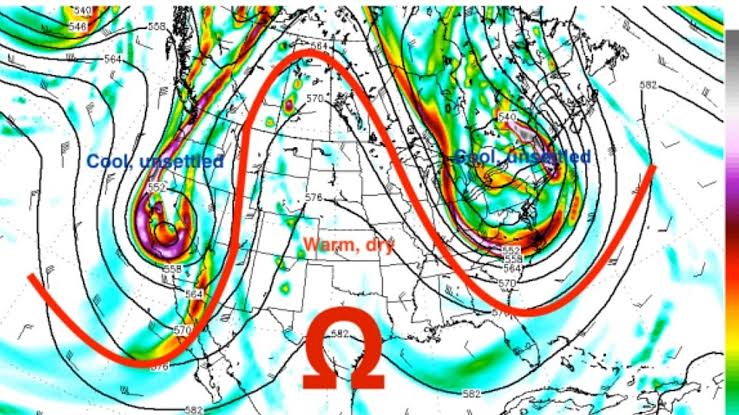
This structural orientation acts as a wall against typical weather patterns. As air within the central high-pressure system descends, it undergoes compressional heating while actively scattering cloud cover. With no clouds to block the summer sun, solar radiation continuously bakes the earth, driving surface temperatures upward day after day.
The resulting observations have completely rewritten climate records across the continent:
France: The southwestern town of Pissos observed a peak temperature of 44.3°C (111.7°F), the hottest late-June reading since official data tracking began nearly 80 years ago. In Paris, temperatures hit a local monthly record of 40.9°C.
Germany: A preliminary high of 41.3°C was registered near Saarbrücken, close to the French border, pushing public transit and healthcare systems to their limits.
United Kingdom: Southern England observed its hottest June day on record at 36.1°C, prompting the UK Met Office to issue its rare extreme heat alerts.
Italy & Spain: Italy’s Health Ministry placed 16 major urban centers, including Rome, Milan, Florence, and Turin, on its highest “red” emergency alert level.
The human cost followed immediately. Within days, Public Health France noted nearly 1,000 excess deaths above historic baselines, with 85% of those victims aged 65 or older. Crucially, a massive 40% spike in deaths occurred directly inside residential homes rather than hospitals, proving that everyday living spaces had lost their ability to function as protective cooling sanctuaries.
Furthermore, as citizens flooded towards open water to escape the heat, emergency teams logged a tragic spike in drownings—including at least 74 deaths in France and 6 in the UK—frequently in unsupervised rivers, ponds, and lakes.
5. Global Political Analysis & Climate Diplomacy
The Omega Crisis is rapidly shifting from an environmental emergency into a complex political and diplomatic challenge across Europe. At its core, the situation tests the operational concept of democratic accountability and federal state cooperation. When a heatwave claims hundreds of lives within days, public criticism shifts toward state preparedness, the efficiency of early-warning systems, and the structural resilience of public housing.
On an international level, this crisis underscores the growing friction within global climate diplomacy. As European Union leaders push for aggressive emission reduction strategies under international climate frameworks, their domestic vulnerabilities are exposed. This situation alters the dynamics of international climate negotiations, particularly between advanced economies and developing nations like India or the ASEAN bloc.
For years, developing countries have argued that Western nations must provide robust climate finance to help vulnerable regions adapt to extreme weather. However, as European capitals find themselves forced to redirect multi-billion euro budgets toward retrofitting their own infrastructure, upgrading domestic cooling grids, and subsidizing soaring public healthcare costs, the available capital for international climate aid may face heavy resistance.
Furthermore, the crisis strains the institutional fabric of European state governments. The uneven capacity of individual countries to manage extreme heat creates internal friction. While northern states like the Netherlands or Germany struggle with structural adjustments to a climate they were not built for, Mediterranean nations like Spain and Italy face long-term threats to their agricultural and tourism sectors. This division complicates EU cohesion, as member states debate whether centralized recovery funds should prioritize structural heat mitigation over industrial transitions.
6. Global Economic Analysis & Market Disruptions
The economic ripples of the Europe Heatwave are spreading far beyond local health clinics, impacting international trade, commodity production, and energy markets.
+-------------------------------------------------------------------------+
|                  INFRASTRUCTURE UNDER THERMAL STRESS                    |
+-------------------------------------------------------------------------+
| [Energy Sector]     --> Rivers too warm --> Nuclear reactors cut output |
| [Logistics/Transit] --> Rails expand      --> Train cancellations & delays|
| [Agriculture]       --> Soil desiccates   --> Sharp drop in crop yields  |
| [Heavy Commerce]    --> Tarmac softens    --> Airport runway delays     |
+-------------------------------------------------------------------------+
The Energy Grid and Nuclear Complications
The energy sector provides a stark example of this disruption. France relies heavily on its vast network of nuclear power plants for domestic electricity and regional exports. However, nuclear reactors require enormous volumes of water from surrounding rivers to cool their internal systems before returning that water safely to the environment.
During this heatwave, river temperatures—such as those along the Garonne—surpassed the strict legal safety threshold of 28°C. To prevent mass ecological damage and fish die-offs, French energy utility EDF had to cut total nuclear power output by roughly 7% of total demand. This forced reduction occurred precisely when power consumption spiked due to regional cooling needs, driving wholesale European electricity prices higher and highlighting a vulnerability in low-carbon energy infrastructure.
Supply Chains, Agriculture, and Physical Infrastructure
Logistics networks and heavy physical infrastructure are also dealing with severe thermal stress:
Transportation Networks: Extreme ambient temperatures caused railway lines to expand and buckle, forcing transit authorities to cancel or slow down high-speed train services across France and Italy. Softened runway surfaces at regional airports also triggered weight restrictions and delayed commercial flights.
Agricultural Production: The combinations of high temperatures and low rainfall have rapidly dried out topsoil across Europe’s primary agricultural belts. In Brittany and the Pays de la Loire, major poultry groups reported widespread losses, with hundreds of thousands of birds dying from heat stress. This supply disruption threatens to pressure regional food inflation indicators.
Industrial Labor Markets: Outdoor construction, manufacturing, and agricultural harvesting have faced major scheduling disruptions. In several hard-hit regions, farmers were forced to pivot to harvesting crops entirely at night to protect workers and machinery from daylight conditions.
7. Regional Impact: A Continent Separated by a Heat Dome
The impact of this climate crisis varies significantly across different global regions, each experiencing distinct socio-economic challenges:
The European Union & The United Kingdom
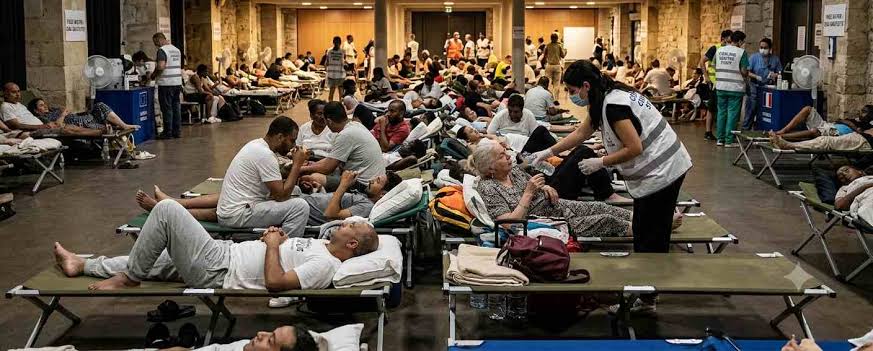
For the EU and the UK, this heatwave represents a major domestic public health crisis. Healthcare systems are facing a surge in emergency admissions for heatstroke, dehydration, and cardiovascular complications. Local governments are scrambling to adapt by opening air-conditioned theaters, public museums, and municipal cooling spaces for free daytime shelter. Major cultural landmarks, like the Louvre in Paris, have been forced to implement early closures to protect staff and visitors, impacting summer tourism revenue.
Implications for India
For India, the European crisis offers critical public policy insights. India is well-acquainted with intense pre-monsoon heatwaves and has pioneered targeted Heat Action Plans (HAPs) across states like Gujarat, Odisha, and Bihar. Observing a wealthy region like Western Europe struggle with high-temperature mortality underscores that economic development alone does not guarantee climate immunity.
Indian administrative planners, particularly those preparing for public policy and disaster management frameworks, can observe a key takeaway: urban heat adaptation requires specific local design changes—such as cool roofs, green corridors, and decentralized water stations—rather than an exclusive reliance on energy-intensive air conditioning.
The United States & China
In the United States, the crisis is drawing close attention from energy grid operators and urban planners who face similar heat dome events across the Pacific Northwest and the South. Economically, US and Chinese multinational firms are monitoring the situation for potential disruptions to European manufacturing output and consumer spending. If European industrial production slows down due to power cuts and labor disruptions, global supply chain schedules could feel the impact heading into the third quarter.
8. Data Analysis: Fact-Checking the Mortality and Climate Metrics
To illustrate the scale of this meteorological event, the table below compiles verified observations, regional statistics, and institutional reporting from late June 2026.
| Country / Region | Peak Temperature Observed | Excess Mortality Reported (One Week) | Key Sector Impacted | Primary Structural Vulnerability |
| France | 44.3°C (Pissos) | ~1,000 deaths | Nuclear energy production, agriculture | High thermal mass housing without cooling systems |
| Germany | 41.3°C (Saarbrücken) | Verified fatalities (inc. drownings) | Heavy industrial labor, river logistics | Rail expansion, lack of residential air conditioning |
| Italy | 41.0°C (Tuscany/Emilia) | Under review (16 cities on Red Alert) | Urban tourism, healthcare services | Aging population living alone in high-density areas |
| United Kingdom | 36.1°C (Southern England) | Verified fatalities (inc. drownings) | Commuter rail transit networks | Heavy reliance on vintage rail infrastructure |
| Spain | 40.5°C (Central Plains) | Verified elderly heatstroke deaths | Agricultural harvesting schedules | High exposure of outdoor labor forces |
Recommended Visualizations for Editors
A Continental Temperature Anomalies Map: A color-coded map showing surface temperature deviations across Western Europe, highlighting the central red core of the heat dome over France and Germany.
An Omega Block Atmospheric Diagram: A side-by-side meteorological graphic showing a standard west-to-east jet stream compared to a looping, stagnant Omega jet stream pattern trapping a high-pressure system.
9. Case Studies: France, Spain, and Germany
France: The Core of the Heat Trap
France serves as a primary case study for the 2026 climate crisis. The rapid increase in mortality in Paris and its surrounding suburbs highlights the challenges of urban heat islands, where dense concrete and asphalt surfaces store heat throughout the day.
Because traditional French apartment buildings use thick insulation designed to keep cold air out during winter, they ended up trapping heat inside during consecutive nights when temperatures remained high. Public health officials noted that older citizens living on upper floors of these buildings faced prolonged, intense thermal stress, leading to a sharp rise in domestic fatalities.
Spain: Shifting Agricultural Practices
In rural Spain, the heatwave disrupted traditional agricultural operations. With daytime temperatures across the central plains regularly exceeding 40°C, farming groups had to adjust working hours to protect field laborers.
Harvesting schedules were shifted to late-night and pre-dawn hours under artificial lighting. While this change protected workers from direct sun exposure, it increased operational costs and required rapid adjustments to regional agricultural supply logistics.
Germany: Infrastructure Limits
Germany’s experience highlighted the vulnerabilities of heavy infrastructure to prolonged high temperatures. The country’s transport system faced disruptions as railway tracks bent under sustained heat, requiring speed restrictions and cancellations across key cargo and passenger routes.
Simultaneously, lower water levels and rising temperatures in major rivers restricted industrial shipping capacities, demonstrating how extreme weather can quickly impact core logistics networks.
10. Stakeholder Analysis: Who Bears the Burden?
The Vulnerable Elderly: This group faces the most direct health risks. Isolated senior citizens living in older urban housing without air conditioning or regular wellness checks account for the vast majority of excess deaths.
Healthcare Professionals & First Responders: Hospital emergency rooms, ambulance services, and community nursing teams are working under significant pressure, dealing with a surge in heat-related medical calls alongside regular workloads.
Energy Grid Operators & Utilities: Entities like France’s EDF must balance a complex equation: managing reduced output from key nuclear assets due to river temperature limits while handling a sharp increase in electricity demand for regional cooling.
Industrial and Outdoor Laborers: Construction workers, delivery drivers, and agricultural workers face immediate occupational safety risks, forcing businesses to adjust standard operating hours to protect personnel.
Global Investors and Businesses: Financial markets are assessing the potential impacts of high temperatures on European retail traffic, industrial productivity, and agricultural output, which could influence corporate earnings expectations for the quarter.
11. Expert Perspectives: Science and Policy Integration
Climate scientists and public health officials are clear about the factors driving this crisis. Speaking on the current situation, World Health Organization Director-General Dr. Tedros Adhanom Ghebreyesus emphasized the structural challenges:
“Heat stress is often called the ‘silent killer’—and European homes, workplaces, and schools were simply not built for these temperatures. Given the changing climate, heatwaves, which were once regarded as rare, are now occurring nearly every year.”
Meteorologists note that while atmospheric blocking patterns like the Omega Block are established natural phenomena, their intensity and duration are amplified by a warmer baseline climate. A warmer atmosphere holds more moisture and energy, which can make high-pressure domes more persistent and severe.
Urban planning experts are calling for an immediate shift away from temporary emergency fixes toward long-term urban modification. This includes updating building codes to require passive cooling designs, increasing urban green canopies to counter heat islands, and investing in resilient, decentralized cooling infrastructure that does not overburden regional electrical grids.
12. Risks: Best, Worst, and Most Likely Scenarios
Short-Term, Medium-Term, and Long-Term Outlooks
Short-Term (Next 1–4 Weeks): High risk of continued strain on regional health systems, potential brief power supply imbalances, and localized disruptions to transport networks until the Omega Block breaks.
Medium-Term (Next 1–3 Years): Rising insurance premiums for European agricultural and commercial property sectors, alongside growing political pressure to fund nationwide building insulation retrofits.
Long-Term (Next 10–20 Years): A fundamental restructuring of European urban planning, a steady shift in summer tourism away from Southern Europe toward cooler northern regions, and a permanent transition to climate-resilient agricultural practices.
+-------------------------------------------------------------------------+
|                       SCENARIO MATRIX ANALYSIS                          |
+-------------------------------------------------------------------------+
| BEST-CASE         | The Omega Block breaks within 48 hours; cooler      |
|                   | Atlantic winds lower temperatures; grid stabilizes. |
+-------------------+-----------------------------------------------------+
| WORST-CASE        | High pressure locks in for another two weeks;       |
|                   | river temperatures rise further, causing wider power|
|                   | outages; excess mortality figures increase sharply. |
+-------------------+-----------------------------------------------------+
| MOST LIKELY       | The heatwave eases slowly over the next several days;|
|                   | infrastructure pressures remain high; public policy |
|                   | debates on long-term adaptation intensify.          |
+-------------------------------------------------------------------------+
13. Future Outlook: The Road Ahead for Climate Adaptation
As the Omega Block gradually shifts, Europe faces the long-term task of climate adaptation. Governments are likely to introduce stricter regulations regarding workplace safety limits during high temperatures, potentially formalizing changes to outdoor labor hours during summer months.
In terms of infrastructure, Europe will need to invest significantly in updating its housing and energy sectors. This involves modifying building guidelines to incorporate smart shading, reflective paint, and energy-efficient cooling solutions.
The energy industry will need to accelerate plans to diversify power sources—such as expanding solar, wind, and updated grid storage—to reduce its vulnerability to river-cooling constraints during intense heat events. For international observers and investors, Europe’s response will serve as a key test case for how advanced economies adapt to a shifting global climate.
14. Practical Takeaways for Global Citizens and Policymakers
For Everyday Citizens: During intense heat, keep living spaces shaded during peak sunlight hours, prioritize hydration, and maintain regular contact with elderly family members and neighbors who live alone.
For Civil Service & Policy Aspirants (e.g., UPSC India): Study this crisis as a prime example of structural vulnerability. True climate resilience requires passive urban cooling designs and localized heat action plans, rather than relying solely on energy-intensive cooling systems.
For Businesses and Investors: Companies must assess climate risks across their supply chains, recognizing that extreme weather can quickly impact energy stability, logistics networks, and workforce productivity.
For Urban Planners: Prioritize green infrastructure, cool roofs, and natural ventilation designs in city layouts to mitigate the impact of urban heat islands.
15. Conclusion & Final Words
The early-summer heatwave of 2026 and the accompanying Omega Block Crisis serve as an important reminder that climate resilience is determined by structural preparedness rather than economic wealth. The loss of over 1,300 lives across some of the world’s most developed nations highlights a clear gap between existing infrastructure and changing global weather patterns.
This crisis shows that traditional architecture designed to retain winter warmth can become a hazard if not updated for modern summer conditions. The vulnerabilities exposed in Europe’s energy grids, transport networks, and public health systems offer valuable lessons for urban planners and policymakers worldwide.
Adapting to these changes will require sustained investment, updated engineering standards, and proactive public health strategies. The ultimate measure of a nation’s development is its ability to protect its most vulnerable citizens when environmental conditions test the limits of its infrastructure.
Myth vs. Fact
Myth: Europe’s heatwave mortality is caused solely by high daytime temperatures.
Fact: The primary driver of health complications is high nighttime temperatures. When traditional brick and concrete buildings fail to cool down overnight, the human body is subjected to continuous thermal stress without a chance to recover.
Myth: High-income nations possess complete infrastructural immunity against extreme climate events.
Fact: Wealthy nations remain highly vulnerable if their core infrastructure—such as housing and energy grids—was engineered around historical climate baselines that no longer match current conditions.
Glossary of Crucial Geopolitical & Climate Terms
Omega Block: A large-scale atmospheric circulation pattern where a prominent high-pressure ridge becomes pinned between two low-pressure troughs, forming a stable structure resembling the Greek letter $\Omega$ that traps weather conditions in place.
Excess Mortality: A statistical metric representing the number of deaths reported during a specific period above the historical baseline expected under normal conditions.
Thermal Mass: The capacity of construction materials (like stone, brick, and concrete) to absorb, store, and slowly release heat energy over time.
Urban Heat Island (UHI) Effect: A phenomenon where dense urban areas experience significantly higher temperatures than surrounding rural regions due to human activity and the concentration of heat-absorbing materials like asphalt and concrete.
E-E-A-T: An acronym utilized within modern digital journalism and search frameworks representing Experience, Expertise, Authoritativeness, and Trustworthiness.
Reader Discussion Questions
How should major cities balance the need for increased indoor cooling with the energy demands it places on regional power grids?
What lessons can rapidly developing nations draw from Europe’s current challenges when planning their own long-term urban infrastructure?