Rail Vikas Nigam Limited delivered one of the most disappointing quarterly earnings reports among railway PSU stocks after announcing its Q4 FY26 results on May 25, 2026. The company reported a sharp collapse in profitability despite maintaining steady revenue growth, immediately triggering concern among retail investors and railway infrastructure stock traders. For investors who watched RVNL become one of the biggest multibagger PSU stories during the railway rally of the past two years, the latest results came as a major shock because the headline numbers showed a severe margin and profit deterioration.
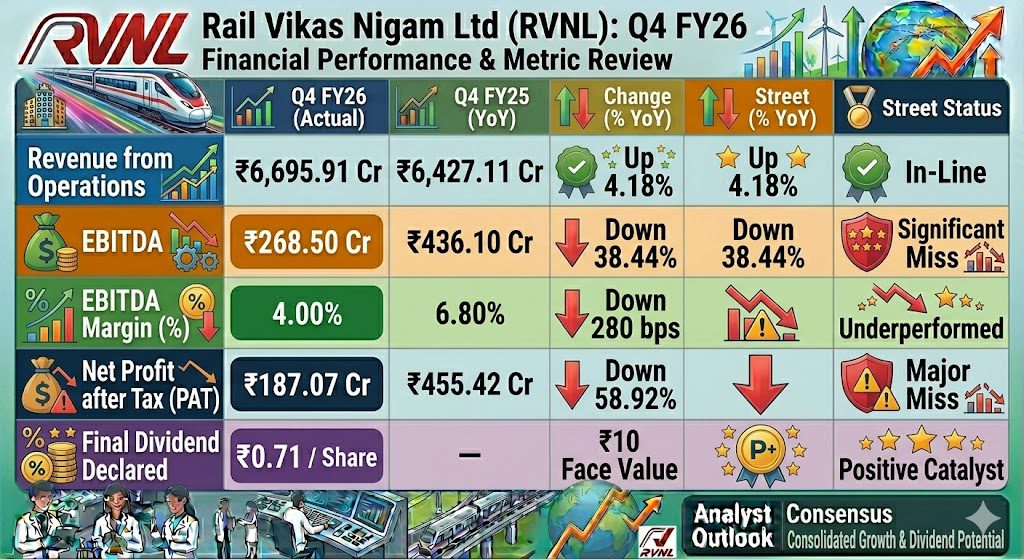
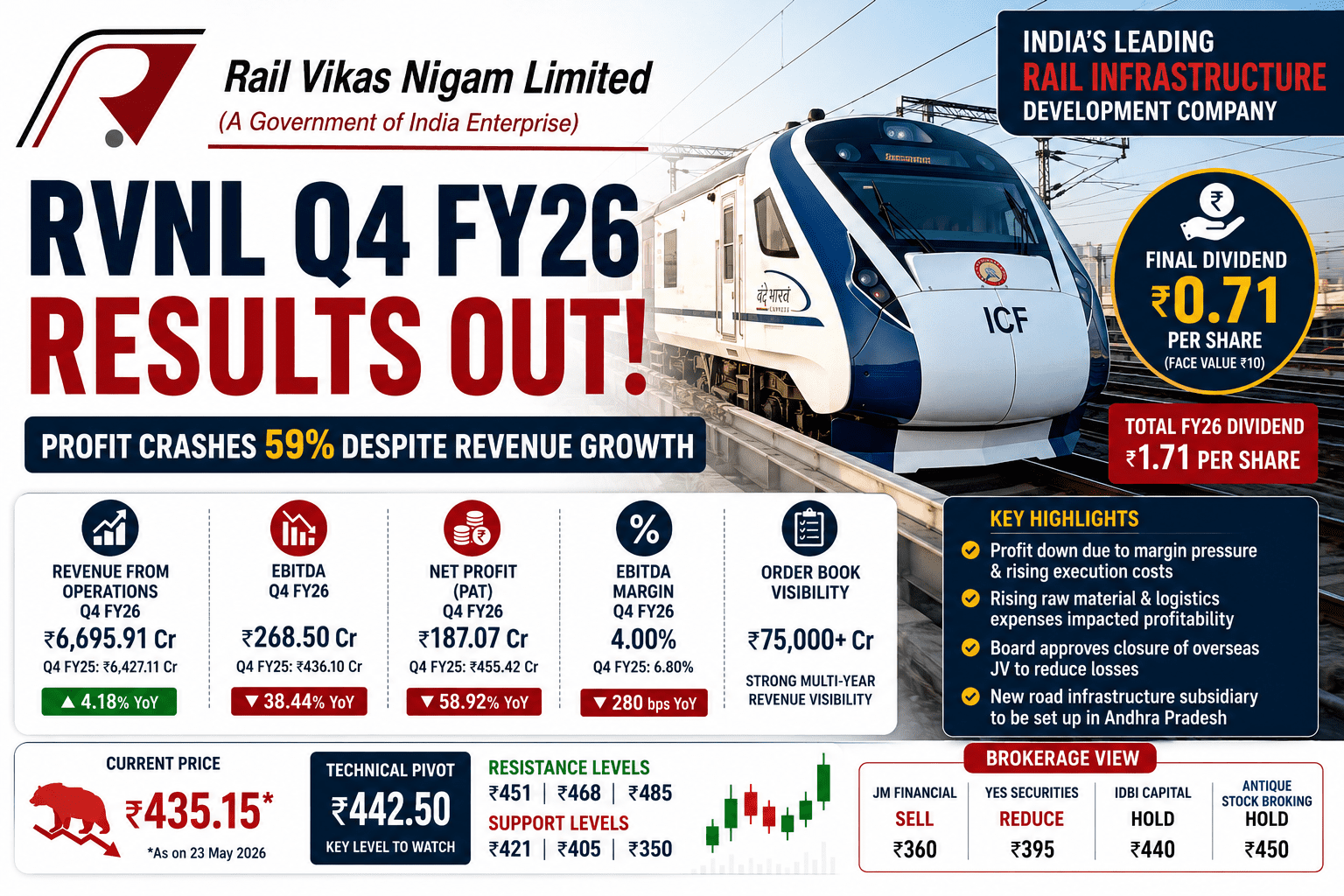
The company reported revenue from operations of ₹6,695.91 crore during Q4 FY26 compared to ₹6,427.11 crore during the same quarter last year, reflecting moderate year-on-year growth of 4.18%. Operationally, the company continues executing a large number of infrastructure projects across India’s railway modernization ecosystem, including railway electrification, metro rail systems, multi-tracking projects, tunnels, and bridge developments. The stable revenue growth clearly indicates that execution activity has not slowed meaningfully despite broader infrastructure sector challenges.
However, while revenue growth remained stable, the company faced severe pressure at the profitability level. EBITDA declined sharply to ₹268.50 crore compared to ₹436.10 crore during Q4 FY25, reflecting a major decline of 38.44%. EBITDA margins also collapsed from 6.8% last year to just 4% during the latest quarter. This dramatic margin contraction became the biggest reason behind the weak earnings performance and immediately raised concerns regarding the company’s operational efficiency and execution cost pressures.
The biggest shock came at the net profit level. Consolidated profit after tax fell sharply to ₹187.07 crore compared to ₹455.42 crore during the same quarter last year, representing a massive decline of nearly 59%. The numbers significantly missed analyst expectations and created immediate negative sentiment around the stock. For short-term traders and momentum investors, the profit collapse was particularly worrying because profitability deterioration of this scale often leads to valuation re-rating pressure within infrastructure stocks.
One of the biggest reasons behind the sharp profit decline was rising operational costs. Total quarterly expenses increased substantially to ₹6,534.6 crore as the company faced higher raw material prices, logistics costs, and execution-related expenditure. Since many infrastructure contracts operate on fixed-price terms signed during earlier periods, sudden increases in steel, transportation, and project execution costs can significantly compress margins. This is exactly what appears to have happened during the quarter.
Global commodity volatility and recent tariff-related disruptions also indirectly impacted cost structures across infrastructure companies. Rising steel price fluctuations, logistics inflation, and higher procurement expenses reduced profitability on legacy projects where pricing flexibility remained limited. The problem was not weak demand but rather weaker profitability conversion from ongoing project execution.
Despite the disappointing earnings, Rail Vikas Nigam Limited still announced a final dividend of ₹0.71 per equity share on a face value of ₹10. Combined with the ₹1 interim dividend already distributed during FY26, the total annual dividend payout now stands at ₹1.71 per share. For long-term PSU investors, the dividend announcement provided at least some reassurance regarding the company’s financial stability despite temporary earnings pressure.
One of the most important factors investors should understand is that RVNL still remains one of the most strategically important railway infrastructure companies in India. The company functions as a major execution arm of India’s Ministry of Railways and plays a central role in the country’s long-term transportation modernization plans. Its project portfolio includes railway electrification, dedicated freight corridors, metro systems, bridge construction, track doubling, and major rail connectivity infrastructure.
India’s railway modernization cycle remains one of the country’s largest long-term infrastructure investment themes. Massive capital expenditure continues flowing into:
- Vande Bharat train infrastructure
- Metro rail systems
- Freight corridors
- Tunnel construction
- Railway electrification
- High-speed connectivity projects
This broader structural demand environment continues supporting RVNL’s long-term project pipeline.
One of the biggest long-term positives for the company remains its enormous order book visibility. RVNL currently holds an order pipeline exceeding ₹75,000 crore, which provides multi-year revenue visibility and execution continuity. This large order backlog ensures that the company still possesses strong long-term business opportunities despite temporary margin pressure during the latest quarter.
Another important development highlighted by management was the company’s strategic restructuring efforts. The board approved closure of the underperforming overseas joint venture Kyrgyzindustry-RVNL CJSC in order to reduce losses and protect shareholder capital. Simultaneously, the company also approved formation of a new domestic road infrastructure subsidiary in Andhra Pradesh. These moves indicate that management is gradually becoming more selective regarding capital allocation and diversification strategy.
From a valuation perspective, the stock has already corrected sharply from its previous 52-week high near ₹647 to around ₹435 levels. This represents a decline of nearly 34%, which has significantly reduced the excessive speculative premium that existed across railway PSU stocks during the earlier rally phase. Many analysts now believe the stock’s valuation is gradually returning toward more sustainable long-term levels.
From a technical analysis perspective, the stock currently remains under pressure following the weak earnings announcement. RVNL closed near ₹435.15 before the market fully reacted to the results. Traders are now closely monitoring whether the stock can defend important support zones during upcoming sessions.
The most important short-term pivot currently stands near ₹442.50.
y=442.50y=442.50
The stock needs to reclaim this level decisively in order to restore short-term bullish momentum. Immediate resistance zones currently remain near ₹451, ₹468, and ₹485 respectively, while major support levels remain visible near ₹421, ₹405, and ₹350. If broader market weakness continues and the ₹421 support breaks decisively, panic selling pressure could intensify toward the ₹350 structural support region.
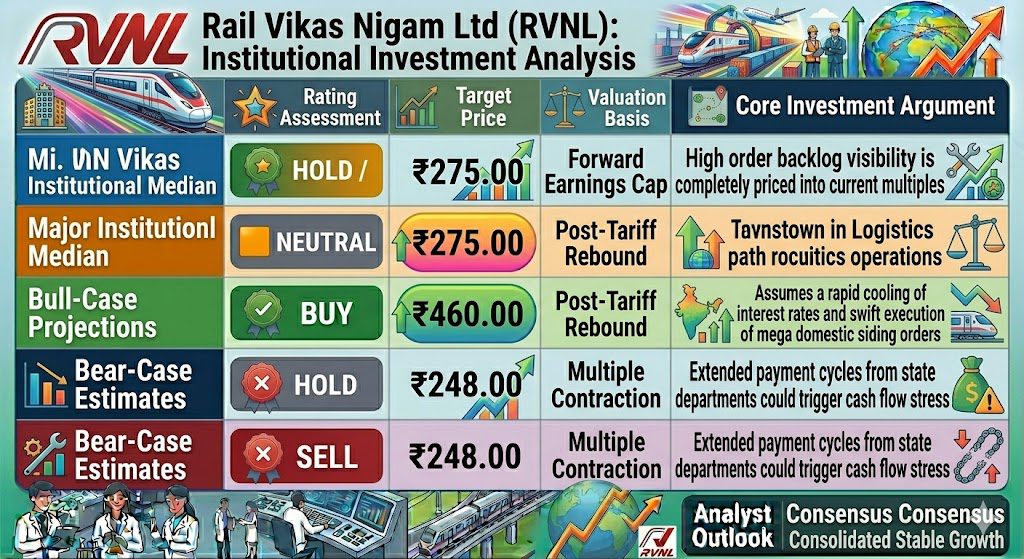
Institutional brokerages have also turned significantly more cautious following the weak earnings report. JM Financial maintained a SELL rating with a target price of ₹360, while YES Securities assigned a REDUCE rating with a target near ₹395. IDBI Capital and Antique Stock Broking maintained HOLD ratings because although long-term railway infrastructure demand remains strong, immediate profitability recovery visibility appears limited. Most institutional analysts highlighted weak EBITDA margins, execution cost pressures, and valuation normalization as the key near-term concerns.
Management’s future execution strategy now becomes critically important for the stock’s next major move. Investors will closely monitor whether the company can gradually restore EBITDA margins toward the healthier 7%–8% range through improved project pricing, operational efficiency, and diversification into newer infrastructure segments. Management also continues aggressively bidding for highways, tunnels, institutional infrastructure, and non-rail projects in order to reduce excessive dependence on slower railway allocation cycles.
Overall, the Q4 FY26 earnings report from Rail Vikas Nigam Limited clearly reflects the difficult operational environment currently affecting India’s infrastructure sector. The massive 59% profit collapse was undeniably disappointing and highlights how vulnerable fixed-price infrastructure contracts can become during periods of rising execution costs and commodity volatility. However, the broader structural railway modernization story in India remains intact. With a gigantic ₹75,000 crore order book, strong sovereign infrastructure exposure, and long-term government capex support, RVNL still remains an important long-term railway infrastructure play, although investors should now expect a more selective and valuation-sensitive phase for railway PSU stocks going forward.