

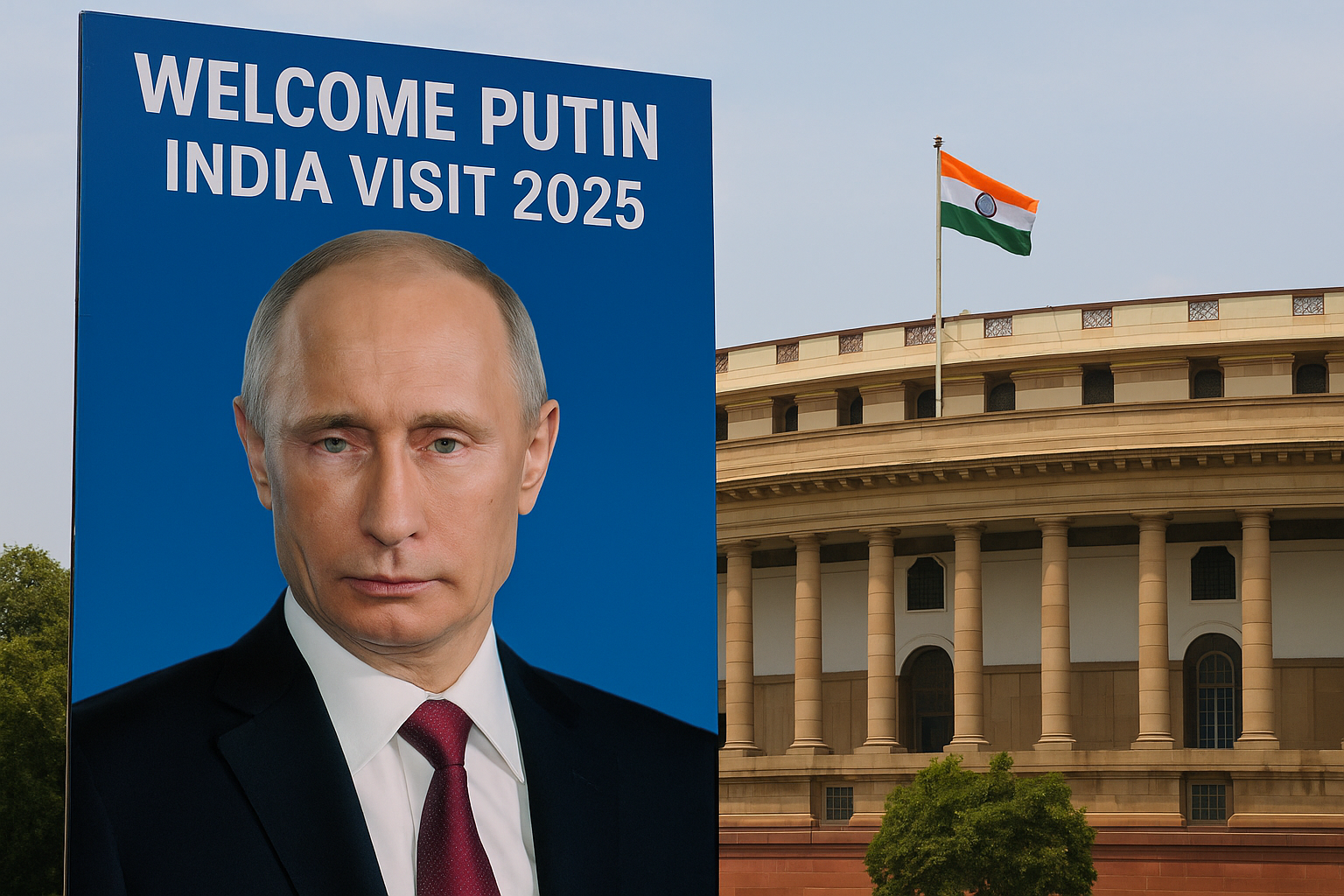
Putin’s Visit to India: Why New Delhi Is Ready to Welcome Him and Why the World Is Watching Closely
Russian President Vladimir Putin’s visit to India has become one of the most significant diplomatic events of the year. It comes at a time when global politics is tense, major powers are realigning their strategies, and the world is undergoing rapid economic and security changes. For India, Putin’s arrival is more than a ceremonial moment—it is a powerful reminder of a long-standing partnership that continues to shape regional and global dynamics. For the rest of the world, especially Western nations, the visit is a moment to observe how India balances its ties with Russia while expanding its relationships with the United States and Europe.
This article explains how New Delhi is preparing to welcome Putin, why this visit holds immense importance for India, how it can deepen Indo-Russia relations, what reactions are emerging from Western leaders, and why global powers are monitoring this summit with great interest.
New Delhi’s Grand Preparations for Putin’s High-Profile Visit
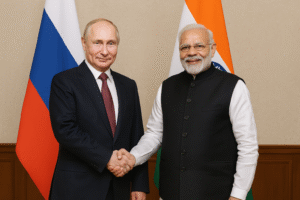
New Delhi has stepped into full diplomatic mode to welcome President Putin. The Indian government is treating this as a high-priority state visit, and the capital has been preparing for days to ensure everything runs smoothly. Security agencies have strengthened protocols across the city, especially around key government buildings, the diplomatic enclave, and large hotels. Routes for the presidential convoy have been secured, traffic arrangements updated, and various security units placed on alert to ensure maximum safety.
Hotels in central Delhi are operating at near full capacity as Russian officials, business delegations, security teams, and media representatives arrive ahead of the summit. Many hotels have increased room tariffs due to the surge in demand, showing how major diplomatic events can briefly transform the city’s economic activity.
The Ministry of External Affairs and the Prime Minister’s Office have coordinated closely with the Russian Embassy to fine-tune every arrangement—from ceremonial protocol to meeting schedules. Digital boards, banners, and welcome messages have been placed across strategic locations to reflect the warmth India wishes to extend to an old partner. The atmosphere in the capital clearly signals that New Delhi considers this visit not just important, but strategically meaningful.
The Strategic Agenda: Defence, Energy, Trade, Space and Beyond
Putin’s visit is expected to cover a wide range of important topics, each reflecting the deep and multi-layered relationship between the two countries. One of the central themes of the visit is defence cooperation. India and Russia share one of the world’s longest-running defence partnerships, and discussions are expected to include long-term maintenance for existing Russian equipment, co-production of newer technologies, and updates on joint ventures such as BrahMos. India’s armed forces still operate a significant number of Russian-origin platforms, making continuity and upgrades essential.
Energy is another major pillar. Russia has become a key supplier of crude oil to India, helping the country manage energy security and fuel costs. During the summit, both sides are likely to explore ways to strengthen long-term energy cooperation, including oil, gas, LNG, and nuclear energy. Payment mechanisms and trade in local currencies may also be discussed to protect bilateral trade from global sanctions and currency volatility.
Space collaboration remains a promising area. India and Russia have a long history of cooperation in space exploration, and new possibilities may be explored in satellite technology, human space missions, and advanced space research.
Trade diversification is also a priority. India wants to expand its exports of pharmaceuticals, machinery, IT services, and agricultural products to Russia. Meanwhile, Russia is looking to strengthen trade ties beyond oil and defence as it seeks new economic partners.
Overall, the agenda is broad, strategic, and forward-looking, reflecting the desire to keep the India–Russia relationship strong and relevant in a rapidly changing world.
How Putin’s Visit Can Strengthen Indo-Russia Relations for the Long Term
Putin’s arrival in New Delhi represents an important moment to reaffirm the deep foundation of the Indo-Russian partnership. For decades, Moscow has stood by India in critical moments—including international forums and defence modernization efforts. In return, India has consistently maintained a mature, balanced approach to its ties with Russia.
This visit can deepen relations in several important ways. First, it helps focus on modern defence cooperation—moving from buyer-seller transactions to joint development and co-production. This model supports India’s “Make in India” initiative while giving Russia long-term access to a reliable defence partner.
Second, the visit can boost economic engagement. In recent years, India has become one of Russia’s key energy markets. Strengthening these ties helps India secure steady fuel supplies while offering Russia an important economic lifeline.
Third, connectivity and logistics agreements are being explored, which would allow military and humanitarian operations from both nations to be more efficient. The expansion of the International North-South Transport Corridor (INSTC) is also expected to be part of future discussions, strengthening trade routes across Eurasia.
Finally, by meeting face-to-face, both leaders can align their positions on global issues such as regional security, terrorism, the Indo-Pacific, and developments in Eurasia. Even when they do not fully agree, the ability to communicate openly helps build trust and manage differences.
Western Reaction: Cautious, Concerned, and Closely Observing
Putin’s visit to India has not gone unnoticed in the West. Many Western leaders are watching the developments with mixed emotions—some with concern, others with cautious respect. Since the Ukraine conflict, Western nations have imposed severe sanctions on Russia and have urged countries globally to reduce their engagement with Moscow.
However, India has maintained a balanced approach, guided by its national interests. Western countries understand India’s deep defence and energy dependence on Russia, but they also want New Delhi to gradually shift closer to their own strategic frameworks.
This is why Putin’s visit is being carefully observed across Washington, London, Paris, and Brussels. Some leaders are concerned that visible warmth between India and Russia could weaken global efforts to isolate Moscow. Others recognize that India plays a unique role in global diplomacy—one that involves engaging all major powers without taking sides. India’s ability to speak to both Russia and the West gives it an important diplomatic position that many countries quietly respect.
The Western reaction, therefore, is a complex blend of concern, calculation, and acknowledgment of India’s strategic autonomy.
Why Putin’s Visit Is Very Important for India’s National Interests
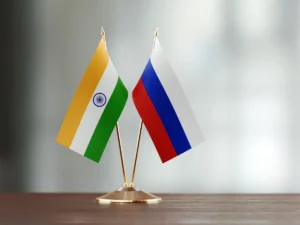
For India, this visit is not about choosing Russia over Western partners. Instead, it is about maintaining strategic autonomy—the freedom to take decisions based on national interest rather than external pressure.
Russia remains indispensable for India in several key areas. A large portion of India’s military platforms, engines, and spare parts are Russian-made. Ensuring their long-term maintenance and modernization requires active engagement with Moscow.
Energy security is another critical factor. Affordable Russian oil has helped India stabilize domestic fuel prices during global market volatility. Establishing long-term supply lines will be essential for India’s growing economy.
Geopolitically, maintaining balanced ties with Russia gives India greater room to maneuver in Asia. A complete weakening of Russia–India ties could push Moscow even closer to China, which is not in India’s interest. By engaging Russia, India maintains influence in global platforms and ensures it remains a voice in Eurasian affairs.
In short, Putin’s visit strengthens India’s leverage, energy security, defence modernization, and diplomatic flexibility.
To know more about Russia’s best Air Defence System S-500 Please Click Here
Why the World Is Watching Putin’s India Visit So Carefully
Global leaders and analysts are paying close attention to this visit because it reflects larger geopolitical trends. It is one of Putin’s most significant visits to a major global economy since the Ukraine conflict began. The outcome of the summit will indicate how deeply Russia remains connected to non-Western partners.
Countries across Asia, Africa, and the Middle East are also watching to see how India manages its relationships with competing global powers. India’s diplomacy today is studied worldwide because it offers a model of engaging with multiple power blocs without fully aligning with any single one.
Beijing, too, will observe closely whether Russia signals greater interest in strengthening ties with India, especially at a time when Russia and China enjoy a close partnership.
This is why Putin’s visit is not just a bilateral moment—it is a global event with wide-reaching implications.
To follow the visit of Putin to india very closely Click Here
Conclusion: A Visit That Reflects India’s Rising Role in a Changing World
Putin’s visit to India is important not only for New Delhi and Moscow but also for the global community. It symbolizes India’s growing power, its ability to maintain strategic autonomy, and its capacity to build balanced partnerships in a polarized world. As India welcomes Putin with full state honours, the message is clear: New Delhi is prepared to engage all major powers on its own terms while safeguarding its national interests.
In a world marked by conflict, shifting alliances, and geopolitical uncertainty, this visit highlights India’s evolving role as a confident, independent, and increasingly influential global player.
To Visit MEA Official Website Click Here
One thought on “Putin in India: Key Highlights, Global Reactions, and the Future of Indo-Russia Relations”