Bridging East and West: Inside the 2025 China–France Summit — Key Outcomes, Deals, and Geopolitical Impact
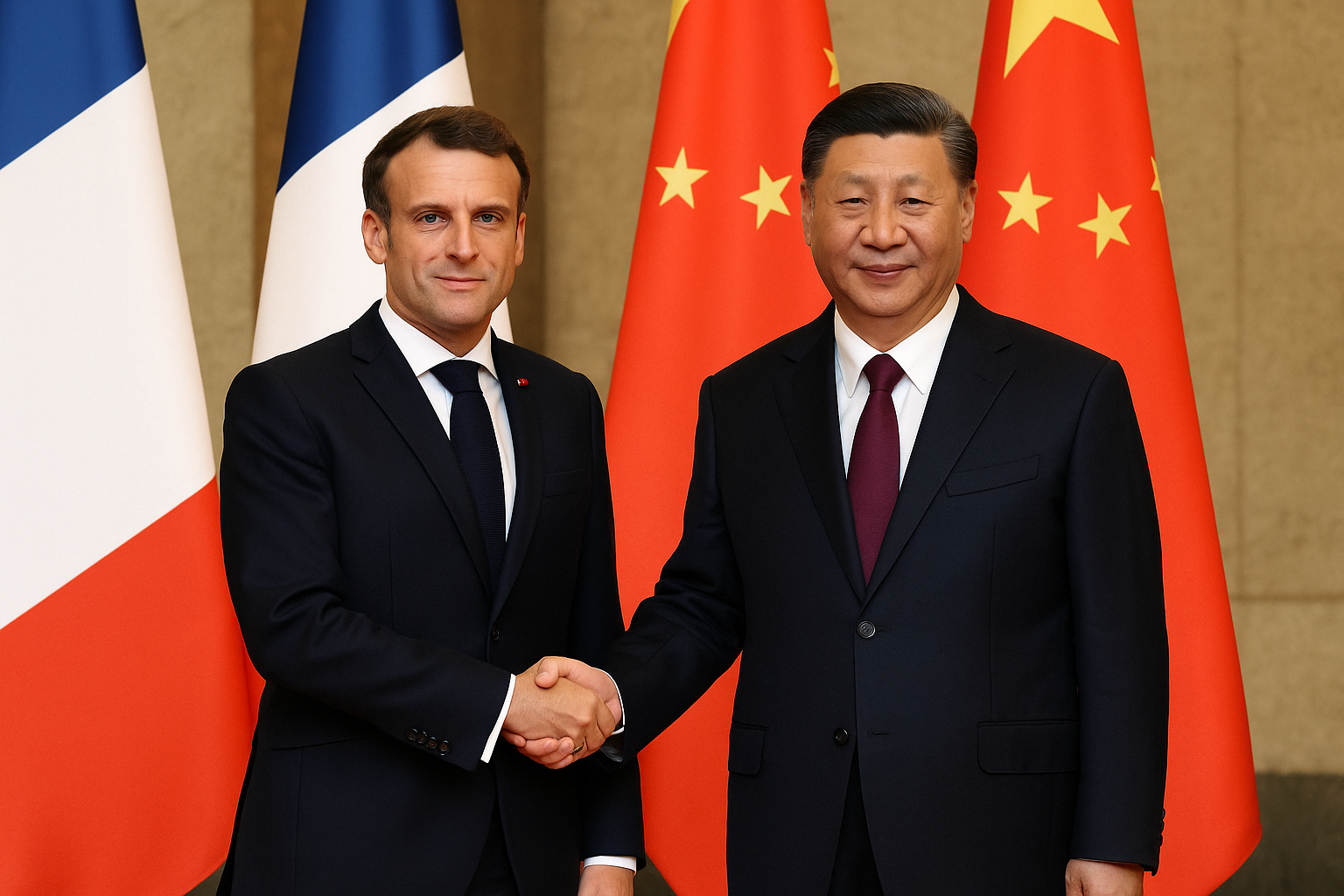
The 2025 China–France Summit has emerged as one of the most influential diplomatic engagements of the year. Held in Beijing during the 60th anniversary of China–France diplomatic relations, the meeting between French President Emmanuel Macron and Chinese President Xi Jinping symbolized both a celebration of history and a push toward redefining global power balances.
This visit was Macron’s fourth state visit to China, and its timing revealed a strategic intent—from strengthening trade ties to navigating the difficult terrain of the Ukraine conflict and reshaping global geopolitics. As the world experiences historic shifts, this summit stands out as a reminder that cooperation between major powers is not optional—it is essential.
The 2025 Summit at a Glance: Why Macron’s Visit Mattered
Macron’s trip to China was more than a diplomatic handshake. It represented France’s attempt to carve out an independent foreign policy path at a time when the world is growing more polarized. While the United States and China compete for global influence and the conflict in Ukraine strains Europe’s security landscape, France wants to be a bridge between East and West.
During his visit, Macron focused on three major areas:
Ending the Ukraine conflict, with Beijing playing a decisive role.
Expanding bilateral trade and investment, especially in technology, aviation, and green energy.
Reinforcing a multipolar world, where no single country dominates the global order.
Each of these themes shaped the tone of the summit and revealed the direction of China–France relations in this new era.
Ukraine Conflict: France Calls China’s Role “Decisive”
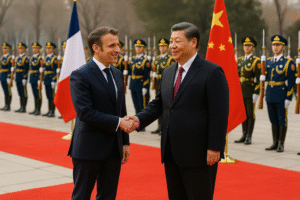
One of Macron’s strongest messages during the summit centered on the ongoing conflict in Ukraine. As Europe continues to face the consequences of the war—economic pressure, energy insecurity, and refugee flows—Paris believes that China is the only major power with the leverage to push Moscow toward peace.
Macron’s Position
President Macron declared that China’s cooperation would be “decisive” in ending the war. He urged Xi to use China’s influence over Russia to steer the conflict away from escalation and toward dialogue.
Xi Jinping’s Response
President Xi responded by repeating China’s long-standing stance:
China supports peace negotiations.
China promotes dialogue and mutual respect.
China acknowledges the security concerns of all parties, including Russia.
However, he did not condemn Russia, maintaining China’s careful diplomatic balance.
Key Takeaway
For France and Europe, China remains an indispensable player in the quest for security stability. Even without concrete breakthroughs, the summit helped preserve diplomatic channels at a time when the world cannot afford new confrontations.
Economic Cooperation: A “Two-Way Success” Worth $68.75 Billion
Beyond geopolitics, the China–France Summit highlighted the strength of bilateral trade and underscored new opportunities for economic collaboration. Between January and October 2025 alone, trade between the two nations reached $68.75 billion, representing a 4.1% increase year-over-year.
Aviation Sector: Airbus Expands Its Footprint in China
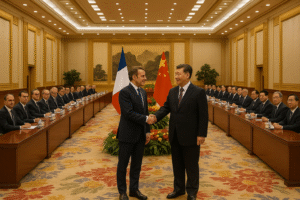
One of the summit’s most important economic highlights was Airbus’s decision to expand its Tianjin final assembly line. The newly inaugurated second line allows Airbus to significantly increase production of A320-family aircraft in China—contributing up to 20% of the company’s global capacity.
For France, this move strengthens its position in the highly competitive aviation market, while China gains access to world-class aerospace technology and industrial expertise.
Green Economy and Renewable Energy Collaboration
As the global community shifts toward carbon neutrality, China and France are positioning themselves at the forefront of the green transition.
Key areas of cooperation include:
Renewable energy (solar and wind)
Clean mobility and electric vehicles
Low-carbon technologies
Climate financing and sustainable development
Macron emphasized the importance of building a fair business environment for French companies operating in China, particularly in the clean-tech sector.
Putin in India: Key Highlights, Global Reactions, and the Future of Indo-Russia Relations visit here
Technology & Innovation: AI, Biomedicine, Digital Economy
China and France also announced steps to expand cooperation in emerging technology fields such as:
Artificial intelligence
Biomedicine
Digital infrastructure
Smart manufacturing
These partnerships are expected to boost innovation, create jobs, and open new pathways for both countries in the global tech ecosystem.
A Shared Vision: Strategic Autonomy and a Multipolar World
A key philosophical theme of the summit was the idea of promoting a multipolar world—a global order led by multiple influential nations rather than a single dominant power.
France’s Strategic Autonomy
President Macron has repeatedly urged the European Union to adopt strategic autonomy, meaning Europe should be able to make foreign policy decisions independently of major powers, including the United States. In this context, France sees itself as:
A constructive player in global diplomacy
A bridge between China and Europe
A voice calling for independence in foreign affairs
China’s Perspective
For Beijing:
A multipolar world reduces pressure from U.S. containment strategies.
France is viewed as a balanced and pragmatic partner in Europe.
Strong ties with Paris can influence broader EU policy on trade, tech, and security.
Together, China and France project themselves as champions of dialogue instead of division, especially as the world grapples with instability.
S-500 Prometheus Missile System Explained: Features, Range, and India’s Strategic Interest. visit here
Balancing the Relationship: Economic Interests vs Security & Values
The China–France relationship is deepening, but not without challenges. Macron faces pressure from the EU and the United States over issues like trade imbalance, technology dependency, and China’s growing global influence.
De-Risking vs. Engagement
While the West talks about “de-risking,” the reality on the ground shows a different picture:
French companies continue to expand operations in China.
China is investing heavily in France, including in EV battery plants and manufacturing hubs.
Human Rights and Political Differences
Though human rights concerns remain a point of contention, both sides now prefer candid but private discussions, avoiding public confrontations that could harm economic interests.
Ministry of External Affair click here
Celebrating 60 Years of Diplomatic Relations
The 2025 summit also carried emotional and historical meaning. France was the first major Western nation to recognize the People’s Republic of China in 1964, setting the stage for one of the most enduring East–West diplomatic relationships.
Cultural & Educational Cooperation
Cultural diplomacy remains a strong pillar of the relationship:
Over 6,000 French students studied in China in 2024.
Both countries launched the China–France Year of Culture and Tourism, encouraging exhibitions, festivals, and tourism exchanges.
Public opinion surveys indicate over 75% of respondents support strengthening economic ties to better face global challenges.
These people-to-people ties add emotional depth to a relationship dominated by hard geopolitics.
Conclusion: Cooperation is Essential—But Results Will Define Success
The 2025 China–France Summit demonstrated that cooperation between East and West is not only possible but necessary. With global tensions rising and economic uncertainty growing, the partnership between Paris and Beijing serves as a stabilizing force.
However, the real impact of this summit will depend on what happens next:
Will China take concrete steps regarding Russia and Ukraine?
Will trade agreements translate into real-world benefits?
Will both sides push forward on climate, technology, and innovation collaborations?
Ultimately, the China–France relationship reflects the broader story of global politics in 2025—a world divided, yet deeply interconnected. Whether this partnership leads to lasting peace and prosperity will depend on sustained commitment, transparency, and meaningful action from both sides.