1. Powerful Introduction
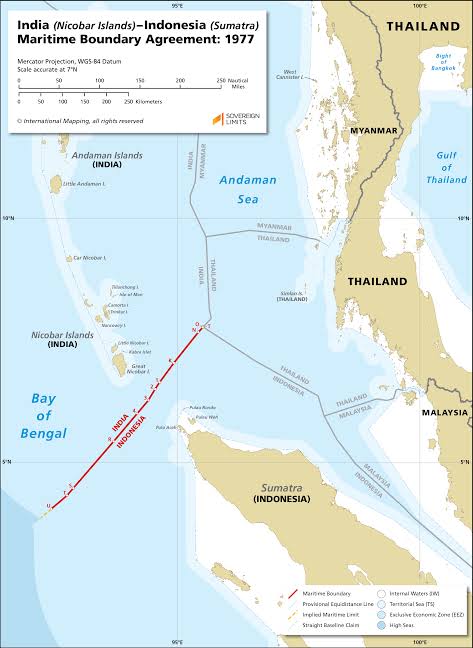
Just 80 nautical miles separate India’s southernmost point in the Andaman and Nicobar Islands from Indonesia’s northernmost tip in Aceh. This narrow stretch of water commands the western entrance to the Strait of Malacca—the vital geopolitical chokepoint through which nearly 30% of global trade and 80% of China’s energy imports flow.
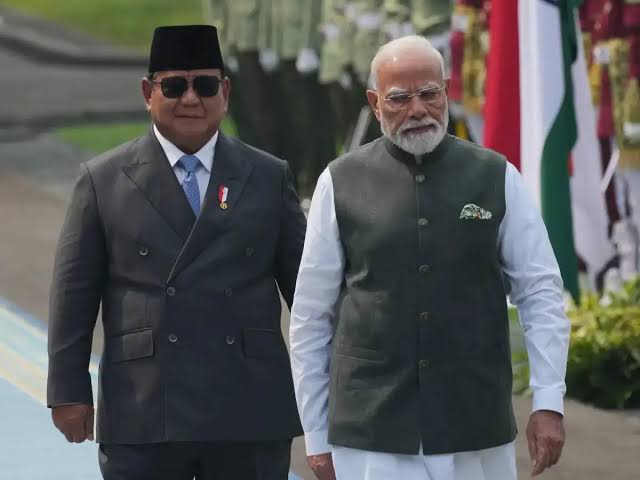
When Indian Prime Minister Narendra Modi landed in Jakarta in 2026 for a highly anticipated summit with Indonesian President Prabowo Subianto, the agenda went far beyond ceremonial diplomacy. Against the backdrop of escalating tensions in the South China Sea and shifting U.S. security commitments, New Delhi and Jakarta are accelerating a strategic convergence that has been years in the making.
This is not merely a bilateral handshake; it is the activation of the Sabang-Andaman Axis. By intertwining their defense architectures, linking their digital economies, and leveraging Indonesia’s critical minerals for India’s massive manufacturing push, the two largest democracies in the Indo-Pacific are establishing a new “Southern Anchor” for regional stability. For global investors, policymakers, and defense analysts, understanding this partnership is no longer optional—it is central to the future of the Indo-Pacific.
2. Executive Summary
Maritime Fortress: The operationalization of the Sabang Port development pact directly links India’s Andaman military command with Indonesia, creating a joint monitoring umbrella over the Malacca Strait.
Defense Tech Integration: Advanced negotiations for Indonesia to procure Indian-made defense systems (including BrahMos coastal batteries) signal a shift in Jakarta’s defense diversification.
Currency Sovereignty: The signing of a Rupee-Rupiah Local Currency Settlement (LCS) framework bypasses the US Dollar for bilateral trade, reducing exchange rate volatility for regional businesses.
Critical Minerals Alliance: A strategic pact allowing Indian electric vehicle (EV) and battery manufacturers prioritized access to Indonesian nickel processing, securing India’s green energy transition.
ASEAN Hedging Strategy: Under President Prabowo, Indonesia is using its partnership with India to hedge against the US-China binary, reinforcing “ASEAN Centrality” with a powerful, non-aligned partner.
Digital Public Infrastructure (DPI): India will export its UPI and India Stack frameworks to Indonesia to modernize Southeast Asia’s largest digital economy.
Supply Chain Resilience: Joint investments in pharmaceutical active pharmaceutical ingredients (APIs) and semiconductor packaging to reduce mutual reliance on Beijing.
Geopolitical Rebalancing: The alliance limits China’s ability to dominate the Indian Ocean Region (IOR) while allowing the US to focus on the Western Pacific.
3. Background: The Evolution of a Strategic Partnership
The India-Indonesia relationship is anchored in millennia of civilizational ties, from the Chola dynasty’s maritime trade to the shared non-aligned movement birthed at the 1955 Bandung Conference. However, the modern strategic framework was codified much more recently.
4. What Happened? The 2026 Summit Deliverables
During the 2026 bilateral summit, the two administrations moved past diplomatic rhetoric into hard operational agreements.
Officially Confirmed Agreements
The Malacca Maritime Domain Awareness (MDA) Pact: A framework for real-time intelligence sharing between the Indian Navy and the Indonesian Maritime Security Agency (Bakamla) regarding commercial and military vessel movements in the Malacca and Sunda straits.
Rupee-Rupiah Settlement Mechanism: A central bank agreement enabling cross-border trade invoices to be settled in INR and IDR, aimed at reaching $50 billion in bilateral trade by 2030.
Critical Minerals Memorandum: A fast-track regulatory corridor for Indian firms (like Tata and Reliance) to invest in Indonesian nickel smelters in Morowali, paired with technology transfers.
Proposals Under Advanced Negotiation
Defense Procurement: Indonesia is evaluating the procurement of the BrahMos extended-range supersonic cruise missile system for coastal defense, following the Philippines’ successful acquisition.
Submarine Rescue & Maintenance: Proposed logistical support where Indian naval facilities in the Andamans could offer emergency berthing and maintenance for Indonesian submarines.
Note: While defense procurement negotiations were prominently featured in joint press briefings, final commercial contracts for the BrahMos system remain pending parliamentary budget approvals in Jakarta.
5. Deep Geopolitical Analysis
The Modi-Prabowo summit fundamentally alters the security architecture of the Indo-Pacific.
The Malacca Chokepoint and Strategic Deterrence
China’s “Malacca Dilemma”—the vulnerability of its energy supply chain to a naval blockade at the Strait of Malacca—is Beijing’s greatest strategic anxiety. By building deep-water port facilities in Sabang (Indonesia) and rapidly militarizing the Andaman and Nicobar command (India), New Delhi and Jakarta now hold the keys to this chokepoint. While neither nation seeks to weaponize trade, the mere capability of a joint Indo-Indonesian naval blockade provides immense deterrence value against Chinese assertiveness in the Himalayas or the Natuna Sea.
Reinforcing “ASEAN Centrality”
For years, Southeast Asian nations felt trapped between the U.S. and China. Indonesia, as the de facto leader of ASEAN, has actively sought a “third way.” India represents the perfect geopolitical hedge: a massive economy and capable military that respects ASEAN Centrality and does not demand treaty-alliance subordination. By drawing India deeper into Southeast Asian security, President Prabowo dilutes Beijing’s regional dominance without relying solely on Washington.
The U.S. and European Perspective
Washington and European capitals broadly welcome this alignment. The U.S. Indo-Pacific Command (INDOPACOM) is stretched thin managing Taiwan and the South China Sea. An India-Indonesia axis that can independently secure the Indian Ocean and the Malacca Strait allows the U.S. Navy to concentrate its assets further east.
Why This Matters: The Indo-Pacific is no longer just a theater for US-China competition. Regional heavyweights are forming overlapping, “minilateral” networks that operate independently of Washington and Beijing.
6. Deep Geoeconomic Analysis
The geoeconomics of the 2026 summit are as profound as the geopolitics, focusing on supply chain sovereignty.
The Nickel-EV Nexus
Indonesia holds the world’s largest nickel reserves and has banned raw nickel exports to force downstream industrialization. India, meanwhile, is executing a massive state-subsidized push to become a global EV manufacturing hub. The 2026 Critical Minerals Memorandum creates a symbiotic loop: Indian capital and engineering scale flow into Indonesian smelters, while refined battery-grade nickel flows securely into Indian gigafactories, bypassing Chinese intermediaries.
De-Dollarization and Financial Autonomy
The Rupee-Rupiah LCS mechanism is a pragmatic response to the US Federal Reserve’s interest rate cycles, which routinely batter emerging market currencies. By settling coal, palm oil, and pharmaceutical trades in local currencies, both nations save millions in currency conversion costs and insulate their domestic economies from dollar liquidity shocks.
Explore how these economic engines compare dynamically:
7. Economic Data Analysis
Data reflects verified trends and government targets up to 2026.
| Sector | Current Bilateral Trade Value | 2030 Target | Key Drivers |
| Energy & Commodities | ~$25 Billion | ~$35 Billion | Indonesian coal and palm oil exports to India. |
| Technology & Digital | ~$2 Billion | ~$8 Billion | India Stack integration, fintech investments, SaaS. |
| Manufacturing & Auto | ~$4 Billion | ~$10 Billion | EV components, two-wheelers, auto parts. |
| Defense & Aerospace | < $100 Million | $1.5 Billion | Proposed BrahMos sales, naval MRO services. |
Key Takeaway for Investors: The steepest growth curve lies not in traditional commodities, but in digital infrastructure and defense hardware, sectors previously dominated by Western or Chinese firms.
8. Country-by-Country Impact
India: Secures its eastern maritime flank, guarantees critical mineral supplies for its EV revolution, and cements its status as the premier security provider in the Indian Ocean Region.
Indonesia: Gains a massive, reliable market for its value-added exports, diversifies its defense procurement away from Russia and the West, and gains leverage in its Natuna Sea disputes with China.
China: Faces a hardened maritime chokepoint at Malacca. The India-Indonesia alignment complicates the PLA Navy’s ambitions to operate freely in the Indian Ocean.
United States: Benefits from a stabilized Indian Ocean, enabling strategic burden-sharing, though Washington may view the Rupee-Rupiah trade settlement as another small chip in the dollar’s global hegemony.
ASEAN: Sees a successful model of “strategic autonomy” in action, encouraging nations like Vietnam and the Philippines to deepen their own ties with New Delhi.
9. Stakeholder Analysis
Global Shipping Companies: Will benefit from enhanced maritime domain awareness and anti-piracy patrols, but must navigate new joint regulatory frameworks in the Malacca Strait.
Defense Industry: Indian defense contractors (HAL, BrahMos Aerospace, L&T) are the immediate beneficiaries, gaining a foothold in the lucrative Southeast Asian arms market.
Energy & EV Firms: Companies reliant on battery supply chains gain a secure, non-Chinese pipeline for critical minerals.
Consumers: Direct local currency trade reduces inflationary pressures on imported staples like cooking oil (palm oil) in India.
10. Expert Perspectives
The Strategic Optimists:
Think tanks like the Brookings Institution and the Observer Research Foundation (ORF) view this partnership as the ultimate realization of India’s “Act East” policy. They argue that Prabowo’s pragmatism perfectly matches Modi’s ambition, creating a durable bulwark against regional hegemony.
The Economic Realists:
Trade economists point out that while the defense optics are excellent, non-tariff barriers and bureaucratic red tape in both New Delhi and Jakarta have historically stifled private-sector integration. They caution that hitting the $50 billion trade target will require painful domestic regulatory reforms.
The Skeptics:
Some defense analysts at the RAND Corporation note that Indonesia maintains deep economic ties with China (its largest trading partner). They argue that Jakarta will never fully align militarily with India if it risks severe economic retaliation from Beijing.
11. Reality Check: Separating Fact from Fiction
Verified Fact: India and Indonesia have established frameworks for real-time maritime intelligence sharing.
Common Misconception: India is building a military base in Sabang. Reality: The Sabang development is a commercial deep-sea port with dual-use potential for naval berthing, not a sovereign Indian military base.
Media Narrative: Indonesia is joining the QUAD. Reality: Indonesia remains fiercely committed to non-alignment and ASEAN centrality; it will partner with QUAD nations individually but will not join the bloc.
Unknowns: Whether the Rupee-Rupiah settlement mechanism can scale beyond state-backed energy trades into private sector commerce remains unproven.
12. Future Scenarios
Best Case Scenario (High Integration)
By 2030, bilateral trade surpasses $50 billion. The Sabang-Andaman corridor becomes a thriving transshipment and naval logistics hub. India successfully integrates Indonesian nickel into its domestic EV market, while Indian tech unicorns dominate Jakarta’s digital landscape.
Worst Case Scenario (Economic Friction)
Protectionist domestic policies in both nations stall trade growth. Beijing leverages its massive FDI in Indonesia to pressure Jakarta into freezing defense tech transfers with New Delhi. The Sabang port project gets bogged down in environmental and bureaucratic delays.
Most Likely Scenario (Pragmatic Hedging)
Steady, incremental progress. Defense interoperability deepens specifically in maritime domains, but Indonesia carefully balances these ties to avoid outright provoking China. Economic integration succeeds in niche sectors (EVs, digital infrastructure) while traditional commodities remain stable.
13. Editorial Analysis
This section represents editorial analysis based on geopolitical trends.
The Modi-Prabowo summit marks the maturation of the Indo-Pacific from a concept engineered in Washington into a reality managed by regional powers. For decades, the global order assumed that Asian security required an external guarantor. India and Indonesia are proving otherwise.
What makes this partnership formidable is its foundation in mutual vulnerability. India needs secure access to the Pacific; Indonesia needs a secure Indian Ocean. India has capital and technology; Indonesia has critical minerals and strategic geography.
However, the ultimate success of the Sabang-Andaman Axis depends on execution. Both nations suffer from a history of announcing grand strategic MoUs that die in bureaucratic committees. If New Delhi and Jakarta can align their notoriously complex domestic bureaucracies to deliver on these 2026 promises, they will not just balance China—they will redefine the economic and security center of gravity for the 21st century.
14. Key Takeaways
For Investors: Supply chain diversification away from China is accelerating. Look for alpha in Indian EV manufacturers and Indonesian mineral processors leveraging the new bilateral framework.
For Policymakers: The “Global South” is bypassing traditional Western financial infrastructure. Local currency settlements are becoming the norm, not the exception, in Asian trade.
For Defense Analysts: The Malacca Strait is no longer solely under the watchful eye of the US Navy. An indigenous Asian maritime security architecture has officially arrived.
15. Conclusion
Prime Minister Narendra Modi’s 2026 visit to Indonesia will not be remembered merely for the photo opportunities in Jakarta. It will be recorded as the moment the Sabang-Andaman Axis was activated. By merging their economic and maritime destinies, India and Indonesia have ensured that the future of the Indo-Pacific will be multipolar, resilient, and anchored securely in the South.