Railway PSU heavyweight Ircon International released its Q4 FY26 results on May 22, 2026, and the numbers are creating mixed reactions across Dalal Street. On the surface, the quarterly scorecard looks weak because the company reported a decline in net profit. However, when investors look deeper into the operational numbers, a much stronger story begins to emerge. Despite a slowdown in revenue growth, Ircon managed to improve its operating efficiency and expand margins, which is a positive signal for long-term investors. This is why many market experts believe the current correction in IRCON shares may eventually turn into an opportunity for patient investors looking at India’s long-term railway and infrastructure growth story.
Ircon International Q4 FY26 Results: Key Financial Highlights
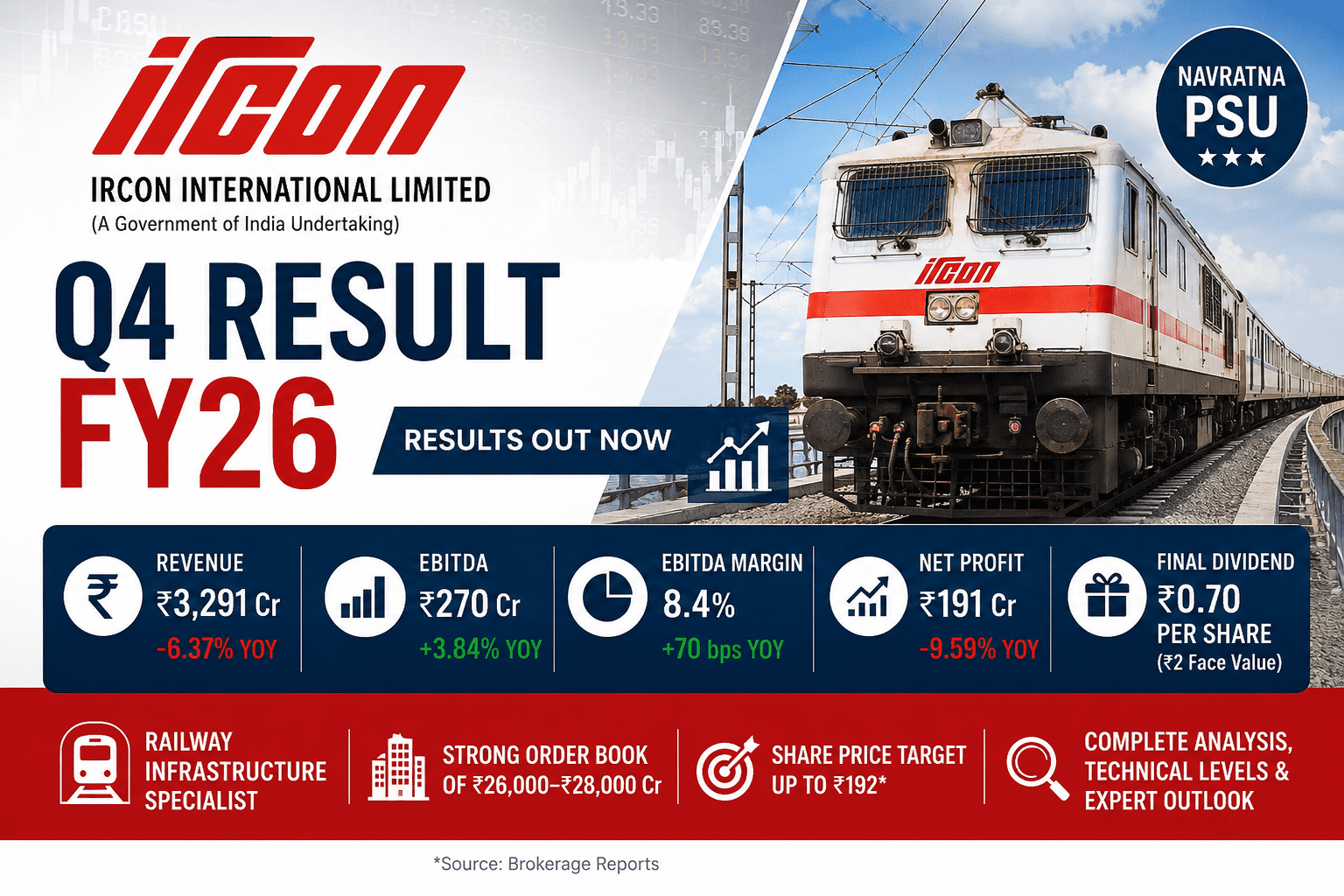
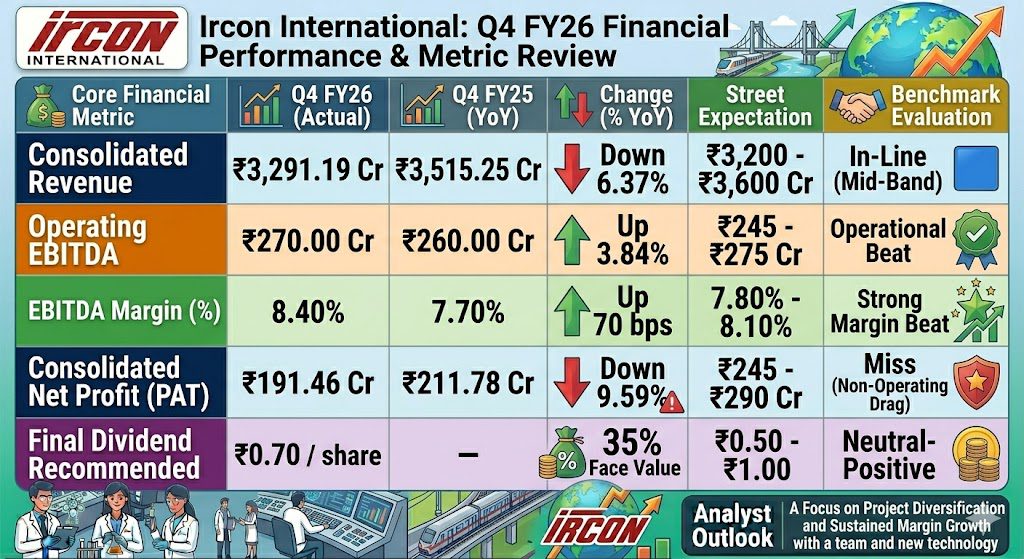
Ircon International reported consolidated revenue of ₹3,291.19 crore for Q4 FY26 compared to ₹3,515.25 crore in the same quarter last year, reflecting a decline of 6.37% year-on-year. While the revenue decline disappointed some investors, the market was encouraged by the company’s strong operational performance. EBITDA increased to ₹270 crore from ₹260 crore last year, while EBITDA margins expanded sharply from 7.7% to 8.4%. This margin expansion became the biggest positive surprise in the earnings report because it showed that the company is improving project execution efficiency and controlling costs better. However, consolidated net profit declined to ₹191.46 crore from ₹211.78 crore, mainly because of higher interest costs and non-operating expenses. Alongside the results, the company also announced a final dividend of ₹0.70 per equity share, providing steady income support for long-term shareholders.
1. Company Overview: The Navratna Infrastructure Powerhouse
Understanding Ircon International’s Core Business
Ircon International is one of India’s leading railway and infrastructure engineering companies operating under the Ministry of Railways. The company enjoys Navratna PSU status, which gives it greater financial and operational flexibility compared to many other government-owned firms. Ircon specializes in railway infrastructure projects including railway track construction, electrification systems, signaling networks, bridges, tunnels, highways, metro rail projects, and large-scale civil engineering contracts. Over the years, the company has built a strong reputation for executing technically complex projects both in India and internationally.
Global Presence Strengthens the Business Model
One of Ircon’s major strengths is its international presence. The company has successfully completed projects across countries such as Malaysia, Sri Lanka, Nepal, Bangladesh, and several African nations. This overseas exposure not only diversifies revenue streams but also improves the company’s execution capabilities in large EPC projects. In addition, India’s aggressive infrastructure push continues to provide long-term growth visibility for railway-focused PSUs like Ircon.
2. Earnings Breakdown: Why Margins Improved Despite Lower Profit
Revenue Decline Reflects Industry Transition
Ircon’s revenue declined by 6.37% year-on-year mainly because the railway infrastructure sector is currently undergoing structural changes. Earlier, railway PSUs benefited heavily from nomination-based contracts where competition remained limited. However, the government is increasingly moving toward competitive bidding systems, which has intensified pricing pressure across the sector. At the same time, some low-margin road and EPC projects reached completion during the quarter, impacting overall billing momentum. While the top-line decline may appear concerning at first glance, it does not necessarily indicate a long-term demand slowdown.
EBITDA Margin Expansion Was the Biggest Positive Signal
The strongest part of Ircon’s Q4 FY26 result was the sharp expansion in EBITDA margins. The company improved its EBITDA margin from 7.7% to 8.4%, despite lower revenues.
This improvement suggests that management is becoming more selective in project execution and focusing on higher-quality contracts with better profitability. Cost optimization, disciplined execution, and reduced exposure to low-margin legacy projects also contributed to the margin expansion. For long-term investors, this operational improvement is more important than short-term fluctuations in quarterly revenue.
Why Net Profit Declined in Q4 FY26
Despite stronger operational performance, consolidated net profit declined by around 9.5% year-on-year to ₹191.46 crore. The primary reason behind the decline was the increase in non-operating expenses. Higher interest costs arising from increased working capital borrowings negatively affected the bottom line. In addition, tax provisions and financing expenses also impacted profitability during the quarter. Infrastructure companies typically require large working capital support, and rising borrowing costs can temporarily pressure earnings even when operational performance remains healthy.
Final Dividend Announcement Supports Investor Confidence
Ircon’s board announced a final dividend of ₹0.70 per equity share with a face value of ₹2. Although the dividend payout remained within market expectations, it still provides an attractive income component for long-term investors holding PSU infrastructure stocks. The official record date for the dividend will be announced after shareholder approval during the AGM process.
3. Fundamental Analysis: Is IRCON Stock Undervalued Now?
Massive Order Book Provides Strong Revenue Visibility
One of the biggest strengths of Ircon International remains its strong order pipeline. The company’s current order book is estimated between ₹26,000 crore and ₹28,000 crore, providing nearly 2.5 years of revenue visibility based on the current execution pace. For infrastructure companies, a large order backlog is extremely important because it reduces uncertainty regarding future project execution and revenue generation. This strong order pipeline also indicates that demand for railway and infrastructure projects remains healthy despite temporary revenue fluctuations.
Valuation Compression Has Improved Risk-Reward Ratio
IRCON shares have corrected sharply from their 52-week high near ₹310 and are currently trading around ₹140.80. This steep correction has significantly improved the valuation comfort for investors. The stock is now trading at around 21.4x trailing earnings, which appears much cheaper compared to several railway PSU peers. For example, Rail Vikas Nigam Limited or RVNL continues to trade at substantially higher valuation multiples. As a result, many analysts now believe that Ircon offers a better risk-reward balance for long-term investors seeking exposure to India’s infrastructure growth cycle.
Balance Sheet Risks Investors Should Monitor
Despite the improving valuation picture, investors should continue monitoring some balance sheet risks. Debtor days increased from around 33 days to over 45 days, indicating slower receivable collections. This can increase pressure on working capital requirements and financing costs. Additionally, rising interest expenses due to higher borrowings remain an important concern for future profitability. Investors should therefore closely track operating cash flows, debt levels, and interest coverage ratios over the coming quarters.
4. Technical Analysis: Key Levels for Monday’s Market Opening
Pivot Level Bulls Must Reclaim
From a technical perspective, the key pivot balance point for IRCON stock currently stands near ₹146.50.
y=146.5y=146.5
If the stock manages to sustain above this level on a daily closing basis, it could indicate the beginning of a short-term recovery trend. However, failure to reclaim this level may keep bearish pressure active in the near term.
Major Resistance Zones for IRCON Shares
The immediate resistance zone for IRCON stock is located near ₹148.50. If the stock crosses this level with strong trading volumes, the next upside targets could emerge near ₹155 and ₹162 respectively. These levels are important because they represent areas where sellers previously dominated price action.
Strong Support Zones Traders Must Watch
On the downside, immediate support is visible near ₹138.50. If this support fails, the stock could decline toward the ₹130 zone, which currently acts as a strong structural support area. In an extreme bearish scenario, the long-term capitulation floor remains close to ₹110.
Trading Strategy for Swing Traders
Since the quarterly net profit missed market expectations, traders should prepare for short-term volatility during Monday’s opening session. Initial selling pressure is likely, especially from short-term momentum traders. However, if the stock forms a strong reversal pattern near the ₹138–₹135 support zone with heavy trading volume, it could provide an attractive swing-trading opportunity for aggressive traders seeking favorable risk-reward setups.
5. Management Guidance & Industry Growth Catalysts
India’s Infrastructure Spending Remains a Long-Term Tailwind
India’s aggressive infrastructure expansion continues to support long-term growth opportunities for railway and EPC companies. The Union Budget allocated approximately ₹11.21 lakh crore toward capital expenditure, creating strong demand visibility for railway modernization, logistics infrastructure, freight corridors, and metro rail projects. As one of the major railway-focused PSUs, Ircon is expected to remain a key beneficiary of this infrastructure cycle.
Diversification Beyond Traditional Railway Projects
Ircon management is also focusing on diversifying the company’s execution portfolio beyond traditional railway projects. The company is actively expanding into metro rail systems, solar energy connectivity, urban infrastructure, and overseas EPC contracts. This diversification strategy is important because it reduces dependence on railway-only contracts and creates opportunities for higher-margin project execution in future years.
6. Institutional Radar: Brokerage Ratings & Target Prices
Analysts Remain Constructive on Long-Term Potential
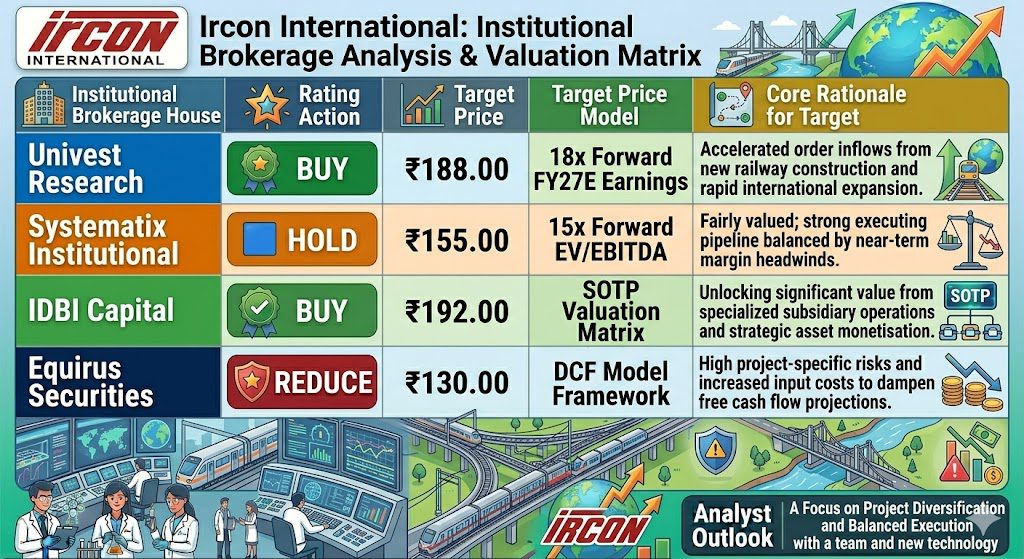
Brokerage firms currently hold mixed opinions regarding IRCON shares in the short term, mainly because of the recent earnings miss. However, several institutional analysts still see meaningful upside potential over the medium term. Univest Research maintained a BUY rating with a target price of ₹188, while IDBI Capital projected a target near ₹192. On the other hand, some analysts remain cautious because of rising borrowing costs and slowing revenue growth. The overall consensus average target price currently stands near ₹166.25, implying potential upside of around 18% from current levels if execution momentum improves during FY27.
7. The Veteran’s Verdict: Should Investors Buy IRCON Shares?
Long-Term Investors Should Focus on Margin Expansion
For long-term investors, the most important takeaway from Ircon’s Q4 FY26 results is the sharp improvement in operational margins. While the decline in net profit created negative headlines, the underlying business quality actually improved during the quarter. Margin expansion indicates stronger cost control and better project execution efficiency. Investors looking for long-term exposure to India’s infrastructure and railway growth story may therefore consider accumulating IRCON shares gradually during market corrections, especially near the ₹130–₹135 zone.
Swing Traders Should Wait for Price Stabilization
Short-term traders should remain patient because post-result volatility could continue for several trading sessions. Instead of aggressively buying during initial weakness, traders should wait for price stabilization near key support zones. A strong bullish reversal pattern supported by trading volumes would provide a much safer entry opportunity for swing positions.
Final Conclusion
Ircon International delivered a quarterly performance that looked weak on the surface but contained several encouraging operational signals underneath. Revenue growth slowed and net profit declined because of higher interest expenses, but the company’s improving EBITDA margins clearly showed that execution quality is strengthening. With a large order book, improving valuation comfort, and strong long-term infrastructure demand in India, Ircon remains strategically positioned for future growth. Although short-term volatility may continue after the earnings announcement, long-term investors are increasingly viewing the current correction as a potential accumulation opportunity within the railway PSU sector.