Introduction: The Multinational “Moat” in Indian Pharma
Back in the mid-1990s, investors purchased GSK Pharma largely because of its massive distribution network and strong multinational parentage. In 2026, however, investors are buying the company for a very different reason—its focused healthcare portfolio centered around specialized vaccines, chronic therapies, and premium healthcare products.
Unlike many domestic pharmaceutical companies that compete heavily in price-sensitive generic drugs, GSK Pharma has steadily shifted toward high-margin healthcare segments where brand trust, medical relationships, and specialized product expertise matter significantly more than pure pricing competition. This strategy has helped the company maintain strong profitability despite relatively gradual revenue growth.
In many ways, GSK Pharma represents the “quality over quantity” model within India’s healthcare sector. The company may not always deliver explosive sales growth, but it consistently generates strong cash flows, healthy margins, and stable shareholder returns. That consistency becomes especially valuable during uncertain economic environments when investors seek defensive sectors like healthcare and pharmaceuticals.
The latest Q4 FY26 numbers further reinforce this image. The company delivered a resilient quarterly performance with steady profit growth, expanding EBITDA margins, and one of the largest dividend payouts seen in the Indian pharma sector this year.
Q4 FY26 Performance: The NSE Actuals
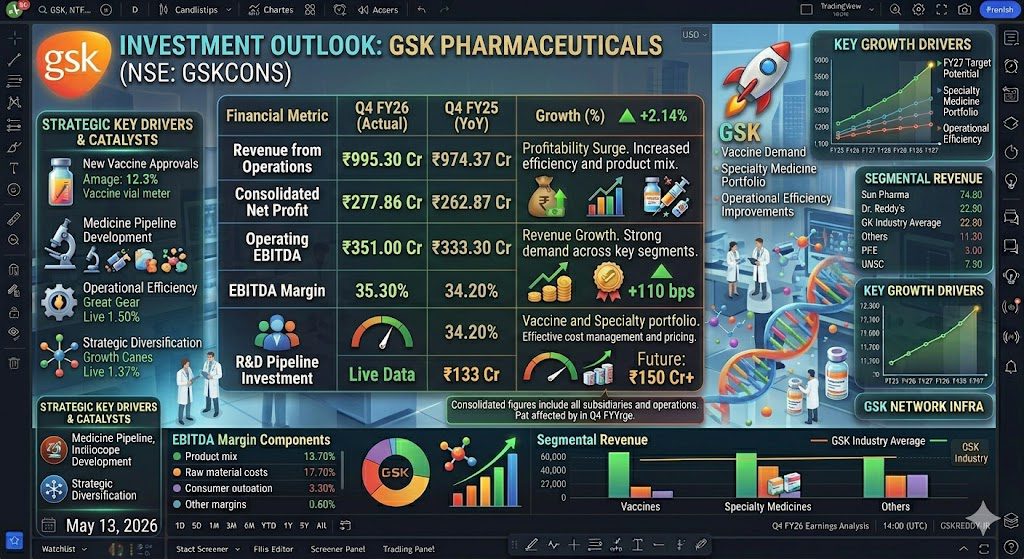
The audited Q4 FY26 data filed with the stock exchanges on May 13, 2026, reveals a financially stable and operationally efficient quarter for GSK Pharma. While topline growth remained moderate, profitability improved steadily due to strong margin expansion and disciplined cost management.
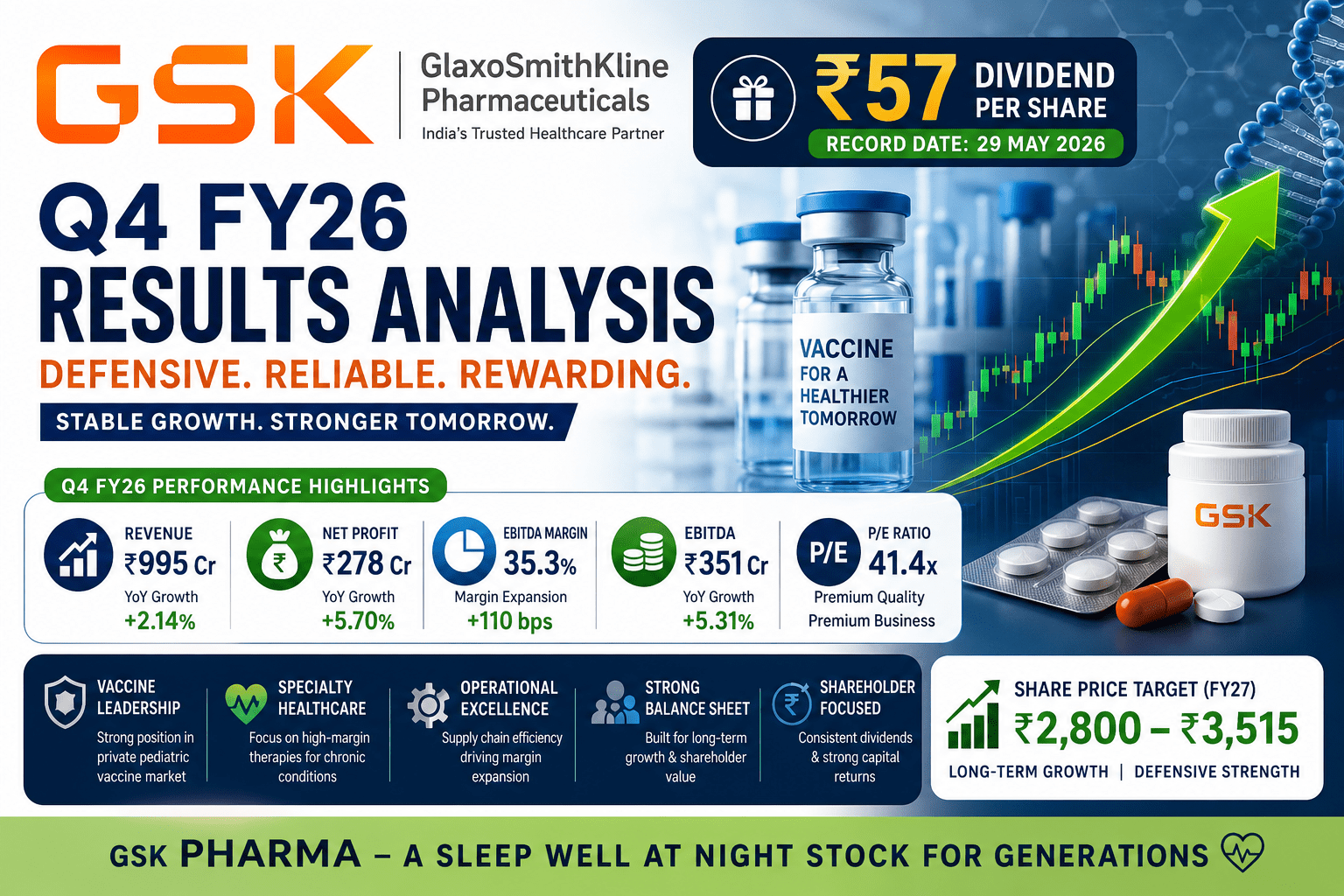
Revenue from operations for Q4 FY26 stood at ₹995.30 crore compared to ₹974.37 crore in the same quarter last year, representing growth of around 2.14%. Although this may appear modest at first glance, it reflects the company’s selective and premium-focused product strategy rather than aggressive volume chasing.
Consolidated net profit increased to ₹277.86 crore from ₹262.87 crore in Q4 FY25, registering year-on-year growth of approximately 5.7%. The profit growth outpaced revenue growth, which is always a positive sign because it indicates improving operational efficiency and stronger product mix realization.
One of the strongest highlights from the quarter was EBITDA performance. Operating EBITDA rose to ₹351 crore compared to ₹333.30 crore last year, showing growth of more than 5.3%. More importantly, EBITDA margin expanded to an impressive 35.3% from 34.2% in Q4 FY25.
For a pharmaceutical company operating in a highly competitive market, a 35% EBITDA margin reflects exceptional operational discipline and premium product positioning. Margin expansion of 110 basis points in a single year demonstrates that the company is successfully scaling higher-value therapies and improving overall business quality.
Fundamental Deep-Dive: The “Swasth” Portfolio
Vaccine Leadership
One of the biggest strengths of GSK Pharma continues to be its dominant position in India’s private pediatric vaccine market. Vaccines remain one of the company’s strongest and most reliable revenue generators because they operate within a highly trusted, specialized healthcare segment.
The vaccine business creates a strong competitive moat because brand trust and medical credibility are extremely important in this category. Doctors and hospitals generally prefer globally trusted healthcare brands for vaccines, especially in pediatric care. This gives GSK Pharma a long-term advantage that is difficult for smaller competitors to replicate quickly.
India’s healthcare awareness is also increasing steadily, particularly among urban middle-class families. Rising vaccination awareness, preventive healthcare spending, and stronger healthcare infrastructure are expected to support long-term growth in this segment.
Specialty Pivot
Another major reason behind GSK Pharma’s margin expansion is its increasing focus on specialty drugs for chronic healthcare conditions. The company is gradually expanding into high-margin therapeutic categories where pricing power and long-term patient demand remain relatively stable.
Specialized healthcare products generally generate stronger profitability because they face less price competition compared to commoditized generic medicines. This strategic shift toward premium healthcare solutions helped the company expand EBITDA margins to 35.3% during Q4 FY26.
The company’s growing presence in respiratory care, dermatology, and specialized chronic therapies positions it well for India’s evolving healthcare landscape, where chronic diseases are becoming increasingly common due to changing lifestyles and urbanization.
Valuation Perspective
From a valuation standpoint, GSK Pharma currently trades at a premium compared to many domestic generic-focused pharmaceutical companies. The stock’s price-to-earnings ratio remains around 41.4x, which reflects the market’s willingness to pay a premium for stability, multinational governance standards, and consistent cash flows.
While this valuation may appear expensive relative to smaller pharma players, it remains comparable to top-tier healthcare companies like Sun Pharmaceutical Industries that also command premium valuations due to strong business quality and specialized product portfolios.
For conservative investors, premium valuations are often acceptable when backed by strong balance sheets, high margins, stable dividends, and defensive sector positioning.
Shareholder Rewards: The ₹57 Dividend Bombshell
Massive Dividend Announcement
The biggest surprise from GSK Pharma’s Q4 FY26 announcement was the board’s recommendation of a final dividend of ₹57 per equity share. This is one of the largest dividend payouts announced by a pharmaceutical company in India this year.
For income-focused investors, such large dividends significantly improve the stock’s attractiveness, especially during periods of uncertain market conditions. At current market prices, the dividend translates into a meaningful yield for shareholders seeking stable income alongside defensive healthcare exposure.
The company has fixed May 29, 2026, as the official record date for this dividend payout. Investors holding shares before the ex-dividend date will become eligible to receive the dividend.
Sustainability Debate
While the dividend announcement has been widely welcomed by investors, it also raises important strategic questions. The payout ratio currently stands near 93.1%, which is considered extremely high for a healthcare company.
A high payout ratio means that the company is returning a significant portion of profits back to shareholders rather than reinvesting aggressively into future business expansion. While this benefits short-term income investors, analysts may question whether excessive cash distribution could limit long-term capital allocation flexibility.
Some market participants believe this reflects the multinational parent company’s strategy of optimizing cash returns from the Indian subsidiary. Others argue that GSK Pharma’s stable and mature business model naturally allows for higher shareholder payouts.
Either way, the ₹57 dividend has become one of the biggest talking points surrounding the stock in FY26.
Technical Analysis: Navigating the ₹2,400 Zone
Current Market Structure
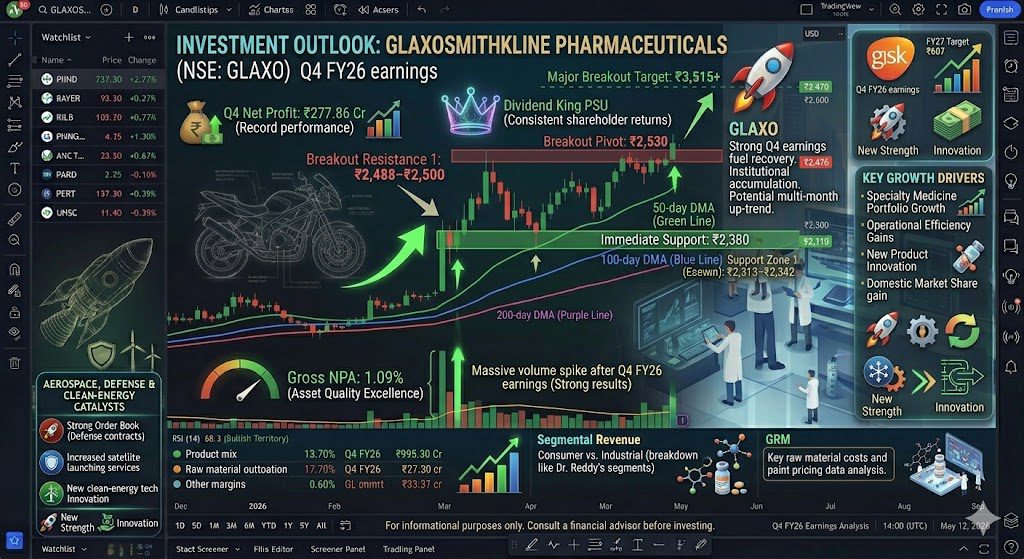
From a technical analysis perspective, GSK Pharma stock is currently in a consolidation phase after a strong year-long upward move from its 52-week low of ₹2,217.60. The broader trend remains constructive, but the stock is now entering a zone where investors are carefully evaluating valuation comfort levels.
Price momentum still remains positive, indicating that institutional buying interest continues supporting the stock despite premium valuations. However, short-term traders are now closely monitoring support and resistance zones for the next directional move.
Key Support Levels
The most important technical support area currently lies between ₹2,313 and ₹2,342. This zone is expected to act as a critical pivot area where fresh buying interest may emerge if the stock experiences temporary weakness.
For investors looking to accumulate the stock, analysts generally prefer a “buy on dips” strategy rather than chasing momentum at elevated valuations. Historically, high-quality defensive pharma stocks tend to offer attractive entry opportunities during broader market corrections.
Resistance Zone
On the upside, immediate resistance is visible between ₹2,488 and ₹2,500. A strong and sustained breakout above this psychological level could potentially trigger fresh momentum toward the stock’s multi-year high near ₹3,515 over the longer term.
However, investors should remember that valuation comfort becomes increasingly important when dealing with premium defensive stocks like GSK Pharma.
Brokerage Sentiment & Targets: The Re-rating View
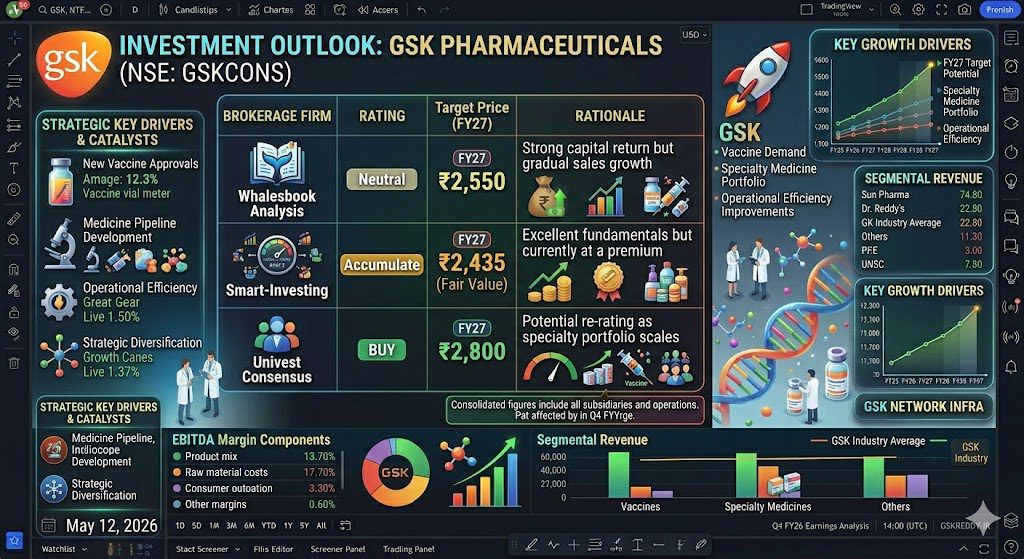
Brokerage sentiment toward GSK Pharma remains cautiously optimistic. Most analysts acknowledge the company’s exceptional balance sheet quality, strong margins, and defensive healthcare positioning, but they also note that current valuations already reflect much of this strength.
Whalesbook Analysis currently maintains a “Neutral” rating with a target price near ₹2,550, citing strong capital return but relatively gradual sales growth. Smart-Investing views the company as fundamentally excellent but believes the stock is fairly valued near ₹2,435 at current levels.
Meanwhile, Univest Consensus remains more bullish with target estimates near ₹2,800, expecting further re-rating potential as GSK Pharma’s specialty healthcare portfolio continues expanding over the next few years.
The overall market consensus suggests that while explosive upside may be limited in the near term, GSK Pharma remains one of the strongest defensive healthcare plays in the Indian stock market.
Management Guidance: The Path to 2027
Chronic Care Expansion
Management has guided for stronger growth in chronic care categories such as respiratory therapies and dermatology over the coming fiscal year. These healthcare segments are strategically important because they typically generate stable recurring demand and better profit margins.
India’s chronic disease burden continues to rise steadily due to urban lifestyles, pollution, aging demographics, and changing healthcare patterns. Companies with strong chronic therapy portfolios are therefore expected to benefit from long-term structural demand growth.
Supply Chain Efficiency
Management also provided positive updates regarding operational improvements at the Nashik manufacturing facility. Better supply chain efficiency and manufacturing optimization contributed significantly to the EBITDA margin expansion witnessed during Q4 FY26.
Operational efficiency improvements are especially important in the pharmaceutical industry because they directly improve profitability without requiring aggressive revenue expansion.
The 30-Year Analyst Verdict
For Long-Term Investors
GSK Pharma remains one of the classic “Sleep Well at Night” stocks in the Indian market. The company combines defensive healthcare exposure, multinational governance standards, stable cash generation, strong margins, and shareholder-friendly dividend policies.
At current market prices, the ₹57 dividend alone offers an attractive yield, making the stock especially appealing for conservative investors seeking stability and predictable returns.
While revenue growth may not always appear spectacular, the quality of earnings and consistency of operations make GSK Pharma a valuable long-term defensive portfolio holding.
For Active Traders
For active traders, the stock currently remains in a neutral-to-bullish technical phase. As long as the ₹2,342 support zone holds, the broader trend structure remains constructive.
If the pharmaceutical sector experiences stronger momentum in the coming months, GSK Pharma could potentially retest the ₹2,600 zone relatively quickly. However, traders should remain disciplined regarding valuations and avoid aggressively chasing rallies at elevated price levels.
Conclusion & Engagement (CTA)
GSK Pharma’s Q4 FY26 performance demonstrates how a focused, premium healthcare strategy can create strong shareholder value even without explosive sales growth. Expanding EBITDA margins, specialized healthcare leadership, operational efficiency, and the historic ₹57 dividend payout together reinforce the company’s reputation as one of India’s highest-quality defensive pharma plays.
As India’s healthcare spending continues to rise and chronic therapies gain importance, GSK Pharma appears well-positioned to maintain stable long-term growth while rewarding shareholders generously.
For investors seeking a combination of healthcare stability, dividend income, and premium business quality, GSK Pharma remains one of the strongest multinational pharmaceutical names in the Indian stock market.
Are you buying GSK Pharma for its massive ₹57 dividend or for its long-term specialty healthcare growth story? Share your “Pharma Yield Strategy” in the comments below.