The Biggest Threat to the Global Economy May Not Be What You Think
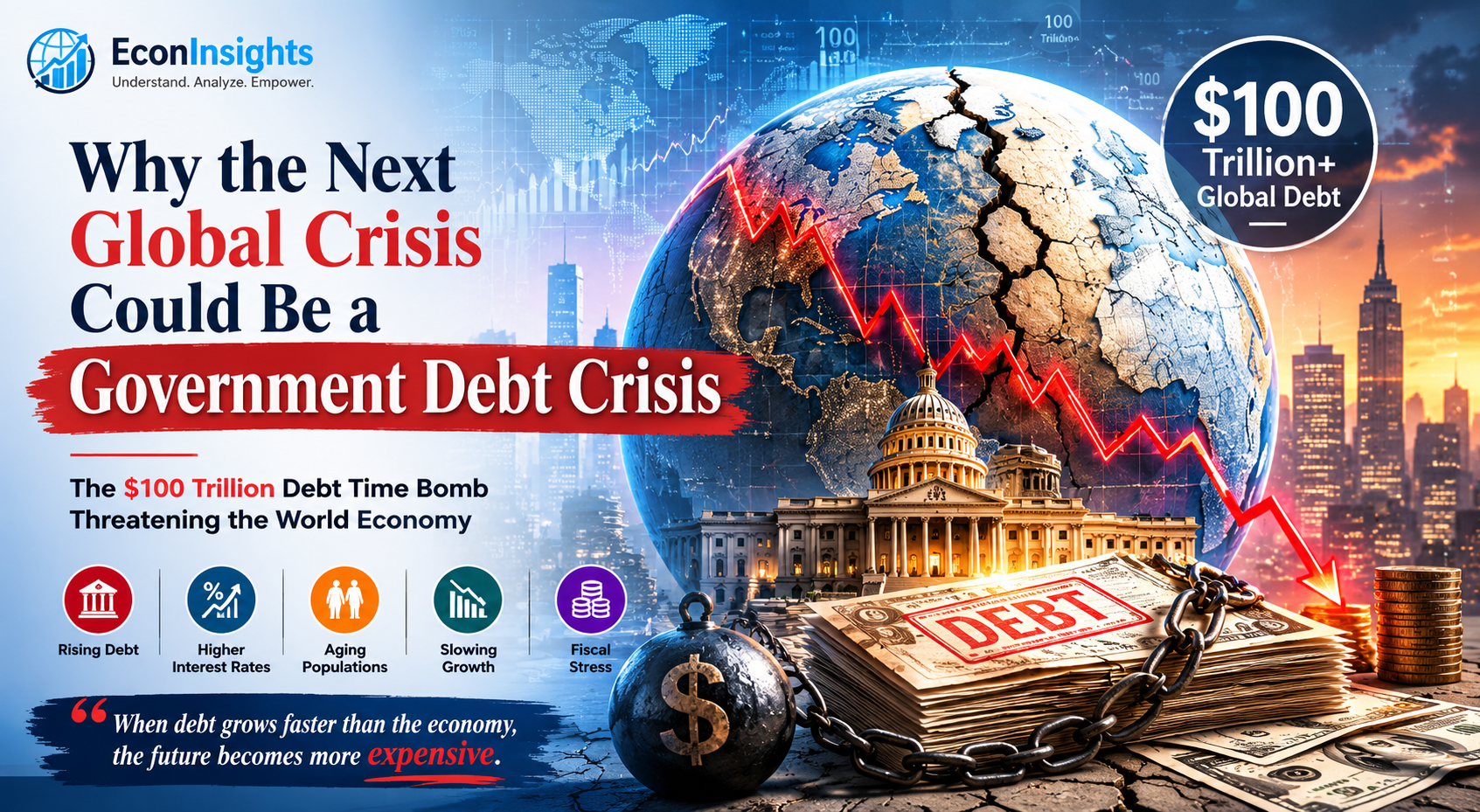
When people worry about the next global economic crisis, they usually think about stock market crashes, inflation, trade wars, or even military conflicts. These are the risks that dominate news headlines and television debates. Yet some economists believe the biggest threat to the world economy is developing quietly in the background, hidden beneath record stock market valuations and discussions about artificial intelligence. That threat is government debt.
At first glance, government debt may not sound particularly alarming. After all, countries have always borrowed money. Governments issue bonds, investors buy them, and the funds are used to build roads, finance healthcare systems, support welfare programs, and strengthen national defense. Borrowing is a normal part of how modern economies operate. The problem begins when debt grows much faster than a country’s ability to generate income and repay its obligations.
Today, the world is witnessing something unprecedented. Governments across both developed and developing economies are carrying debt burdens that would have been considered extraordinary just a few decades ago. More importantly, many of these countries continue to borrow heavily despite already struggling with rising interest payments. This has led a growing number of economists to ask a simple but uncomfortable question: What happens when the world finally reaches the limits of borrowing?
The World Has Never Been This Deep in Debt
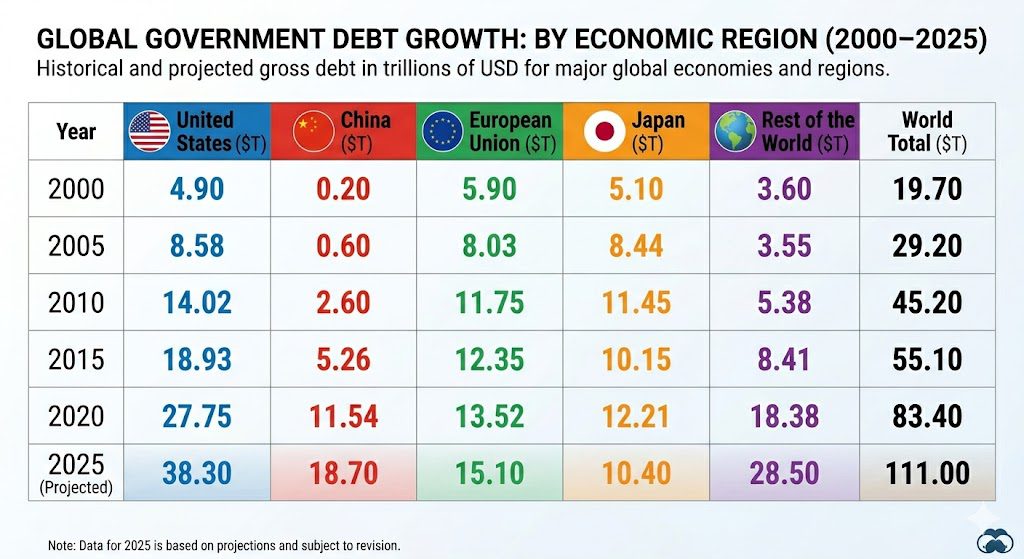
Over the last twenty-five years, government debt has exploded across the globe. Following the 2008 financial crisis, governments borrowed heavily to stabilize their economies and rescue financial institutions. Then came the COVID-19 pandemic, which triggered the largest wave of government spending in modern history.
To prevent economic collapse, governments distributed stimulus payments, expanded unemployment benefits, provided business support programs, and dramatically increased healthcare spending. These actions helped avoid a depression-like scenario, but they also left behind an enormous financial bill.
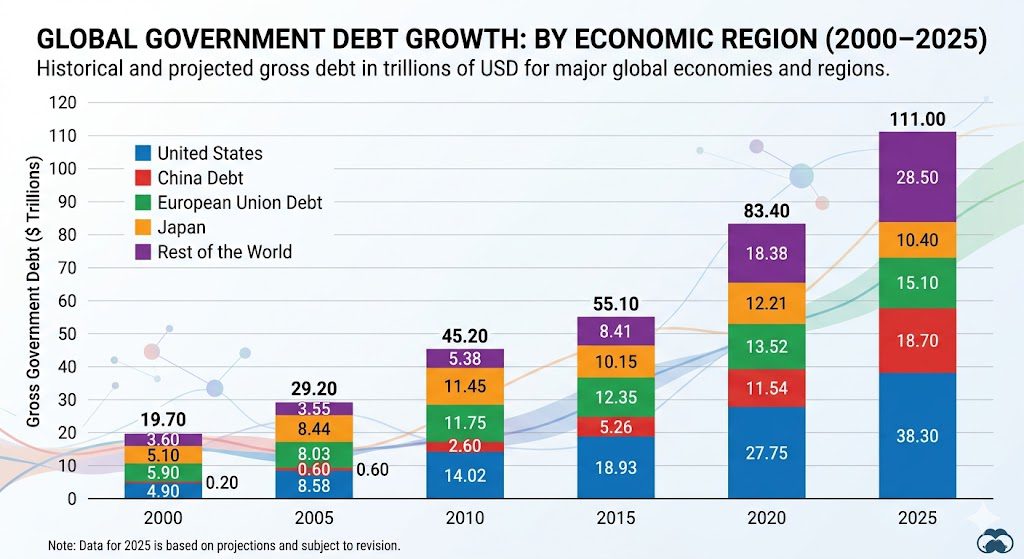
The result is a world where public debt has climbed to record levels. The United States alone now carries more than $36 trillion in federal debt. Japan’s debt exceeds two and a half times the size of its entire economy. Several European countries continue to struggle with debt levels above 100 percent of GDP, while many emerging economies face growing pressure from foreign creditors.
What makes the situation unusual is not simply the size of the debt but the speed at which it has accumulated. In many cases, debt has grown much faster than economic output. That imbalance is often where financial problems begin.
Debt Is Not Dangerous Until Interest Rates Rise
For years, governments enjoyed a period of exceptionally low interest rates. Borrowing money was remarkably cheap. Policymakers became accustomed to financing large deficits without facing immediate consequences. As long as interest rates remained low, debt appeared manageable.
That environment has changed dramatically.
In response to the inflation surge that followed the pandemic, central banks around the world raised interest rates at the fastest pace in decades. Suddenly, governments found themselves refinancing old debt at much higher costs.
Imagine a family that has accumulated a large mortgage while interest rates are near zero. Everything seems manageable until rates rise and monthly payments double. The debt itself has not changed, but the cost of carrying it has increased significantly.
Governments face the same reality.
In the United States, annual interest payments on federal debt have crossed the one trillion dollar mark. This means the government is spending more on servicing debt than on many critical national priorities. Every dollar spent on interest is a dollar that cannot be spent on infrastructure, education, healthcare, or scientific research.
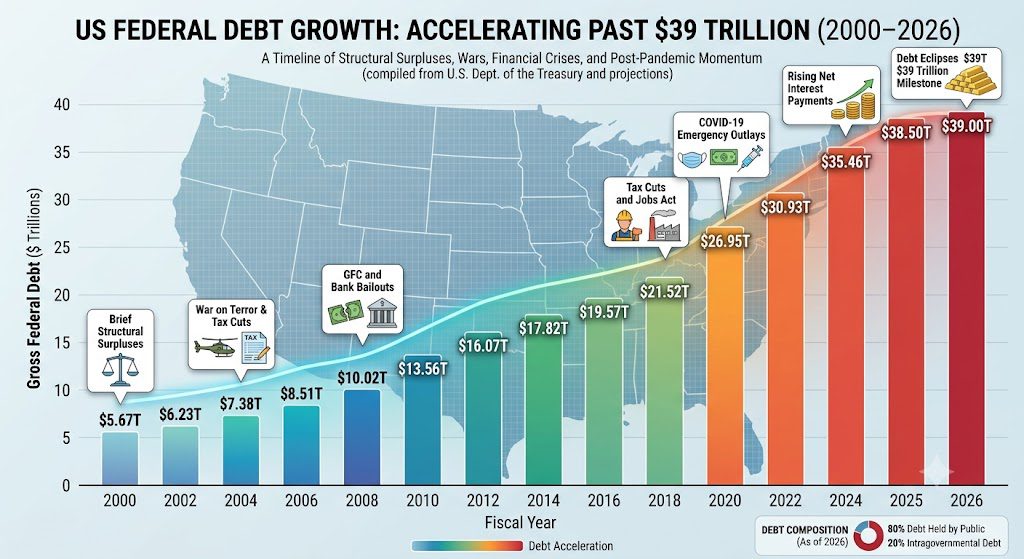
The danger is that rising interest costs create a vicious cycle. Governments borrow more to cover deficits. Higher debt leads to higher interest expenses. Higher interest expenses require additional borrowing. Over time, debt begins to feed on itself.
History Shows That Debt Crises Rarely Arrive Suddenly
One of the biggest misconceptions about financial crises is that they appear without warning. In reality, most debt crises develop slowly over many years before reaching a breaking point.
History provides numerous examples.
During the late Roman Empire, government finances became increasingly strained by military spending and administrative costs. To cope with these pressures, authorities repeatedly debased the currency, reducing the silver content of coins. While this temporarily eased fiscal problems, it gradually undermined confidence in the monetary system and contributed to long-term economic instability.
Centuries later, similar patterns appeared in Latin America. Throughout the 1970s, countries such as Mexico, Brazil, and Argentina borrowed heavily from international lenders. As long as global interest rates remained low, the debt seemed sustainable. However, when U.S. interest rates surged during the early 1980s, borrowing costs exploded. Governments suddenly found themselves unable to meet their obligations, triggering a regional debt crisis that damaged economic growth for years.
Perhaps the most famous modern example is Greece. For years, the Greek government financed spending through borrowing while reporting fiscal numbers that understated the scale of the problem. Once investors began questioning the country’s ability to repay its debts, confidence collapsed. Borrowing costs skyrocketed, forcing Greece into painful austerity measures and international bailout programs.
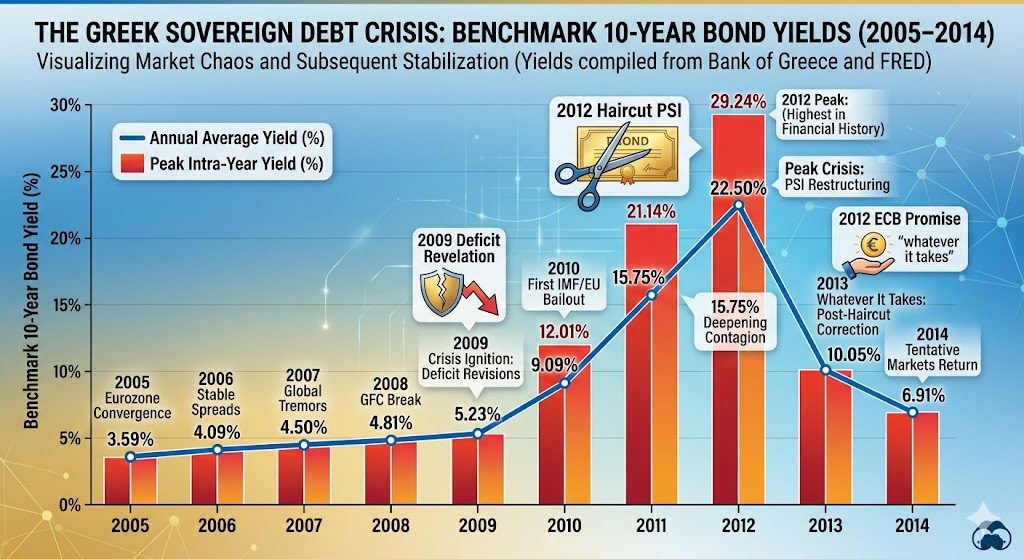
The lesson from these examples is remarkably consistent. Debt problems often appear manageable until investors lose confidence. Once that confidence disappears, events can move much faster than policymakers expect.
Why This Time Could Be Different
What makes today’s situation particularly concerning is that debt is no longer concentrated in a handful of vulnerable countries. Some of the world’s largest and most important economies are carrying historically high debt burdens.
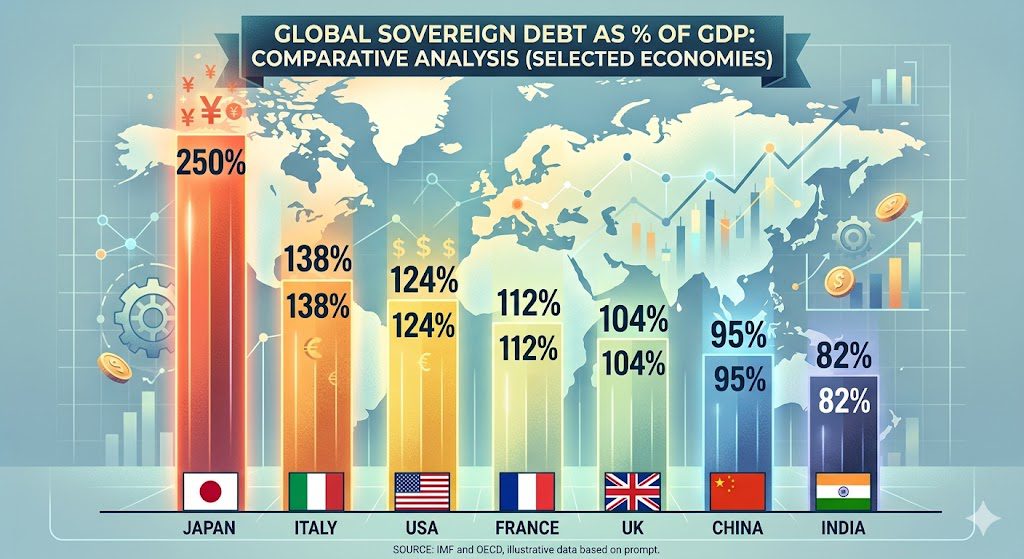
In previous debt crises, financially stronger countries often played a stabilizing role. Wealthier governments or international institutions could step in and provide support. But what happens when many of the largest economies face fiscal pressures at the same time?
This is one reason why economists are paying close attention to current debt trends. If debt problems emerge simultaneously across multiple major economies, the global financial system could face challenges unlike anything experienced in recent decades.
Another factor is demographics. Many developed countries are aging rapidly. Birth rates are declining while life expectancy continues to rise. As a result, governments must spend increasing amounts on pensions, healthcare, and social support programs.
At the same time, the number of working-age taxpayers supporting those systems is growing more slowly or even shrinking.
This creates a difficult equation. Governments face rising spending obligations while the tax base needed to finance them grows at a much slower pace.
The Debt Problem Nobody Wants to Talk About
Politicians rarely campaign on reducing debt. Voters generally prefer lower taxes, better public services, stronger social programs, and increased government investment. The challenge is that these goals often require spending more money.
Borrowing allows governments to postpone difficult choices.
Instead of reducing spending or increasing taxes, policymakers can issue new debt. This approach works for a while, particularly when financial markets remain confident. However, it does not eliminate the underlying problem. It simply transfers the burden into the future.
Eventually, future arrives.
That is why some economists describe debt as a slow-moving crisis. Unlike a stock market crash, debt accumulation does not create dramatic headlines every day. It builds gradually, year after year, until the financial burden becomes impossible to ignore.
Could Government Debt Trigger the Next Global Crisis?
No one can predict exactly when the next major crisis will occur or what event might trigger it. Economic crises rarely follow a script. However, history suggests that heavily indebted systems are more vulnerable to unexpected shocks.
A recession, a geopolitical conflict, a banking crisis, persistent inflation, or a prolonged period of high interest rates could all expose weaknesses that currently remain hidden.
The greater the debt burden, the less room governments have to respond when problems emerge.
This is perhaps the most important concern. Debt does not merely increase financial risk. It reduces flexibility. Governments burdened by massive obligations may find it harder to support their economies during future emergencies.
Conclusion: The Silent Risk Beneath the Global Economy
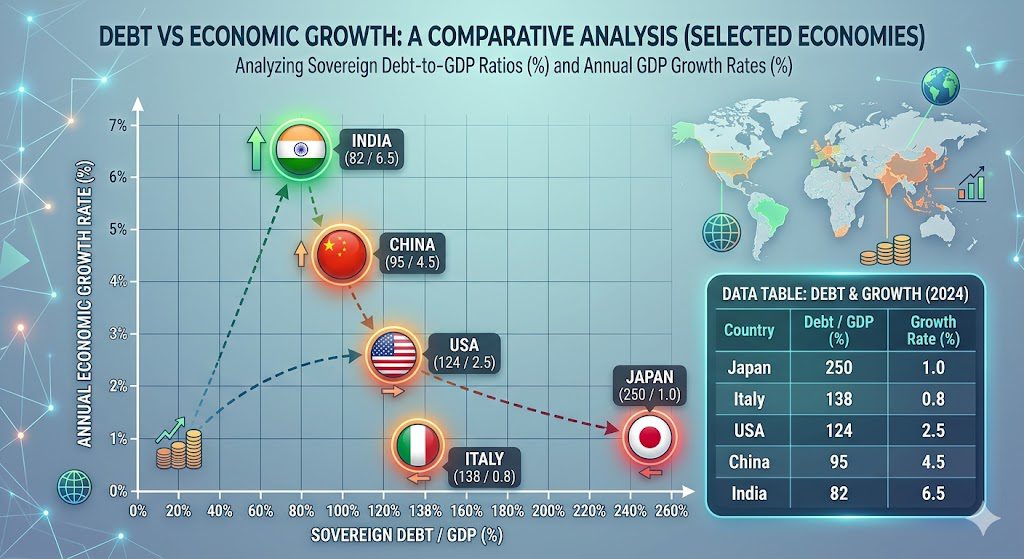
The next global crisis may not begin on a battlefield or inside a stock exchange. It may emerge from government balance sheets that have been deteriorating for years.
Debt itself is not the enemy. Borrowing can support growth, fund innovation, and help societies overcome temporary challenges. The danger arises when debt expands faster than the economy, interest costs consume public resources, and governments become dependent on continuous borrowing simply to maintain normal operations.
For decades, the world benefited from low interest rates, rising globalization, and strong investor confidence. Those conditions allowed governments to accumulate unprecedented amounts of debt with relatively little immediate pain.
The question now is whether that era is coming to an end.
If history teaches us anything, it is that debt crises do not begin when debt reaches a specific number. They begin when confidence disappears. And when confidence is lost, problems that took decades to build can suddenly unfold with remarkable speed.
That is why government debt may be the most underestimated economic risk of the coming decade—and perhaps the foundation of the next global financial crisis.