1. A Historic Start to 2026
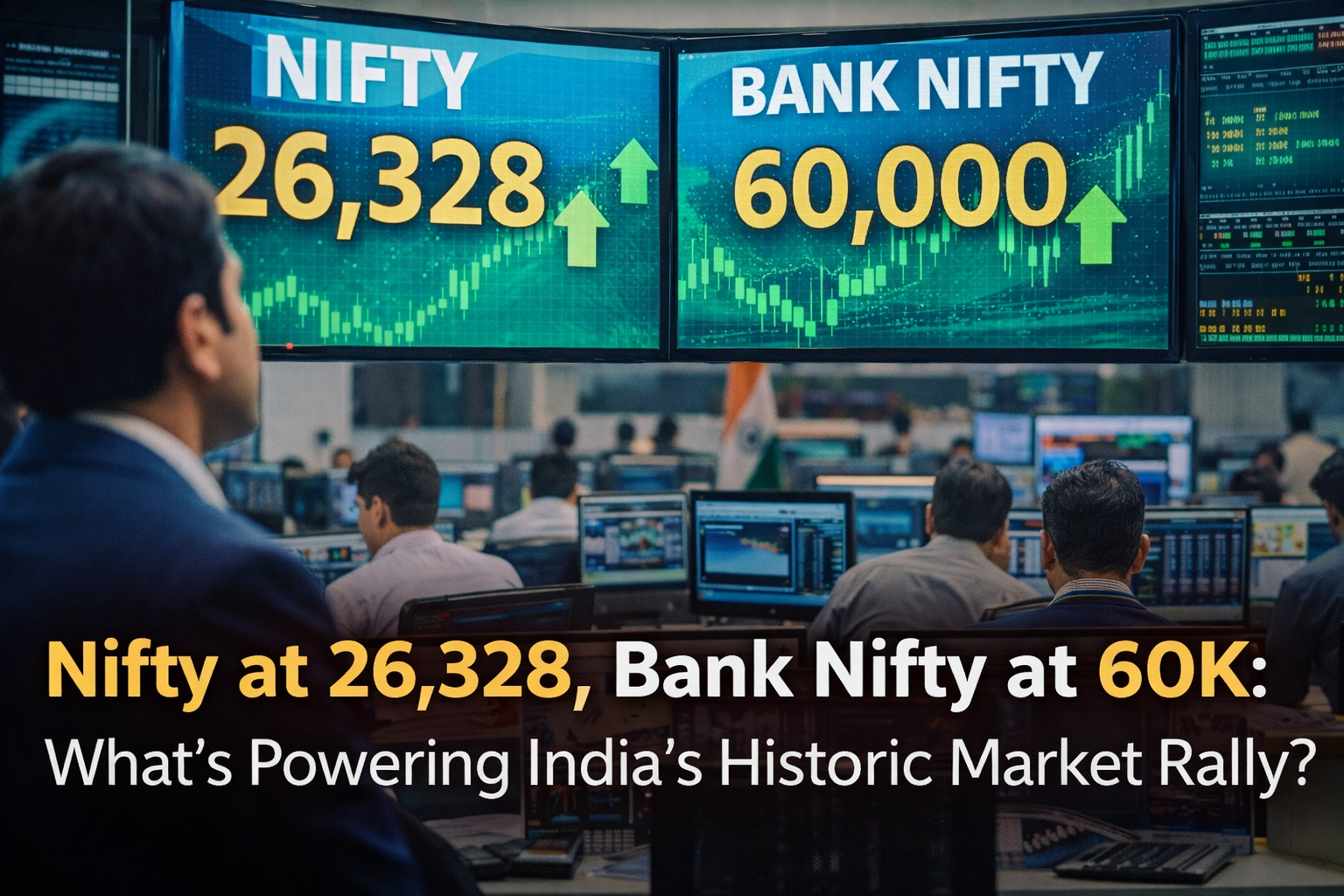
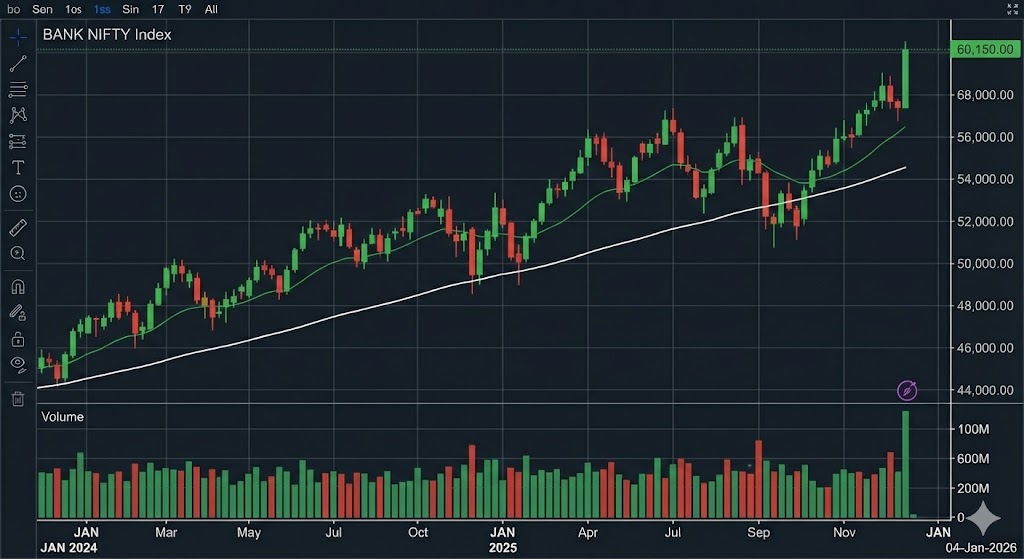
January 2, 2026, will be remembered as one of those rare days when Indian equity markets sent a clear, confident message. The market achieved a historic “Triple Crown”. The Nifty 50 closed at 26,328, the Sensex surged to 85,762, and most importantly, the Bank Nifty crossed the psychological 60,000 mark for the first time ever.
This was not a sudden spike driven by speculation or global hype. Market experts describe this rally as a “credit-cycle rally.” In simple words, the market is responding to real economic activity. Investors are pricing in strong Q3 earnings (October–December 2025), which are expected to be the best in nearly five years. Festive demand during Diwali, Dussehra, and the wedding season boosted consumption across sectors like automobiles, consumer goods, housing loans, and retail credit.
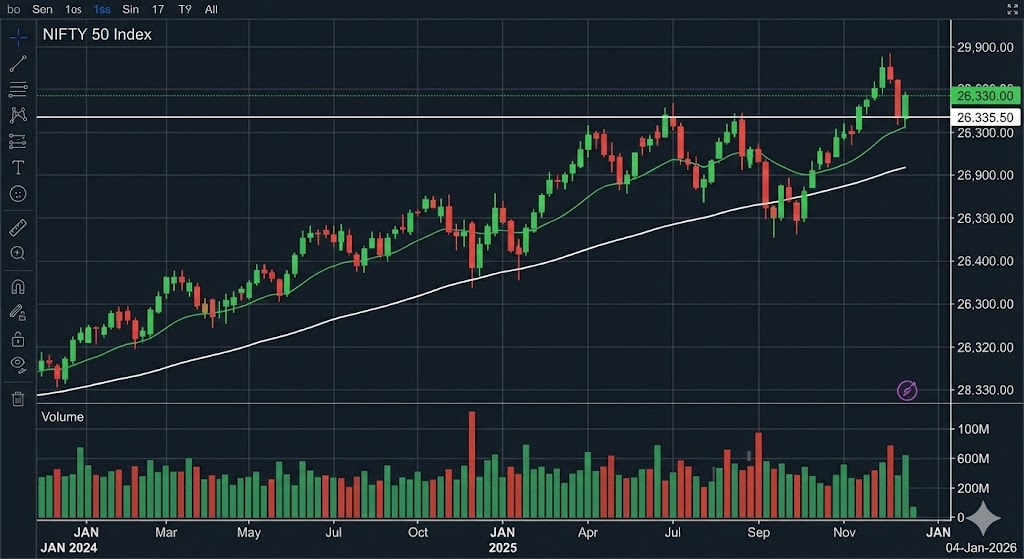
Unlike short-lived rallies of the past, this one is built on earnings visibility, cleaner balance sheets, and strong domestic demand. That is why the rally feels calm, steady, and broad-based rather than overheated.
National Stock Exchange of India (NSE)
2. The Banking Engine: Why 60,000 Matters
The crossing of 60,000 on Bank Nifty is not just a number. It reflects a deep transformation in India’s banking system.
By late 2025, bank credit growth accelerated to around 11.5%–12% year-on-year, compared to just 8–9% two years ago. This growth is coming from housing loans, MSME credit, infrastructure financing, and working capital for small businesses. Credit is flowing where it creates jobs and income.
The most important change is in asset quality. Indian banks are now operating in what analysts call the “clean balance sheet era.” Gross NPAs for the overall banking system are estimated to be below 2.5% in early 2026, the lowest level seen in decades. This gives banks the confidence to lend without fear.
Regulation has also played a quiet but powerful role. The Reserve Bank of India proactively adjusted risk weights in 2025, slowing risky unsecured retail lending and pushing banks toward productive sectors. As a result, MSME credit grew by a strong 24.6%, supporting real economic growth rather than speculation.
3. Sectoral Catalysts: Beyond the Banks
While banks led the rally, other sectors added fuel to the market’s momentum.
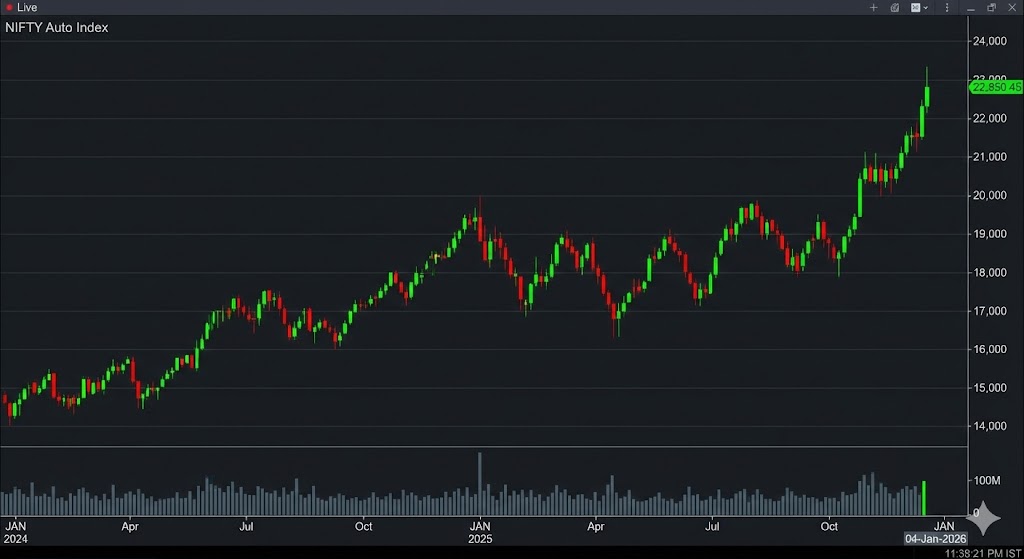
The automobile sector sent a strong signal that the rural economy has fully recovered. December 2025 sales were among the highest ever for Maruti Suzuki and Mahindra & Mahindra. Tractor sales, entry-level cars, and SUVs all saw healthy demand, showing that income growth is spreading beyond cities.
The metal and energy space also surprised many investors. Coal India rose nearly 7% in a single week. The reason was strategic. By opening direct e-auctions to neighboring countries like Bangladesh and Bhutan, Coal India is slowly transforming from a domestic PSU into a regional energy supplier, improving long-term revenue visibility.
In the defence sector, companies such as Apollo Micro Systems announced large order wins. This reflects India’s Atmanirbhar Bharat push, where domestic companies are replacing imports in defence electronics, radar systems, and communication equipment. Defence is no longer a policy slogan—it is now a revenue-generating sector.
4. Geoeconomic Logic: The “India Premium”
One of the most interesting features of this rally is what did not hurt Indian markets. In January 2026, global oil prices became volatile due to political shocks in Venezuela and parts of West Asia. Yet Indian equities remained stable.
The reason is simple. Over the last year, Indian refiners have diversified away from Venezuelan crude, reducing dependency on politically unstable supply sources. This has lowered India’s risk premium in global markets.
Global investors now increasingly view India as a “safe harbor”—a large economy driven by domestic consumption rather than fragile exports. Compared to high-risk regions in South America or Eastern Europe, India offers stability, scale, and policy continuity.
Another major shift is in market flows. Even though US Treasury yields remain high, Domestic Institutional Investors (DIIs) have emerged as the real market makers. Strong SIP inflows, pension money, and insurance funds are absorbing foreign selling whenever it appears. This structural support did not exist a decade ago.
5. Comparative Snapshot: January 2025 vs January 2026
This one-year comparison clearly shows why the rally is being taken seriously.
| Market Indicator | Jan 2025 (Approx) | Jan 2026 (Actual) | Growth |
|---|---|---|---|
| Nifty 50 | 21,800 | 26,328 | +20.7% |
| Nifty Bank | 48,200 | 60,150 | +24.8% |
| Bank Credit Growth | 10.6% | 11.5% | +90 bps |
| USD/INR | 83.10 | 89.92 | -8.2% (₹ depreciation) |
Despite a weaker rupee, equity markets have moved higher because earnings growth has comfortably absorbed currency pressure.
6. The Expert’s Warning: The “Credit–Deposit Gap”
No rally is without risks, and experts are watching one key metric closely—the credit–deposit gap.
While credit is growing at around 12%, deposit growth is lagging at about 9.4%. This creates liquidity tightness for banks. If deposits do not catch up, banks may have to raise interest rates on loans or slow down lending.
Such a scenario would not crash the market, but it could cool the rally in Q2 2026. The next few months will be crucial for banks to mobilize deposits through higher rates or innovative savings products. This is the only visible speed-breaker in an otherwise strong cycle.
7. Conclusion: The Roadmap to Nifty 30,000
The 60,000 Bank Nifty milestone is not just a stock market achievement. It is a vote of confidence in India’s internal consumption story, cleaner banking system, and policy stability.
With the Union Budget 2026 just weeks away, markets are already positioning for a capex-heavy budget focused on infrastructure, manufacturing, defence, and energy transition. If that expectation is met, analysts believe the Nifty could move toward the 28,000–30,000 range by the end of 2026.
The key takeaway is simple. This rally is not built on hope alone. It is built on credit growth, earnings strength, and domestic confidence. As long as those pillars remain intact, India’s equity story still has room to run.
❓ Frequently Asked Questions (FAQ)
1. Why did the Nifty 50 cross 26,000 in January 2026?
The Nifty crossed 26,000 because of strong earnings expectations, rising bank credit growth, and solid domestic consumption. Markets are pricing in one of the best quarterly earnings seasons in five years, driven by festive demand and a recovery in both urban and rural spending.
2. What does Bank Nifty crossing 60,000 mean for the economy?
Bank Nifty at 60,000 signals confidence in India’s banking system. It reflects low non-performing assets, strong credit growth, and improved balance sheets. Banks are lending more to productive sectors like MSMEs and housing, which supports economic growth.
3. Is the current stock market rally a bubble?
Most experts do not see this rally as a bubble. Unlike past speculative rallies, this one is supported by real credit growth, strong earnings visibility, and regulatory discipline by the RBI. Valuations are higher but still backed by fundamentals.
4. How important is credit growth in this market rally?
Credit growth is one of the main drivers of the rally. Bank credit is growing at around 11.5–12% year-on-year, which directly supports consumption, business expansion, and corporate earnings. This is why the rally is called a “credit-cycle rally.”
5. What role has the RBI played in this rally?
The Reserve Bank of India helped prevent excess risk by tightening rules on unsecured retail lending while encouraging lending to MSMEs and industry. This ensured that growth remained healthy and avoided a credit bubble.
6. Why are domestic investors more important than foreign investors now?
Domestic Institutional Investors (DIIs) have become the main stabilisers of the market. Regular SIP inflows, pension funds, and insurance money are absorbing foreign selling, reducing volatility and making the market more resilient to global shocks.
7. How has rural demand affected the stock market?
Strong sales of cars, tractors, and two-wheelers show that rural incomes have improved. This recovery has boosted auto stocks, banks, and consumer companies, contributing significantly to the overall market rally.
8. Does a weak rupee hurt Indian stock markets?
A weaker rupee can increase import costs, but it does not always hurt stock markets. In 2026, earnings growth and domestic demand have been strong enough to offset currency weakness, keeping equities attractive.
9. What is the biggest risk to this rally going forward?
The main risk is the credit–deposit gap. While loans are growing at about 12%, deposits are growing slower at around 9–9.5%. If this gap widens, banks may slow lending or raise interest rates, which could cool the market.
10. Can the Nifty reach 30,000 by the end of 2026?
Many analysts believe Nifty can move toward 28,000–30,000 if earnings growth continues and the Union Budget 2026 focuses on capital expenditure. However, short-term corrections are normal in a long-term uptrend.
11. Should retail investors enter the market at these levels?
Retail investors are advised to focus on long-term investing rather than short-term timing. Systematic Investment Plans (SIPs) and diversified portfolios help reduce risk during market highs.
12. What sectors look strong in 2026?
Banking, automobiles, defence, infrastructure, and select PSUs are showing strong momentum. These sectors benefit directly from credit growth, government spending, and domestic demand.
🔍 People Also Ask
Why did Bank Nifty cross 60,000 in 2026?
Bank Nifty crossed 60,000 due to strong credit growth, low NPAs, and improved profitability of banks. Clean balance sheets and rising lending to housing, MSMEs, and infrastructure boosted investor confidence.
Is the Indian stock market overvalued in 2026?
Valuations are higher than historical averages, but they are supported by earnings growth and economic recovery. Experts believe the market is expensive but not in a bubble because fundamentals remain strong.
What is a credit-cycle rally in stock markets?
A credit-cycle rally happens when banks increase lending, leading to higher consumption, business expansion, and corporate profits. Stock markets rise because earnings growth becomes visible across sectors.
How do RBI policies affect Bank Nifty?
RBI policies influence interest rates, liquidity, and lending behaviour. By controlling risky loans and supporting productive credit, RBI policies have strengthened bank balance sheets and supported sustainable growth.
Why are domestic investors dominating Indian markets now?
Domestic Institutional Investors (DIIs) have become dominant due to steady SIP inflows, pension funds, and insurance investments. This has reduced dependence on foreign investors and lowered market volatility.
How does rural demand impact Nifty and Sensex?
Rural demand boosts sales of automobiles, FMCG products, and housing loans. Strong rural recovery improves earnings for many companies, which supports broader market indices like Nifty and Sensex.
What is the credit–deposit gap and why does it matter?
The credit–deposit gap is the difference between loan growth and deposit growth. If loans grow faster than deposits, banks may face liquidity pressure, which can slow lending and affect market momentum.
Will rising interest rates slow India’s market rally?
Moderate rate increases may cool the rally but are unlikely to reverse it. Strong earnings growth and domestic demand can absorb higher rates unless tightening becomes aggressive.
Which sectors are leading India’s market rally in 2026?
Banking, automobiles, defence, infrastructure, and select PSU stocks are leading the rally due to strong demand, government spending, and credit expansion.
Can Nifty reach 30,000 by the end of 2026?
Many analysts believe Nifty could approach 28,000–30,000 if earnings growth continues and government capital spending remains strong. Short-term corrections, however, are part of any long-term trend.