

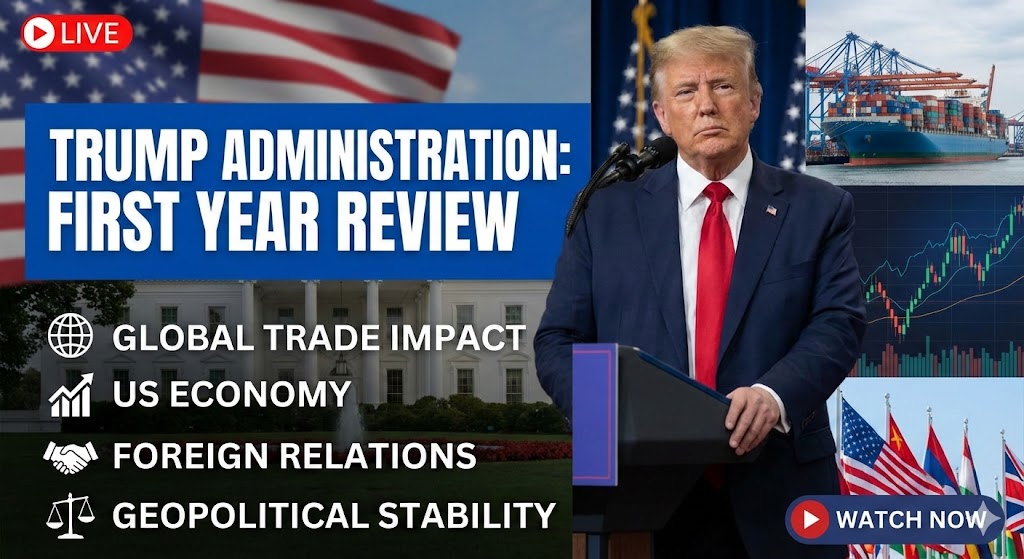
Trump Administration’s First Year: A Global and Domestic Review of Its Impact
As the Trump administration completes its first year back in office, both Americans and the world are closely evaluating how Trump’s return has shaped the economy, global trade, foreign policy and relations with key partners. His second-term agenda has been more assertive, more unpredictable and far more polarising than his first term. From steep tariffs to shifting diplomatic positions, Trump’s decisions have influenced everyday life in the United States and reshaped global geopolitical equations.
This article reviews the major developments of the last 12 months — including trade policies, crypto regulations, foreign relations, and Trump’s approach to long-standing conflicts — all explained in clear, simple, human language.
A Year of Tariffs: Who Gains and Who Loses Under Trump’s Trade Policy?
One of the most defining features of Trump’s second term has been the aggressive expansion of tariffs. The administration argues that tariffs are meant to protect American jobs, bring manufacturing back home and create leverage in global negotiations.
However, economists and trade analysts note that the picture is more complicated. While some industries do benefit from tariff protection, such as domestic steel, chemicals and certain manufacturing segments, many other sectors face higher costs because imported components become more expensive.
For American consumers, tariffs often translate into:
Higher prices on everyday goods
Increased costs for companies who rely on imported materials
Slower investment in industries dependent on global supply chains
For global trade, Trump’s tariff policies have triggered retaliation from several countries. This has led to disruptions in agricultural exports, technology supply chains, and cross-border trade partnerships.
In short, the tariff strategy creates winners and losers — but its long-term effect on growth remains debated.
How Tariffs Affected Global Trade and American Businesses
Trump’s tariff expansion did not just impact the United States — it affected the entire global economy. Countries like China, India, South Korea and many in the EU responded with counter-tariffs, making it difficult for many American exporters to compete internationally.
Global analysts point out several challenges:
Imported goods became costlier in the US.
Export markets for US farmers and manufacturers shrank.
Supply-chain pressure increased inflation in certain sectors.
Global uncertainty slowed business investment worldwide.
While the administration promotes tariffs as a path to “economic strength,” many experts believe that long-term trade stability requires cooperation, not constant tariff battles.
Trump and Cryptocurrency: Policy Shifts and Political Influence
One of the most surprising developments of Trump’s second term has been the administration’s shift toward supporting the cryptocurrency sector. The government has shown interest in encouraging domestic blockchain innovation, fintech investment and digital-asset development.
However, this policy direction has also sparked debate. Critics argue that the administration’s friendliness toward the crypto industry overlaps with political support from crypto donors, while supporters believe Trump is modernising America’s financial system to compete with countries like China and the EU.
Key points from Trump’s crypto stance include:
A push for clearer regulations for digital assets
Encouragement of blockchain innovation in finance and security
A goal to position the US as a leader in emerging fintech technology
While this has brought excitement to crypto investors, traditional banks and regulators remain cautious about stability and consumer protection.
The India–Russia–US Triangle: A Challenging Year for Diplomacy
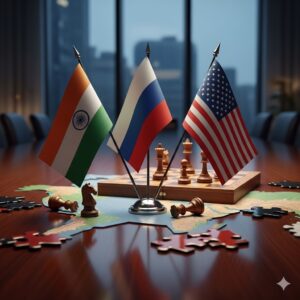
For more than two decades, American governments attempted to balance strategic ties with India while acknowledging India’s long-standing defence and energy relationship with Russia. Trump’s second-term policies have added new pressure to this delicate triangle.
India continues to purchase Russian energy, defence equipment and raw materials, which has created friction with Washington’s approach toward Moscow. Tariffs and trade restrictions introduced by the Trump administration have affected Indian exports and complicated bilateral understanding.
Diplomats note that while India–US defence cooperation remains strong, the tone of communication has become more tense, especially regarding Russia-related trade. Analysts believe both countries will need patient diplomacy to rebuild momentum in 2026.
The Russian Oil Debate: A Source of Domestic and International Confusion

A major talking point this year has been Trump’s strong public messaging on countries that purchase oil from Russia. The administration frequently urges allies to reduce their dependence on Russian energy.
However, critics argue that the messaging is sometimes inconsistent, as certain sectors and companies continue dealing with Russian-linked suppliers under regulated or exempted channels. This has led to confusion among allies and domestic observers about what constitutes acceptable trade under US policy.
Experts say this debate highlights a larger issue: global energy markets are interconnected, and achieving complete separation is more difficult than political speeches often suggest.
Trump’s Approach to “Peace Deals”: Diplomatic Success or Political Branding?
Throughout his first year back in office, Trump has promoted several initiatives as “peace deals” across regions experiencing long-standing tensions. These include references to:
India–Pakistan tensions
Iran–Israel hostilities
Thailand–Cambodia border disputes
Israel–Palestine conflicts
However, diplomatic analysts caution that many of these conflicts involve deep historical, cultural and political roots. Any pause, ceasefire or negotiation typically results from multiple parties, not solely Washington.
While the Trump administration has taken part in discussions, facilitated talks or encouraged communication, experts emphasise that these situations remain ongoing and require sustained international cooperation.
State Funeral of Graham Richardson: Australia Farewells a Labor Powerbroker and Political Kingmaker click here
Concerns Among US Allies: Taiwan and Japan Seek Clarity
Among America’s closest allies in the Indo-Pacific, Taiwan and Japan, Trump’s first year back in office has created both confidence and uncertainty.
Taiwan values Washington’s continued support, particularly regarding defence discussions and security cooperation. However, Taiwan analysts often express the need for consistent, long-term commitments, especially as regional tensions remain high.
Japan, another key ally, is adjusting to shifting US priorities. While cooperation remains strong in security and trade, policy experts note that Japan seeks clear communication and dependable diplomatic support amid rising competition with China.
Allies are watching closely to see if the United States will continue offering predictable, stable leadership in the region — or if America’s approach will remain transactional.
To visit official website of White House click here
Domestic Concerns: Is “Make America Great Again” Losing Its Original Meaning?
Trump’s famous slogan, “Make America Great Again,” resonates strongly with his supporters. They believe the administration is prioritising American jobs, strategic independence and global strength.
However, critics argue that some policy decisions appear more aligned with short-term political gains or selective economic interests rather than long-term national goals. Debates around tariff impacts, crypto influence, diplomatic strains and mixed foreign-policy messaging have raised questions about whether the original spirit of the slogan is being fulfilled.
What remains clear is that Trump’s political style continues to command intense attention — both supportive and critical — across the country.
A Complex First Year: What Comes Next?
Trump’s first year of his second term has been dynamic, controversial and globally impactful. The administration’s decisions have reshaped trade flows, influenced international partnerships, and sparked debates about technology, security and foreign policy.
As the administration enters its second year, Americans and the world will be watching closely to see whether:
Tariffs will remain as high
Crypto policy will expand
Relations with India, Europe, Japan and Taiwan stabilise
Global conflicts see meaningful diplomatic progress
The US economy manages inflation and trade disruption successfully
One thing is certain: Trump’s leadership continues to redefine America’s role on the world stage — creating new alliances, new tensions and new debates that will shape 2026 and beyond.
One thought on “Trump Administration’s First Year Review: Impact on Global Trade, US Economy, Foreign Relations and Geopolitical Stability”