1. Renewed Israeli Strikes in Gaza Despite Ceasefire Talks
The biggest international headline on 21 November 2025 was the resurgence of Israeli airstrikes in Gaza despite ongoing ceasefire mediation efforts by the United States and regional partners. Israel justified the strikes as responses to ceasefire violations, but humanitarian groups reported rising civilian casualties, highlighting the fragility of temporary truces. This news is crucial for UPSC aspirants because the Gaza conflict directly connects to questions on West Asian geopolitics, UN resolutions, humanitarian law, and the role of major powers in conflict mediation. The incident also adds complexity to regional diplomacy, including Arab states’ positions and global calls for de-escalation.
2. Humanitarian Crisis Deepens in Gaza Strip
Alongside renewed hostilities, international agencies reported worsening living conditions inside Gaza. Damaged infrastructure, limited medical supplies, overcrowded shelters, and lack of electricity have made daily survival difficult for displaced populations. Humanitarian corridors remain inconsistent due to continuing security concerns, delaying the delivery of critical relief. This news is important for civil-services preparation because it ties to international humanitarian law, disaster relief protocols, and the role of agencies such as the UNRWA and WHO. Understanding how humanitarian crises evolve and how countries respond forms an important part of international relations and disaster management studies.
3. Israel Claims Killing Senior Hamas Commanders
Israel announced that its targeted operations successfully eliminated several senior Hamas commanders responsible for overseeing intelligence, tunnel networks, and naval operations. This development has both tactical and strategic implications. While Israel considers these actions necessary for national security, analysts warn that targeted killings may escalate tensions and prolong cycles of retaliation. For UPSC aspirants, this incident is significant as it raises debates on counterterrorism strategies, peace negotiations, and the political cost of military action. It also ties into discussions on asymmetric warfare and regional security architecture in the Middle East.
4. Major Diplomatic Shift: U.S. Envoy on Ukraine to Step Down
Another major development was the announcement that the newly appointed U.S. envoy on Ukraine would step down early next year, signaling a possible shift in Washington’s diplomatic strategy. The Ukraine war continues to reshape European security dynamics, NATO policies, and global energy markets. A change in America’s diplomatic team could influence ceasefire proposals, military aid decisions, and peace negotiations. For civil-services aspirants, this is a critical development because the Russia–Ukraine conflict remains one of the most important global issues since 2022. Understanding diplomatic transitions helps in analyzing state behaviour, negotiations, and global alliances.
5. G20 Summit in Johannesburg Begins Amid Global Tensions
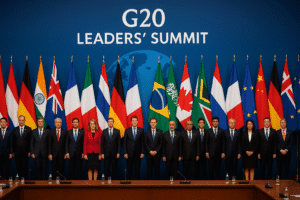
World leaders began arriving in Johannesburg for the 2025 G20 Summit, where discussions on global economic recovery, energy security, climate finance, and conflict resolution dominated the agenda. The G20 remains the most influential global economic forum, representing 85% of global GDP. This year’s meeting is particularly important given rising geopolitical tensions. For UPSC preparation, the G20 is a recurring topic, and understanding its structure, agenda, and outcomes is crucial for international relations (IR) and economy-related questions.
6. Fire at COP30 Venue Poses Challenges for Climate Diplomacy
A fire reported at the main venue for COP30 disrupted logistical preparations for the important climate summit. While no major casualties were reported, the incident raised concerns about readiness, infrastructure safety, and continuity of climate negotiations. COP conferences drive global climate agreements, including commitments to carbon neutrality, climate finance, and renewable energy transitions. UPSC candidates should track such developments as they tie directly to environmental governance, global climate agreements, and India’s climate policies.
7. Russia Tightens Foreign Agent Laws with New Tax Measures
Russia’s parliament advanced new laws imposing higher taxes and stricter regulations on organisations labelled as “foreign agents.” This move attracted global criticism for limiting civil society and suppressing dissent. For civil-services preparation, this topic is linked to governance models, human rights debates, and the geopolitics of sanctions. Understanding Russia’s domestic political environment helps in answering questions related to authoritarianism, political freedoms, and international responses to rights violations.
8. Venezuelan Opposition Leaders Face Restrictions
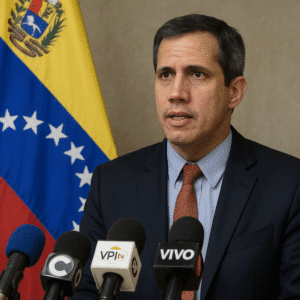
Venezuelan opposition figures continue to face legal and travel restrictions imposed by the government, further complicating the country’s political crisis. Some leaders risk arrest warrants and are blocked from international engagements. This news is important for aspirants as it highlights themes such as democratic backsliding, authoritarianism, and Latin American political instability. It also brings focus to international institutions like the Organization of American States (OAS).
9. U.S. President’s Media Confrontation Sparks Debate
A tense exchange between the U.S. President and a group of journalists made international headlines, triggering debates on press freedom and political accountability. For civil-services exams, this topic helps explore the role of media in democracies, freedom of speech debates, and how domestic political norms influence a country’s soft power. Understanding U.S. political behaviour is essential for analyzing trends in global governance and diplomacy.
10. European Energy Policy Recalibrates Amid Russia–Ukraine War
European nations continue to adjust energy strategies amid ongoing tensions with Russia. Efforts to diversify energy imports, invest in renewable sources, and reform gas storage policies are key developments shaping the global energy market. This news is vital for UPSC because it integrates economic policy, energy security, and international politics. It also influences global inflation and commodity pricing.
11. Africa Faces Security Challenges and Election-Related Tensions
Multiple African nations are witnessing heightened political activity, including elections and regional tensions triggered by insurgencies. Issues such as ethnic conflict, resource competition, and political instability continue to test regional bodies like the African Union and ECOWAS. For UPSC aspirants, Africa remains an important region due to India’s development partnerships, peacekeeping contributions, and diplomatic ties.
12. China’s Economic Policy Signals Affect Global Markets
China issued new policy guidelines aimed at stabilizing its real estate sector and boosting manufacturing exports. These reforms influence global trade flows, commodity prices, and financial markets. For civil-services students, China’s economic decisions are important because the country plays a key role in the global value chain, and its policy shifts impact India’s trade balance and strategic planning.
13. South Asia Witnesses Renewed Cross-Border Water and Security Tensions
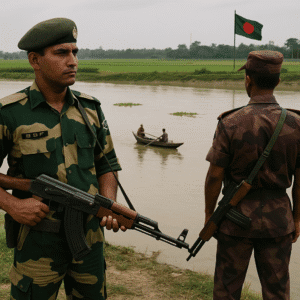
South Asian countries continue to face tensions related to water-sharing agreements and border security. Disputes related to river flows, new hydropower projects, and flooding concerns are becoming diplomatically sensitive issues. UPSC aspirants must understand water treaties, international river law, and the concept of hydro-politics. These issues frequently appear in GS Paper 2 and Essay topics.
14. Indo-Pacific Navies Conduct High-Level Maritime Drills
Nations in the Indo-Pacific conducted joint naval exercises to strengthen maritime cooperation, ensure open sea lanes, and counter growing strategic competition. These drills are central to global power realignments and are directly relevant for UPSC aspirants due to India’s active role in QUAD, IORA, and other maritime partnerships. Maritime security is a recurring IR topic.
15. Global Migration Crisis Intensifies Due to Conflict and Climate Change
International organisations reported rising migration flows across Africa, Europe, and the Americas due to war, economic instability, and extreme weather events. For civil-services preparation, migration is a key topic connecting international law, humanitarian issues, and geopolitics. UPSC essays frequently feature themes like forced migration, climate refugees, and global governance.
16. Infectious Disease Alerts Highlight Need for Global Preparedness
Several countries issued alerts on emerging infectious diseases, reminding policymakers of the importance of surveillance systems and global health coordination. Post-pandemic preparedness, vaccine distribution, and global health funding are major themes relevant for UPSC. Understanding WHO frameworks and International Health Regulations is essential for GS Paper 2 and 3.
17. Global Financial Markets Respond to Central Bank Policies
Central banks across major economies released new policy guidance affecting inflation, interest rates, and currency stability. These decisions have spillover effects on emerging markets like India. For civil-services aspirants, monetary policy coordination, exchange-rate movements, and global capital flows are crucial economic topics.
18. AI Governance and International Data Regulations Tighten
Countries discussed new frameworks for regulating artificial intelligence, digital privacy, surveillance technology, and cross-border data flows. The growing digital economy makes this news vital for UPSC, especially in areas related to cybersecurity, emerging technologies, and global digital governance.
19. Trade Disputes Continue in Semiconductors and Critical Minerals
Nations continue to impose restrictions or tariffs on semiconductor equipment, rare earth minerals, and clean-energy technologies. These trade tensions are central to global supply-chain restructuring. Aspirants should understand how economic nationalism, technology security, and strategic autonomy shape global trade policies.
20. Global Demand for Multilateral Reforms Grows Stronger
Small and developing countries demanded reforms in the UN, IMF, WTO, and other multilateral bodies. Their calls focus on fair representation, climate finance, and global decision-making equity. This issue is highly relevant for civil-services preparation, especially for topics related to global governance, international institutions, and India’s role in multilateral diplomacy.
Conclusion
The international news of 21 November 2025 reflects a world in transition — marked by geopolitical competition, humanitarian crises, technological advancements, and demands for global reforms. For UPSC aspirants, staying updated with these developments helps in mastering international relations, current affairs, GS papers, and Essay topics.