https://www.effectivegatecpm.com/w2vputgg?key=5f29b3a06ae6431953d6cf3379d6ce0a
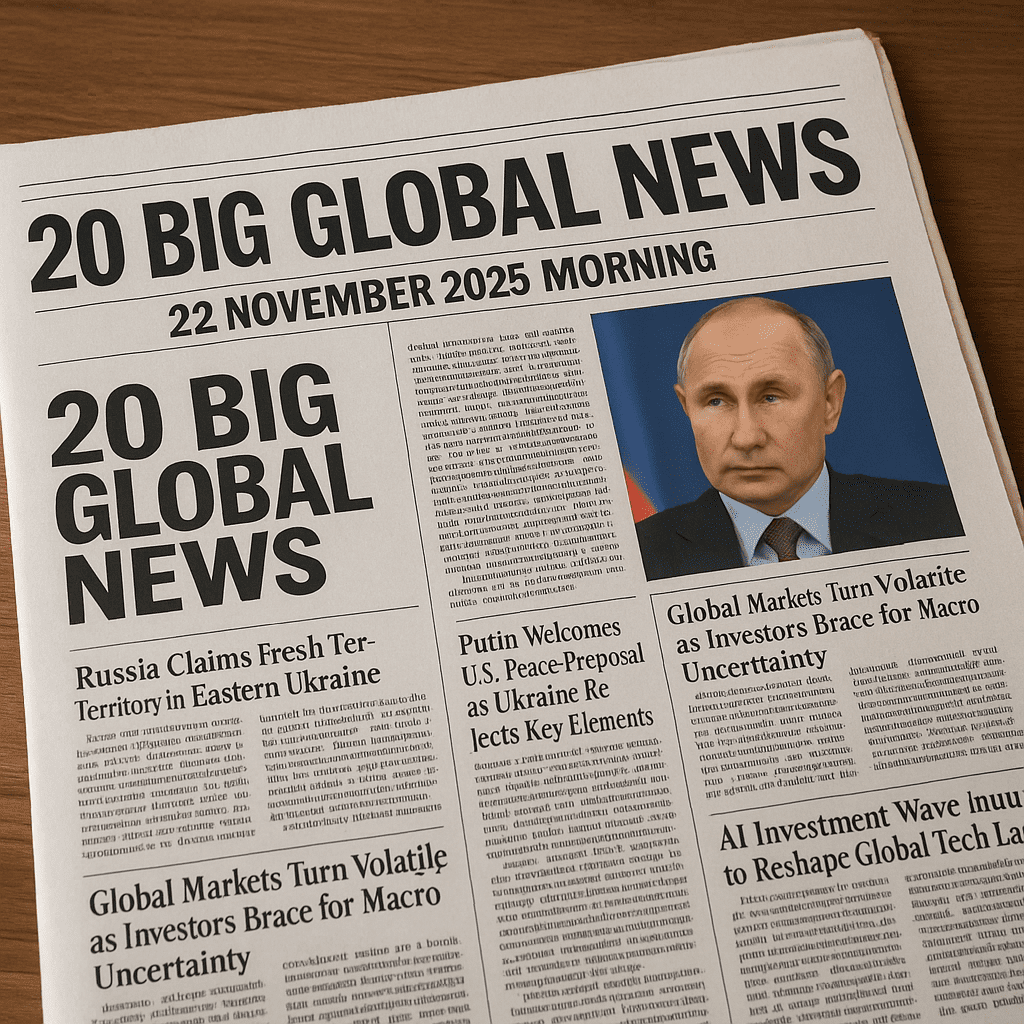
1. Russia Claims Fresh Territorial Gains in Eastern Ukraine
The morning of 22 November 2025 began with escalating claims from Russia that its forces had taken new territory in eastern Ukraine. Moscow reported capturing multiple villages and advancing closer to key logistical routes in the Donetsk region. Ukraine, however, denied several of these claims, insisting that defensive lines remained largely intact. The fog of war remains thick as neither side is willing to offer verifiable on-ground access to neutral observers. For global markets, this situation fuels geopolitical uncertainty, impacting oil, defence stocks, and foreign-exchange volatility. Investors are increasingly pricing in risks of prolonged conflict and extended supply-chain disruptions, especially for energy and agricultural commodities.
2. Putin Welcomes U.S. Peace Proposal as Ukraine Rejects Key Elements
Diplomatic circles were energized as reports confirmed that Vladimir Putin expressed openness toward a 28-point U.S. peace proposal — but Ukraine strongly pushed back, calling several clauses “strategically unacceptable.” The proposal reportedly includes ceasefire mechanisms, demilitarized zones, and conditions for internationally monitored withdrawals. Kyiv’s resistance stems from concerns that agreeing too soon could solidify Russian territorial control. Global powers from Europe to Asia are now studying the proposal, fearing that stalled diplomacy may worsen battlefield escalations. The coming weeks will test whether diplomatic momentum can survive disagreement or whether the conflict drifts back into intensive combat phases.
3. Global Markets Turn Volatile as Investors Brace for Macro Uncertainty
https://www.effectivegatecpm.com/w2vputgg?key=5f29b3a06ae6431953d6cf3379d6ce0a
Global stock futures dipped early in the day as investors reacted to geopolitical risk, mixed corporate earnings, and concerns of slowing global demand. European markets opened on a softer note while Asian indices showed choppy movement driven by tech and energy sectors. Traders pointed to a temporary risk-off environment as bond yields adjusted and currency markets reflected heightened uncertainty. This volatility mirrors investor anxiety over interest-rate expectations, inflation pathways, and how strongly the U.S. and EU economies will grow in 2026. For businesses globally, such volatility often delays capital expenditure decisions and widens bid-ask spreads in key commodity markets.
4. AI Investment Wave Continues to Reshape Global Tech Landscape
The global AI revolution continued to dominate headlines, with several major firms announcing new funding rounds, data-centre expansions, and partnerships for generative AI deployment. Artificial intelligence is now seen not just as a technology trend but as a structural transformation across industries from healthcare to finance. However, this rapid expansion has raised concerns about concentration of power among a few tech giants and the potential for regulatory backlash in multiple jurisdictions. Analysts warn that while AI investment promises high returns, it also risks creating bubbles around semiconductor and cloud-infra stocks. Still, enterprise demand for automation ensures strong long-term prospects for AI players.
5. ECB Highlights Structural Reforms Essential for Europe’s Future Competitiveness
The European Central Bank used its latest policy communications to emphasize the need for structural reforms to boost the bloc’s long-term competitiveness. Top officials highlighted supply-chain resilience, domestic industrial capability, and digital infrastructure as core areas requiring urgent investment. This message carries weight as Europe navigates slower growth amid demographic challenges and global geopolitical pressures. For investors, this signals upcoming policy changes that may create opportunities in renewable energy, advanced manufacturing, and cybersecurity sectors. The ECB’s renewed push also hints at the need for greater coordination between monetary policy, fiscal spending, and industrial strategy.
6. U.S. Job Data Looms Large Over Global Economic Narrative
U.S. macroeconomic data continued to dominate global financial discussions as traders awaited new employment and factory-order results expected later in the week. Any sign of cooling in the labor market could push the Federal Reserve closer to interest-rate cuts, while stronger numbers may delay easing cycles. These outcomes hold global consequences: emerging markets often see capital outflows when U.S. yields rise, while multinational corporations must adjust pricing and production plans based on currency fluctuations. Investors worldwide are watching closely, knowing that U.S. economic health still serves as the backbone of global demand and liquidity.
7. Middle East Tensions Spark Concern Over Oil and Shipping Routes
Fresh reports of cross-border strikes and retaliatory shelling in the Middle East raised alarms across diplomatic and business circles. Energy analysts cautioned that any escalation could affect global oil supplies and shipping lanes, especially those near chokepoints essential for crude and LNG transport. As oil markets remain sensitive to supply interruptions, even minor conflicts can produce outsized price impacts. Global insurers are also monitoring rising risks, as conflict-prone zones often lead to higher premiums for cargo, vessels, and freight operations. With winter approaching in the Northern Hemisphere, energy security remains a top priority for governments and corporations.
8. Brazil Secures Breakthrough in Tariff Dispute, Boosting Investor Confidence
Brazil’s government marked a diplomatic win by finalizing concessions in an international tariff negotiation that had long hampered its export potential. The agreement brings relief to agricultural exporters, manufacturing firms, and supply-chain operators who depend on predictable tariff environments. Investors responded positively, as Brazil is a major player in global commodities such as soy, beef, and metals. Improved trade stability may also accelerate foreign direct investment and add momentum to the country’s ongoing industrial-policy reforms. This breakthrough is likely to strengthen Brazil’s negotiating power in future regional trade talks.
9. South Asia Responds to Earthquake Reports With Emergency Measures
Authorities across parts of South Asia activated disaster-response units following reports of seismic activity in multiple regions. Early assessments indicated localized structural damage, prompting rapid mobilization of relief teams. Global humanitarian organizations began offering assistance, recognizing that densely populated urban areas can face significant vulnerability during earthquakes. Business continuity plans were activated by companies with operations in the region, especially those in manufacturing and logistics. These events highlight the increasing importance of resilient infrastructure as climate-related and geological risks rise worldwide.
10. Global Tech Giants Brace for New Antitrust and Data-Governance Policies
Regulators in the EU, U.S., and Asia intensified scrutiny of major technology firms as new proposals surfaced targeting market monopolization, data privacy, and AI governance. These regulatory frameworks could reshape how large platforms operate, particularly regarding user tracking, product bundling, and cross-border data transfers. Investors are increasingly incorporating regulatory risk into valuations of top tech companies. Meanwhile, smaller tech innovators see new opportunities if large firms are forced to open platforms or divest assets. The global tech regulatory landscape is evolving in real-time, with far-reaching implications for competition and innovation.
11. Reports of Foreign Fighters in Ukraine Increase Geopolitical Complexity
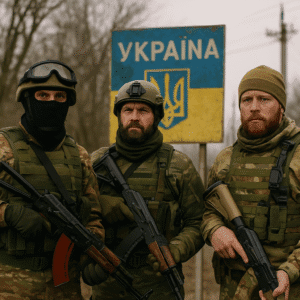
News agencies reported renewed concerns about foreign combatants participating in the Ukraine conflict, adding another dimension to an already complicated battlefield. The presence of non-state actors and foreign volunteers complicates ceasefire negotiations, battlefield monitoring, and humanitarian operations. International observers warn that such dynamics heighten the risk of conflict spillover into neighboring regions. This factor also influences how global powers weigh their diplomatic strategies, fearing unintended consequences if conflict actors are not clearly defined or controlled. As winter approaches, humanitarian organizations must navigate even more challenging conditions.
12. Sector Rotation Evident Across Global Stock Markets
Investment patterns reveal a clear sector rotation as capital moves away from cyclical industries and into structural themes such as AI, digital infrastructure, and renewable energy. Commodity stocks faced pressure due to slowing demand indicators, while semiconductor and cloud-infrastructure players attracted renewed investor interest. This rotation reflects broader uncertainty about global economic recovery timelines. For investors, the challenge lies in distinguishing between short-term momentum and long-term value creation as companies realign their business models to match technology and sustainability trends.
13. North American Political Developments Influence Market Sentiment
Political developments in the United States and Canada, including legal cases, policy debates, and upcoming fiscal decisions, influenced investor confidence on 22 November. Markets tend to react quickly to major political headlines — especially those involving financial regulation, labor laws, or large corporate investigations. With elections approaching in multiple countries over the next year, the global financial system is bracing for policy volatility. Businesses are preparing contingency plans as legislative and regulatory environments grow less predictable.
14. China-Japan Standoff Over Taiwan Raises Strategic Concerns
Tensions escalated in the Asia-Pacific region as China and Japan issued strong statements on military maneuvers around Taiwan. Strategists warn that increased naval patrols and aerial incursions raise the probability of miscalculations that could disrupt global trade routes. As Taiwan remains the world’s largest semiconductor hub, any instability has immediate consequences for tech manufacturing, automotive supply chains, and consumer-electronics markets. Governments worldwide are quietly updating contingency plans to mitigate the fallout from potential conflict escalations in the Taiwan Strait.
15. Global Currency Markets React to Geopolitical and Policy Shifts
Currency markets saw sharp movements as investors rebalanced portfolios amid geopolitical uncertainty and shifting expectations of global interest rate changes. Safe-haven currencies strengthened, while emerging-market currencies faced renewed pressure. Import-dependent countries, particularly in Asia and Africa, may experience rising inflation as weaker currencies make energy and raw materials more expensive. For multinational firms, currency hedging becomes even more critical, especially for companies with large supply chains or dollar-denominated debt.
16. Humanitarian Agencies Warn of Funding Shortages Amid Winter Crisis
International relief organizations issued strong warnings about under-funded humanitarian operations in conflict zones and disaster-affected regions. With winter approaching, agencies are racing to secure funding for shelters, medical supplies, and food distribution in areas facing extreme conditions. The rising frequency of geopolitical crises and climate-related disasters has strained the global aid system, leaving millions at risk. Governments and private donors face mounting pressure to step up commitments as the humanitarian funding gap widens.
17. Global Trade Shifts as Tariff Uncertainty Returns
Businesses across Asia, Europe, and the Americas reported renewed concerns over shifting tariff policies. Several countries signaled possible new import duties on key products, prompting global supply-chain managers to reassess sourcing options and diversify suppliers. Companies are accelerating “China+1” and “Europe+1” strategies, while logistics firms prepare for potential rerouting of goods. These shifts highlight the fragility of globalized trade structures, especially in politically sensitive sectors such as electronics, pharmaceuticals, and agro-commodities.
18. Energy Markets Brace for Policy Announcements and Supply Disruptions
Oil, gas, and renewable-energy markets were on high alert amid both geopolitical tensions and upcoming policy announcements from major economies. Countries are simultaneously working toward energy security and climate commitments, creating a dynamic and sometimes conflicting policy environment. Investors are closely watching new renewable-energy auctions, cross-border energy partnerships, and OPEC signals. Meanwhile, utility companies are strengthening infrastructure to handle winter demand spikes and potential supply interruptions.
19. Global Media Landscape Faces Trust Challenges During Crisis Coverage
International media outlets faced scrutiny as conflicting reports and rapid developments tested newsrooms’ ability to verify information. With misinformation spreading faster than ever, publishers are investing in real-time fact-checking teams and AI-powered verification tools. For audiences, the challenge lies in distinguishing reliable reporting from manipulated narratives. This growing trust deficit has implications for public sentiment, political polarization, and global markets, as investor reactions often hinge on credible information flow.
20. The Big Picture: A Highly Interconnected and Rapidly Evolving World
The morning of 22 November 2025 reinforced a central truth: global events are more interconnected than at any time in human history. From geopolitical conflicts to macroeconomic shifts and technological advancements, each development influences another. Businesses must now operate with resilience, diversified supply chains, stronger digital ecosystems, and sharper geopolitical awareness. Investors, too, must balance tactical moves with long-term strategy, recognizing that volatility will remain a defining feature of global markets in 2026.