🔥 Breaking News: Trump Reveals Pakistan’s Secret Nuclear Testing
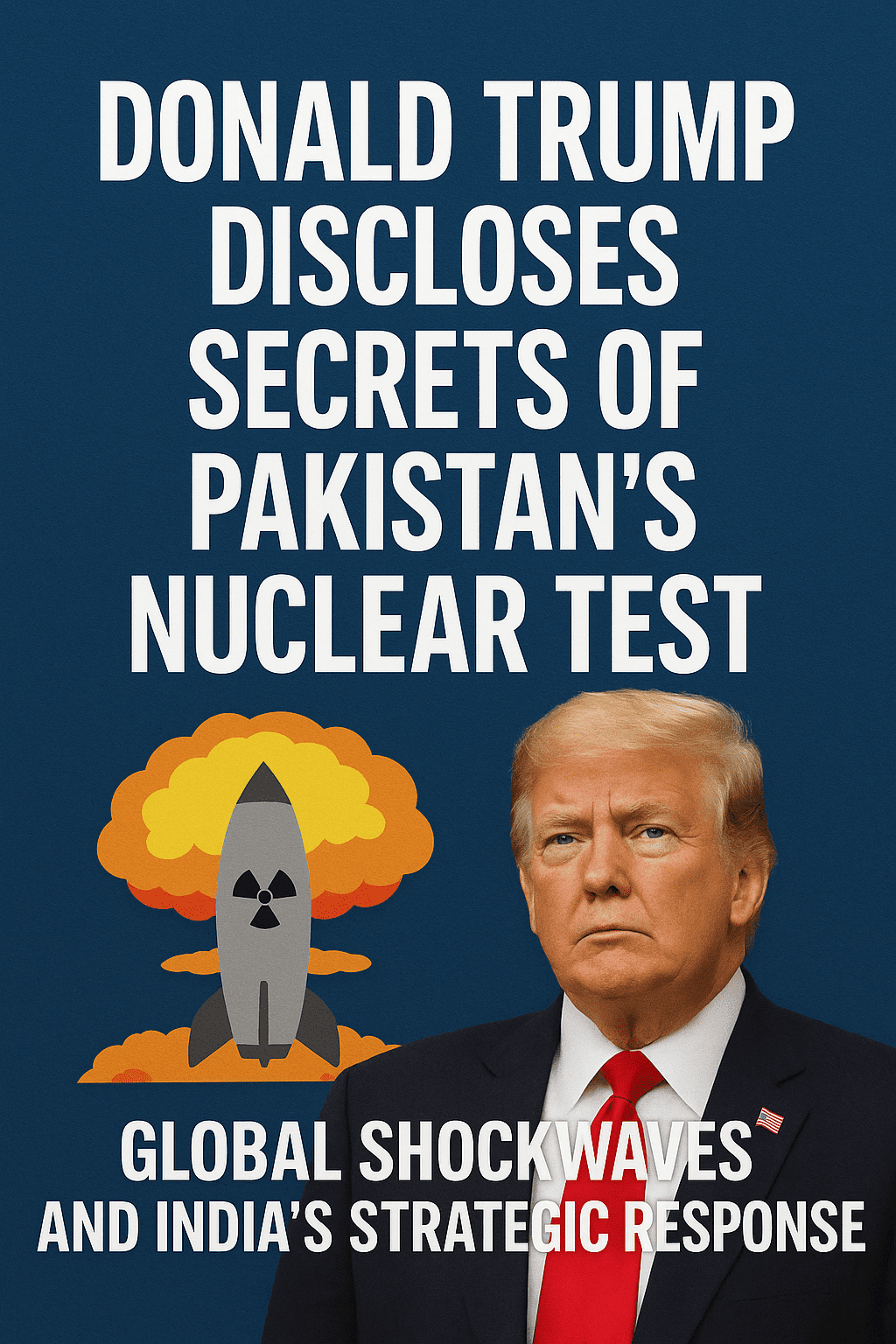
In a sensational revelation, former U.S. President Donald Trump has claimed that Pakistan has been actively conducting secret nuclear tests, reigniting fears of a new nuclear arms race in South Asia.
During an interview, Trump justified America’s decision to restart nuclear trials by stating,
“We’re going to test because they test and others test. And certainly, Pakistan’s been testing.”
This statement has shaken global observers, coming at a time when India’s Operation Sindoor was reported to coincide with multiple earthquakes in the region — sparking debates over whether those tremors were natural or man-made nuclear shocks.
🌋 Operation Sindoor and the Earthquakes: Coincidence or Connection?
During Operation Sindoor, Indian military activity in the border region reportedly aligned with unusual seismic events. Analysts and social-media observers began linking these tremors to potential underground explosions.
Let’s break down the possibilities:
Clandestine Nuclear Testing by Pakistan – Trump’s claim hints that underground tests could have triggered these seismic waves. If true, this would mean Pakistan violated global testing moratoriums like the CTBT (Comprehensive Nuclear-Test-Ban Treaty).
Impact of Indian Air Strikes – Precision strikes during Operation Sindoor may have hit deep underground bunkers or storage depots, causing artificial quakes.
Natural Tectonic Activity – Experts caution that the area is seismically active. The earthquakes might have been natural but coincidentally timed.
Strategic Psychological Warfare – Even if not nuclear, the perception of “earthquake-like” blasts can send a powerful geopolitical signal, deterring rivals.
The IAEA (International Atomic Energy Agency), however, confirmed no radiation leak from any Pakistani site — leaving the truth uncertain but the stakes sky-high.
💣 Why Trump Defended the U.S. Nuclear Test
Trump’s remarks also revealed deeper American intentions. According to him, the United States must resume testing because rivals — including China, Russia, North Korea, and Pakistan — are not following the rules.
Key Reasons Behind Trump’s Statement:
To maintain U.S. nuclear superiority amid global violations.
To counter China’s rapid advancements in hypersonic and nuclear technologies.
To pressure NATO allies and adversaries into transparency.
To divert domestic political attention by projecting global strength.
If the U.S. indeed resumes nuclear testing, it could reshape global security, revive Cold War-era rivalries, and erode decades of non-proliferation progress.
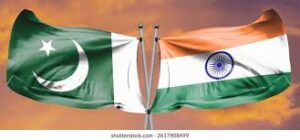
🌍 Global Implications: A New Nuclear Arms Race?
Trump’s disclosure raises major concerns for international peace:
CTBT Violation Risk – Secret testing undermines the global non-testing norm established after the 1990s.
Increased Nuclear Competition – Russia, China, and North Korea may accelerate their arsenals.
Destabilized Asia-Pacific Region – South Asia becomes a hotbed for deterrence breakdown.
Economic Impact – Renewed nuclear programs drain national budgets and increase global tension, affecting markets and energy security.
In short, the world might be entering a new nuclear era, where secrecy and speed replace treaties and transparency.
🇮🇳 How Pakistan’s Nuclear Tests Affect India’s Security Policy
If Pakistan truly resumed nuclear testing, India cannot afford complacency. The impact on Indian strategic policy could be transformative:
Shift in Deterrence Doctrine – India might reassess its No-First-Use stance to maintain credible deterrence.
Faster Weapon Modernization – Expect upgrades in Agni-V, K-series SLBMs, and BrahMos variants.
Deeper Global Alliances – Closer cooperation with the U.S., Japan, France, and Australia (Quad nations) for nuclear safety and technology sharing.
Stronger Surveillance – India will expand satellite imagery, seismic monitoring, and intelligence gathering around Pakistan’s testing zones.
Diplomatic Counter-Moves – India could push for IAEA inspections and call for sanctions if testing is confirmed.
This would mark a significant step toward strategic self-reliance, balancing military assertiveness with diplomatic maturity.
🛰 Top 10 Nuclear-Capable Fighter Jets in the World
| Rank | Fighter Jet | Origin Country | Manufacturer |
|---|---|---|---|
| 1 | F-35 Lightning II | USA | Lockheed Martin |
| 2 | Su-57 Felon | Russia | Sukhoi |
| 3 | J-20 Mighty Dragon | China | Chengdu Aerospace |
| 4 | Rafale F4 | France | Dassault Aviation |
| 5 | F-15EX Eagle II | USA | Boeing |
| 6 | Eurofighter Typhoon | Multinational (UK, Germany, Italy, Spain) | Airbus & BAE Systems |
| 7 | Tejas MK1A | India | HAL |
| 8 | J-31 Gyrfalcon | China | Shenyang Aircraft Corp |
| 9 | Gripen E | Sweden | Saab |
| 10 | KF-21 Boramae | South Korea | KAI |
(Note: Only certain variants have nuclear-capable configurations.)
🧭 What India Should Do Next
To counter potential instability, India needs a three-dimensional strategy:
Strengthen the Nuclear Triad — Boost land, sea, and air-based nuclear deterrence.
Expand Defense Budget — Allocate higher funds for R&D in missile and cyber defence.
Engage Global Institutions — Lead efforts to reinforce CTBT and expose violators.
Enhance Domestic Preparedness — Develop robust disaster-response systems against nuclear or seismic events.
Invest in AI-based Surveillance — Use AI and satellite tech to detect underground activity and monitor radiation levels in real time.
India must act not with panic, but with precision and preparedness.
⚖️ Conclusion: India at a Nuclear Crossroads
Donald Trump’s explosive claims about Pakistan’s secret nuclear activities are more than political soundbites — they are a wake-up call. Whether the tests were real or rhetorical, they expose the fragile state of global nuclear stability.
For India, this is a pivotal moment. The country must:
Reinforce deterrence,
Strengthen intelligence,
Uphold global non-proliferation values, and
Lead diplomatically in a volatile region.
The world is watching, and how India responds will define not only South Asia’s future but also the balance of power in the 21st century.