1. Introduction: The Engine Powering India’s Agricultural Growth
In India’s capital markets, some companies quietly compound wealth without grabbing headlines—and Swaraj Engines Ltd (SEL) is one of them. Backed by strong parentage from Mahindra & Mahindra and Kirloskar Industries, Swaraj Engines plays a critical role in India’s agricultural ecosystem by manufacturing diesel engines for tractors, primarily for the Swaraj brand.
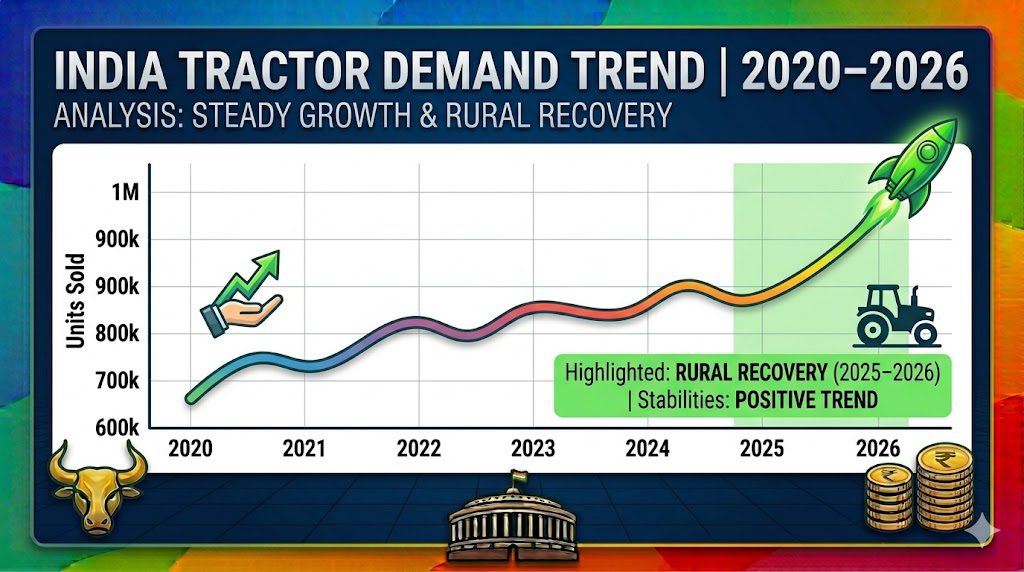
As of April 2026, India’s rural economy is showing signs of steady recovery, supported by favorable monsoon expectations, rising MSP (Minimum Support Price), and increased mechanization. Tractor sales, a key indicator of rural demand, have remained resilient despite global uncertainties. In this context, Swaraj Engines becomes more than just an engine manufacturer—it becomes a proxy play on rural India’s economic health.
Following the announcement of its Q4 FY26 results on April 13, 2026, investor attention has once again turned toward this consistent performer, known for its strong dividend payouts and efficient business model. This article provides a complete breakdown—from earnings and fundamentals to technical trends and future outlook—to help investors make informed decisions.
2. Q4 FY26 Result Analysis: Stable Margins Despite Cost Pressures
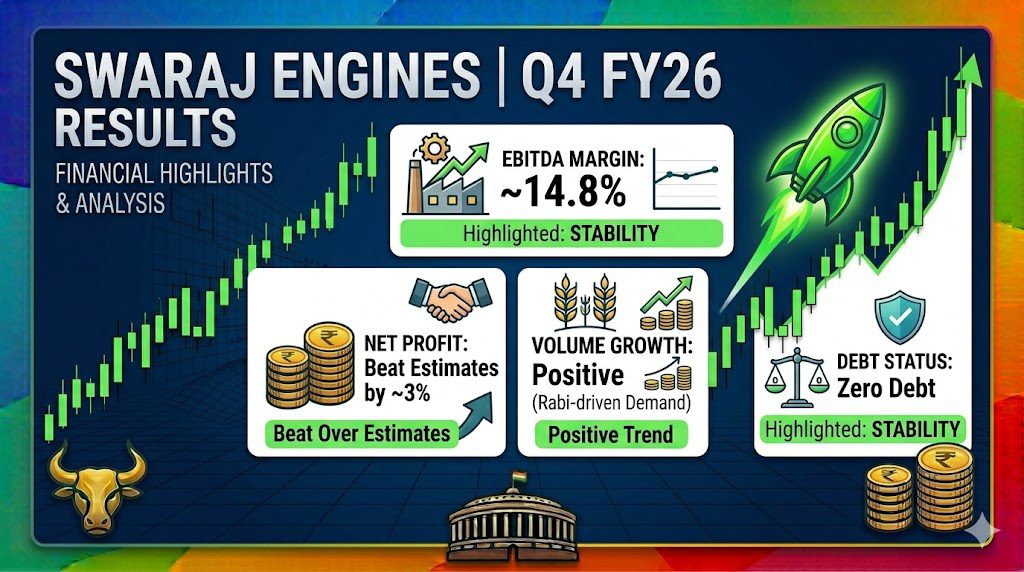
Swaraj Engines delivered a steady operational performance in Q4 FY26, reflecting its disciplined cost management and strong demand environment. The company reported healthy growth in engine sales volumes, driven by a robust Rabi harvest season and optimism around an early monsoon.
One of the key highlights of the quarter was the company’s ability to maintain EBITDA margins at around 14.8%, despite rising input costs—particularly specialized steel and pig iron. In a manufacturing business, where margins are often vulnerable to raw material volatility, this level of stability indicates strong pricing power and operational efficiency.
On the profitability front, the company’s Net Profit (PAT) exceeded street expectations by approximately 3%, supported by its debt-free status. With negligible interest expenses, a larger portion of operating profits flows directly to the bottom line, enhancing shareholder returns.
Additionally, Swaraj Engines continues to benefit from its asset-light and focused business model, where it primarily supplies engines to Mahindra’s Swaraj tractor division. This ensures predictable demand and reduces marketing and distribution costs significantly.
👉 Key takeaway: The Q4 results reaffirm that Swaraj Engines is not a high-growth story—but a high-quality, stable earnings compounder.
3. Fundamental Analysis: High ROE, Zero Debt, and Strong Cash Flows
From a fundamental perspective, Swaraj Engines stands out as one of the most efficient mid-cap manufacturing companies in India.
- Return on Equity (ROE): 35%+
- Return on Capital Employed (ROCE): 45%+
- Debt: Zero
- Cash Position: Strong and growing
These numbers place Swaraj Engines in the league of elite capital-efficient businesses.
What makes the business model unique is its captive demand structure. Since the company supplies engines primarily to Mahindra’s Swaraj tractors, it enjoys consistent order flow without the need for aggressive marketing or sales expenditure. This results in higher margins and stable cash flows.
Another important factor is the company’s low capital expenditure requirement. Unlike many manufacturing companies that require heavy reinvestment, Swaraj Engines operates with relatively modest capex, allowing it to generate significant free cash flow (FCF).
Valuation-wise, the stock typically trades at a moderate P/E multiple, reflecting its stable but non-explosive growth profile. However, when adjusted for its high dividend yield and capital efficiency, the valuation appears reasonable for long-term investors.
👉 In simple terms, Swaraj Engines is a “cash machine” with predictable earnings and strong return ratios.
4. Technical Analysis: Breakout Signals Emerging After Consolidation
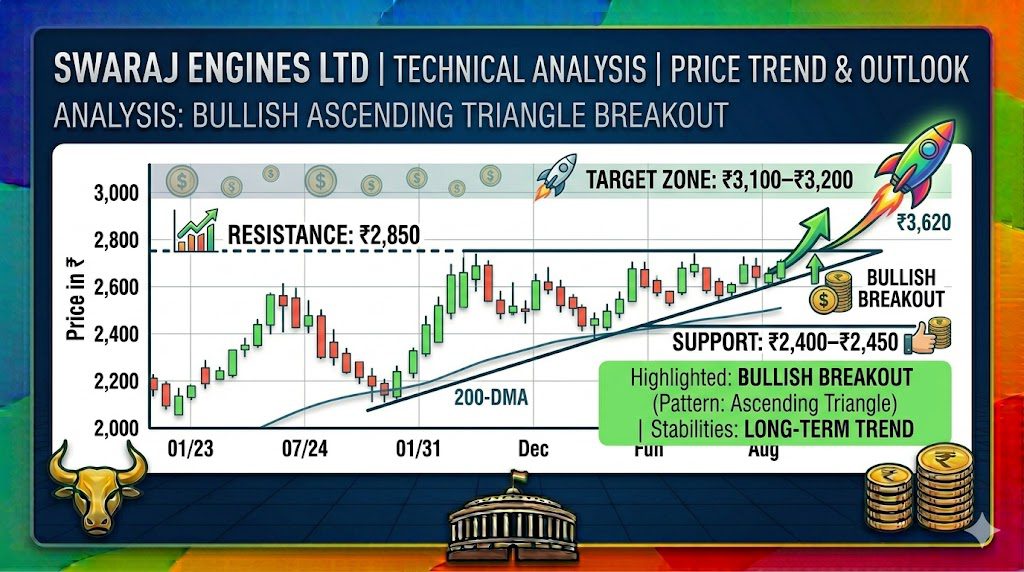
From a technical standpoint, Swaraj Engines has been forming a well-defined consolidation pattern over the past few months, indicating accumulation by long-term investors.
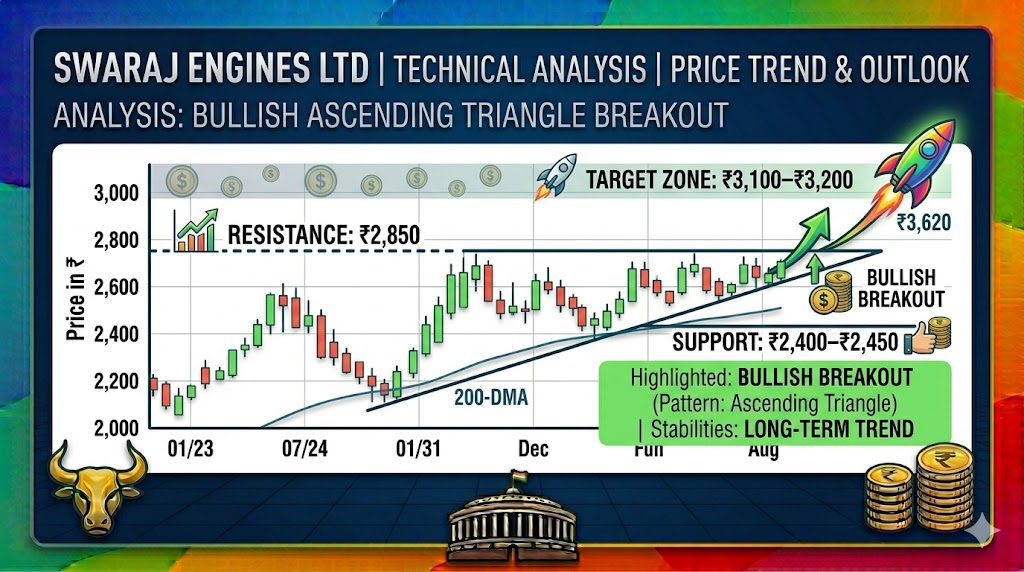
The stock has been trading within an ascending triangle pattern, which is generally considered a bullish continuation setup. Following the Q4 results, the stock tested its key resistance level near ₹2,850.
If the stock manages to sustain above this level, it could trigger a fresh breakout rally toward ₹3,100–₹3,200 levels in the medium term.
Key technical indicators:
- Support Level: ₹2,400–₹2,450 (near 200-day moving average)
- Resistance Level: ₹2,850
- Momentum Indicator (MACD): Bullish crossover
- Trend: Sideways to bullish
The presence of a strong support zone near the 200-day moving average provides confidence to long-term investors, making the stock suitable for a buy-on-dips strategy.
👉 For traders, the next big trigger is a decisive breakout above ₹2,850.
5. Dividend Analysis: A True “Income Stock” in Indian Markets
One of the biggest reasons investors track Swaraj Engines is its consistent and high dividend payouts.
Historically, the company has maintained a dividend yield between 3.5% and 4.5%, which is significantly higher than the broader market average. More importantly, the company maintains a payout ratio of over 80%, reflecting strong cash flow generation and shareholder-friendly policies.
This makes Swaraj Engines a rare example of a “pension-style stock”, where investors can rely on steady income along with moderate capital appreciation.
The company’s ability to generate strong free cash flow ensures that these dividends are not dependent on borrowing or one-time gains—they are sustainable over the long term.
For conservative investors, especially those looking for income-generating assets, Swaraj Engines offers a compelling proposition in the capital goods sector.
6. FY27 Outlook: Riding the Rural Demand and Mechanization Cycle
Looking ahead, the outlook for Swaraj Engines remains closely tied to the performance of India’s rural economy and agricultural sector.
Key growth drivers for FY27:
1. Monsoon Dependency
A normal or above-normal monsoon, as forecasted by IMD, can significantly boost rural income and tractor demand.
2. Rising Mechanization
India is witnessing increasing adoption of mechanized farming, particularly in states like Punjab, Haryana, and Uttar Pradesh. The demand for higher horsepower tractors (50 HP+) is rising, which directly benefits engine manufacturers like Swaraj Engines.
3. Government Support
Schemes related to farm mechanization, rural infrastructure, and credit availability continue to support tractor sales.
4. Mahindra’s Market Share Growth
Since Swaraj Engines supplies primarily to Mahindra’s Swaraj brand, any increase in Mahindra’s tractor market share directly translates into higher demand for SEL.
📊 Broker-wise Share Price Target (2026–27)
| Brokerage / Source | Rating | Target Price (₹) | Upside Potential |
|---|---|---|---|
| Consensus (2 Analysts) | Strong Buy | ₹4,629 | ~25–30% |
| High Estimate (Street High) | Bullish | ₹4,759 | ~30–35% |
| Low Estimate (Street Low) | Conservative | ₹4,500 | ~20–25% |
| Economic Times Median | Positive | ₹4,500 | ~25% |
| Technical/Fair Value Range | Neutral-Bullish | ₹3,700–₹4,100 | ~5–15% |
7. Risks to Watch: What Could Go Wrong?
Despite its strong fundamentals, investors should be aware of key risks:
- Monsoon Variability: Weak rainfall can impact rural demand
- Raw Material Prices: Fluctuations in steel and pig iron prices
- Customer Concentration: Heavy dependence on Mahindra
- Limited Diversification: Business largely focused on tractor engines
These factors can impact short-term performance, although the long-term outlook remains stable.
8. Final Verdict: A Quiet Compounder for Long-Term Investors
After three decades in the capital markets, one thing is clear—wealth is often created by holding high-quality, boring businesses for long periods.
Swaraj Engines fits perfectly into that category.
- ✅ Strong balance sheet (debt-free)
- ✅ High return ratios
- ✅ Consistent dividend payouts
- ✅ Stable business model
It may not deliver explosive returns like small-cap multibaggers, but it offers something equally valuable—predictability and consistency.
🎯 Investment Strategy
- Below ₹2,500: Strong accumulation zone
- ₹2,500–₹2,850: Hold / gradual buying
- Above ₹2,850: Breakout confirmation