The relationship between national security, political communication, and public accountability remains one of the most sensitive domains in contemporary Indian democracy. In late June 2026, a fierce political row erupted across India’s political landscape following media reports concerning Operation Sindoor—the high-stakes counter-terrorism military operation launched by the Indian Armed Forces in May 2025.
The controversy was ignited when prominent national media outlets reported that the names of six Indian soldiers killed during Operation Sindoor had been inscribed onto the Roll of Honour at the National War Memorial in New Delhi “for the first time.” This phrasing quickly transformed into a powerful political weapon. The opposition, led by the Indian National Congress, seized upon the development to accuse the ruling Bharatiya Janata Party (BJP) government, and specifically Union Defence Minister Rajnath Singh, of deliberately concealing operational casualties and misleading Parliament during debates in July 2025.
However, a granular, evidence-based investigation into official military records, public statements, and archival data reveals a far more nuanced picture than the polarized narratives dominating social media grids. This extensive investigative analysis deconstructs the operational timeline, evaluates the competing political arguments, maps out the systemic communication gaps within the security establishment, and explores what this confrontation reveals about wartime transparency in a modern digital republic.
Executive Summary
The Genesis: Operation Sindoor was executed in early May 2025 as a direct punitive response to a major cross-border terrorist attack in Pahalgam, Jammu & Kashmir, which resulted in the tragic deaths of 26 tourists.
The Operation: The military campaign involved precise strikes against active terrorist launchpads in Pakistan-Occupied Kashmir (PoK), eliminating over 100 insurgents, and triggering a high-intensity four-day aerial engagement that concluded with a bilateral ceasefire on May 10, 2025.
The Controversy: A political firestorm erupted in June 2026 when news reports claimed the government had “finally broken its silence” by listing six operational casualties on the National War Memorial’s Roll of Honour, leading to allegations of an official cover-up.
The Opposition’s Stance: Senior Congress leaders alleged that Defence Minister Rajnath Singh committed a breach of parliamentary privilege on July 28, 2025, when he answered “no” to a question regarding whether Indian personnel suffered harm during the operation.
The Fact-Check: Archival verification proves the government did not conceal the names. On May 11, 2025, the Directorate General of Military Operations (DGMO) held a live press briefing naming five fallen soldiers, with the sixth succumbing to injuries shortly thereafter. Furthermore, the official list of Gallantry Awards published on August 14, 2025, formally documented their heroism.
The Contextual Disconnect: The Defence Minister’s July 2025 parliamentary statement was delivered specifically during an intense debate over tactical fighter jet losses and the associated aerial crew, rather than a holistic assessment of ground forces. This contextual misalignment created a glaring narrative vulnerability that the opposition successfully weaponized.
National Security Implications: The dispute underscores a growing friction point between classified military operational data, state-driven information management, and democratic demands for institutional transparency.
Background: The Geopolitical Catalyst of May 2025
To comprehend the political fracture of 2026, one must accurately trace the escalatory ladder of May 2025. On April 22, 2025, a heavily armed group of cross-border terrorists carried out a brutal attack targeting civilian infrastructure and transport vehicles in Pahalgam, a major tourist hub in Jammu & Kashmir. The assault claimed the lives of 26 tourists, drawing universal domestic outrage and placing immense public pressure on the Central Government to deliver a decisive kinetic response.
Under the strategic directive of the Cabinet Committee on Security (CCS), the Indian Armed Forces conceptualized and initiated Operation Sindoor. Diverging from the localized footprint of the 2016 surgical strikes, this operation deployed a multi-domain offensive framework. In the early hours of May 2025, Indian special units and precision-guided standoff munitions targeted highly active terrorist infrastructure deep within Pakistan-Occupied Kashmir (PoK). Operational logs indicate that more than 100 terrorists and command handlers were neutralized across multiple launchpads.
The scale of the strikes prompted an immediate retaliation from the Pakistani military establishment, escalating the conflict into a fierce four-day aerial dogfight and heavy artillery duels along the Line of Control (LoC). International diplomatic intervention, alongside backchannel negotiations, eventually led to a mutually agreed-upon cessation of hostilities and a comprehensive ceasefire on May 10, 2025.
Current Situation: Anatomy of the 2026 Political Firestorm
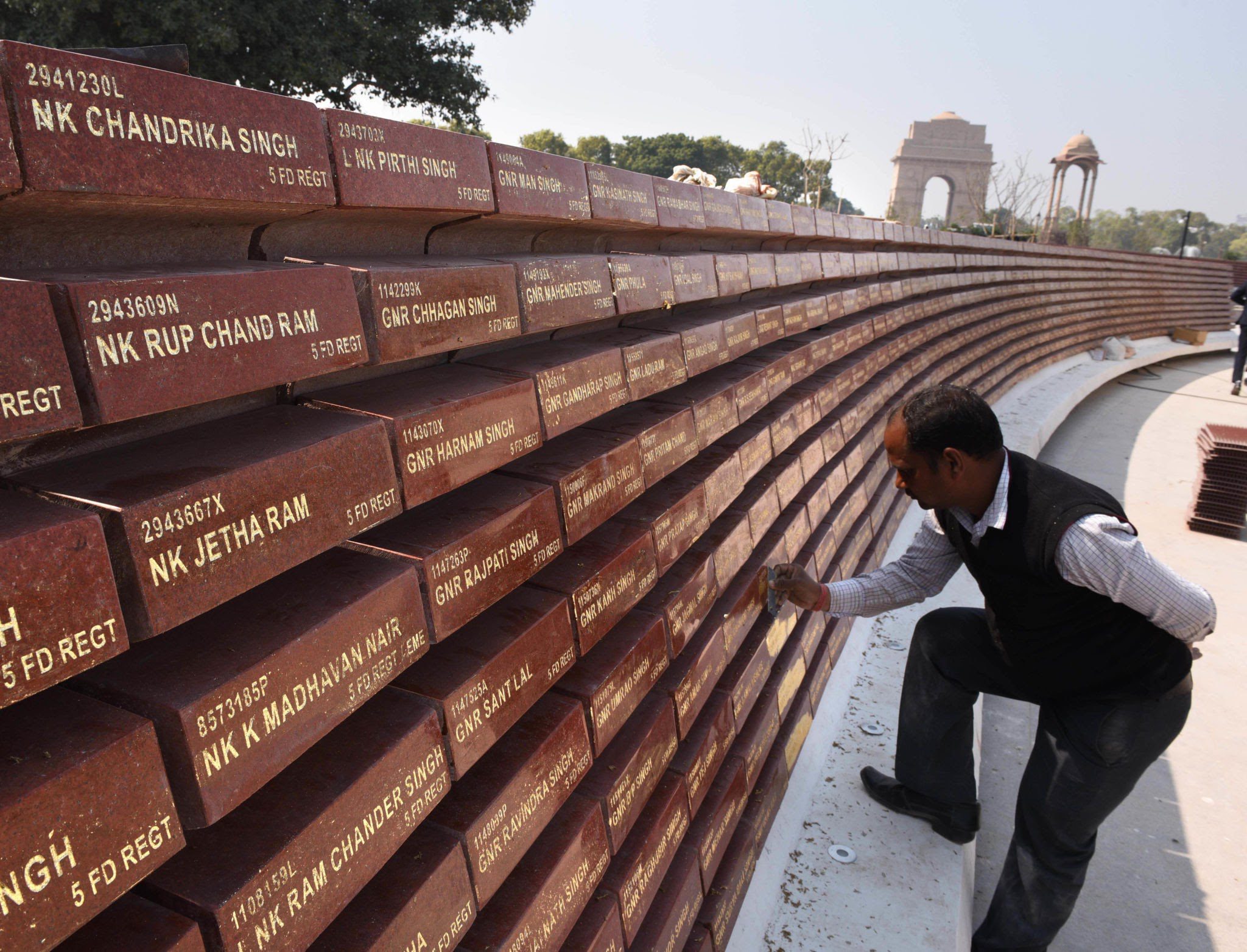
The current crisis did not emerge from a new military engagement, but rather from the routine administrative updates of the Ministry of Defence. In late June 2026, the National War Memorial (NWM) updated its digital Roll of Honour database and physically etched the names of the servicemen who lost their lives during the 2025 cycle into its concentric granite structures.
A report published by The Hindu used a headline indicating that “for the first time,” the government had officially released the names of six personnel killed during Operation Sindoor. This specific choice of words implied that the state had spent the previous thirteen months keeping these casualties hidden from the public eye.
Within hours, the Indian National Congress and other opposition groups launched a coordinated political offensive. Congress spokespersons Pawan Khera and Supriya Shrinate published scathing critiques, highlighting a glaring contradiction: if six brave soldiers had made the supreme sacrifice in May 2025, why did the Defence Minister tell Parliament in July 2025 that no soldiers had been harmed? The opposition characterized this as a textbook case of pseudo-nationalism, arguing that the ruling administration had actively suppressed the realities of military casualties to preserve a political narrative of flawless operational success.
Fact-Check: Deconstructing the “Concealment” Claim
To evaluate whether the state deliberately hid these deaths, we must cross-reference the opposition’s claims with the public record from May 2025. The assertion that the names were kept a secret for over a year is factually incorrect.
Evidence 1: The DGMO Briefing (May 11, 2025)
On the morning of May 11, 2025—fewer than 24 hours after the ceasefire was implemented—the Directorate General of Military Operations held a televised press conference. During this briefing, the military leadership explicitly paid tribute to the personnel lost during the campaign. The official statement read:
“I pay my solemn homage to my five fallen colleagues and brothers from the Armed Forces and civilians who have tragically lost their lives in Operation Sindoor. Our hearts go out to the bereaved families…”
The briefing originally cited five casualties because the sixth soldier was still fighting for his life in a critical care facility and passed away a short time later.
Evidence 2: State and Institutional Tributes
On May 11, 2025, the Lieutenant Governor of Jammu & Kashmir held a public ceremony laying a wreath for Rifleman Sunil Kumar, one of the personnel killed in action. By May 16, 2025, the respective Army Corps social media channels had published individual obituaries honoring Subedar Major Pawan Kumar and the other fallen heroes.
Evidence 3: Historical Records from the Opposition
In an ironic twist of digital record-keeping, senior opposition figures—including Priyanka Gandhi Vadra—had themselves tweeted formal condolences on May 12, 2025, naming these exact individual soldiers. This indicates that the identities of the deceased were fully available within the public space.
Evidence 4: The Official Gallantry Awards (August 14, 2025)
On the eve of Independence Day in 2025, the Ministry of Defence released its official gazette of Gallantry Awards. Multiple personnel involved in Operation Sindoor were posthumously awarded medals for valor, with their full citations and names detailed in public government documents.
Political & Legal Analysis: The Parliamentary Privilege Dilemma
If the names of the soldiers were public knowledge as early as May 2025, why did Defence Minister Rajnath Singh state in Parliament on July 28, 2025, that no personnel were harmed? Deconstructing this specific moment requires reviewing the official transcripts of the parliamentary session.
On July 28, 2025, Parliament was locked in a highly contentious debate regarding tactical military losses. The opposition was questioning the government over claims made by international media and foreign political figures regarding the number of Indian fighter jets shot down during the four-day aerial conflict. Rumors circulating at the time suggested that anywhere from five to eleven Indian aircraft had been compromised.
When the Defence Minister rose to address the Lok Sabha, his focus was explicitly directed at refuting foreign propaganda concerning the aerial dogfight. He argued that the opposition was showing a strange interest in tracking domestic losses rather than celebrating the damage inflicted on terrorist networks. In this specific context, when asked if the personnel involved in those specific aerial shootdowns or aircraft incidents had been killed or captured, the Minister responded that none of our personnel had been harmed.
While technically accurate regarding the specific aircraft crews under discussion, the statement was framed in a broad, sweeping manner. By failing to clearly distinguish between the aircrew in the dogfight and the ground forces who came under artillery fire along the Line of Control, the Minister’s response created a significant linguistic loophole.
[Opposition Question: July 2025]
"How many of our fighter jets were lost, and what happened to the personnel inside them?"
       │
       ▼
[Defence Minister's Sweep Response]
"Our personnel were not harmed." (Intended context: The aircrews survived/were safe)
       │
       ▼
[Media Interpretation & Opposition Weaponization: June 2026]
"Defence Minister claimed NO soldiers died in the entire operation. War Memorial proves 6 died. Government lied."
In constitutional law and parliamentary procedure, a Breach of Privilege occurs when a Minister intentionally misleads the House. Because the broader state apparatus had already published the casualties via DGMO briefings and Gallantry Award lists months prior, proving an intentional cover-up is legally difficult. Instead, the episode reveals a classic breakdown in strategic political communication, where a broadly phrased statement in parliament created a narrative vulnerability that could easily be exploited later.
Economic & Strategic Impact of the Conflict
While the political debate centers around communication, the underlying military campaign had significant fiscal and economic consequences for the region.
1. Defence Expenditure and Procurement Dynamics
Operation Sindoor required an immediate expenditure of emergency capital for precision munitions, round-the-clock aerial surveillance, and defensive realignments along the western border. The Ministry of Finance approved emergency financial powers for the armed forces to replenish depleted stockpiles, accelerating the acquisition of domestic standoff weaponry and drone technologies.
2. Impact on the Regional Economy of Jammu & Kashmir
The timing of the Pahalgam attack in April 2025 struck at the very beginning of the peak summer tourism season, which serves as the economic backbone for thousands of MSMEs, artisans, hoteliers, and transport operators in the valley. The subsequent military escalation caused tourism numbers to drop significantly in the second quarter of 2025. However, the comprehensive ceasefire signed on May 10, 2025, paired with intensified security protocols, allowed tourism to stage a gradual recovery by late autumn.
3. Market and Fiscal Reassurance
During the tense four-day aerial engagement, India’s benchmark financial indices (NIFTY 50 and SENSEX) experienced brief volatility. However, the quick enforcement of the ceasefire prevented any structural flight of foreign institutional investor (FII) capital, demonstrating the resilience of the domestic economy during localized security shocks.
Structural Comparisons: Inscription Profiles at the National War Memorial
The physical structure of the National War Memorial utilizes a systematic administrative protocol for engraving names, which explains why the physical updates happen in distinct annual cycles.
| Memorial Circle (Chakra) | Design Function | Specific Operational Inscription Criteria |
| Amar Chakra (Circle of Immortality) | Houses the Central Obelisk and the Eternal Flame. | Serves as the spiritual focal point; no individual names are inscribed here. |
| Veerta Chakra (Circle of Bravery) | A covered gallery displaying bronze murals of historic battles. | Commemorates specific landmark actions (e.g., Longewala, Tiger Hill, Operation Sindoor strikes). |
| Tyag Chakra (Circle of Sacrifice) | Concentric granite walls containing individual stone bricks. | Every brick is dedicated to a specific fallen soldier, organized by year, regiment, and operation. |
| Raksha Chakra (Circle of Protection) | Outer ring featuring dense rows of evergreen trees. | Symbolizes the continuous vigilance of the Armed Forces guarding the nation’s borders. |
Key Perspectives from Security Experts
An examination of views from defense analysts and constitutional experts reveals two distinct interpretations of the controversy:
The Institutionalist View: Retired military officers and strategic analysts emphasize that the administrative process of updating the National War Memorial is inherently slow. Casualties from any given year are thoroughly verified through regiment registers, pension clearances, and citation reviews before being physically carved into stone during the next annual maintenance cycle. From this perspective, the June 2026 updates were standard administrative procedures completely unrelated to political narratives.
The Communication Critique: Public policy experts and media analysts argue that modern political communication often prioritizes immediate public relations over clear, detailed transparency. By using ambiguous language in Parliament to project absolute success, the political leadership created an unnecessary credibility gap, transforming a routine memorial update into an unnecessary national controversy.
Risks and Future Outlook
Short-Term and Long-Term Scenarios
Best-Case Scenario: The Ministry of Defence issues a clarifying statement detailing the distinction between the July 2025 aerial crew status and the overall operational casualties. Public trust is restored through fact-checking networks, and the focus returns to honoring the sacrifices of the fallen servicemen.
Worst-Case Scenario: Persistent political polarization undermines the institutional credibility of official military briefings. Routine administrative updates at the National War Memorial become recurring targets for partisan disputes, eroding the traditional consensus surrounding national security issues.
Most Likely Scenario: The political debate gradually cools down as fact-check reports clarify the historical timeline. However, the opposition will likely continue to cite the July 2025 parliamentary transcript as a key example of the government’s tightly controlled information strategy.
Practical Takeaways
For Citizens and Civil Society
Recognize that in the age of rapid digital information, headlines can easily flatten complex timelines. Understanding national security issues requires cross-referencing immediate political rhetoric with official records and formal military briefings.
For UPSC and Civil Services Aspirants
Constitutional Focus: Study the precise definitions of Parliamentary Privileges (Articles 105 and 194) and understand the strict criteria required to establish an institutional breach.
Public Policy Focus: Analyze the delicate balance between maintaining operational security (OPSEC) during live military conflicts and meeting democratic requirements for transparency.
Conclusion
The controversy surrounding Operation Sindoor is an instructive case study in how information moves through a hyper-connected political ecosystem. The claim that the state actively hid its casualties for a year is soundly debunked by public records, televised military briefings, and official gallantry gazettes from 2025.
At the same time, the crisis shows how imprecise political communication in legislative bodies can leave a government vulnerable to damaging narratives. For a democracy to maintain a healthy civil-military relationship, the state must communicate security realities with absolute precision, ensuring that the sacrifices of its soldiers are insulated from the short-term fluctuations of partisan politics.