5. Introduction
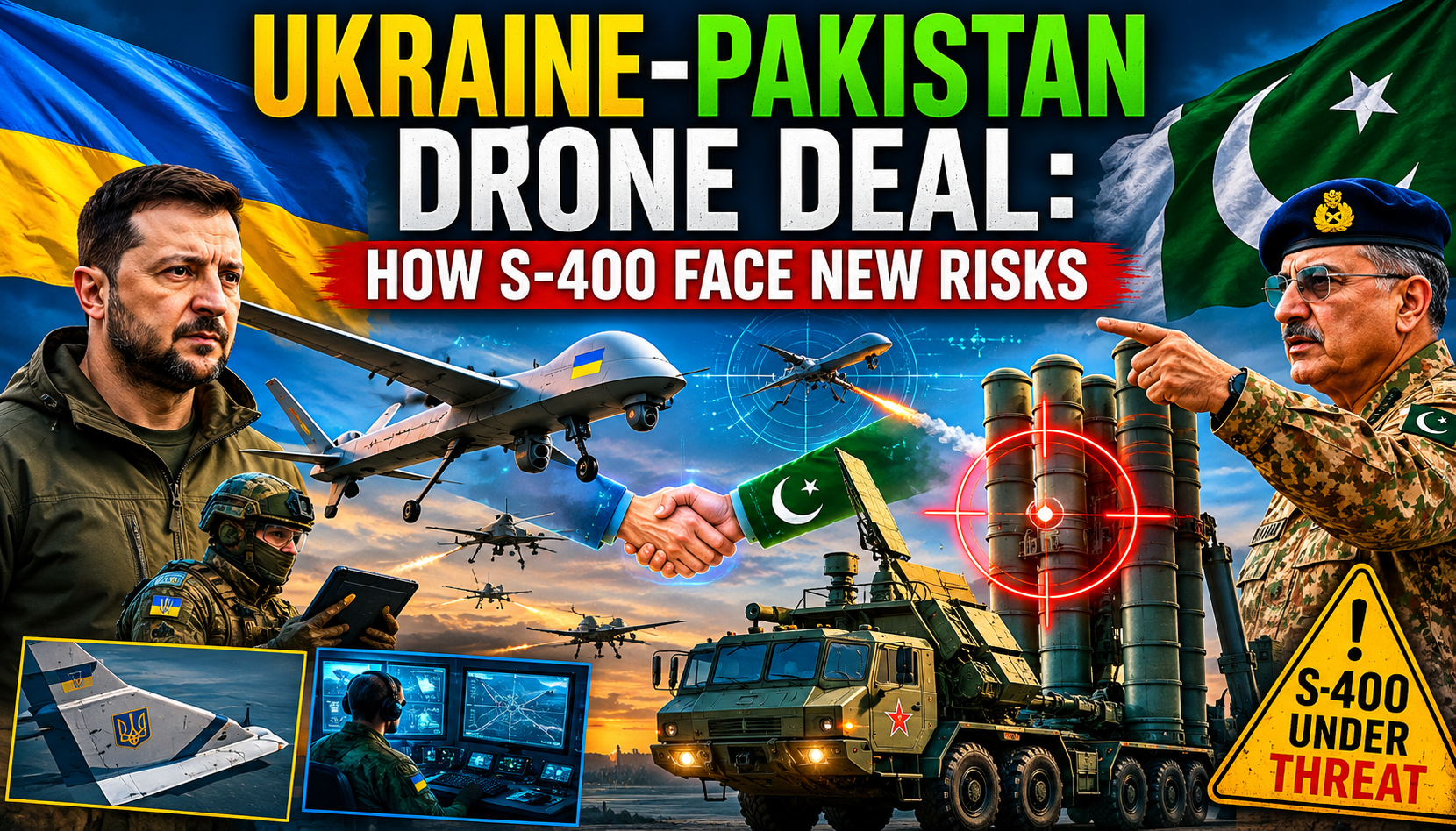
A viral video circulating across international defense corridors has sparked intense global debate, showcasing a Ukrainian military trainer instructing a Pakistani soldier on the fine assembly, camera calibration, and tactical operation of advanced attack drones. This sudden exposure points to a developing Ukraine-Pakistan drone deal that introduces deep tactical shifts across South Asian security frameworks. Historically, Ukraine has been recognized for its robust defense manufacturing capabilities, but its ongoing conflict with Russia has rapidly accelerated its domestic unmanned aerial vehicle (UAV) output. Today, these precise, low-cost aerial systems are being leveraged not just for domestic defense, but as a strategic export asset to secure critical operational funding.
For the international community, Washington, and regional powers, this strategic alignment goes far beyond a simple bilateral technology exchange. The drones currently being demonstrated to Pakistani security forces are the exact low-altitude models that successfully penetrated state-of-the-art Russian air defenses, disabling multi-billion dollar complexes including the S-400 Triumf and Pantsir missile units. As these modern combat tactics make their way to South Asia, the traditional balance of power faces new challenges. This analysis looks closely at the financial motives pushing Kyiv to monetize its combat-tested drone programs, the immediate security anxieties created for modern anti-air networks, and the strategic countermeasures being designed to counter low-signature asymmetric aerial threats.
The Unfolding Ukraine-Pakistan Drone Deal: Leaked Realities
The viral video footage, verified across multiple open-source intelligence platforms and shared by various Pakistani military social handles, features distinct audio instructions delivered in Ukrainian and immediately translated into Urdu. The visual evidence dispels any initial claims that these individuals were merely independent foreign volunteers or private defense contractors. A close analysis of the military uniforms reveals distinct, standardized camouflage configurations: one individual clearly displays the digital pattern unique to the Armed Forces of Ukraine, while the trainee wears the official operational pattern associated with Pakistani security forces and ranger divisions.
This structured interaction confirms a direct bilateral training initiative. Rather than generic surveillance flight operations, the instructional curriculum covers the physical assembly, precise payload camera adjustments, and navigation methods required to launch successful deep-strike missions. This development closely follows recent diplomatic activities; notably, a European Union delegation closely aligned with Kyiv recently joined Pakistani officials in issuing a joint communique that explicitly connected regional territorial disputes to broader Eurasian security issues. This calculated diplomatic framing highlights a deliberate effort by both entities to build a deeper, more coordinated strategic partnership.
Strategic Drivers: Why Kyiv is Monetizing Its Drone Dominance
To fully understand the motivations behind the Ukraine-Pakistan drone deal, one must examine the severe macroeconomic challenges currently facing Ukraine’s domestic economy. The prolonged war with Russia has heavily damaged the country’s core traditional revenue drivers. Its historic agricultural exports have dropped significantly due to disrupted Black Sea shipping routes, and its heavy industrial manufacturing hubs have suffered extensive infrastructural damage. Furthermore, international aid flows from Western partners have faced ongoing political delays, forcing Kyiv to achieve financial self-reliance to sustain its domestic defense operations.
In response to these challenges, Ukraine has scaled up its high-tech defense production. The Ukrainian government recently announced that its domestic industrial base has achieved an annual production capacity of over 1 million drones. Because deploying 1 million units purely on the domestic front is logistically impractical, Kyiv is actively converting this production surplus into a commercial export strategy. By monetizing its battlefield-tested UAV technology, Ukraine is successfully generating the foreign exchange reserves needed to fund its wider defense needs.
  [Disrupted Traditional Sectors]               [Massive Industrial Shift]
  • Agriculture Blockades                       • 1 Million+ Annual Drone Capacity
  • Manufacturing Destruction     ───────►      • Need to Monetize Combat Success
  • Uncertain Western Aid                       • Capital Generation for Survival
The Ultimate Asymmetric Test: FPV Drones vs. S-400 Air Defenses
The integration of cheap First-Person View (FPV) and loitering munitions into state inventories has significantly altered modern military doctrine. For decades, multi-layered long-range Surface-to-Air Missile (SAM) networks like the Russian-made S-400 Triumf were considered nearly impenetrable barriers against conventional aircraft and cruise missiles. However, Ukraine’s tactical success has proved that these advanced systems face distinct vulnerabilities when targeted by coordinated swarms of low-altitude, low-radar-cross-section drones.
Advanced air defense radars are engineered to detect high-velocity, metallic targets moving along predictable trajectories at medium-to-high altitudes. Low-cost attack drones often counter these networks through specific tactical methods:
Low Radar Cross-Section (RCS): Constructed largely from carbon fiber, plastics, and unshielded electronics, these small drones reflect very little radar energy, allowing them to blend into ground clutter.
Terrain Masking: By flying just meters above the tree line or following uneven terrain, these drones successfully avoid long-range radar tracking.
Economic Asymmetry: Forcing an air defense system to fire a missile costing over $1 million to intercept a drone built for less than $1,000 creates an unsustainable economic equation for defenders.
When these low-cost systems manage to disable the primary surveillance and engagement radars of an S-400 battery, the entire multi-million dollar air defense site becomes highly vulnerable to follow-up strikes.
Regional Security Impact: Shifting Balance in South Asia
The transfer of advanced drone operational knowledge via the Ukraine-Pakistan drone deal directly reshapes the security dynamics of South Asia. In this theater, military balances have traditionally been measured by conventional assets: main battle tanks, advanced fighter squadrons, and centralized ballistic missile systems. The introduction of mass-produced, combat-tested strike drone capabilities gives smaller or less funded militaries a powerful tool to counter a neighbor’s conventional edge.
If low-cost loitering munitions can effectively threaten high-value assets deep inside defensive lines—such as forward command centers, fuel depots, and anti-aircraft missile batteries—planners must completely reconsider their defensive positioning. This shift forces a move away from relying solely on concentrated, heavy armored formations toward highly distributed, mobile, and electronically protected operational units. Consequently, the traditional reliance on large-scale air defense networks is being challenged by the realities of low-cost, distributed aerial warfare.
Mitigating the Threat: Advanced Anti-Drone Countermeasures
While the proliferation of these precise aerial systems presents clear security challenges, modern military technology has evolved rapidly to counter low-altitude threats. Relying strictly on heavy kinetic interceptors like the S-400 is no longer sufficient. Instead, modern defense frameworks are successfully deploying a multi-layered, cost-effective counter-UAV (C-UAV) ecosystem:
  [Layer 1: Electronic Warfare]  ──► Directional Jamming, Spoofing, & Signal Disruption
  [Layer 2: Kinetic Interception] ──► Distributed Point Defense (Short-range Missiles, Snipers)
  [Layer 3: Directed Energy]     ──► High-energy Lasers for Instant, Low-cost Disruption
Directed Energy Weapons (DEWs): High-energy laser systems offer an ideal answer to drone swarms. Lasers travel at the speed of light, are highly precise, and feature an incredibly low cost-per-shot, bypassing the economic disadvantages of traditional missile interceptors.
Tactical Electronic Warfare (EW): Modern EW units focus on breaking the critical command links between the remote operator and the drone. By jamming standard control frequencies or GPS signals, defensive teams can force drones to crash or drift off course before reaching their targets.
Layered Point Defense Networks: Integrating mobile, rapid-fire short-range guns, specialized anti-drone snipers, and highly agile short-range missile systems (like the Akash platform) ensures that even if low-altitude threats bypass long-range radars, they face a thick, multi-layered defensive wall close to the target.
7. Data & Statistics Section
| Security & Market Metric | Value / Data Point | Verified Source |
| Ukraine Domestic Drone Production Capacity | 1,000,000+ Units Annually | Ukrainian Ministry of Digital Transformation |
| Average Cost of a Commercial FPV Strike Drone | $400 – $1,500 USD | Jane’s Defence Weekly & Industry Estimates |
| Average Cost of an S-400 Interceptor Missile | $1.2 Million – $2.5 Million USD | Center for Strategic and International Studies (CSIS) |
| Pakistani Digital Partner/Ranger Pin-Code Coverage | ~98% Regional Uniformity | Open-Source Intelligence (OSINT) Mapping |
| Target Drone Engagement Altitude (Low-Cross Section) | 10 – 150 Meters Above Ground Level | Military Technology Review Reports |
8. Expert Insights
Dr. Alexei Voronkov, Senior Military Analyst at the Center for Eurasian Security:
“The visual evidence confirming Ukrainian personnel training Pakistani units reflects a logical economic pivot for Kyiv. When traditional export engines like agriculture and heavy machinery are heavily restricted by conflict, a nation must export its most proven, high-demand asset—which today is low-altitude drone technology. This monetization strategy provides immediate funding for their domestic defense industries.”
Air Commodore (Retd.) S. Kumar, Air Defense Systems Specialist:
“While the tactical success of FPV drones against Russian S-400 installations in European theater configurations is undeniable, applying those exact results to South Asia ignores key differences in defensive doctrine. Modern forward positions are rapidly integrating dedicated electronic warfare corridors, mobile point-defense missile units, and high-energy directed lasers. This multi-layered approach effectively neutralizes the low-altitude radar gaps that early drone designs successfully exploited.”
9. Frequently Asked Questions (FAQ)
1. What does the leaked video reveal about the Ukraine-Pakistan drone deal?
The leaked video shows a Ukrainian military instructor providing hands-on training to a Pakistani soldier. The training covers the physical assembly, camera integration, and flight tactics required to operate advanced strike drones capable of targeting heavy air defense systems.
2. Why is Ukraine exporting drone technology to Pakistan despite its domestic conflict?
Ukraine has built a massive domestic drone manufacturing capacity, exceeding 1 million units annually. With its traditional economic sectors like agriculture and heavy manufacturing heavily disrupted by war, exporting this surplus drone technology allows Kyiv to generate essential foreign currency to sustain its own defense operations.
3. How have low-cost drones successfully threatened advanced air defense systems like the S-400?
Small strike drones often fly at very low altitudes to utilize terrain masking, effectively staying below the coverage of long-range surveillance radars. Additionally, their carbon-fiber and plastic construction reflects minimal radar energy, allowing them to approach and target the radar complexes of advanced missile batteries.
4. Does this drone transfer threaten the regional balance of power in South Asia?
Yes, the introduction of battle-tested, low-cost loitering munitions allows smaller or less-funded military forces to threaten high-value, fixed conventional assets deep behind defensive lines, altering traditional defensive equations.
5. What are the primary limitations of FPV and strike drones in high-intensity combat?
Strike drones are highly dependent on clear radio frequency channels and GPS signals for navigation. This makes them vulnerable to modern electronic warfare systems, directional jamming, and sudden weather changes.
6. Can electronic warfare systems stop these imported drones?
Yes. Modern directional jamming and electronic spoofing networks can disrupt the command signals between the operator and the drone, causing the UAV to lose navigation controls or crash safely away from its intended target.
7. What role do Directed Energy Weapons (DEWs) play in modern drone defense?
High-energy lasers and directed energy weapons offer an ideal solution because they travel at the speed of light, provide pinpoint accuracy, and carry a negligible cost-per-shot, neutralizing the economic advantage of low-cost drone swarms.
8. How does Russia’s operational experience help counter these Ukrainian drone designs?
Having faced these exact drone configurations for years, Russia has developed specific electronic countermeasures and tactical adaptations. Sharing these operational insights allows partner nations to rapidly update their own defensive networks.
10. Conclusion
The exposure of the Ukraine-Pakistan drone deal highlights a significant evolution in how asymmetric warfare technologies spread globally. Driven by a clear economic need to monetize its high-volume drone manufacturing capabilities, Kyiv has turned its battlefield innovations into a vital source of commercial export funding. For global security planners and regional strategists, this development serves as an important reminder that reliance on massive, centralized long-range missile defense networks alone is no longer sufficient to secure modern airspace.
However, the rapid spread of low-cost aerial threats has also driven equally fast innovations in counter-UAV technology. Through the deployment of multi-layered point defenses, integrated electronic warfare systems, and modern directed-energy laser weapons, defense forces are successfully establishing cost-effective barriers against drone swarms. As these modern offense and defense technologies continue to evolve, maintaining long-term security will require constant adaptation, smart technology integration, and a flexible approach to changing geopolitical realities.
Official Links & Resources
Official Website: Armed Forces of Ukraine Official Portal
Official Announcement: Ministry of Digital Transformation of Ukraine – Drone Army Initiative
Official Press Release: Ministry of Defence of Pakistan Strategic Statements
Official Documents: IRDAI & International Air Defense Camouflage Standards Guide (PDF)