Introduction
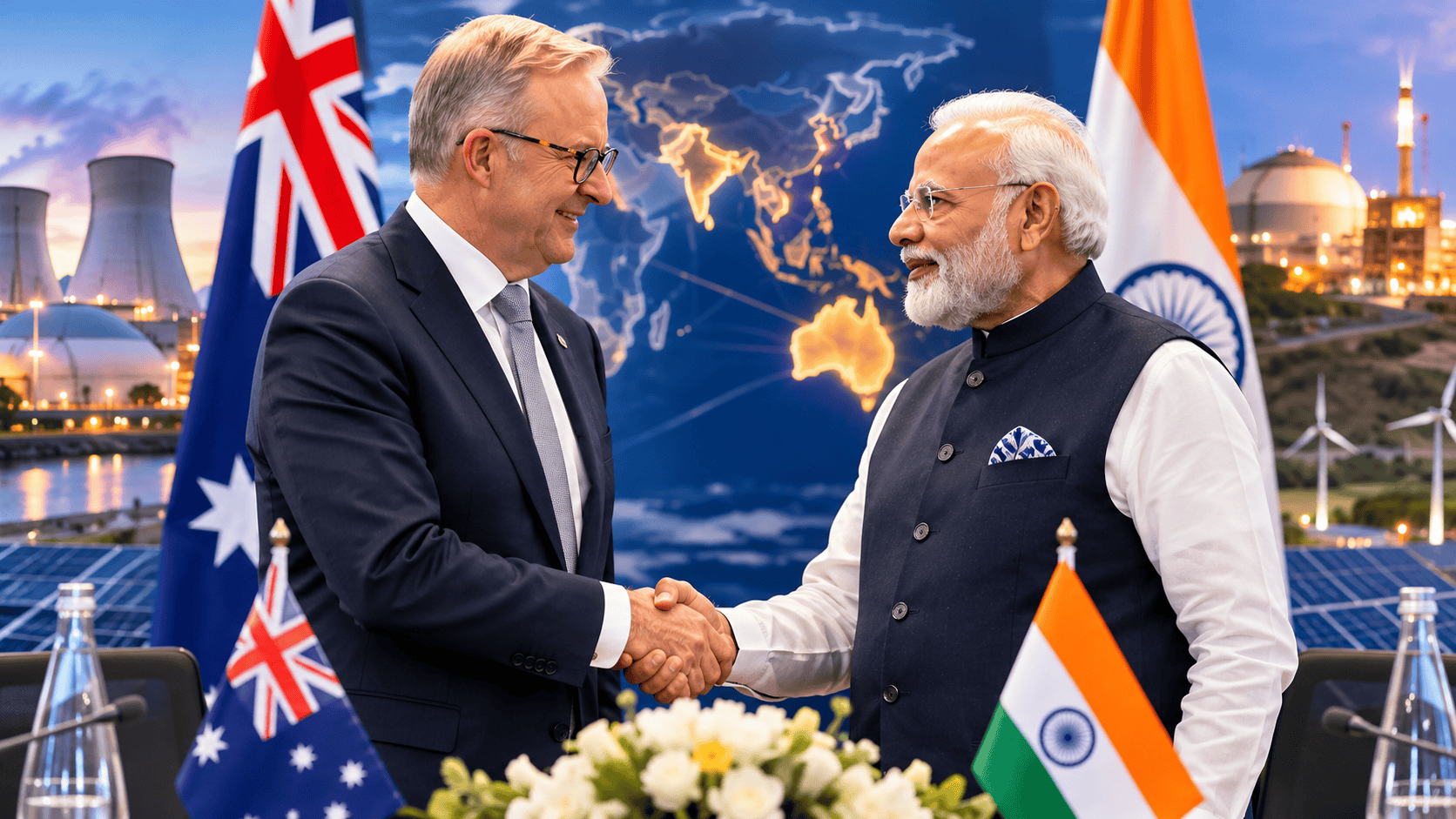
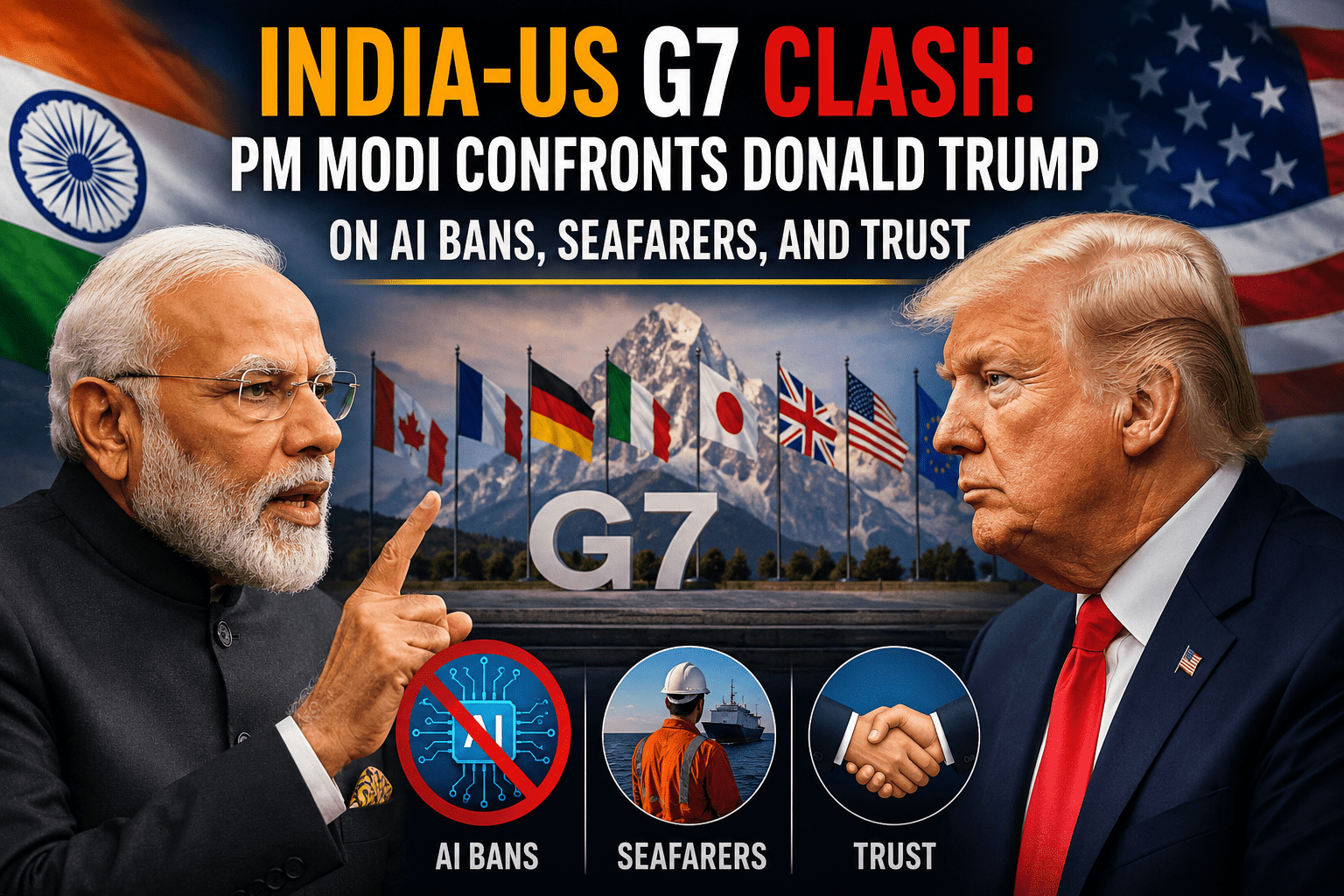
The geopolitical landscape witnessed a significant diplomatic shift at the Group of Seven (G7) Summit. Indian Prime Minister Narendra Modi engaged in a direct, face-to-face diplomatic confrontation with United States President Donald Trump. Addressing the global media and fellow world leaders, PM Modi raised critical concerns regarding Washington’s current protectionist policies, sweeping technology bans, and the safety of global merchant navy crews.
This high-stakes encounter highlights growing structural friction in India-US relations, particularly concerning global supply chains, international trade routes, strategic digital infrastructure, and bilateral economic trust.
Background: The Evolving Geopolitical Friction
Bilateral relations between India and the United States have historically fluctuated between strategic misalignment and deep economic integration. The current friction stems from a series of unilateral policy shifts enacted by the Trump administration, affecting trade tariffs, technological accessibility, and maritime security protocols. PM Modi’s sharp rhetoric at the G7 summit reflects New Delhi’s growing willingness to challenge Washington’s policies when they conflict with India’s national interests and global economic contributions.
Key Conflict Areas at the G7 Summit
1. The Security and Safety of Indian Seafarers
A primary point of contention raised during the joint statement was the security and operational freedom of international maritime crews, known as seafarers. PM Modi asserted that these crews function similarly to global postal workers, facilitating international trade without political alignment.
Global Shipping Share: Maritime transport accounts for approximately 80% of global trade by volume.
Indian Workforce Dominance: Indian nationals comprise roughly 70% of the active crew members operating global commercial vessels.
The Core Issue: New Delhi expressed sharp opposition to aggressive maritime targeting and restrictive policies by the US that jeopardize these crews, emphasizing that Indian merchant mariners operate ships carrying cargo for all nations, including the US, China, and North Korea.
2. Technological Protectionism: The AI Access Ban
The diplomatic friction intensified regarding digital sovereignty and artificial intelligence infrastructure. PM Modi criticized recent protectionist measures enacted by the Trump administration that restrict access to advanced AI models.
The Anthropic Ban: The US administration implemented strict usage restrictions on the advanced AI model “Claude 3.5 Sonnet” (and related infrastructure) developed by Anthropic, limiting full operational access strictly to US citizens.
The Contradiction: This policy has locked out foreign developers, including individuals from Latin American countries like Colombia and Argentina who were co-founders and core developers of the technology itself.
India’s Stance: Modi warned that nations attempting to monopolize critical technology will ultimately pay a heavy long-term cost. He stated that technology, like water, inevitably finds its own path; blockages will only compel excluded nations to accelerate their own sovereign technological development, potentially surpassing existing US frameworks.
3. Tariffs and the Bilateral Trust Deficit
Economic trust emerged as a central theme of the confrontation. PM Modi noted that the modern global economy does not suffer from a shortage of raw materials or resources, but rather from a critical deficit of trust.
To underscore this point, Modi directly cited former US President Richard Nixon’s doctrine: “Trust, but verify,” noting its continued relevance. He emphasized that while trust can be destroyed in a single second, it takes seven to eight generations to rebuild.
Historical Context: Bilateral trust suffered a severe rupture in 1971 during the Bangladesh Liberation War when the US deployed its naval forces against India, creating decades of strategic skepticism.
Recent Developments: Although a strategic convergence was progressively rebuilt over nearly 50 years—gaining momentum around 2016—current US tariff policies and unilateral sanctions risk reversing these diplomatic gains.
Data & Statistics Section
| Metric / Parameter | Value / Percentage | Operational Context / Source |
| Global Trade Facilitated by Maritime Shipping | 80% | Total volume of global commercial cargo moved via sea routes. |
| Indian Representation in Global Ship Crews | 70% | Proportion of Indian seafarers in international commercial vessel operations. |
| Bilateral Trust Recovery Timeline | ~50 Years | Diplomatic rebuilding period required following the 1971 naval rift. |
| Recent AI Export/Access Control Policy | Global Ban (Except US Citizens) | Restrictions imposed on advanced Anthropic AI system access. |
Expert Insights & Industry Impact
Global trade analysts and geopolitical experts view this confrontation as a turning point in how emerging economies interact with Western protectionism.
Strategic Autonomy: New Delhi’s firm stance demonstrates that India will not compromise its economic security or the safety of its global workforce for diplomatic convenience.
Supply Chain Diversification: The US technology ban is actively driving nations across Asia and Europe to diversify away from American digital infrastructure, accelerating the rise of open-source and sovereign AI models.
Maritime Implications: With India supplying a vast majority of global mariners, any escalation affecting their legal protections or safety could severely disrupt international supply chains.
Frequently Asked Questions (FAQ)
1. What triggered the confrontation between PM Modi and Donald Trump at the G7 Summit?
The confrontation was driven by India’s concerns over unilateral US policies, specifically technology restrictions on advanced AI models, tariffs, and security threats facing global merchant navy seafarers.
2. How much of the global shipping workforce comes from India?
Indian nationals constitute approximately 70% of the crew members operating international commercial cargo ships worldwide.
3. What percentage of global trade moves via maritime routes?
Approximately 80% of all international trade cargo is transported by commercial shipping vessels.
4. What technology ban did PM Modi criticize at the summit?
PM Modi criticized the US administration’s decision to ban non-US citizens from accessing advanced AI platforms, such as Anthropic’s systems, highlighting that even foreign co-founders of these technologies were restricted from using them.
5. Why did PM Modi quote the “Trust, but verify” doctrine to President Trump?
Modi used the quote to emphasize that bilateral trust is fragile, taking decades to build but only seconds to destroy, warning that current US protectionist policies threaten long-term strategic cooperation.
6. What historical event affected India-US trust before 2016?
Bilateral trust was severely damaged in 1971 when the United States deployed naval forces in opposition to India during the Bangladesh Liberation War.
7. What did PM Modi mean by stating “technology finds its own path”?
He meant that blocking access to critical tech will not stop global progress; instead, it will motivate excluded nations to innovate independently and build superior sovereign alternatives.
8. Is India-US cooperation completely halted due to this clash?
No, the confrontation represents strategic friction within an ongoing diplomatic relationship, signaling that India is asserting its autonomy on critical economic and workforce issues.
Conclusion
The G7 Summit clash underscores a shift towards multipolarity, where emerging powers like India openly challenge unilateral policies from Washington. By defending the rights of Indian seafarers and critiquing US technological protectionism, PM Modi delivered a clear message: global supply chains, international trade, and technological innovation require mutual trust rather than isolationist mandates. Moving forward, the sustainability of the India-US strategic partnership will depend on how effectively both nations navigate these structural economic disagreements.