TOP 5 NATIONAL NEWS FOR CIVIL SERVICES EXAM – NOVEMBER 19, 2025 (SEO-Friendly Edition)
1) Supreme Court Strikes Down Key Provisions of Tribunal Reforms Act, 2021 – Major Boost to Judicial Independence
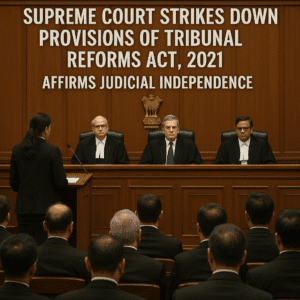
In a landmark judgment on November 19, 2025, the Supreme Court of India struck down several key provisions of the Tribunal Reforms Act, 2021, ruling that they undermined judicial independence and violated the constitutional doctrine of separation of powers. The Court observed that the government had reintroduced clauses earlier struck down, especially those dealing with tenure, appointment process and service conditions of tribunal members. This decision is extremely important for UPSC and other Civil Services aspirants as it highlights the continuing checks and balances that safeguard India’s democratic framework. The ruling will influence the functioning of various tribunals, administrative mechanisms, and future legislative drafting. Students must understand the constitutional principles behind the verdict — judicial independence, basic structure doctrine, and administrative justice — making this one of the top national news topics relevant for the Civil Services exam.
2) PM Releases 21st PM-Kisan Instalment and Launches Multiple Rural Development Projects
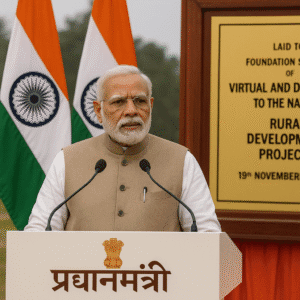
On November 19, the Prime Minister released the 21st instalment of PM-Kisan, transferring financial assistance directly into farmer accounts through the Direct Benefit Transfer (DBT) mechanism. Along with this, major rural road and connectivity projects were inaugurated under national infrastructure schemes. This makes the news highly relevant for UPSC preparation as it connects directly to topics such as agriculture, welfare schemes, financial inclusion and rural development. PM-Kisan remains one of India’s largest farmer-support initiatives, benefiting crores of small and marginal farmers. Aspirants should focus on eligibility criteria, fiscal impact, digital governance, and the broader significance of DBT in reducing leakages. The push for rural connectivity — including PMGSY upgrades — improves market access, logistics efficiency and local employment, making this a multi-dimensional topic important for GS-III, Economics and Governance.
3) RBI’s Inflation Forecasting Model Under Review as Experts Question Policy Transmission
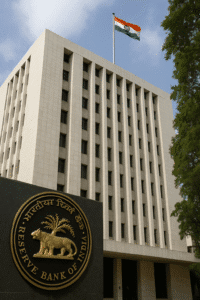
November 19 saw renewed scrutiny of the Reserve Bank of India’s inflation forecasting model, with economists debating whether the central bank’s projections accurately reflect evolving price trends. The analysis fueled discussion on the effectiveness of monetary policy transmission, core inflation behaviour and credit availability across sectors. This is an exam-relevant topic because it bridges macroeconomics, monetary policy, inflation dynamics and institutional accountability. Recent fluctuations in food and fuel categories have created uncertainty around policy decisions, while uneven rate transmission across banks has raised questions about liquidity management and credit flow. For Civil Services aspirants, understanding CPI components, repo-linked lending, MPC roles, and inflation-targeting frameworks is crucial. This news provides rich content for Mains answers on economic stability and central-bank governance.
4) Nationwide Innovation Challenge Launched Ahead of IISF 2025 to Boost DeepTech and Startup Growth
Ahead of the India International Science Festival (IISF) 2025, the government launched a National Innovation Challenge to promote cutting-edge research and DeepTech solutions from students, startups and research institutions. The initiative focuses on emerging sectors like quantum computing, biotech, AI, space-tech and advanced manufacturing, placing India’s innovation ecosystem at the centre of growth planning. This is highly relevant for the UPSC syllabus under Science & Technology, innovation policy, R&D funding mechanisms and digital economy governance. For civil-services aspirants, the story showcases how India is building a future-oriented scientific workforce while encouraging public-private collaboration, challenge-based funding and incubation networks. It also highlights the government’s emphasis on transforming India from a service-driven economy to a technology-driven global competitor — an essential trend for exam essays and interview discussions.
5) Supreme Court Pushes for Speedy NIA Trials, Calls for Six-Month Completion Framework
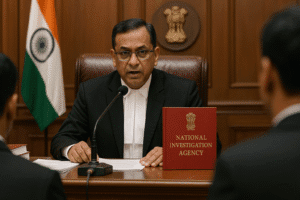
In another significant judicial development on November 19, the Supreme Court directed the Centre to propose a clear plan to complete National Investigation Agency (NIA) case trials within six months wherever possible. The Court emphasised the urgent need to balance national security concerns with the fundamental right to a speedy trial. This is an important topic under Judiciary, Internal Security, Human Rights and Criminal-Justice Reforms for the Civil Services exam. Prolonged undertrial detention and slow investigation timelines have been major systemic concerns. Aspirants should note key concepts such as fast-track courts, technological interventions in justice delivery, witness protection, and NIA’s role under the Unlawful Activities (Prevention) Act. This news is likely to appear in prelims, mains or interview questions as it directly connects to constitutional safeguards, police reforms and internal security governance.