3️⃣ Nifty at Highs: Who Is Really Driving the Index Up?

One reason the Nifty can stay near record levels despite weak breadth is its structure. The index is heavily influenced by a handful of large heavyweight stocks. Companies like Reliance Industries, HDFC Bank, ICICI Bank, Infosys, and TCS carry enormous weight in the index. When these stocks rise, the Nifty moves up even if dozens of other stocks are falling.
Data consistently shows that the top 5–10 stocks contribute a disproportionate share of index gains during such phases. This creates concentration risk, where the market’s direction depends on very few names. If even one or two of these heavyweights correct sharply, the index can fall quickly.
Such index-heavy rallies can mislead investors into believing the market is strong. In reality, the strength is narrow. For portfolio managers, this raises an important risk-management issue: diversification may not protect portfolios when the rally itself lacks diversification.
4️⃣ Midcaps & Smallcaps Under Pressure: What the Data Shows
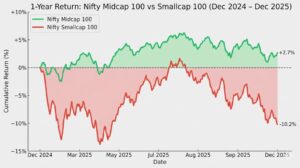
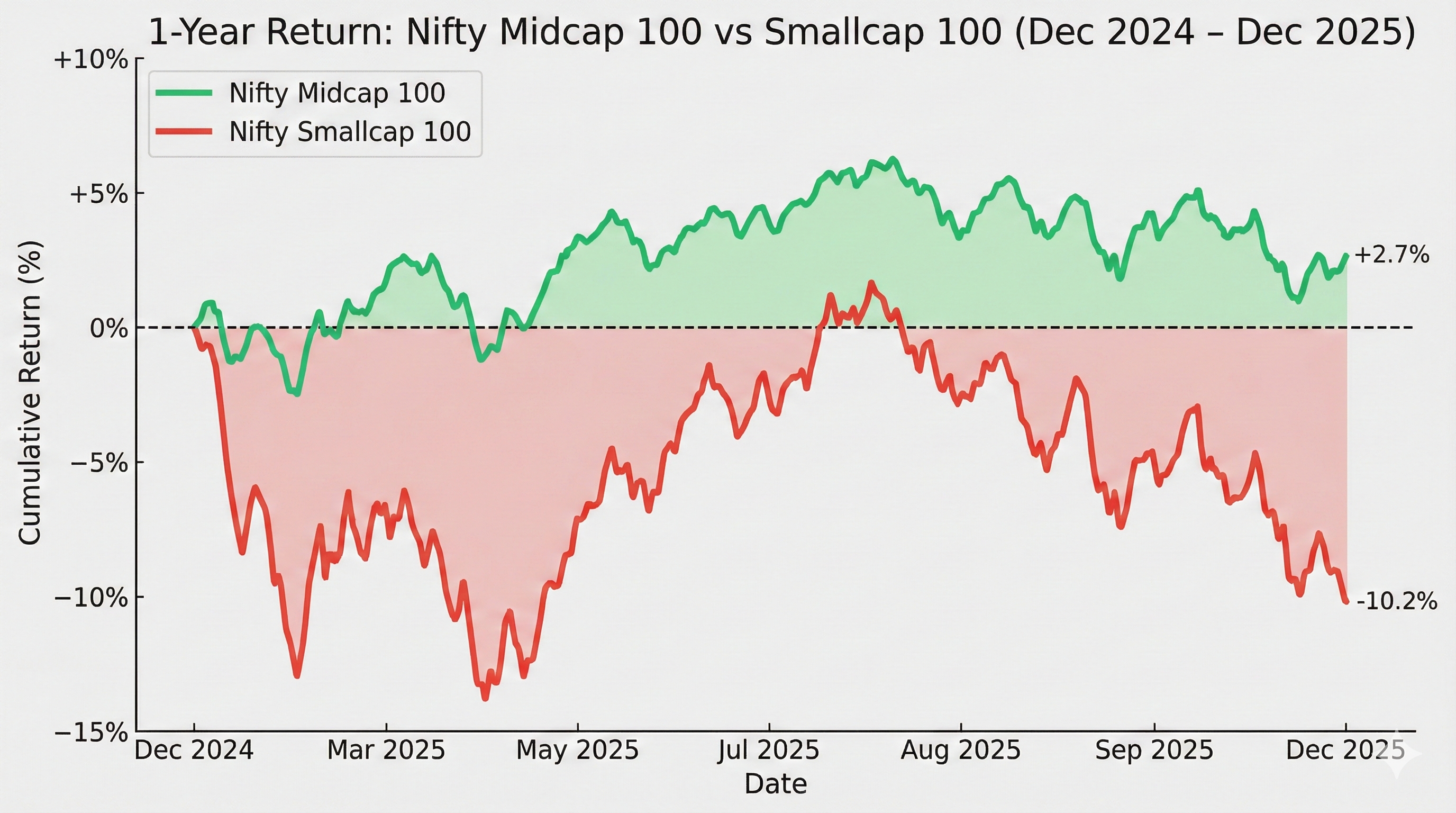
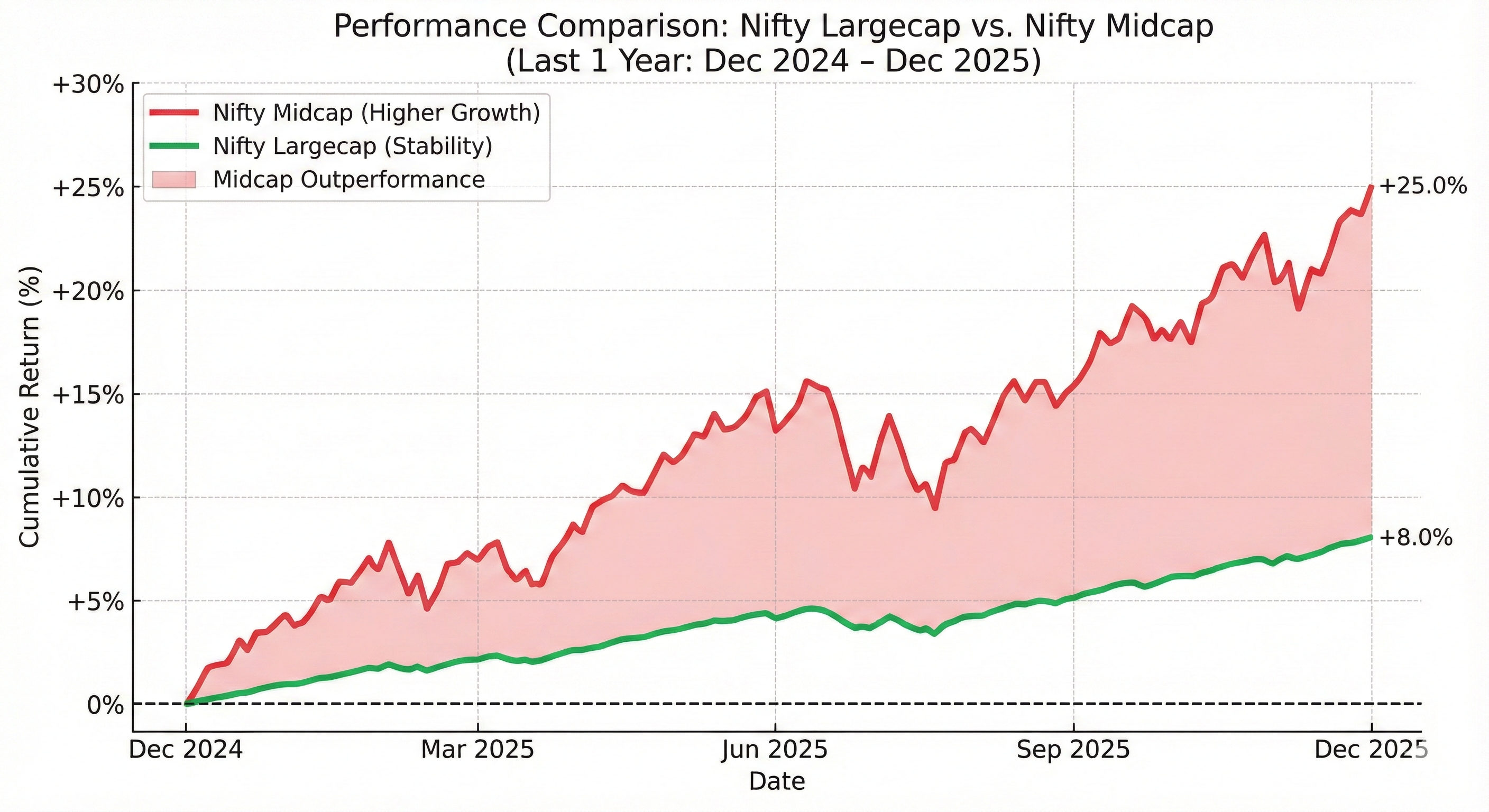
The weakness in market breadth is most visible in the midcap and smallcap segments. After a strong multi-year rally, valuations in these segments became stretched. As liquidity tightened and profit-booking began, many midcap and smallcap stocks corrected sharply, even as the Nifty stayed firm.
Data shows a large percentage of midcap and smallcap stocks trading below their 50-day and even 200-day moving averages. This indicates sustained weakness rather than short-term noise. In relative terms, midcap and smallcap indices have underperformed the Nifty by a wide margin in recent months.
This divergence reflects a decline in risk appetite. Investors are becoming selective, preferring safety over growth. When breadth weakens at lower market levels, it often signals caution—not panic, but a clear warning that easy money conditions are fading.
5️⃣ Institutional Flows & Market Breadth: The Missing Link
Institutional behaviour plays a major role in shaping market breadth. Recently, Foreign Institutional Investors (FIIs) have been cautious or net sellers, particularly in the broader market. Their selling pressure is often felt first in midcaps and smallcaps, where liquidity is thinner.
At the same time, Domestic Institutional Investors (DIIs)—mutual funds, insurance companies, and pension funds—have been active buyers. However, their buying is largely focused on quality large-cap stocks, not the broader market. This selective buying supports the index but does little for overall breadth.
This explains the current paradox: strong indices but weak internals. In the short term, liquidity matters more than fundamentals. When institutions concentrate their capital in a few large stocks, breadth narrows even if earnings remain stable elsewhere.
6️⃣ Technical Warning Signs Investors Should Not Ignore
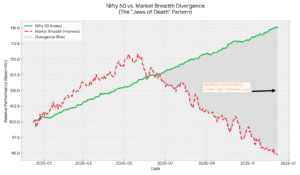
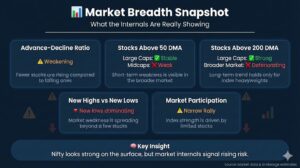
Technical indicators are flashing early warning signals. The advance–decline ratio has been narrowing, meaning fewer stocks are participating in rallies. Momentum indicators show divergence, where prices rise but momentum weakens—a classic sign of exhaustion.
Midcap indices have also shown failed breakouts, attempting to rise but quickly falling back. At the same time, market volatility has picked up despite index strength, reflecting uncertainty beneath the surface.
Experienced traders know that such patterns often precede either sharp corrections or long periods of consolidation. The market may not crash immediately, but returns tend to become uneven, frustrating investors who chase momentum without understanding risk.
7️⃣ What History Tells Us: Past Rallies With Weak Breadth
History offers valuable lessons. In 2018, the Nifty remained relatively stable while most stocks corrected sharply, leading to a painful phase for midcap investors. Before the COVID crash in early 2020, market breadth had already weakened, offering early warning signs.
A similar pattern appeared during the 2021–22 midcap and smallcap froth, when indices stayed high but internals deteriorated. The key takeaway is clear: weak breadth does not always cause immediate crashes, but it often leads to time corrections, selective sell-offs, and underperformance.
Markets usually reward patience during such phases, not aggression.
FII Selling vs DII Buying: The Tug of War Defining Today’s Indian Stock Market Read Now
8️⃣ Is This a Warning or an Opportunity? Three Possible Scenarios
Looking ahead, three broad scenarios are possible.
First, breadth improves—earnings grow, liquidity eases, and participation broadens. This would signal a healthier and more sustainable rally.
Second, breadth remains weak, leading to a range-bound market where only select stocks perform.
Third, breadth worsens, triggering sharper corrections, especially in midcaps and smallcaps.
Triggers include corporate earnings trends, global liquidity conditions, interest rate movements, and geopolitical cues. Investors should prepare for all scenarios rather than betting blindly on continued index highs.
To visit official website of NSE click here
9️⃣ What Should Investors Do Now? Expert Portfolio Strategy
In such markets, strategy matters more than prediction. Investors should focus on quality over momentum, avoiding overcrowded trades. Balancing portfolios with strong large caps and selectively chosen midcaps reduces risk.
For long-term investors, SIPs remain a sensible approach, helping average costs during volatility. Lump-sum investments should be staggered. Traders should tighten stop-losses, reduce leverage, and respect technical signals.
Above all, investors must avoid chasing index highs blindly. Markets punish confidence without discipline.
🔟 Conclusion: When the Index Lies, Breadth Tells the Truth
Record highs can be comforting—but they can also be misleading. Nifty levels alone do not guarantee market health. Weak market breadth is not a panic signal, but it is a clear yellow flag. Smart investors look beyond headlines and track internals that reveal the market’s true condition.
In the end, discipline matters more than optimism. When the index tells one story and breadth tells another, history suggests listening to breadth. Because in markets, what is hidden often matters more than what is visible.