Kharg Island Strike 2026: Iran’s Oil Lifeline Under Threat — What It Means for You

Introduction: Why Kharg Island Changes Everything
Most people have never heard of Kharg Island. It’s a tiny coral outcrop in the Persian Gulf — roughly one-third the size of Manhattan. But what happens on this small strip of land has the power to shake global financial markets, spike your petrol prices, and tilt the balance of power in the most dangerous war the Middle East has seen in decades.
On March 14, 2026 — Day 15 of the US-Israel war on Iran — US forces struck Kharg Island for the first time. While the oil infrastructure was deliberately left untouched, President Trump’s message to Tehran couldn’t be more menacing: cooperate on the Strait of Hormuz, or watch your economic lifeline burn.
Trump says US ‘obliterated’ military targets on Kharg Island but spared oil infrastructure
What Is Kharg Island? The Geography of Power
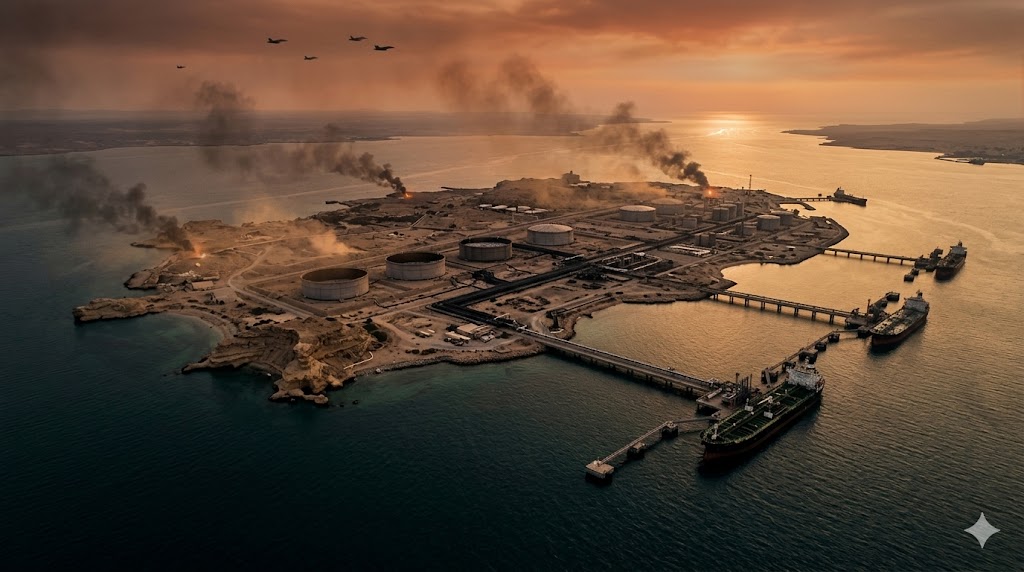
Located just 25 kilometres off Iran’s southwestern coast in the northern Persian Gulf, Kharg Island is a five-mile-long stretch of land that punches far above its weight. A 1984 CIA document described it as “the most vital in Iran’s oil system.” Four decades later, nothing has changed.
- Processes approximately 90% of Iran’s crude oil exports — around 950 million barrels every year
- Connected to Iran’s three major offshore oil fields via subsea pipelines: Aboozar, Forouzan, and Dorood
- Deep natural harbour allows giant supertankers to dock and load crude directly
- Storage capacity of roughly 30 million barrels; currently holds ~18 million barrels
- Loading terminals capable of handling 7 million barrels per day at full capacity
What Happened on March 14, 2026 — The Strike Explained
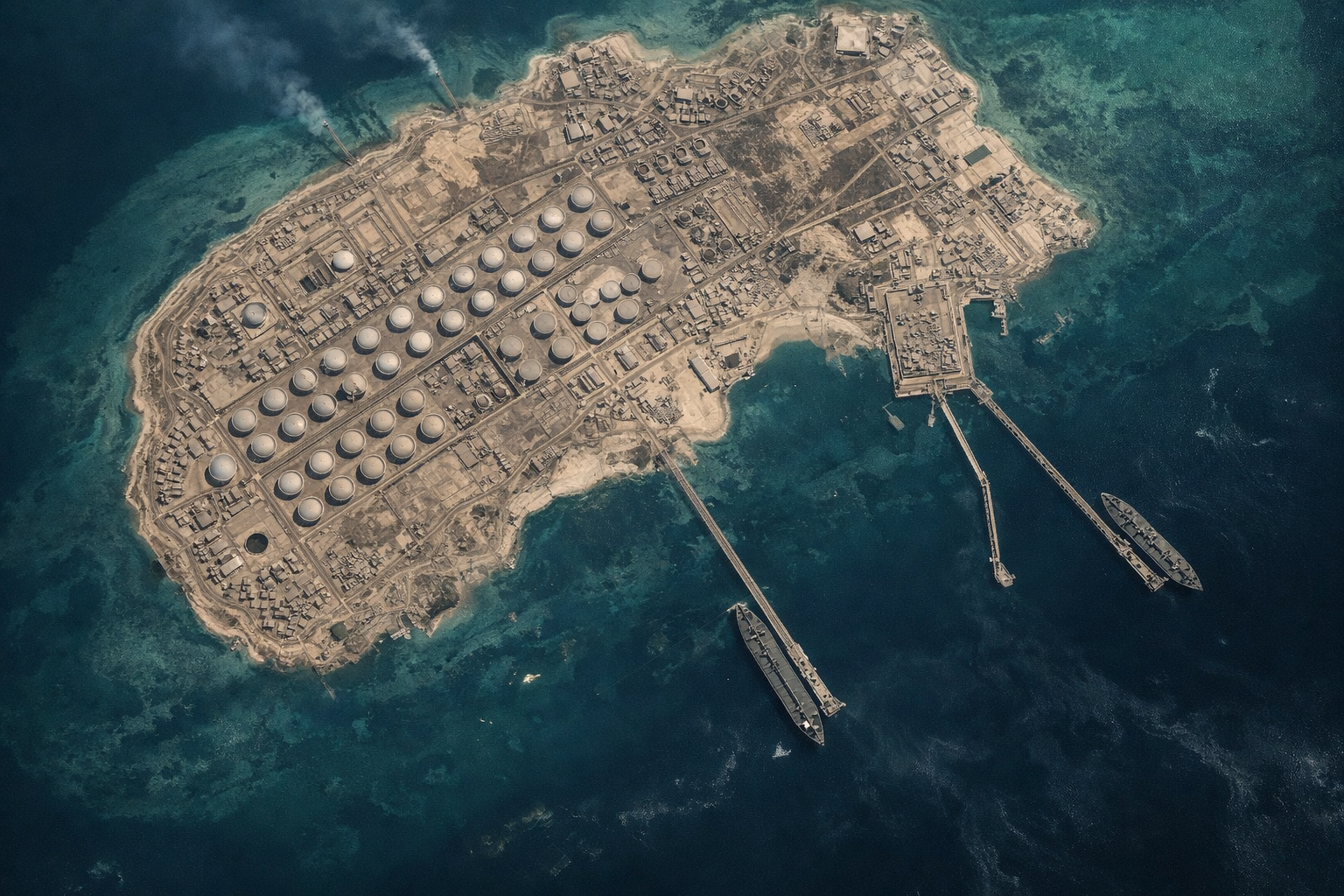
In the early hours of March 14, US Central Command launched what it called a “large-scale precision strike” on Kharg Island. Trump later posted claiming forces had “totally obliterated every military target.” According to CENTCOM, the strike destroyed naval mine storage, missile bunkers, air defence systems, and airport facilities. Crucially, no oil infrastructure was touched.
Why the Oil Infrastructure Was Spared — 4 Strategic Reasons
1. It Would Hurt America Too
Oil prices have already surged to nearly $120/barrel since the war began February 28 — up from $71. Destroying Kharg would take 2 million barrels per day off global markets permanently, potentially triggering a global recession and devastating US consumers at the pump.
2. Leverage for Negotiations
Keeping Kharg intact gives the US enormous negotiating leverage regardless of which regime rules Iran post-war. RUSI research fellow Petras Katinas put it plainly: seizure gives the US leverage “no matter which regime is in power after the military operation ends.”
3. Prize for a Future Friendly Government
If regime change succeeds, destroying Iran’s main export terminal would be an economic catastrophe for any future government the West wants to succeed. Kharg is a prize to be unlocked — not destroyed.
4. The Seizure Option
Some analysts believe Trump may attempt to physically seize — not just bomb — Kharg Island. Former White House Situation Room head Marc Gustafson notes the appeal: maximum financial leverage, a PR win, and a military buffer. Experts estimate roughly 5,000 combat troops would be needed.
US attacks military sites on Iran’s Kharg Island, home to vast oil facility
Oil Markets: What the Numbers Tell Us
| Indicator | Before War (Feb 27) | March 14, 2026 |
|---|---|---|
| Brent Crude Price | $71.32 / bbl | ~$92–$120 / bbl |
| Strait of Hormuz traffic | ~20M bbl/day | Near standstill |
| Gulf supply disruption | Normal | –10M bbl/day |
| IEA emergency release | Not activated | 400M bbl released |
| US gas prices | ~$3.10 / gallon | 22-month high (~$5+) |
The IEA has characterised this as the largest supply disruption in the history of the global oil market. JPMorgan analysts warn that a Kharg oil strike could remove up to half of Iran’s national output — up to 2 million barrels per day — from global supply permanently.
The Iran Wildcard: A ‘Yuan for Oil’ Gambit?
Here’s what most Western media is missing. Tehran is reportedly exploring allowing a limited number of tankers through the Strait — but only if cargo is traded in Chinese yuan rather than US dollars. This is more than logistics — it’s a direct challenge to the dollar’s dominance in global energy trade.
What to know about Kharg Island — the tiny coral outcrop at the heart of Iran’s oil industry
What This Means for India
- India is a major Gulf oil consumer — LPG supplies for cooking and heating are severely disrupted
- Air India and IndiGo have suspended Middle East services due to airspace closures
- Indian petrochemical plants relying on Gulf naphtha and LPG are already curtailing output
- The IEA specifically flagged LPG disruption risk for India and East Africa
- Indian investors in energy stocks and oil ETFs face extreme price volatility
What Happens Next? The 4 Scenarios
Tehran agrees to free shipping — possibly via a yuan-based China-mediated deal. Oil falls below $90. Kharg’s oil facilities stay intact. Markets stabilise.
Iran maintains the blockade. US keeps striking military targets. Brent stays $90–$110. This is the current trajectory and could persist for weeks.
Iran mines the Strait. Trump follows through. Kharg terminals destroyed. Brent surges past $130–$150. Global recession risk rises sharply.
~5,000 US troops capture the island. It becomes a US-controlled leverage point. Russia and China are drawn into the diplomatic — and possibly military — fray.
Iran threatens to strike oil facilities after US hits Kharg Island military targets
Frequently Asked Questions
Conclusion
Kharg Island has become the single most watched piece of real estate on the planet. The US has destroyed all military infrastructure on it — but the oil terminals still stand. That “for now” is doing enormous heavy lifting.
Iran’s new Supreme Leader faces an impossible dilemma: hold the Strait and risk losing the economic heart of his country, or back down and hand Trump a massive geopolitical win. Neither choice is clean. Both carry enormous consequences — for 80 million Iranians, and for billions more who heat their homes and power their economies with Persian Gulf oil.
Stay tuned. This story is far from over.

Related Articles