When American Policy Goes on Sale: How Trump’s U.S. Agenda Appears to Serve The Few, Not the Many
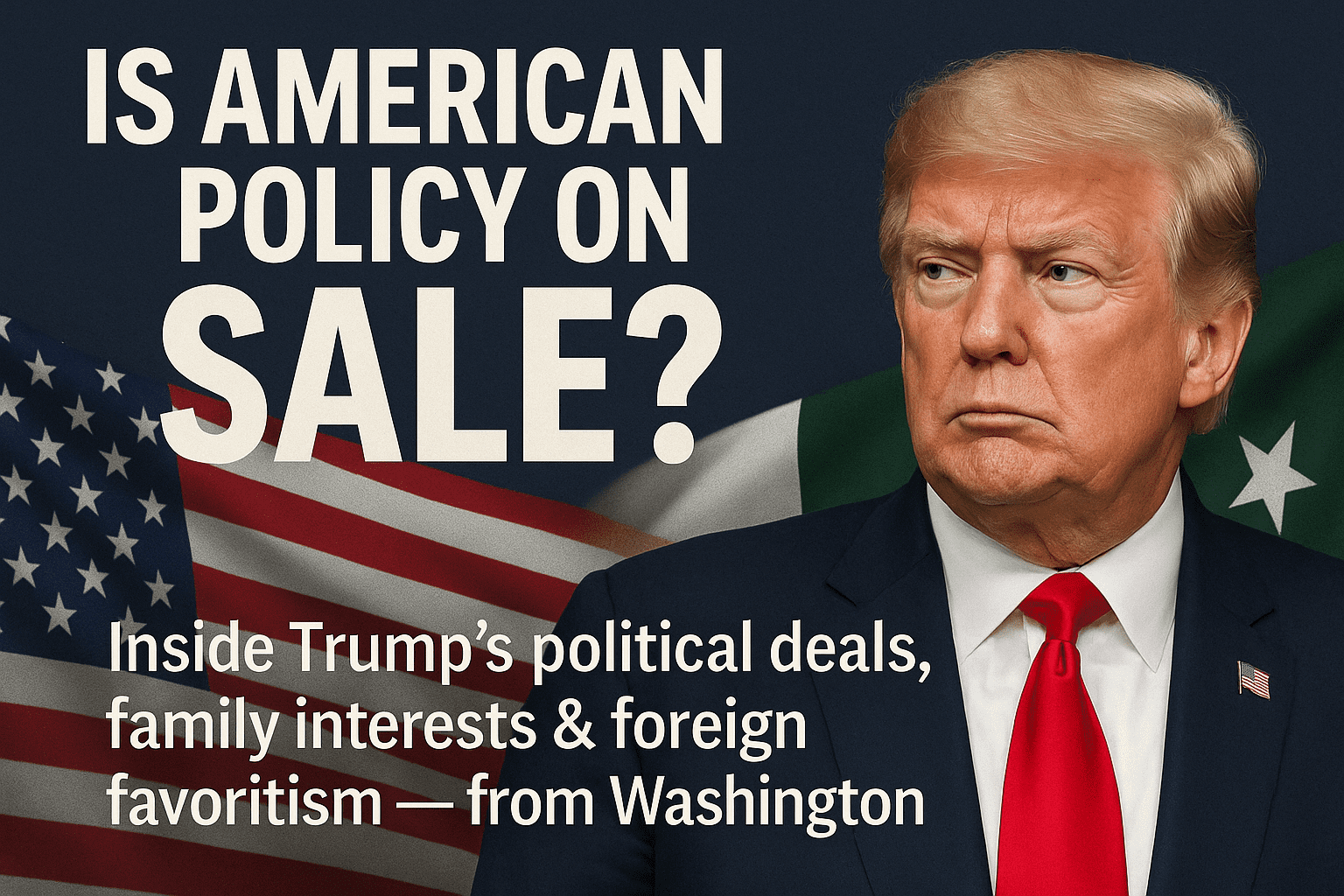
In the public arena, the United States repeatedly proclaims itself a champion of democracy, human rights, and rule of law. Under former President Donald Trump and his inner circle, however, a growing body of evidence suggests that American policy—both at home and abroad—has been leveraged not for the majority of Americans, but for a narrow set of interests: family, business, and connected foreign actors. This article explores three inter-linked themes: first, how domestic lobbying and family business intersect with U.S. foreign policy; second, how that intersection plays out in relations with nations that do not adhere to democratic norms; and third, how global actors—not just adversaries but strategic partners—appear to benefit disproportionately when U.S. policy is shaped by money, access and influence rather than principle.
1. The revolving door, the family business and the “policy for profit” dynamic
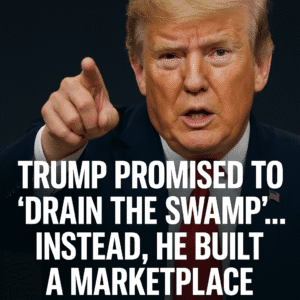
President Trump entered office promising to “drain the swamp” in Washington. But shortly thereafter, the swamp seemed to fill up with former lobbyists, industry insiders and officials whose connections to business interests raised alarms. Analysts at Center for American Progress noted that the administration “appointed scores of former industry lobbyists to positions that regulate those industries,” creating predictable conflicts. Center for American Progress
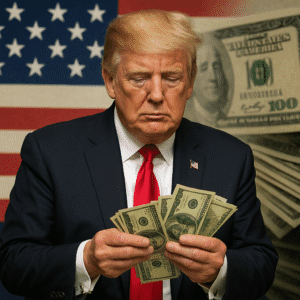
At the same time, the Trump family business empire remained active—and in many cases directly benefited from foreign governments and foreign entities paying to stay in Trump-owned properties or to engage with Trump-branded ventures. For example, the ethics watchdog Citizens for Responsibility and Ethics in Washington found that Trump likely benefited from $13.6 million in payments from foreign governments during his presidency. CREW
Further, the lobbying and expenditure trail suggests that U.S. policy may have been influenced by access rather than merit. A striking commentary from The New Yorker described the system bluntly:
“What if he’s in a bad mood? You have no clue where the money is eventually going.”
“Outer-borough Mafia shit.” The New Yorker
In short: when policy becomes transactional, the average citizen is squeezed out of both the decision-making circle and the benefit stream. The result is a kind of “American policy for sale” which—ironically—undermines the very foundations of democracy that the U.S. claims to support.
2. Foreign tax-payers, foreign lobbyists, and the bending of U.S. foreign policy
The influence of money and lobbying does not stop at U.S. borders. Foreign governments, strategic actors and military establishments have at times leveraged U.S. policy via donations, investment promises and personal relationships with the Trump circle. What does this mean in practice?
2.1 Foreign payments to Trump-controlled properties
It is no secret that foreign governments, including those with opaque human-rights records, have used Trump-branded properties. According to the open source data from OpenSecrets and related reports, payments to Trump properties from foreign entities are traceable and raise questions about whether policy favours followed commercial favour. OpenSecrets
2.2 Lobbying for access and policy shift
Lobbying-firms close to the Trump orbit became conduits for foreign actors seeking influence. A recent memo on lobbying by interest groups noted the strong correlation between a bill’s legislative progress and interest-group positions, highlighting how large firms with access can shift outcomes. arXiv
When the U.S. policy apparatus is open to being influenced by well-moneyed actors (including foreign ones), the risk is that policy that should serve the American people instead begins to serve international clients, or the family/business network of the president.
3. Democracy as cover: When America “supports democracy” — selectively
One of the core tenets of U.S. foreign policy has been the support of democracy and human rights. Yet under Trump, a number of puzzling paradoxes emerged: nations with weak democratic institutions or dubious records received U.S. attention, while traditional democratic partners found themselves sidelined or treated coldly.
3.1 The paradox of praising non-democratic regimes
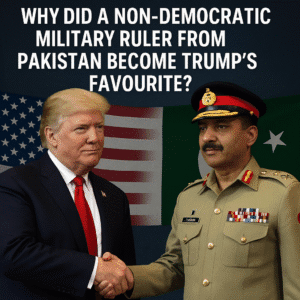
Consider the relationship with Asim Munir, the Chief of Army Staff (now Field Marshal) of Pakistan. Pakistan is widely regarded as having weak democratic accountability, military dominance over civilian government, and serious human-rights concerns. Wikipedia+1
Yet in June 2025 President Trump hosted Munir at the White House, calling him “my favourite field marshal”, “a great, great guy” and praising Pakistan in unusually effusive terms. Hindustan Times The article in Hindustan Times called it “Trump’s strange love affair with Pakistan.” Hindustan Times
What is striking is the contrast: a leader of a democratic country might wait years for meeting with the U.S. President, while a strongly militarised figure from a country whose democracy is fragile gets palm-patting access. The message: support for democracy becomes a slogan, not a principle.
3.2 America’s “for democracy” rhetoric vs. transactional reality
On one hand, the United States continues to proclaim that it stands with the people of democracies, that its alliances are based on shared values. On the other hand, when a foreign leader brings access, business opportunity, lobbying leverage, or strategic value—regardless of democratic credentials—Trump appears to reward that.
This mismatch risks delegitimising U.S. claims to moral leadership. Citizens around the world observe that the same policy-maker who calls for election fairness might also be whispering business deals behind closed doors.
4. The flip side: Terror, paradox and policy opportunism
When the U.S. foreign-policy lens is narrowed to business and influence rather than strategic coherence, even alliances with actors once considered adversaries become plausible.
For example: while there is no credible public documentation that the U.S. under Trump embraced a formal relationship with ISIS, several media pieces highlight how transactional logic can blur first principles. An ideology-driven terrorist organisation becoming a “favourite” of a U.S. President would be absurd—but the broader point is: when policy is defined less by values and more by deals, weird alignments become feasible.
In one commentary, the tone appears:
“When you’re in the lobbying-business regime, you have no clue where the money is eventually going.” The New Yorker
It is entirely plausible that U.S. policy under Trump permitted or encouraged actors anywhere—even those with dubious democratic or anti-terror credentials—to enjoy de facto favour if they could offer business, minerals, strategic access or lobbying value.
5. The Pakistan case study: A closer look
To illustrate how these dynamics converge, let’s dive deeper into the case of the U.S.–Pakistan axis under Trump.
5.1 Munir’s promotion, lifelong immunity and the U.S. link
Asim Munir has been elevated to the rank of Field Marshal in Pakistan—an extremely rare honour in that country. Wikipedia His promotion grants him sweeping authority and arguably weakens civilian oversight of the military. Pakistan’s democracy remains fragile, and military dominance over politics is well documented.
From a U.S. standpoint: hosting this individual at the White House sends a strong signal of personal endorsement, regardless of the democratic condition in Pakistan. Al Jazeera+1
5.2 Trade, minerals and mining: business meets diplomacy
In 2025 Pakistan and the U.S. were reported to be negotiating a trade and investment deal worth billions, including critical minerals, oil reserves and mining in Pakistan’s Balochistan region. Wikipedia+1 Some analysts interpret this as Pakistan leveraging Trump’s transactional style: “What can you do for me? What can I get out of this?” The Guardian
In effect, it appears that a militarised Pakistani actor (Munir) and a U.S. President known for business-style diplomacy converged in a deal: the U.S. gains access to minerals, trade investment; Pakistan gains legitimacy, access and perhaps US favour.
5.3 Democracy, accountability and the victimised majority
Yet for Pakistan’s average citizen, the democratic cost remains high: military dominance, weak civilian institutions, limited transparency and accountability. The U.S. endorsement of such a figure thereby undermines any claim to prioritising democracy or human rights.
6. What about domestic Americans? Who loses when policy is sold?
When U.S. foreign policy is shaped by commercial access, family business entanglements and lobbying rather than democratic principle, the domestic losers are many:
Ordinary Americans lose as taxpayer dollars may be diverted to serve foreign or private interests rather than national interest.
Policy becomes opaque: when lobbying funds shape outcomes, citizens cannot track how decisions are made.
The credibility of U.S. democracy suffers: foreign publics and governments see contradictions between values and practice, diminishing American soft power.
Business-as-usual becomes reinforced: rather than challenging entrenched power, the system rewards insiders.
The fact that Trump’s own properties benefited from foreign payments; that foreign governments engaged with Trump-linked firms for access; and that policy shifts appear aligned with these interests—all point to an uneven playing field where the many are sidelined by the few.
7. What needs to change — rebuilding credibility and accountability
If the United States wants to restore its claim to democracy-based leadership, several reforms must be pursued:
Tightened ethics and lobbying transparency: Enforce the spirit of Executive Order 13770 (signed by Trump in 2017) which prohibited appointees from becoming lobbyists for five years or lobbying on behalf of foreign governments. Wikipedia Make the waivers and exceptions public.
Freeze foreign payments to presidential-family businesses during office: To prevent foreign governments from buying access via hotels or branded properties.
Foreign-policy decisions aligned with democratic and human-rights criteria—not purely transactional value: If a country lacks democratic institutions, the U.S. should incorporate that into policy, not sideline it because business deals or access are available.
Clear separation of personal business and public service: The president and his family must avoid entanglements that create actual or perceived conflict of interest.
Robust oversight and whistleblower protections: So that when policy shifts occur, the public record is transparent and accountable.
8. Conclusion: Democracy cannot be a slogan while business is the driver
It is tempting to dismiss the pattern of policy-for-profit as just politics as usual. But when the leader of the world’s leading democracy appears to put his family’s business interests and foreign lobbying access ahead of national service and principle, it’s a red-flag moment.
President Trump’s style of diplomacy and policy making appears less about advancing the American people’s interests and more about leveraging the power of the office for business, personal and foreign advantage. Whether it’s hosting a Pakistani field-marshal whose country’s democratic institutions are weak, or allowing foreign payments into Trump-owned properties while policy changes follow, the signal is clear: access equals favour.
For a democracy to function, policy must be shaped by public interest, not private interest. When that line blurs, the system tilts from “by the people, for the people” to “by the few, for the few”. And so long as policy is on sale instead of on principle, the credibility of U.S. global leadership—and the trust of its own citizens—will continue to erode.