The Iran–Israel–USA War: Four Hidden Goals and the Quiet Death of the Dollar

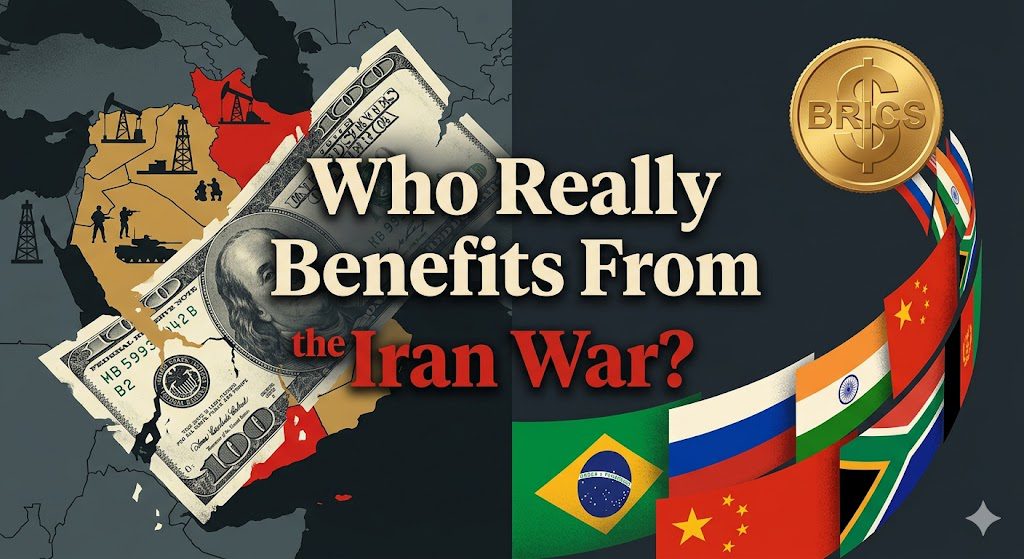
Every major war of the modern era has had two faces. The face the public sees — flags, speeches, missiles on television — and the face hidden behind closed boardroom doors, where real decisions about energy, currency, and global dominance are made quietly, long before the first bomb drops. The ongoing conflict involving Iran, Israel, and the United States is no different. On the surface, it looks like a regional security dispute or a religious confrontation. But dig just a little deeper, and you will find a layered agenda that has almost nothing to do with religion and everything to do with oil, weapons contracts, reconstruction profits, and the future of the US dollar as the world’s reserve currency.
In this analysis, we break down the four primary goals that the United States — or more precisely, the powerful corporate and financial interests that influence US foreign policy — stands to gain from escalating conflict in Iran. We will also examine how this Middle Eastern flashpoint is directly connected to the Russia-Ukraine war, and why both conflicts, happening simultaneously, are accelerating the most consequential financial transformation of our lifetime: de-dollarization. Read every word carefully. What follows is not conspiracy theory. It is pattern recognition backed by history, data, and decades of precedent.
Control Over Iran’s Oil — The Oldest Game in Geopolitics
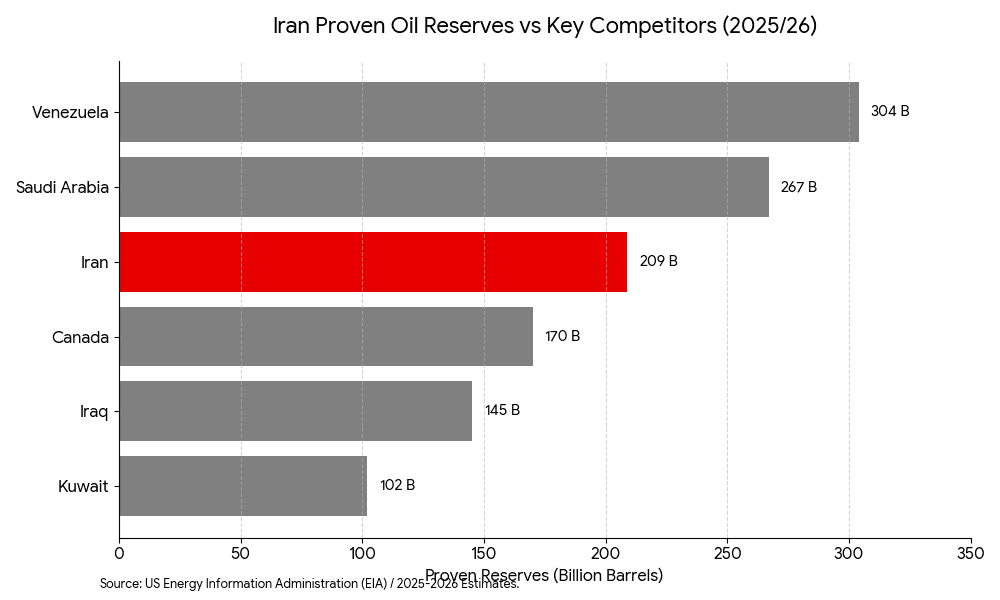
Iran is not just a country. It is a geological treasure chest. It holds the world’s fourth-largest proven crude oil reserves — estimated at over 155 billion barrels — and the second-largest natural gas reserves globally. For any superpower that aspires to control global energy markets and keep the petrodollar system alive, Iran is the most important country in the world that it does not yet control.
The United States and its allies have had a complicated and deeply interventionist history with Iran. The 1953 CIA-backed coup that overthrew the democratically elected Prime Minister Mohammad Mosaddegh — who had nationalized the Anglo-Iranian Oil Company — was not an accident of Cold War politics. It was a calculated move to put Iranian oil back under Western corporate control. The Shah was reinstalled not because Iranians chose him, but because he kept the oil pipelines flowing to the West.
When the 1979 Islamic Revolution expelled Western oil interests from Iran, Washington lost access to one of the richest energy fields on earth. Sanctions, proxy wars, and nuclear deal negotiations since then have all, at their core, been about finding a way to re-enter Iran’s energy economy. A military conflict that destabilizes, weakens, or fundamentally changes the Iranian government would open the door to a new round of oil concessions, contracts, and influence — not for the American people, but for the multinational energy corporations that fund political campaigns and shape foreign policy from behind the scenes.
Beyond pure profit, controlling Iranian oil also means denying China and Russia a critical energy partner. Iran has been quietly supplying China with discounted crude oil despite US sanctions. If that supply line is broken — or brought under Western-friendly management — China’s industrial engine slows, and the BRICS bloc loses one of its most strategically important members. In a world where oil is still priced primarily in US dollars, controlling who sells it and to whom remains the single most powerful lever of American financial dominance.
The Return of a Shah — Regime Change as US Foreign Policy
Washington has never truly accepted the 1979 Islamic Revolution. Not because it fundamentally opposed the Iranian people’s right to self-governance, but because the revolution created a government that refused to be managed, could not be bribed, and had no interest in accommodating American financial or corporate interests. Since 1979, regime change in Iran has been a persistent objective of US neoconservative foreign policy circles, think tanks, and intelligence agencies.
The goal is not necessarily the literal return of the Pahlavi dynasty, though certain influential Washington circles have funded and supported exiled Iranian royalists for decades. The broader objective is the installation of a government — whatever its form — that is compliant, pro-Western, and willing to open Iran’s economy to American banks, energy companies, and financial institutions. In Washington’s strategic vocabulary, this is called “democracy promotion.” In the real world, it has historically meant replacing independent governments with manageable ones.
Look at the pattern. Iraq, 2003: Saddam Hussein removed, replaced by a fragile parliamentary system heavily dependent on US military and financial support, while US oil companies and contractors flooded in. Libya, 2011: Muammar Gaddafi — who had proposed replacing the US dollar with a gold-backed African dinar for oil trade — was removed in a NATO-backed operation. Syria was next, though it survived with Russian and Iranian support. Iran is the largest, most resource-rich, and most strategically important country on that list. It is the unfinished business of the neoconservative project.
Historical Context
The 1953 Anglo-American coup against Iran’s elected Prime Minister, Operation AJAX, was carried out precisely to prevent Iran from nationalizing its own oil. The current conflict is a continuation of the same economic logic — only the tools have changed.
A regime change in Iran would serve multiple objectives simultaneously: it would remove the primary sponsor of Hezbollah, Hamas, and the Houthi movement in Yemen, dramatically reducing the military threat to Israel; it would open Iran’s economy to Western capital; and most importantly, it would remove a critical pillar of BRICS energy independence and deal a severe blow to de-dollarization efforts. For those who engineer these outcomes from a distance, it is an extraordinarily efficient investment.
Depleting the Stockpiles — How War Feeds the Military-Industrial Complex
There is a remarkable economic reality that almost never gets discussed in mainstream media: modern wars do not just destroy economies — they create enormous, guaranteed revenue streams for the corporations that manufacture weapons, ammunition, missiles, and military hardware. And the beauty of it, from a business perspective, is that every weapon fired in a conflict must be replaced, generating a continuous and legally mandated government purchase order.
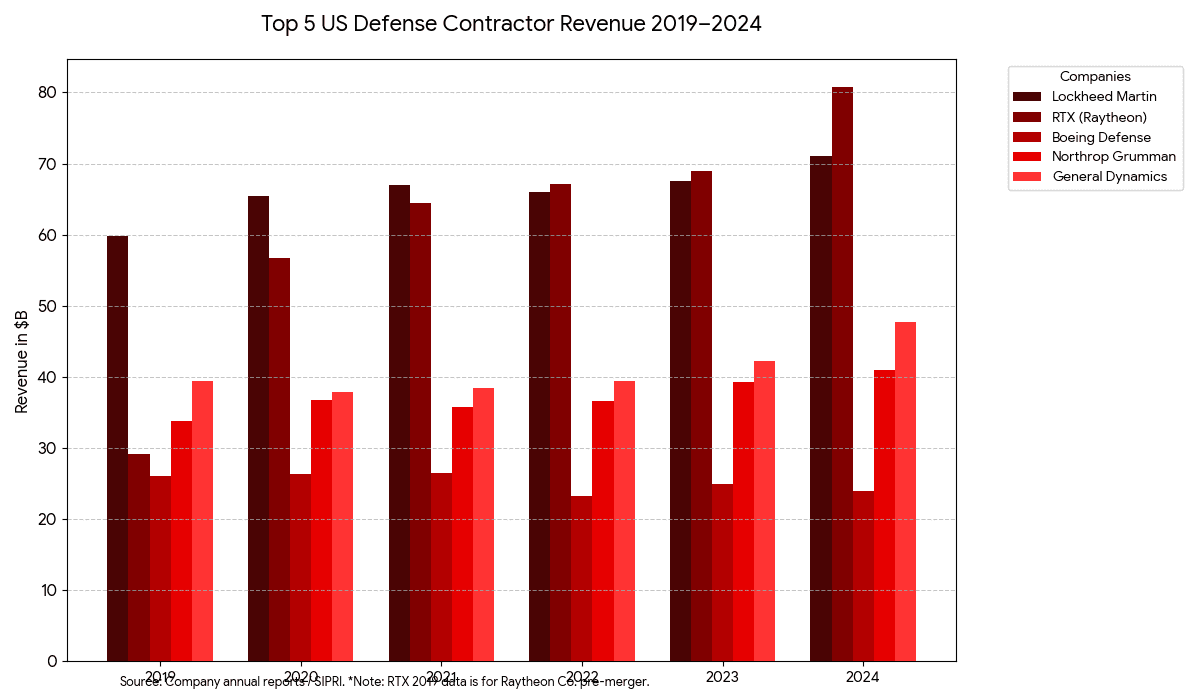
The United States military-industrial complex — a term coined by President Dwight D. Eisenhower in his famous 1961 farewell address as a warning — is not just a collection of defense contractors. It is a deeply embedded ecosystem of corporations, lobbyists, think tanks, and former military officials who revolve between government positions and corporate boardrooms. Companies like Raytheon, Lockheed Martin, Boeing Defense, Northrop Grumman, and General Dynamics collectively earn hundreds of billions of dollars annually. Their revenue depends on conflict. Peace, by definition, is bad for their business model.
When the United States supplied billions of dollars’ worth of missiles, air defense systems, and precision munitions to Israel for operations in Gaza and against Iran-backed forces, those weapons eventually need to be replenished from US manufacturing facilities. The Pentagon then issues new defense procurement orders. Congress approves supplemental defense budgets. The contracts flow. Stock prices rise. The cycle continues. This is not speculation — it is the documented, publicly reported business model of American defense procurement, and it accelerates every time a conflict escalates in the Middle East.
Iran’s military is one of the most heavily armed independent forces in the world. It has accumulated decades of domestically produced drones, ballistic missiles, and asymmetric warfare capabilities. A direct or proxy conflict involving Iran would require an extraordinary volume of countermeasures — interceptors, jamming systems, naval hardware, and air superiority assets. For the US defense industry, Iran is not a threat to be feared. It is a market to be monetized. And critically, the American taxpayer foots the entire bill, while the profits flow to private shareholders, not public coffers.
Reconstruction Profits — Building Back What Was Deliberately Destroyed
Perhaps the most cynical dimension of modern American-led warfare is the reconstruction business that follows every major conflict. The formula is disturbingly consistent: bomb a country’s infrastructure into rubble, then send in your own corporations to rebuild it at the expense of the destroyed nation’s future revenues, international loans, or direct US taxpayer funding. The profits stay in American hands. The debt stays with the war-torn country.
After the 2003 invasion of Iraq, the United States Agency for International Development (USAID) awarded reconstruction contracts worth over $18 billion in the first years alone. The largest recipients were companies like Bechtel Group, Halliburton’s subsidiary KBR, and a constellation of other American multinationals. Iraq’s own contractors received a fraction of the work. Afghanistan followed the same script. By some estimates, over $140 billion was spent on reconstruction in Afghanistan over twenty years, with a substantial share flowing to US and Western contractors while the Afghan state remained fragile and dependent.
Iran, if subjected to a major military conflict, would present one of the largest reconstruction opportunities in modern history. With a population of 85 million people, a developed urban infrastructure, functioning industrial capacity, and decades of deferred investment due to sanctions, a post-conflict Iran would require trillions of dollars in rebuilding. The companies that would win those contracts — with the support of US government financing and international lending institutions — would predominantly be American.
This is what critics mean when they refer to the “deep state” or the permanent financial establishment that transcends any individual US president or political party. These are the institutional interests — defense contractors, energy majors, construction multinationals, and the financial institutions that fund them — that consistently benefit from foreign policy decisions that create, prolong, and then profitably conclude military conflicts. The American voter, the American taxpayer, and the American soldier bear the costs. A narrow class of corporate shareholders absorbs the gains.
Russia-Ukraine: Weakening Europe to Accelerate De-Dollarization
Now zoom out from the Middle East and look at Europe. The Russia-Ukraine war, which began in February 2022, is not just a territorial dispute between two neighboring nations. It is a strategic inflection point in the global balance of power — one that has been exploited by multiple parties for multiple ends. And one of its most profound, least discussed consequences is its role in destabilizing the European economy in ways that directly benefit the BRICS de-dollarization agenda.
Before the war, Europe was deeply integrated with Russian energy. Germany, in particular, was receiving approximately 40% of its natural gas from Russia via the Nord Stream pipeline system. This energy dependency was cheap, efficient, and kept European industrial competitiveness — especially German manufacturing — extremely high. The war changed everything. Russia cut off, and the Nord Stream pipelines were mysteriously sabotaged, European nations scrambled to replace Russian energy with far more expensive liquefied natural gas (LNG), primarily imported from the United States at significantly higher prices.
The result was a brutal energy-driven inflation crisis across the European Union. Industrial energy costs soared. German chemical giants, steel producers, and automotive manufacturers began considering relocating production outside Europe. GDP growth stagnated. Consumer purchasing power eroded. The euro weakened against the dollar. Europe — which had historically been a stable anchor of the dollar-denominated global financial system — suddenly looked fragile, divided, and dependent.
The De-Dollarization Connection
A weakened Europe cannot lead a strong Western defense of the dollar’s global reserve status. When the EU itself is economically stressed, it lacks the political and financial capacity to resist countries trading oil in yuan, joining BRICS payment systems, or settling bilateral trade outside SWIFT. European weakness is structural ammunition for de-dollarization.
For BRICS nations — Brazil, Russia, India, China, South Africa, and their newer members including Saudi Arabia, the UAE, and Iran — European economic weakness is a strategic gift. A Europe that is paying billions more for energy, running higher deficits, and managing political fractures over Ukraine war financing is a Europe that cannot effectively champion the dollar-dominated international financial system. It is a Europe that will, over time, be forced to accommodate alternative trading arrangements and payment systems simply to survive economically.
Russia, despite crippling Western sanctions, has managed to reorient its trade toward China, India, Turkey, and the Global South. It is now conducting a growing share of international trade in non-dollar currencies. China continues to expand the use of the yuan in oil trade, having convinced Saudi Arabia to accept yuan for some crude transactions. The BRICS New Development Bank is expanding its lending in local currencies. The SWIFT alternative — CIPS, the Chinese cross-border interbank payment system — is growing steadily in adoption. Every year that the Russia-Ukraine war continues is another year that European economies are diverted, distracted, and diminished — and another year that BRICS financial architecture matures.
How Both Wars Connect: The Engineered Collapse of Dollar Hegemony
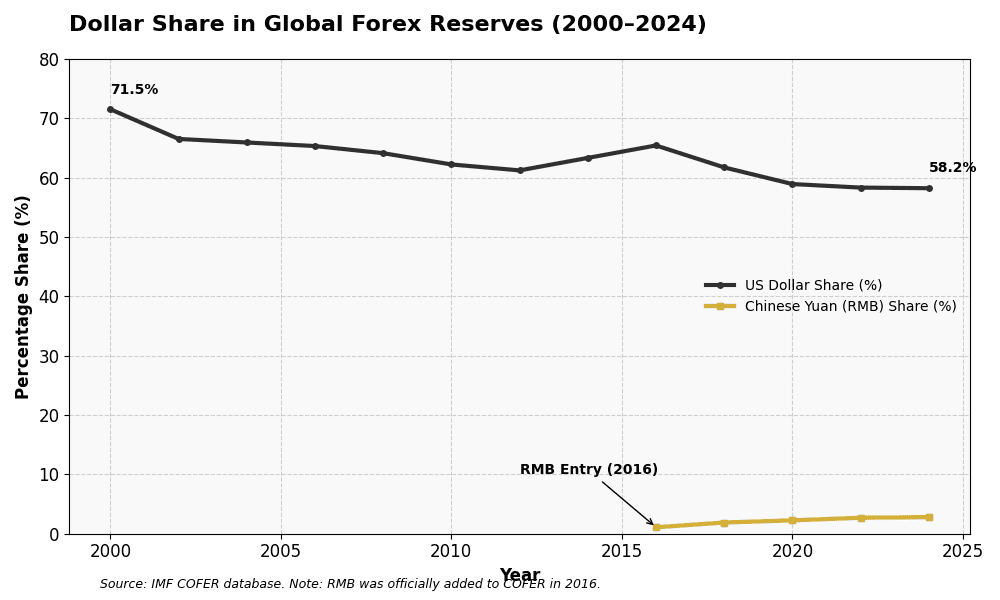
At first glance, the Iran-Israel-USA conflict and the Russia-Ukraine war appear to be separate crises driven by different actors, different geographies, and different ideologies. But view them through the lens of global monetary competition and the picture becomes startlingly coherent. Together, these two conflicts are reshaping the very foundations of the international financial order — and not necessarily in the way Washington intended.
The United States went into both conflicts with clear short-term objectives: contain Iran, punish Russia, reassert American power, and keep the dollar central to global energy trade. But in practice, the interventions have had the opposite effect on the monetary system. By weaponizing the dollar through unprecedented sanctions — freezing $300 billion in Russian central bank assets held in Western institutions — the United States sent a terrifying message to every government on earth: if Washington decides you are an adversary, your dollar reserves are not safe. Countries that had never seriously considered alternatives to the dollar suddenly began diversifying, accelerating dedollarization out of pure self-preservation.
Iran, already under decades of US sanctions, became a test case for BRICS financial workarounds. China built direct trade and barter arrangements with Tehran. Russia and Iran linked their banking systems outside SWIFT. India bought discounted Iranian and Russian oil in rupees and dirhams. The message was clear: the dollar could be avoided, and the alternatives worked. For the Global South, this was an enormously encouraging demonstration.
Oil Control
Keeps the petrodollar alive. Iran’s oil under Western management means global energy priced in dollars.
Regime Change
A compliant Tehran opens Iranian economy to Western capital and cuts off China’s energy lifeline.
Arms Sales
Every missile fired is a new procurement order. War is a subscription business for the military-industrial complex.
Reconstruction
US multinationals win post-war contracts, funded by international debt. Profits privatized, costs socialized.
Meanwhile, the Russia-Ukraine war has achieved something that years of BRICS summits could not: it has broken European confidence in the dollar system as a tool of neutral international commerce. When Germany — the engine of the European economy — realizes that American LNG is twice as expensive as Russian gas, and that the US has potentially benefited from European energy distress, the transatlantic alliance begins to crack at the edges. Quiet conversations about European strategic autonomy, a digital euro, and independent payment systems grow louder.
The ultimate irony is profound. In trying to preserve dollar hegemony through military and economic coercion, the United States may be engineering the very conditions that destroy it. The sanctions, the weaponization of SWIFT, the energy war in Europe, and the proxy conflicts in the Middle East are collectively pushing a critical mass of the world’s nations toward BRICS financial infrastructure, local-currency trade, and gold-backed settlement systems. De-dollarization is no longer a theoretical possibility debated in academic journals. It is happening, transaction by transaction, in commodity markets, bilateral trade deals, and central bank reserve diversification programs across the Global South.
The American taxpayer is not the beneficiary of this grand strategy. The American soldier who serves in Middle Eastern deployments is not the beneficiary. The ordinary citizen watching fuel prices and grocery bills climb is certainly not the beneficiary. The beneficiaries are a narrow, interconnected class of energy executives, defense contractors, financial institutions, and construction multinationals whose fortunes have grown every single decade of American military intervention abroad. That is the uncomfortable, documented, historically verifiable truth at the heart of this analysis.
Understanding this is not cynicism. It is the first step toward demanding accountability, building alternatives, and recognizing that the world is in the middle of a monetary revolution that will determine who holds economic power for the next century. Whether the dollar survives that revolution, and in what form, depends not on military force but on whether America can offer the world a fair, transparent, and genuinely mutual financial system — something it has conspicuously failed to do for decades.
IMF World Economic Outlook
People Also Ask
Why does the USA want to control Iran’s oil?
Iran holds the world’s fourth-largest proven oil reserves and second-largest natural gas reserves. US control over Iranian energy would sustain the petrodollar system, deny China a critical supply partner, and allow American energy corporations to profit from one of the world’s richest untapped markets.
What is the connection between the Iran conflict and de-dollarization?
Conflict in Iran destabilizes global oil markets and pushes regional nations closer to BRICS alternatives. As oil trade shifts away from dollars — and as US sanctions push more countries toward yuan, rupee, or gold settlements — the dollar’s global reserve status weakens structurally.
How does the Russia-Ukraine war help de-dollarization?
The war devastated European energy security and economic stability, reducing Europe’s capacity to defend the dollar-based financial order. Meanwhile, US sanctions on Russia demonstrated to the entire Global South that dollar reserves can be frozen — accelerating the search for alternatives.
Who profits from post-war reconstruction contracts?
History shows that US multinational construction and infrastructure firms win the majority of post-conflict reconstruction work — as evidenced by Iraq and Afghanistan. The funds come from international loans or US appropriations; the profits flow to private corporate shareholders.
Is de-dollarization actually happening in 2025?
Yes. BRICS nations are expanding local-currency trade settlements. Central banks globally are diversifying reserves away from the dollar and toward gold and other currencies. The yuan’s share of global trade financing is growing steadily, and alternatives to SWIFT are gaining adoption across Asia, the Middle East, and Africa.
What does “deep state” mean in the context of these wars?
In this context, the term refers to the permanent institutional interests — defense contractors, energy companies, financial institutions, and their lobbying apparatus — that shape US foreign policy regardless of which political party holds the White House, consistently benefiting from foreign military engagements.
 Related Articles in This Series
 Related Articles in This Series
→ What Is De-Dollarization and Why Does It Matter?
The Petrodollar System Explained

Related Articles