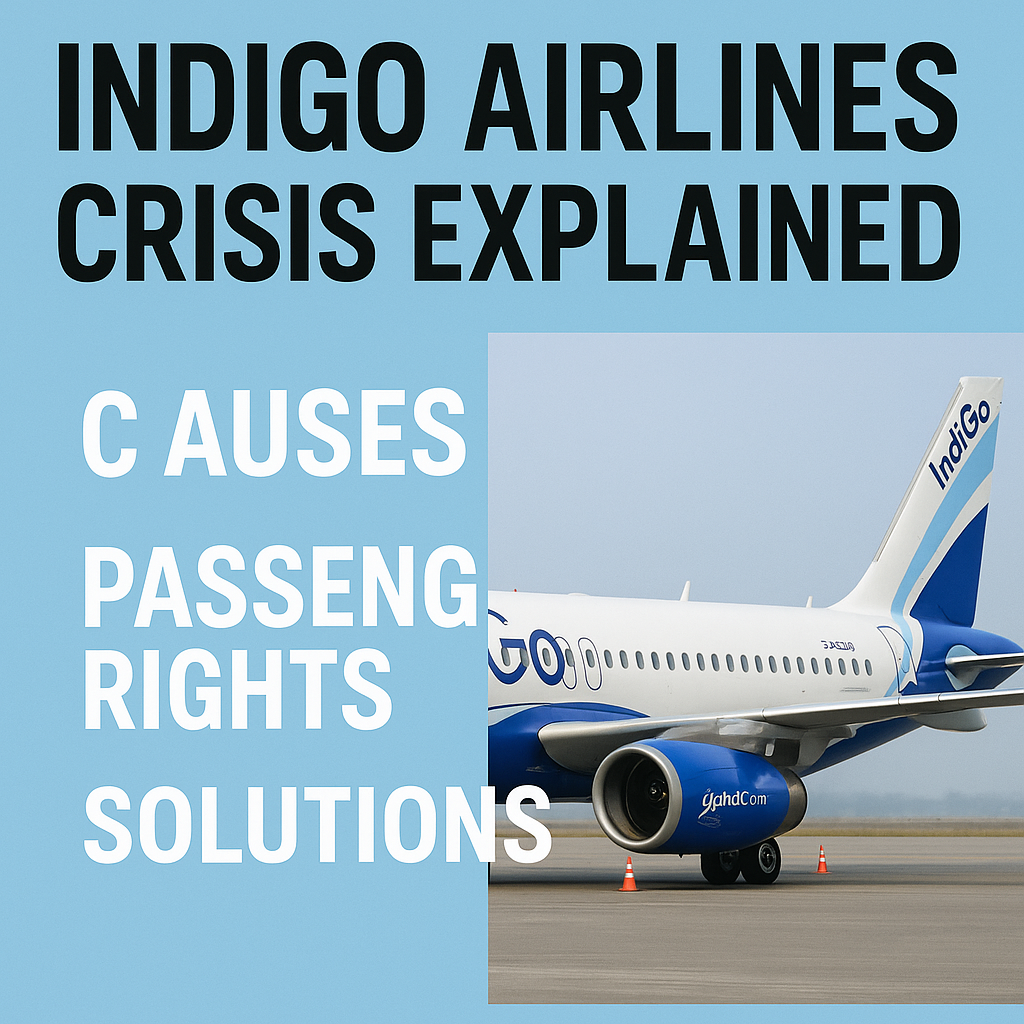
IndiGo Airlines Service Breakdown Raises Concerns: Understanding the Reasons, Laws, and Solutions
In the past few days, passengers across several Indian airports experienced long delays, sudden cancellations, and extended waiting hours due to major disruptions in IndiGo’s flight operations. Many travellers shared that they felt unsupported and uninformed during the crisis, which created significant inconvenience for families, senior citizens, and professionals with urgent schedules. The situation has sparked nationwide discussion about why the issue became so severe, what aviation laws expect from airlines, and how such problems can be prevented in the future. This incident has also opened a larger debate on the need for better planning, communication, and crisis management within India’s fast-growing aviation sector.
Why IndiGo Faced Such a Large-Scale Operational Breakdown
The primary reason behind the airline disruptions was the implementation of updated Flight Duty Time Limitation (FDTL) rules, which determine how long pilots can fly and how much rest they must receive between flights. These rules are essential for maintaining passenger safety and ensuring that pilots are well rested. However, the transition to the new regulations required airlines to adjust their schedules and pilot availability.
IndiGo reportedly did not have enough rested or legally compliant pilots once the new rules fully came into force. As a result, the airline was unable to operate its complete schedule. This created a chain reaction: delays led to more delays, cancellations increased, and airport terminals became crowded with passengers waiting for alternative arrangements. The situation revealed that the airline may not have maintained sufficient backup crew or flexible scheduling to handle sudden regulatory changes.
What Indian Aviation Law Says About Passenger Rights
Indian aviation law is clear about how airlines must support passengers in case of delays or cancellations. The Directorate General of Civil Aviation (DGCA) has specific guidelines to ensure transparency and protect travellers from inconvenience.
Key provisions include:
1. Refunds and Alternate Flights
If a flight is cancelled, passengers must be offered:
A full refund, or
A rescheduled flight at no additional cost.
2. Compensation for Delays
Depending on the duration of the delay and distance of travel, passengers may be eligible for:
Free meals and refreshments
Hotel accommodation for overnight delays
Compensation up to a certain limit set by DGCA
3. Mandatory Communication
Airlines must inform passengers in advance through SMS or email when a flight is rescheduled or cancelled.
4. Timely Refund Processing
Refunds must be processed quickly, and passengers cannot be charged additional fees during airline-caused disruptions.
These laws are designed to protect the interest of travellers while balancing operational requirements for airlines.
Why IndiGo Struggled to Follow the Rules During the Crisis
The disruptions revealed several operational and communication gaps. Many passengers said they did not receive timely notifications about cancellations and had to find out only after reaching the airport. This lack of updated information made it difficult for them to plan their next steps. In addition, airport counters became overcrowded as ground staff tried to manage a large number of passengers with limited resources.
Another challenge was the slow pace of refunds and rebooking. The government later instructed airlines to speed up refund processing and avoid charging passengers for rescheduling during the crisis period. The scale of the disruption made it difficult for staff to respond promptly, highlighting the need for more robust systems during peak stress situations.
Overall, IndiGo appeared to be unprepared for the sudden pressure that came with the new regulatory changes, especially in terms of manpower, scheduling, and crisis response capacity.

Was This Negligence or an Operational Compulsion? A Balanced View
A fair assessment requires looking at both sides. On one hand, IndiGo had to comply with the updated safety regulations immediately once they were enforced. Safety-related rules such as pilot rest requirements leave no room for compromise and must be followed strictly.
On the other hand, these rules were not introduced suddenly. They were announced months earlier, giving airlines time to prepare. It appears that IndiGo may have underestimated the number of pilots required under the new norms or may have planned schedules too tightly without maintaining adequate backup. The combination of strict new rules and limited operational flexibility resulted in a major breakdown.
Therefore, the crisis was partly a result of regulatory compulsion but also reflected gaps in planning, preparedness, and communication.
To visit official website of
IndiGo Airlines click here
Solutions Needed to Prevent Such Incidents in the Future
The recent disruptions should push the aviation sector to improve systems that directly impact passenger convenience and safety. Several solutions can help avoid similar crises:
1. More Realistic Flight Scheduling
Airlines must create schedules that match pilot availability, weather conditions, and regulatory limits. Stress-testing schedules against possible disruptions can prevent last-minute chaos.
2. Stronger Enforcement of Passenger Rights
DGCA should:
Ensure airlines follow care and compensation guidelines
Monitor refund timelines
Publish performance reports on delay management
When airlines follow clear frameworks, passengers experience fewer difficulties.
Ministry of Aviation official website click here
3. Better Crisis Management at Airports
Airports should have a joint crisis-handling plan with airlines. This includes:
Additional support desks
Clear announcements
Assistance for families, senior citizens, and travellers with special needs
Availability of basic facilities during long delays
4. Improved Communication Systems
Timely, transparent communication helps passengers plan alternative options. Airlines should use automated alerts, mobile apps, and well-trained staff to keep travellers informed.
5. Passenger Awareness
Travellers should be aware of their rights. Keeping booking details, checking official updates, and filing complaints through the DGCA Air Sewa platform can help ensure fair treatment.
Conclusion: A Learning Moment for the Entire Aviation Sector
TMC Suspends Humayun Kabir: Issue Explained, Political Impact, and the Road to Bengal Elections 2026 visit here
The IndiGo disruption has shown that even a large and well-known airline can face serious challenges when planning does not match operational realities. While regulatory changes played a major role, the need for stronger preparation and better passenger communication is clear. The situation also highlights the importance of a coordinated approach between airlines, airports, and regulatory authorities to protect passenger interests.
India aims to build a world-class aviation system. For that vision to succeed, every traveller must feel supported, respected, and informed — especially during unexpected disruptions. The recent events serve as a valuable opportunity for the entire sector to learn, improve, and ensure smoother travel experiences in the future.