Scope Outline
Introduction: Crossing the 500-Store Rubicon
If you look at the evolution of Indian retail over the past three decades, one thing becomes very clear—scale alone does not guarantee success. What matters is how efficiently that scale is built and sustained. Avenue Supermarts, the company behind DMart, has mastered this balance better than most. Its Q4 FY26 performance is not just about numbers; it reflects a strategic shift toward aggressive expansion while maintaining its core operational discipline.
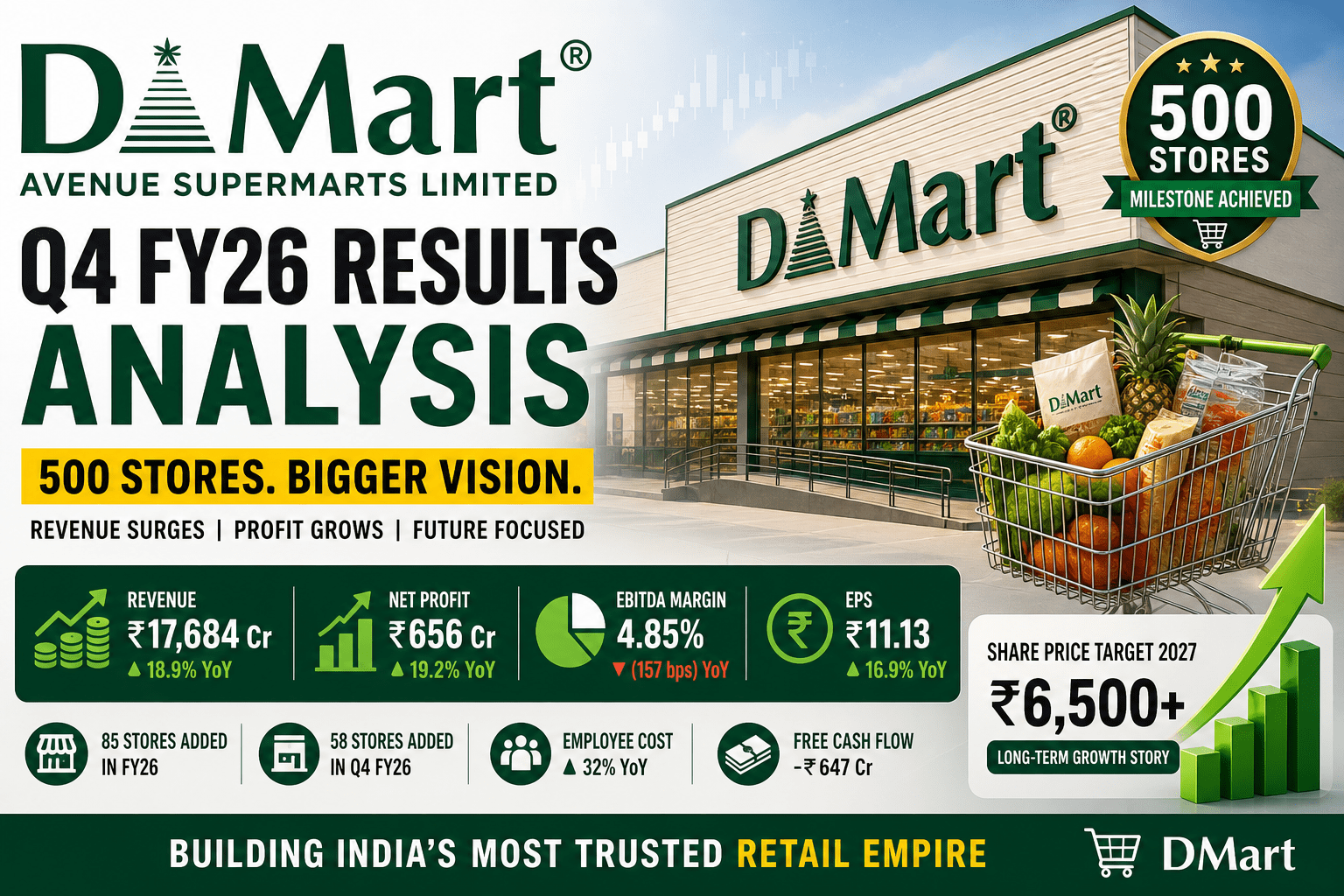
The company achieved a historic milestone on March 31, 2026, by crossing 500 stores, including opening 12 stores in a single day. This is a defining moment in India’s organized retail journey and highlights the speed at which DMart is scaling its presence across the country. At the same time, the company reported ₹17,684 crore in revenue, reflecting an 18.9% year-on-year growth, which signals a strong recovery after a relatively moderate performance earlier in the year.
From a market perspective, the stock is currently trading near ₹4,614, holding steady despite concerns around margin pressure and rising investments. Investors are now carefully evaluating whether this expansion phase will translate into higher profitability over the next few years.
Q4 FY26 Financial Scorecard: The Actual Numbers
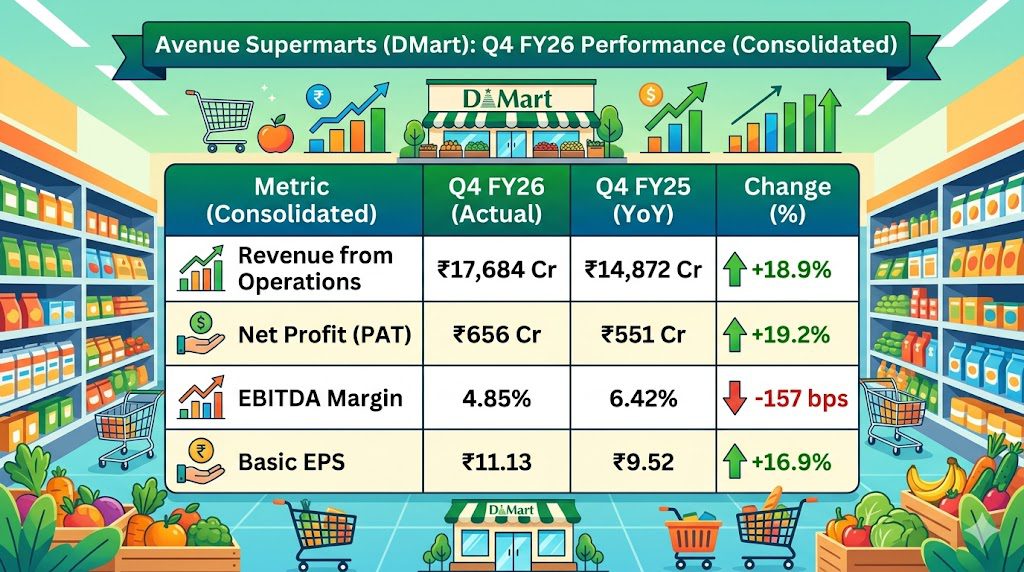
The Q4 FY26 financial performance of DMart highlights strong revenue growth alongside stable profit expansion. Revenue from operations stood at ₹17,684 crore, up from ₹14,872 crore in the same quarter last year, marking a solid 18.9% growth. This growth has been driven by both new store additions and consistent performance from existing stores.
Net profit for the quarter came in at ₹656 crore, compared to ₹551 crore last year, representing a 19.2% increase. This shows that despite rising costs, the company continues to maintain profitability. However, the key area of concern is EBITDA margin, which declined to 4.85% from 6.42%, reflecting increased operational expenses linked to expansion.
Basic earnings per share (EPS) improved to ₹11.13, up from ₹9.52, indicating steady value creation for shareholders. Overall, the numbers present a picture of strong growth with temporary pressure on margins.
Fundamental Analysis: The Cost of Growing Fast
The Expansion Blitz
DMart’s aggressive expansion strategy is the most defining aspect of its FY26 performance. The company added 85 new stores during the year, with 58 stores opened in Q4 alone, marking its highest-ever quarterly addition. This rapid expansion shows the company’s intent to capture market share across India, particularly in underpenetrated regions.
Margin Stress: The Gestation Phase
While expansion is driving revenue growth, it is also putting pressure on margins. EBITDA margin declined to 4.85%, primarily due to the “gestation effect” of new stores, which typically take time to reach optimal profitability. Additionally, employee costs have increased by around 32%, as the company scales its workforce to support new operations.
The Shift in Cash Flow Dynamics
For the first time, DMart has reported negative free cash flow of around ₹647 crore, as capital expenditure for expansion has exceeded operational cash generation. Finance costs have also increased to ₹142 crore, reflecting higher lease liabilities and borrowings. While this shift may concern some investors, it is largely a result of deliberate investment in future growth.
Technical Analysis: The Multi-Month Resistance
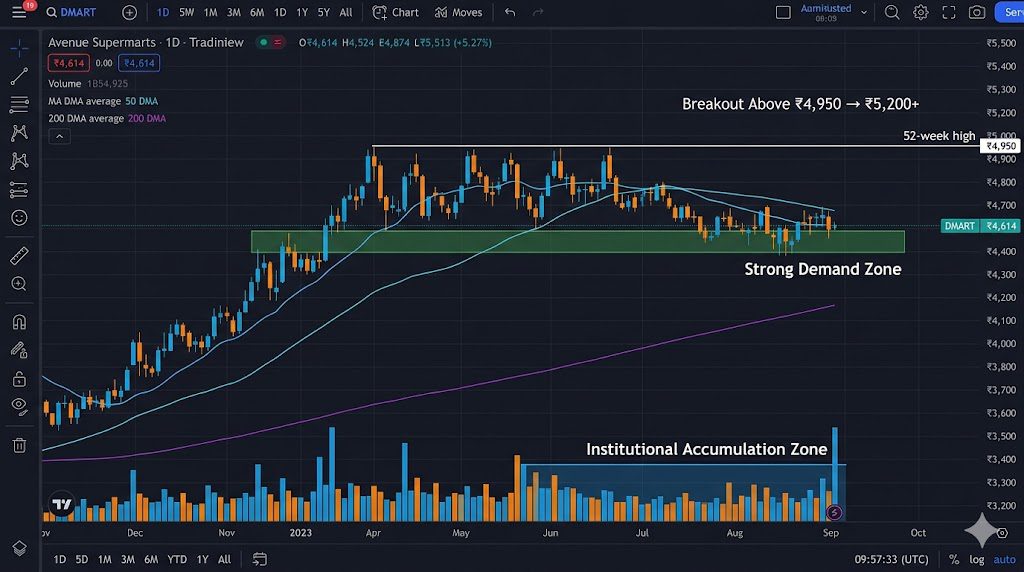
From a technical standpoint, DMart is currently trading within a broad consolidation range between ₹3,529 and ₹4,949. This indicates a phase where the market is absorbing recent developments and waiting for the next trigger.
The ₹4,400–₹4,500 zone has emerged as a strong support level, where buying interest is consistently seen. On the upside, the ₹4,950 level acts as a key resistance, and a breakout above this could lead to a rally toward ₹5,200 or higher.
The Relative Strength Index (RSI) is currently in a neutral-to-bullish range, suggesting that the stock has the potential to move higher if supported by strong volumes.
Management Guidance: Moving North
Focus on North India Expansion
One of the key strategic priorities for DMart is expanding its presence in North India. Approximately 24% of the new stores added in FY26 were located in regions such as Punjab, Uttar Pradesh, and Haryana. These markets offer significant growth potential and help diversify the company’s geographic footprint.
DMart Ready: The Digital Push
The company’s online platform, DMart Ready, continues to evolve. It reported a loss of ₹1.73 billion, reflecting ongoing investments in logistics and delivery infrastructure. The shift from a pick-up model to a home delivery model is expected to improve customer convenience but will take time to become profitable.
Brokerage Sentiment & Targets: The Path to ₹6,500?
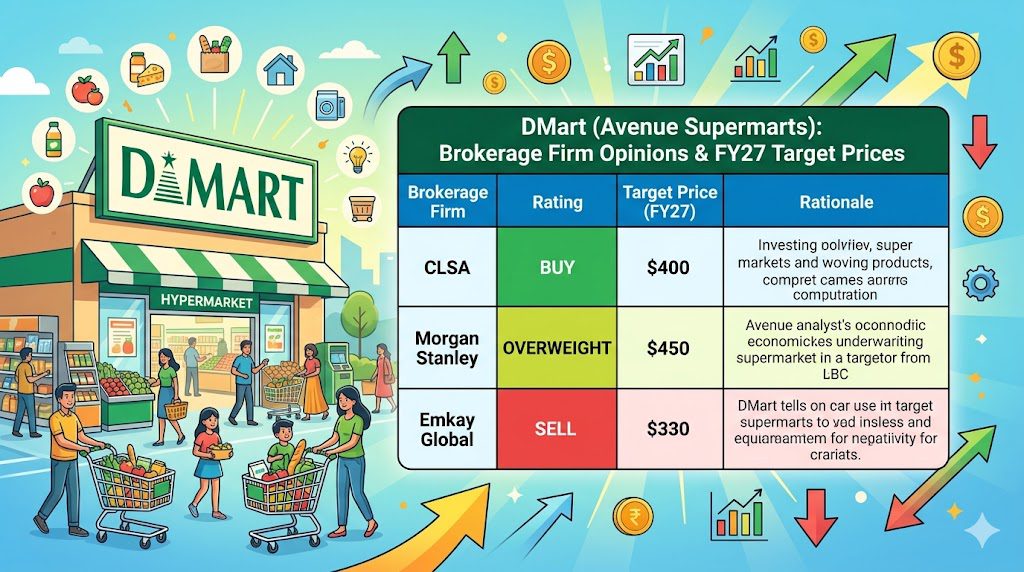
Brokerage opinions on DMart remain mixed, reflecting the balance between strong growth and premium valuations. CLSA has maintained a Buy rating with a target of ₹6,583, citing strong sales growth and expansion momentum. Morgan Stanley has an Overweight rating with a target of ₹5,188, highlighting the company’s resilience.
On the other hand, Emkay Global has a Sell rating with a target of ₹3,700, pointing to stretched valuations. This divergence in views reflects the broader market debate around whether DMart’s growth justifies its high valuation.
The “30-Year” Analyst Verdict
From a long-term perspective, DMart is clearly in an acceleration phase, where the focus is on expanding its store network and strengthening its market position. The company’s core strengths—such as owned real estate, efficient supply chain, and strong vendor relationships—remain intact.
For investors, this is a story of patience. The benefits of the current expansion will likely become visible over the next 2–3 years, as new stores mature and start contributing to profits. For traders, the stock offers opportunities to accumulate during dips, particularly near key support levels.
Conclusion & Engagement (CTA)
DMart’s Q4 FY26 results highlight a company that is playing the long game. With strong revenue growth, a historic 500-store milestone, and ongoing expansion, the company is positioning itself for sustained leadership in the Indian retail sector.
However, this growth comes with short-term challenges, including margin pressure and negative free cash flow. The key question for investors is whether they are willing to look beyond these short-term concerns and focus on the long-term potential.
Are you staying invested for the long-term growth story and potential upside toward ₹6,500, or are you cautious about valuations and waiting for better entry levels? Let’s discuss your strategy in the comments.