🇺🇸 America’s Paper Tiger: The Iran War Is Showing the World Exactly What a Printed-Dollar Army Really Looks Like

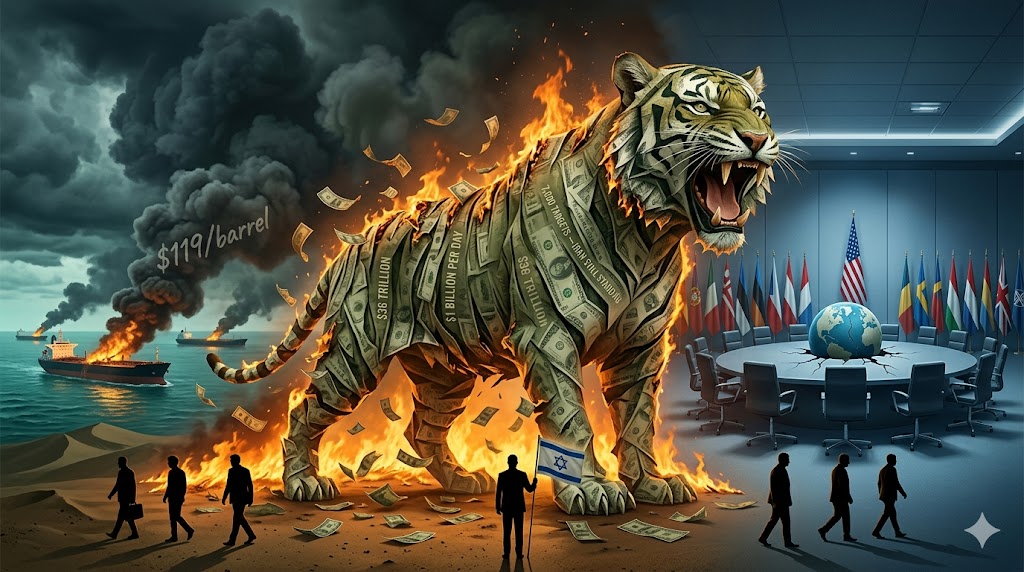
Let us start with a simple, honest question.
The United States of America spends approximately $886 billion per year on its military — more than the next ten countries combined. It operates 11 nuclear-powered aircraft carriers. It has 800 military bases in over 70 countries. It has the most advanced air force, the most sophisticated missile systems, and the largest intelligence apparatus in the history of the world.
And yet — three weeks into a war against a country with one-tenth of its military budget — America is spending nearly $1 billion per day, has lost 13 service members, has been abandoned by every major ally it called upon, and has failed to end the conflict or collapse the government it went in to dismantle.
How do you spend the most money in history on a military — and still find yourself fighting alone, over budget, and without a clear victory in sight?
The answer, as we will explore in this article, begins not with generals or strategy. It begins with the printing press.
🖨️ THE ARMY THAT PRINTED MONEY BUILT
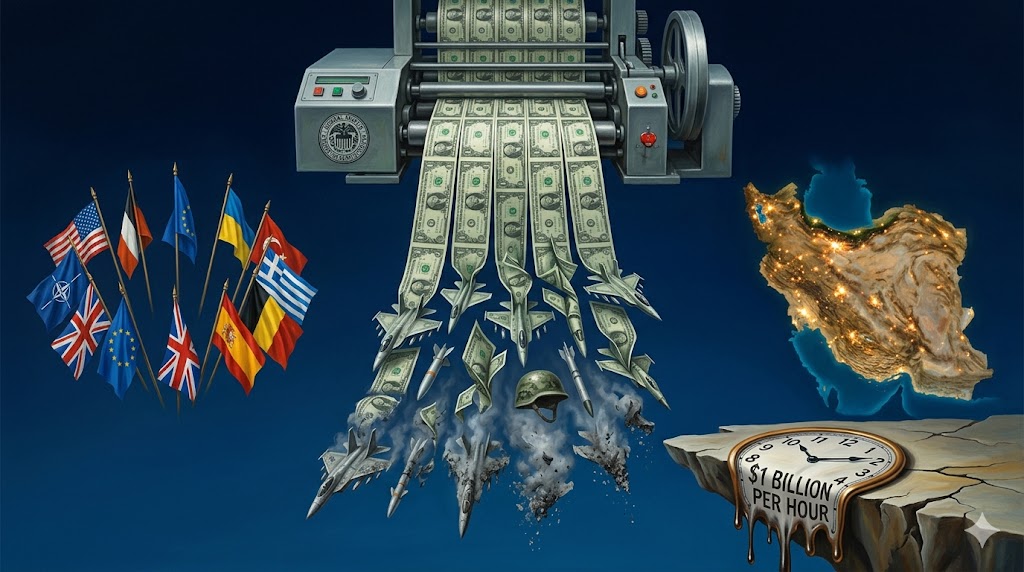
The United States national debt currently stands at over $36 trillion. A staggering portion of that debt is the accumulated cost of wars — conflicts funded not by taxes and genuine national wealth, but by borrowed dollars created through deficit spending and the Federal Reserve’s money-printing machinery.
Since President Nixon took the dollar off the gold standard in 1971, the US has had the unique privilege of printing the world’s reserve currency. This means it can pay for wars, weapons, and military bases by borrowing in its own currency and inflating away the cost over time. Other countries have to earn the money they spend. America just prints it.
The result? A military that is optimized for spending, not for winning.
Look at the numbers from the current Iran war alone:
- The first 100 hours of Operation Epic Fury are estimated to have cost $3.7 billion, or $891.4 million each day. Most of these costs — approximately $3.5 billion — are not budgeted.
- Trump administration officials estimated that the first six days of the Iran war cost the United States roughly $11.3 billion, according to attendees leaving a closed-door congressional briefing.
- By the end of the second week, the United States had spent at least $12 billion on the conflict, according to Trump administration officials — a figure that became a flashpoint among critics.
- The live war cost tracker, anchored at $36 billion on March 4, 2026, increments at $2,315 per second — roughly $200 million per day — reflecting the active operations rate since Epic Fury began.
To understand what this means for ordinary Americans, consider what that money could buy instead: $12 billion could cover a year of childcare for roughly 900,000 children, fund the entire National Park Service for more than three years, or pay the annual salaries of roughly 166,000 teachers — equivalent to the entire teaching workforce of the state of Florida.
But the money keeps flowing. Because when you print the world’s reserve currency, you can always print more.
US Secretary of Defense Pete Hegseth requested an additional $200 billion from Congress to ensure the military is funded “for what’s been done, for what we may have to do in the future.”
Two hundred billion dollars. For a war that was supposed to last four weeks.
💥 7,000 TARGETS STRUCK — AND IRAN IS STILL STANDING
Here is the uncomfortable military reality that no Pentagon press briefing has honestly addressed.
As of March 19, 2026, the US has struck more than 7,000 targets across Iran. Combined with Israeli strikes, the total targets hit by the US-Israeli campaign exceeds 15,000, according to Defense Secretary Pete Hegseth and the Chairman of the Joint Chiefs.
Fifteen thousand targets. In three weeks.
And yet the Islamic Republic of Iran has not collapsed. Its government functions. Its military continues to retaliate. Iran has launched over 2,000 drones and 500+ ballistic missiles against US bases and Israel since the war began.
Iran closed the Strait of Hormuz — the narrow waterway through which approximately 20% of the world’s daily oil supply passes. The result: Brent crude oil prices surged to a high of $119.50 per barrel in a single week. The national average petrol price in the US jumped nearly 27 cents in a single week — the fastest weekly increase since Russia’s invasion of Ukraine in 2022.
By mid-March 2026, the war had killed more than 2,000 people across the Middle East, including at least 13 American service members — 7 killed by enemy fire. Iran reported 25 hospitals damaged and 9 out of service. Lebanon suffered 773 killed and 1,933 injured, with 830,000 people displaced. Iran displaced 3.2 million people internally.
There is also the cruel economics of modern warfare that exposes the absurdity of America’s situation: Iran fires drones that cost approximately $20,000 each. America shoots them down with interceptor missiles that cost between $1 million and $3 million each. The cost ratio is approximately 106 to 1 in Iran’s favor.
You do not win wars by spending 106 times more than your enemy to neutralize each attack. You just go broke faster.
🏆 WHO IS ACTUALLY WINNING THIS WAR?
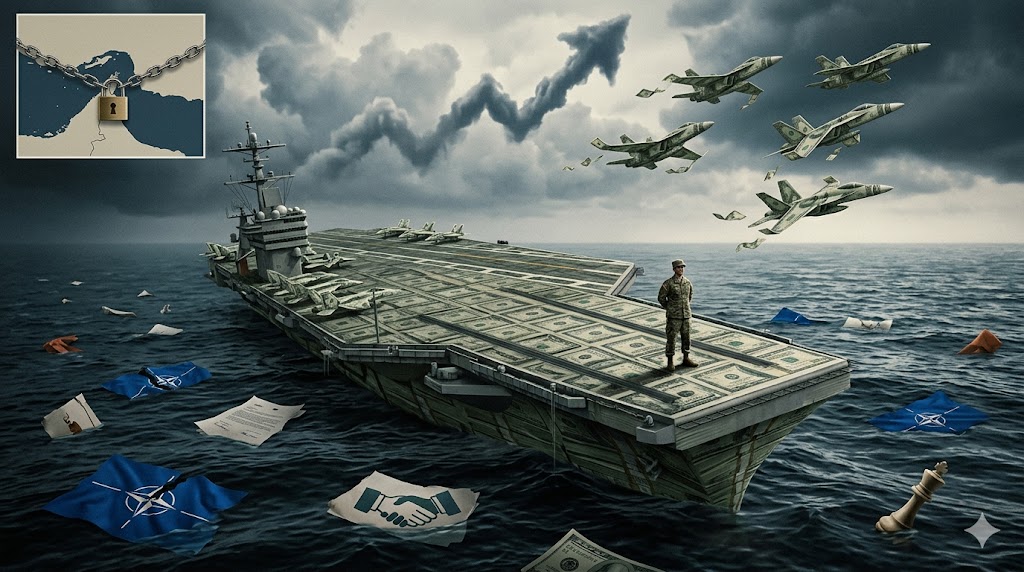
To be fair and accurate, not everything about this war has been a failure. But the successes belong almost entirely to Israel — not to the United States.
The US and Israel launched coordinated strikes on Iran on February 28, 2026, notably killing the country’s longtime Supreme Leader, Ayatollah Ali Khamenei — one of the most consequential leadership eliminations in modern military history.
That was Israel’s intelligence and targeting work, executed in coordination with American air power.
In the months before the war, it was Israel that had already conducted Operation Rising Lion in June 2025 — striking Iran’s nuclear facilities, air defense networks, and missile production infrastructure across twelve days. It was Israel that decimated Hezbollah’s entire command structure in 2024 using precision operations. It was Israel that rebuilt its deterrence from the ground up following October 7, 2023.
America’s primary contribution to this war has been missile defense — its warships and aircraft intercepting the hundreds of Iranian drones and ballistic missiles aimed at Israel and US bases across the Gulf. American B-2 bombers struck the deep underground nuclear facilities at Fordow, Natanz, and Isfahan — targets Israel could not reach alone.
But here is the brutal truth: America went into this war with a declared objective — “ensure that Iran does not obtain a nuclear weapon” and “raze their missile industry to the ground,” as Trump said in his eight-minute Truth Social video on February 28. Three weeks later, Iran’s nuclear program infrastructure has been severely damaged, but the Iranian state is intact, its government is functioning, and its military is still fighting.
The declared objective has not been achieved. And there is no exit ramp in sight.
As CENTCOM noted, the focus of the United States and Israel now is to “blunt or degrade — as quickly as they can — the offensive capabilities of the Iranians.” That is not winning. That is managing.
🤝 TRUMP’S DIPLOMATIC CATASTROPHE — A WAR WITHOUT A SINGLE FRIEND
Here is where the story moves from military failure to diplomatic catastrophe — and where the consequences of a full year of Trump’s transactional, bullying foreign policy came home to roost.
When Trump tried to build a coalition to police the Strait of Hormuz, he was publicly and humiliatingly rejected.
“We don’t need too much help,” a frustrated Trump said in the Oval Office on March 17, 2026. “We don’t need any help actually.” It was a striking turnabout for the president, who had spent the last several days ardently insisting other countries send their warships to the strait to escort oil tankers.
NATO and several major partners — including Japan, Australia, South Korea, and China — declined to join the US effort, while European leaders distanced themselves from Trump’s unilateral approach.
EU foreign policy chief Kaja Kallas called for a diplomatic solution around the Strait of Hormuz rather than a military response.
This is an astonishing reversal of the post-World War II American world order. For 75 years, the central pillar of American military power was not just its weapons — it was its alliances. The ability to show up to any conflict with 30 or 40 nations standing behind it. That is what made America genuinely powerful — not just militarily, but strategically and morally.
That pillar has been systematically demolished over the past year.
The evidence of diplomatic wreckage is overwhelming:
The first 100 days of Trump’s second term were particularly disruptive, both in rhetoric and policy, giving the impression that the US was targeting its very allies. The new administration’s actions, wittingly or not, have undermined the foundations of transatlantic trust.
After a year of trying to accommodate Washington in every possible way, it has become evident that this approach does not work. The Trump administration clearly considers European subservience a sign of weakness.
European countries have increased defense spending by 83% since 2015 — not merely to please Trump, but because they no longer believe they can fully rely on the United States.
In January 2026 alone, Washington left a further 66 international organizations and UN entities and cut or froze most financial contributions to the UN.
Trump humiliated Ukrainian President Zelensky in the Oval Office. He threatened to abandon NATO unless allies spent 5% of GDP on defense. He slapped tariffs on European allies. He tried to buy Greenland — triggering unprecedented European backlash and discussions about closing US military bases on the continent. Former Estonian Prime Minister Kaja Kallas observed that Beijing and Moscow “are probably celebrating right now,” capitalizing on visible fissures between the United States and its European partners.
Compare this to 1991. When President George H.W. Bush wanted to confront Saddam Hussein, he spent months building a 35-nation coalition through patient, careful diplomacy. The Gulf War became, effectively, the world versus Saddam Hussein. The result was a swift, decisive, internationally legitimate victory.
Trump’s Iran war is the mirror image of that. It is the United States and Israel — versus nearly everyone else’s advice, without a single formal ally’s support, and funded by money that exists only because the printing press keeps running.
🕊️ THE DEAL HE WALKED AWAY FROM
[Internal Link: “Iran nuclear deal history explained” — link here]
Perhaps the most damning single fact in this entire story is not the cost, not the casualties, and not the diplomatic isolation.
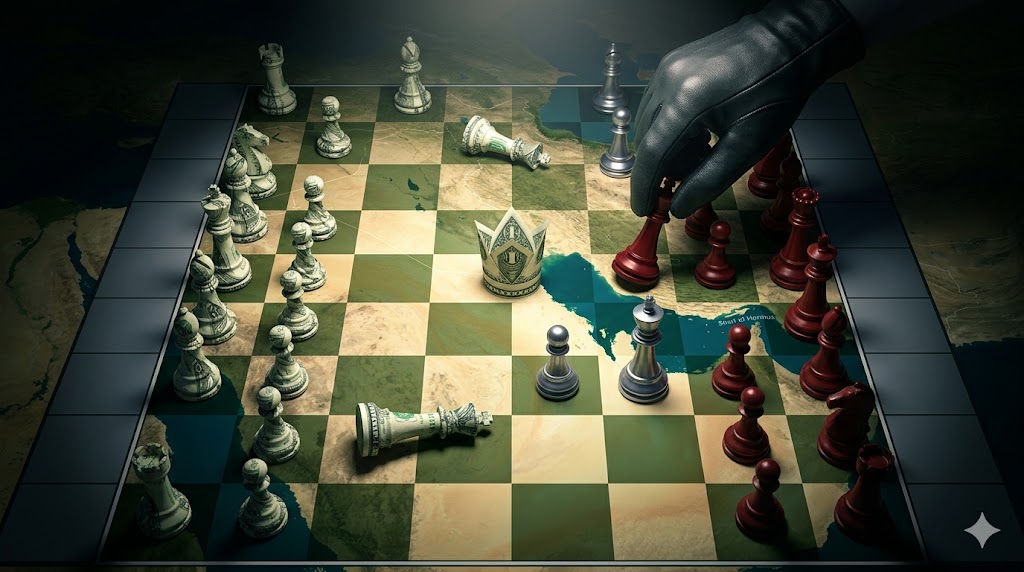
It is this: Iran was at the negotiating table before the bombs fell.
Before the February 28 strikes, indirect nuclear negotiations were underway between the United States and Iran, mediated by Oman. The Omani foreign minister publicly stated there had been significant progress — with Iran willing to make meaningful concessions on its nuclear program.
Then Trump said he was “not thrilled” with the talks.
And the bombs fell.
Iran was offering to negotiate away the very thing — a nuclear weapon — that Trump publicly cited as his reason for going to war. The diplomatic path was open. It was not taken.
History will spend a long time asking why. And the most honest answer is that this administration, as the Carnegie Endowment for International Peace noted, has displayed a radical turn away from multilateral diplomacy and international regimes — ignoring long-standing rules of international commerce, dismantling its own development aid organization, and withdrawing US support for international efforts on climate change, global health, and poverty reduction.
When you have spent a year dismantling every diplomatic tool you own, war becomes the only instrument left.
📊 THE NUMBERS THAT TELL THE WHOLE STORY
Let us put the full picture together in cold, hard numbers — because the data is more damning than any opinion.
| Metric | Figure | Source |
|---|---|---|
| US military budget (annual) | $886 billion | SIPRI 2025 |
| US national debt | $36+ trillion | US Treasury |
| Operation Epic Fury — first 100 hours | $3.7 billion | CSIS |
| Operation Epic Fury — first 6 days | $11.3 billion | Pentagon briefing |
| Operation Epic Fury — first 12 days | $16.5 billion | CSIS update |
| Operation Epic Fury — first 2 weeks | $12B+ (official) | Trump admin officials |
| Current daily war cost | ~$1 billion/day | Pentagon / CSIS |
| Total US spending since Oct 7, 2023 | $31.35B–$33.77B | Brown University |
| Targets struck in Iran (US+Israel) | 15,000+ | Pentagon/CENTCOM |
| Iran drones/missiles launched | 2,500+ | CSIS |
| US interceptor-to-drone cost ratio | 106:1 | Defense Priorities/CSIS |
| Americans killed in war | 13 (at least 7 by enemy fire) | US CENTCOM |
| People displaced in Iran | 3.2 million | UNHCR |
| Oil price spike (Brent crude) | $119.50/barrel | Business Insider |
| Americans opposed to the war | 56% | NPR/PBS/Marist poll |
| NATO allies who joined US | 0 | AP, Reuters |
56% of Americans oppose this war — a majority of the American public, according to an NPR/PBS News/Marist poll.
A war that costs $1 billion per day. That the majority of American citizens oppose. That not a single formal ally has joined. That has not achieved its stated objective. That was launched after walking away from a negotiating table.
This is what the printed-dollar army looks like in practice.
🔮 CONCLUSION: WHAT THE IRAN WAR TELLS US ABOUT AMERICAN POWER
There is an important distinction that often gets lost in coverage of American military power.
The United States military is not weak. It has extraordinary technology, extraordinary reach, and extraordinary individual soldiers. The B-2 bomber strikes on Iran’s deep underground nuclear facilities were genuinely remarkable feats of military engineering. American missile defense has saved thousands of Israeli and Gulf state lives.
But a military can be technically capable and still strategically ineffective. The two are not the same thing.
America has spent 25 years and trillions of printed dollars building a military optimized for projecting power — launching missiles from warships, dominating airspace, conducting raids. It has not built a military that wins wars. Not Afghanistan. Not Iraq. Not Syria. And, as the evidence of March 2026 strongly suggests, not Iran either.
The real strategic victories in this conflict have been Israel’s — more focused, more targeted, more willing to absorb risk, and above all, more honest about its specific objectives.
America went in with maximalist goals — nuclear elimination, regime change, unconditional capitulation. It is discovering, once again, that the country it is trying to change does not collapse on schedule.
And when it turned to its allies for help, it found an empty room — because a year of tariff threats, Oval Office humiliations, Greenland fantasies, and 66 UN exits had left the world’s most powerful nation standing, for the first time in decades, completely alone.
What makes this moment so ominous is not only the violence, but the political isolation surrounding it. If the United States continues down a path of unilateral warfare while alienating the allies it never properly consulted, it risks turning a regional conflict into a broader crisis of legitimacy.
Great powers often claim they are saving the world. History — with a raised eyebrow — usually asks for the receipts.
The receipts, in this case, arrive at $1 billion per day — and counting.