Introduction: The Multinational “Moat” in Indian Pharma
The Hook
Over the last three decades, India’s pharmaceutical sector has transformed from a low-cost generic manufacturing industry into a highly sophisticated healthcare ecosystem driven by branded formulations, AI-powered manufacturing, specialty therapies, and patient-centric healthcare solutions. During the 1990s, investors primarily focused on volume growth in generic medicines. In 2026, however, the market rewards pharmaceutical companies that possess strong brand trust, premium therapies, pricing power, and sustainable operating margins. Among multinational pharmaceutical companies operating in India, Abbott India Limited continues to hold a unique reputation as one of the strongest “quality compounders” within the branded generics segment.
Despite changing healthcare regulations, increasing competition, and evolving therapy trends, Abbott India has consistently maintained a debt-free balance sheet, premium profitability profile, and strong return ratios. However, the latest Q4 FY26 results also reveal that the company now faces new strategic challenges linked to pricing regulation, portfolio maturity, and rising competition in key therapy segments.
The Big Headline
Abbott India reported Total Income of approximately ₹1,604.59 crore during Q4 FY26, reflecting stable operational performance despite broader pressure within the pharmaceutical sector. Operating profitability remained strong while margins expanded significantly compared to the previous year. However, despite delivering healthy earnings growth, the stock has corrected nearly 31% from its 52-week peak near ₹37,000. Investors are increasingly balancing the company’s high-quality business fundamentals against concerns regarding slower portfolio growth and regulatory pricing risks.
Real-Time Market Context
As of May 11, 2026, shares of Abbott India Limited were trading near ₹27,800 on the NSE. The stock has remained under pressure due to broader de-rating within the pharmaceutical sector caused by foreign institutional selling and concerns surrounding new global trade tariffs impacting healthcare companies. In addition, investors remain cautious about the long-term impact of India’s expanding drug-price regulations under the National List of Essential Medicines (NLEM). Despite these concerns, Abbott India continues to maintain one of the strongest balance sheets and operating profiles within the Indian pharma industry.
Q4 FY26 Actual Performance: The NSE Data Center
Total Income Growth
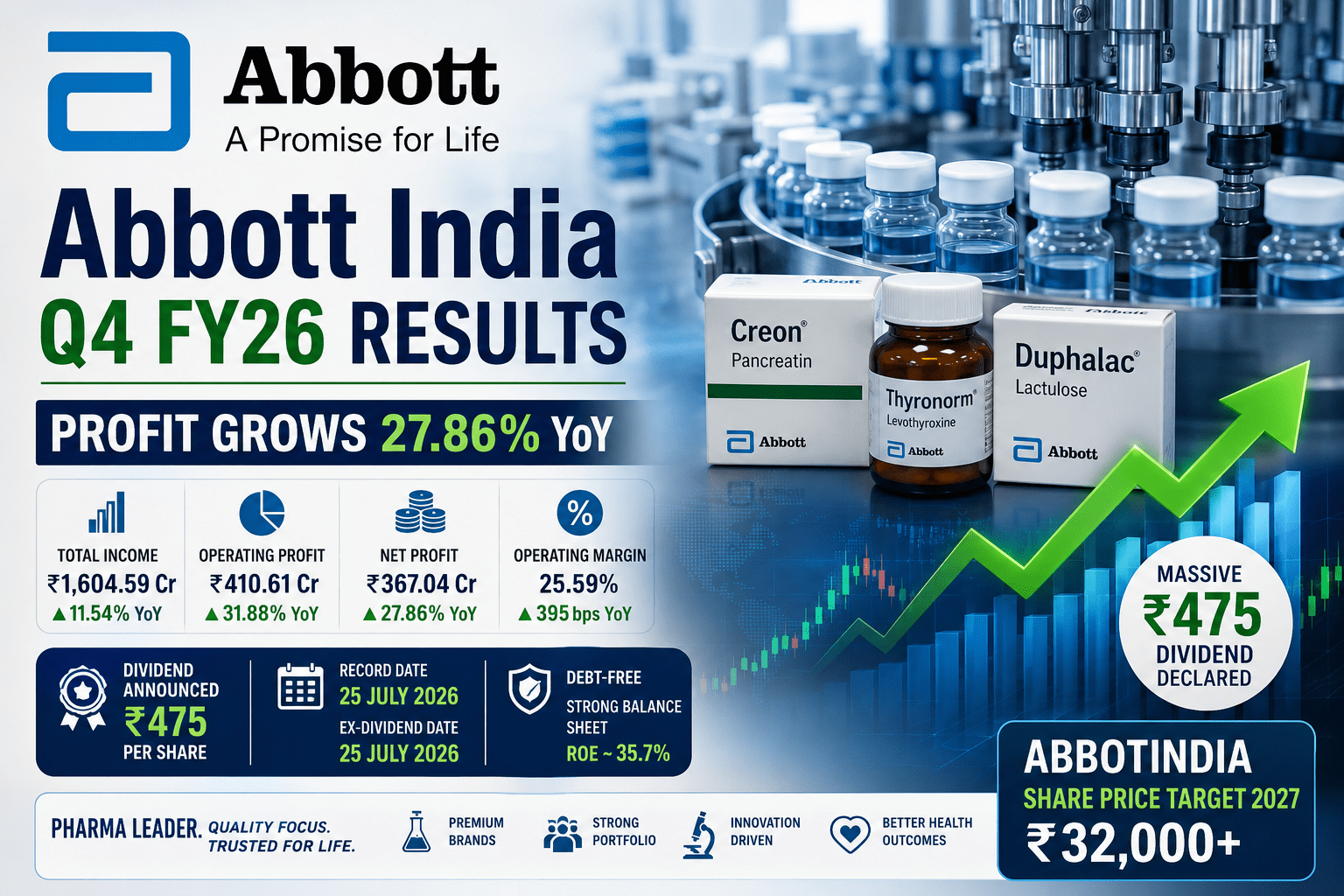
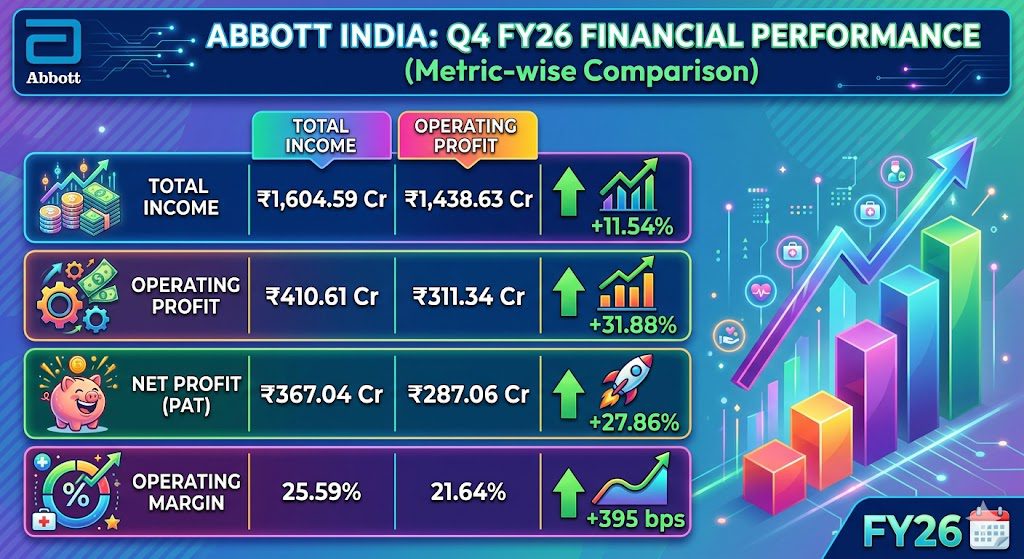
Abbott India reported Total Income of approximately ₹1,604.59 crore during Q4 FY26 compared to ₹1,438.63 crore during the same quarter last year. This represents year-on-year growth of nearly 11.54%. The increase in income was supported by stable prescription demand across core therapeutic categories including gastroenterology, women’s health, nutrition, and pain management. Despite pricing pressure within regulated medicine categories, the company managed to maintain healthy revenue momentum due to strong brand recall and physician trust within premium healthcare segments.
Operating Profit Expansion
Operating Profit rose sharply to approximately ₹410.61 crore during Q4 FY26 compared to ₹311.34 crore during Q4 FY25. This represents impressive growth of nearly 31.88%.
Operating Margin=Operating ProfitRevenue×100Operating\ Margin = \frac{Operating\ Profit}{Revenue} \times 100
The strong operating-profit expansion highlights Abbott India’s ability to maintain pricing discipline and operational efficiency despite increasing competition and regulatory pressure. The company continues benefiting from its premium branded portfolio and high-margin product mix, which support stronger profitability compared to many domestic generic-focused pharma companies.
Net Profit Performance
Net Profit After Tax (PAT) for Q4 FY26 rose to approximately ₹367.04 crore compared to ₹287.06 crore during the same period last year. This represents healthy growth of nearly 27.86%. The strong profit growth reflects improving operational efficiency, cost management, and margin expansion. Even though overall pharmaceutical-sector sentiment remains cautious, Abbott India continues demonstrating superior earnings quality and consistent profitability generation.
Operating Margin Improvement
Operating margins improved significantly from approximately 21.64% during Q4 FY25 to nearly 25.59% during Q4 FY26. This represents margin expansion of approximately 395 basis points. Margin improvement is especially important because it indicates that the company continues maintaining strong profitability despite regulatory pricing controls and evolving competitive pressures. Premium product positioning, operational efficiency, and disciplined cost structures continue supporting Abbott India’s margin resilience.
Fundamental Analysis: Navigating Regulatory Clouds
Pricing Pressure from NLEM
One of the biggest long-term challenges facing Abbott India is the expanding National List of Essential Medicines (NLEM) framework and Drug Price Control Order (DPCO) regulations. These government policies cap prices on essential medicines, limiting pricing flexibility for pharmaceutical companies operating within premium therapy categories. Abbott India has traditionally benefited from strong pricing power due to its premium branded formulations. However, increasing regulatory intervention may gradually pressure revenue growth and operating margins across several key therapy segments.
The Indian pharmaceutical sector is currently experiencing a broader transition where regulatory compliance and affordability concerns are increasingly influencing business strategies. Companies with strong product innovation pipelines may therefore outperform those heavily dependent on mature regulated brands.
Revenue Concentration Risk
Another important concern for investors is the company’s dependence on a relatively concentrated portfolio across gastroenterology, women’s health, and pain-management therapies. While these segments continue generating strong cash flows, parts of the portfolio are gradually entering maturity phases where growth rates may slow over time. This creates an urgent need for fresh product launches, therapy expansion, and next-generation healthcare solutions.
Long-term investors are therefore closely monitoring whether Abbott India can successfully build a stronger innovation pipeline capable of sustaining double-digit growth over the next decade.
The Insulin Franchise Challenge
The diabetes and insulin business is also undergoing major transformation globally. Competitive pressure from companies such as Novo Nordisk is accelerating the shift toward advanced GLP-1 therapies and next-generation metabolic treatments. Traditional insulin franchises are increasingly facing disruption as newer therapies gain physician and patient preference.
Abbott India therefore faces strategic pressure to modernize parts of its healthcare portfolio and align itself with evolving treatment trends within diabetes and obesity management.
Technical Analysis: The Search for a Floor
Current Technical Setup
Technically, Abbott India shares currently remain within a confirmed downtrend. The stock is trading below its 200-day Simple Moving Average, reflecting broader weakness in market sentiment toward mid-cap pharmaceutical companies. The sharp correction from the ₹37,000 peak indicates that investors are actively reducing exposure to premium-valued pharma stocks amid concerns regarding regulatory pressure and slower earnings growth.
Key Support Levels
The ₹26,386–₹26,073 zone now represents the most important support region for the stock. This range acts as a major technical and psychological demand area. If the stock falls below approximately ₹25,716, the market could potentially witness a retest of the 52-week low levels. Traders and investors are therefore monitoring this support region very closely because it may determine whether the stock stabilizes or continues weakening further.
Immediate Resistance Levels
On the upside, immediate resistance remains visible between ₹27,056 and ₹27,413. A sustained breakout above the Pivot Point near ₹26,743 is necessary before any meaningful short-term recovery can begin. Until the stock successfully reclaims these resistance zones, rallies may continue facing selling pressure from traders exiting losing positions.
RSI & Oversold Signals
The stock is currently forming lower highs and lower lows, which remains technically bearish. However, the Relative Strength Index (RSI) is gradually approaching oversold territory.
RSI=100−1001+RSRSI = 100 – \frac{100}{1 + RS}
Oversold RSI conditions sometimes trigger temporary relief rallies even during broader downtrends. Investors will therefore closely monitor whether post-results buying activity creates stabilization near current support levels.
Shareholder Rewards: The Dividend King Status
Massive Dividend Announcement
Abbott India reinforced its commitment toward shareholder returns by announcing one of the largest dividend payouts within the Indian pharmaceutical sector. For FY26, the company declared a total equity-share dividend of approximately ₹475 per share. This exceptionally high payout reflects management’s confidence regarding cash-flow generation and balance-sheet strength.
Dividend consistency remains one of Abbott India’s biggest attractions for long-term investors seeking stable income along with defensive business exposure.
Record Date & Ex-Dividend Details
The company announced July 25, 2026, as both the Record Date and Ex-Dividend Date for the FY26 dividend payout. Investors holding shares before the ex-dividend date will become eligible to receive the declared dividend. Large dividend announcements often improve investor sentiment because they signal strong financial discipline and long-term operational stability.
Brokerage Sentiment & Targets (The Re-rating View)
JPMorgan Outlook
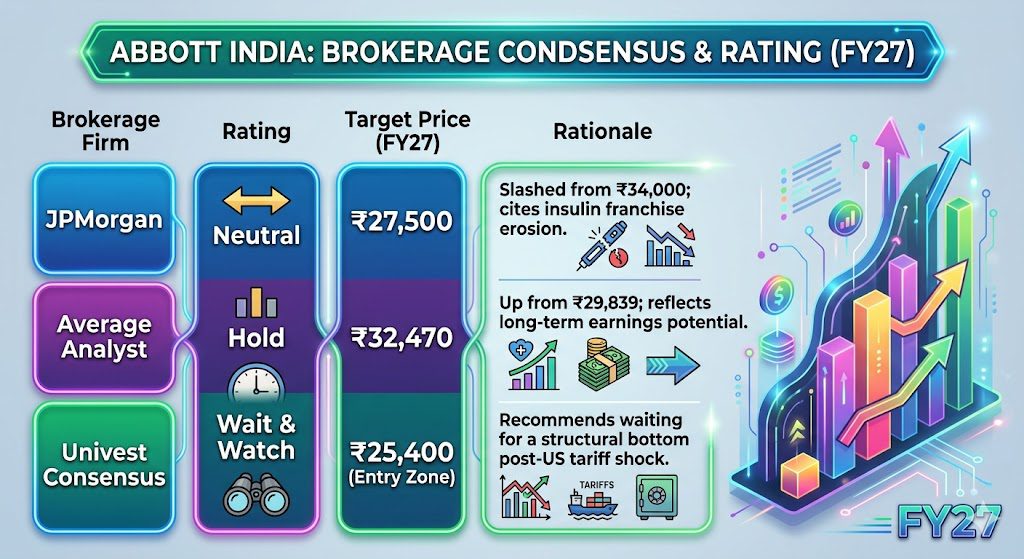
Global brokerage JPMorgan Chase & Co. currently maintains a Neutral outlook on Abbott India with target prices near ₹27,500. The brokerage reduced its earlier target from approximately ₹34,000 mainly due to concerns regarding insulin-franchise erosion and regulatory pricing pressures. Analysts believe future earnings growth may moderate unless the company accelerates innovation and therapy diversification.
Average Analyst Consensus
Average analyst estimates currently suggest target prices near ₹32,470 compared to earlier estimates around ₹29,839. This indicates that despite near-term caution, several analysts still remain optimistic regarding the company’s long-term earnings potential, premium margins, and strong balance-sheet quality.
Univest Strategy View
Several market analysts within the Univest framework currently maintain a “Wait & Watch” stance on the stock with preferred accumulation zones near ₹25,400. Analysts believe investors may receive better long-term entry opportunities if broader pharmaceutical-sector weakness continues following global tariff-related volatility.
The “30-Year” Analyst Verdict
For Long-Term Investors
Abbott India remains an “Earnings Quality” business within the Indian pharmaceutical sector. Despite regulatory challenges and therapy-transition risks, the company continues maintaining exceptional financial discipline with virtually zero debt and a Return on Equity near approximately 35.7%. The sharp 31% stock correction has significantly improved valuation comfort compared to earlier euphoric levels, although the stock still cannot be considered deeply undervalued.
For long-term investors seeking high-quality defensive healthcare exposure, Abbott India continues representing one of the strongest multinational pharmaceutical franchises in India.
For Active Traders
From a trading perspective, the broader trend remains bearish. Traders may continue using the ₹27,400 resistance zone as a key exit level during short-term rallies. At the same time, stabilization near the ₹26,000 support area may potentially create fresh long-term entry opportunities if broader sector sentiment improves over the coming months.
Conclusion & Engagement (CTA)
Final Word
Abbott India’s Q4 FY26 results reflect a company that continues delivering strong profitability and margin resilience despite increasingly complex industry conditions. With nearly 28% profit growth, expanding operating margins, and a massive ₹475 dividend payout, the company remains one of the highest-quality pharmaceutical businesses listed in India. However, regulatory pricing pressure, therapy evolution, and portfolio maturity challenges are creating important strategic crossroads for the future.
Abbott India Limited therefore remains a classic “Quality at a Crossroads” investment story — balancing defensive stability against evolving healthcare-sector disruption.
Investor Discussion
Are you holding Abbott India primarily for its ₹475 dividend payout, or are you waiting for a stronger long-term recovery toward the ₹32,000 target zone? Share your pharmaceutical-sector investment strategy and ABBOTINDIA outlook in the comments below.