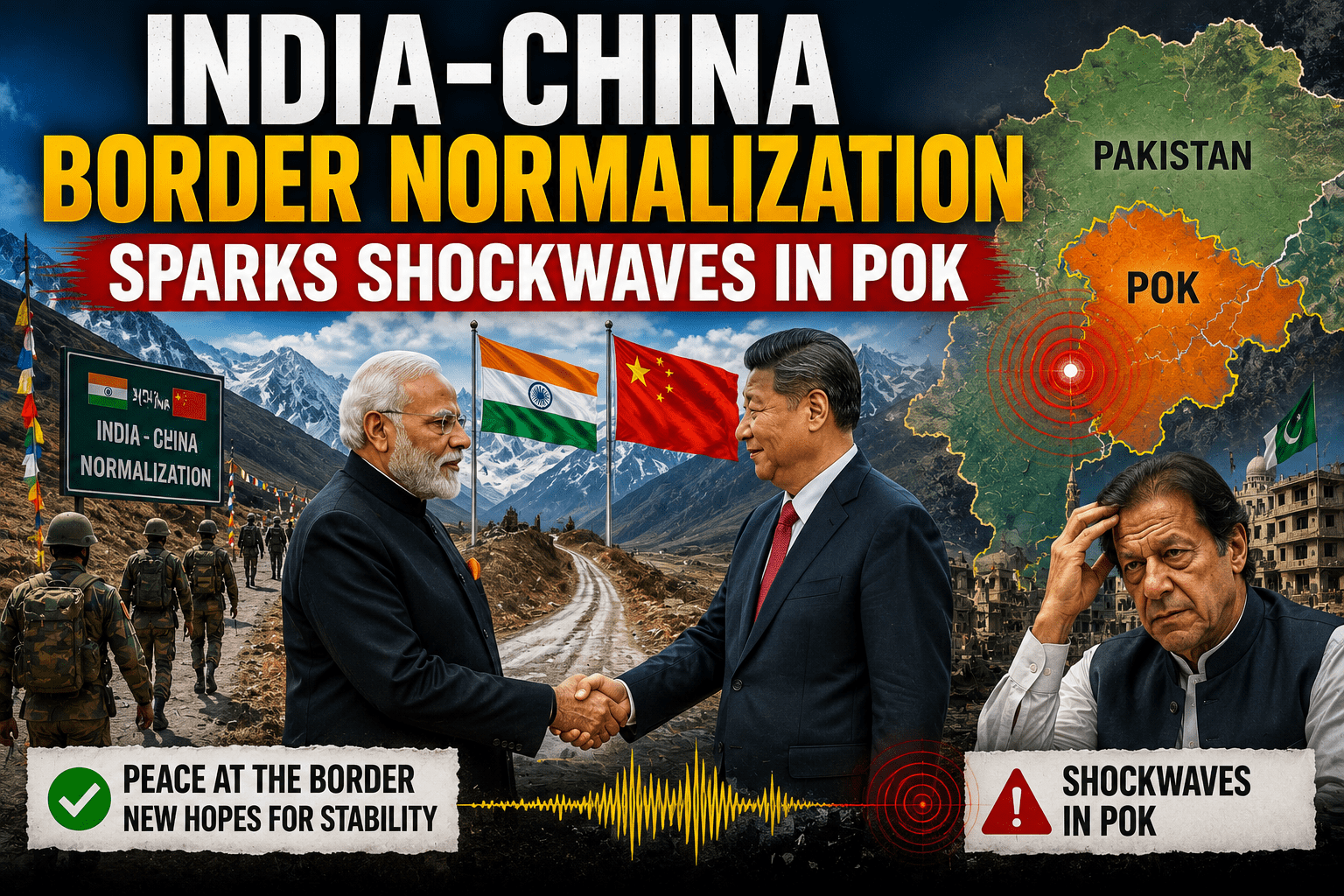
The geopolitical dynamic of South Asia is undergoing a profound structural shift. For decades, regional balance was defined by highly institutionalized friction along two distinct borders: the Line of Actual Control (LAC) separating India and China, and the Line of Control (LoC) dividing Jammu and Kashmir. However, mid-2026 has introduced a striking paradox in cross-border diplomacy.
As New Delhi and Beijing actively engage in high-level talks focused on gradual India-China border normalization, public demonstrations and civic resistance have intensified across Pakistan-Occupied Kashmir (PoK). This correlation highlights a critical vulnerability in Islamabad’s traditional regional leverage. When the two largest economic and military powers in Asia prioritize border stability and trade resumption, the strategic buffer that smaller regional actors historically relied upon begins to shift, amplifying localized internal crises.
1. Background and Context: High-Level Diplomacy in New Delhi
The modern phase of diplomatic re-alignment crystallized on June 22, 2026, on the sidelines of the 16th Meeting of BRICS National Security Advisors and High Representatives on National Security. In a highly anticipated bilateral meeting, Indian National Security Advisor Ajit Doval met with Chinese Foreign Minister Wang Yi in New Delhi.
   [16th BRICS NSA Summit - New Delhi]
                   │
         ┌─────────┴─────────┐
         ▼                   ▼
   Ajit Doval             Wang Yi
(Indian NSA)        (Chinese Foreign Minister)
         │                   │
         └─────────┬─────────┘
                   ▼
  [Gradual Normalization Framework]
   • Boundary Delimitation Prep
   • Institutional Trade Restorations
   • Lipulekh Pass Resumption
Building on the previous disengagement pacts finalized at key friction points like Depsang and Demchok, the Doval-Wang Yi dialogue focused heavily on institutionalizing mechanisms for long-term border peace and tranquility. Rather than allowing unresolved boundary disputes to stall broader interactions, both states demonstrated a mutual willingness to compartmentalize geopolitical rivalries in favor of economic pragmatism.
On June 24, 2026, Prime Minister Narendra Modi met directly with Wang Yi to emphasize cooperation across the Global South. This meeting helped establish a strategic consensus, shifting the bilateral narrative from viewing each other as structural rivals toward treating one another as pragmatically cooperative neighbors.
2. The Resumption of Cross-Border Trade: The Lipulekh Blueprint
The most immediate practical outcome of this diplomatic shift occurred along the mountainous border of Uttarakhand. On June 25, 2026, administrative authorities officially announced the resumption of the historic India-China border trade through the Lipulekh Pass. This route had been suspended since the 2020 global pandemic.
[Lipulekh Pass Border Gateway]
        │
        ├── Suspended: 2020 (Pandemic Controls)
        ├── Resumed: June 2026 (Strategic Consensus)
        └── Operational Blueprint:
                 • Custom House established at Gunji
                 • Initial Batch: 26 Indian Traders/Helpers
                 • Sub-Divisional Logistics (Mules/Horses)
Managed directly by the Dharchula sub-divisional administration, the initial phase saw the issuance of trade passes to Indian merchants and helpers eager to enter the Chinese territory of Tibet. A dedicated customs checkpoint was set up at Gunji to oversee the logistics, while local warehouses near Nabhidhang were prepared to store transit goods safely.
This resumption is highly symbolic. It demonstrates that even when complex security issues remain along the LAC, localized economic integration and cross-border management can function effectively when supported by political consensus.
3. The PoK Paradox: Economic Stagnation and Civic Revolt
While India-China border normalization progresses through structured diplomatic frameworks, a very different situation is unfolding across the Line of Control. For several weeks, major urban centers within Pakistan-Occupied Kashmir have been shaken by widespread public demonstrations.
The primary driver of this internal instability is an acute economic crisis. Local populations, organized largely under the umbrella of the Jammu and Kashmir Joint Action Committee, have mobilized to protest against:
Subsidy Cancellations: Direct rollbacks of long-standing flour and essential food staple subsidies.
Electricity Tariff Inflation: Sharp price increases for residential and commercial electricity, despite the region generating significant hydroelectric power.
Suppression of Civic Governance: Administrative bans on local advocacy committees and the use of force to control peaceful gatherings.
Reports indicate that law enforcement crackdowns have resulted in over 20 civilian deaths and numerous injuries, transforming local economic grievances into a wider regional movement for basic political rights.
4. The Geopolitical Ripple Effect: Shifting Strategic Alignments
The intersection of these two regional developments reveals a deeper geopolitical reality for Islamabad. Historically, Pakistan’s security framework relied heavily on maintaining a unified stance with Beijing regarding border disputes with India. This alignment allowed Islamabad to leverage external diplomatic support to counter India’s regional presence.
┌──────────────────────────────────────────────────────────────────────────┐
│                    REGIONAL POWER STRATEGY ADJUSTMENTS                   │
├──────────────────────────────────────────┬───────────────────────────────┤
│ Traditional Bipolar Pressure Strategy    │ Modern Multi-Alignment Model  │
├──────────────────────────────────────────┼───────────────────────────────┤
│ • Relied on coordinated border friction  │ • Compartmentalized border    │
│ • Assumed permanent diplomatic blocks    │   negotiations           │
│ • Leveraged internal local instability   │ • Re-activation of mountain   │
│                                          │   trade corridors               │
│ • Susceptible to external trade shocks   │ • Focus on long-term domestic │
│                                          │   economic growth        │
└──────────────────────────────────────────┴───────────────────────────────┘
However, as China pursues a multi-alignment foreign policy—balancing its strategic competition with Washington while building steady, pragmatic relations with New Delhi—this traditional security dynamic is evolving.
When Beijing engages in constructive border management talks with India, it signals to international observers that it prefers regional stability over prolonged containment strategies. Left to manage its domestic financial challenges without the leverage of an active border conflict, Islamabad faces compounding internal pressures, which can fuel further public discontent within PoK.
5. Public and Civil Society Responses in Jammu
The escalating violence and heavy-handed law enforcement response within PoK have drawn sharp reactions from civil society organizations across the border. In mid-June 2026, displaced persons communities and refugee cells held significant protest marches in Jammu.
Assembled near the Jammu Press Club and marching toward the historic Maharaja Hari Singh statue, groups like the BJP PoJK Refugee Cell and SOS International publically condemned the actions of security forces across the LoC.
Demonstrators urged international human rights organizations and the United Nations to step in, while formally requesting that the Indian central government raise the issue globally. This internal advocacy emphasizes that the social and humanitarian concerns of the region remain deeply relevant to the broader conversation around South Asian border management.
Data & Statistics Section
The following structured data matrix compiles verified administrative, economic, and logistical details surrounding these regional border dynamics:
| Metric Parameter | Observed Operational Value | Verified Data Source |
| Bilateral Diplomatic Round | 16th BRICS NSA Meeting Side-Talks | Ministry of External Affairs (MEA) |
| Initial Lipulekh Pass Batch | 26 Registered Traders & Helpers | Uttarakhand Sub-Divisional Office |
| Duration of Pass Suspension | 6 Continuous Years (2020–2026) | Regional Customs Log Repositories |
| Primary Logistics Checkpoint | Gunji Customs Checkpost established | Border Trade Administration |
| Reported Civilian Casualties | Over 20 Deaths in Local Standoffs | Regional Human Rights Inquiries |
| Disengagement Validation | Depsang and Demchok Frameworks | WMCC Boundary Commission Files |
Expert Insights
“The gradual restoration of border trade through historical passes like Lipulekh indicates a shift toward economic pragmatism in the region. By creating institutional pathways for localized commerce, both nations can successfully lower border tensions and build communication channels that function independently of broader global rivalries.”
— International Security & Border Trade Policy Specialist
“The recent unrest across Pakistan-Occupied Kashmir shows how domestic economic strain can rapidly transform into a wider crisis of governance. When basic subsidies for food and energy are altered without local administrative support, it can trigger widespread public discontent that challenges traditional security frameworks.”
— South Asian Constitutional Governance Researcher
Frequently Asked Questions (FAQ)
What was the core focus of the June 2026 India-China dialogue?
The dialogue, held between NSA Ajit Doval and Foreign Minister Wang Yi, focused on gradual border normalization, preparing for the next round of Special Representatives talks, and maintaining peace along the LAC.
Why was the reopening of the Lipulekh Pass significant?
The reopening ended a six-year closure that began during the 2020 pandemic, restoring an important historical trade corridor between Uttarakhand and Tibet.
What caused the widespread public demonstrations within PoK?
The protests were triggered by severe inflation, the removal of long-standing government subsidies on flour, rising electricity tariffs, and a ban on the Jammu and Kashmir Joint Action Committee.
Where is the primary logistics checkpoint for the Lipulekh border trade located?
A dedicated customs and clearing facility has been set up at Gunji to process traders and coordinate goods transport.
How do India-China border talks affect the broader region?
By focusing on stability and compartmentalizing border disputes, the talks reduce the likelihood of sudden military escalations, encouraging a more predictable environment for regional commerce.
What actions did civil society organizations take in Jammu?
Groups such as SOS International and refugee advocacy cells organized marches to condemn the use of force against civilians across the LoC, calling for international visibility on the situation.
Which specific border friction points have seen progress?
Bilateral disengagement efforts have focused on resolving long-standing issues at key sectors, including Depsang and Demchok.
What is the function of the Working Mechanism for Consultation & Coordination (WMCC)?
The WMCC serves as an institutional diplomatic platform established to manage border situations, prevent miscalculations, and maintain peace along the LAC.
Official Links & Resources
Official Website: Ministry of External Affairs (MEA), India
Official Announcement: Press Information Bureau – India-China Bilateral Engagements
Official Press Release: Uttarakhand District Administration – Lipulekh Pass Resumption
Official Documents: BRICS NSA Summit Joint Communiqué Archives