🌏 Introduction: India Wins Big in the Trade Negotiations
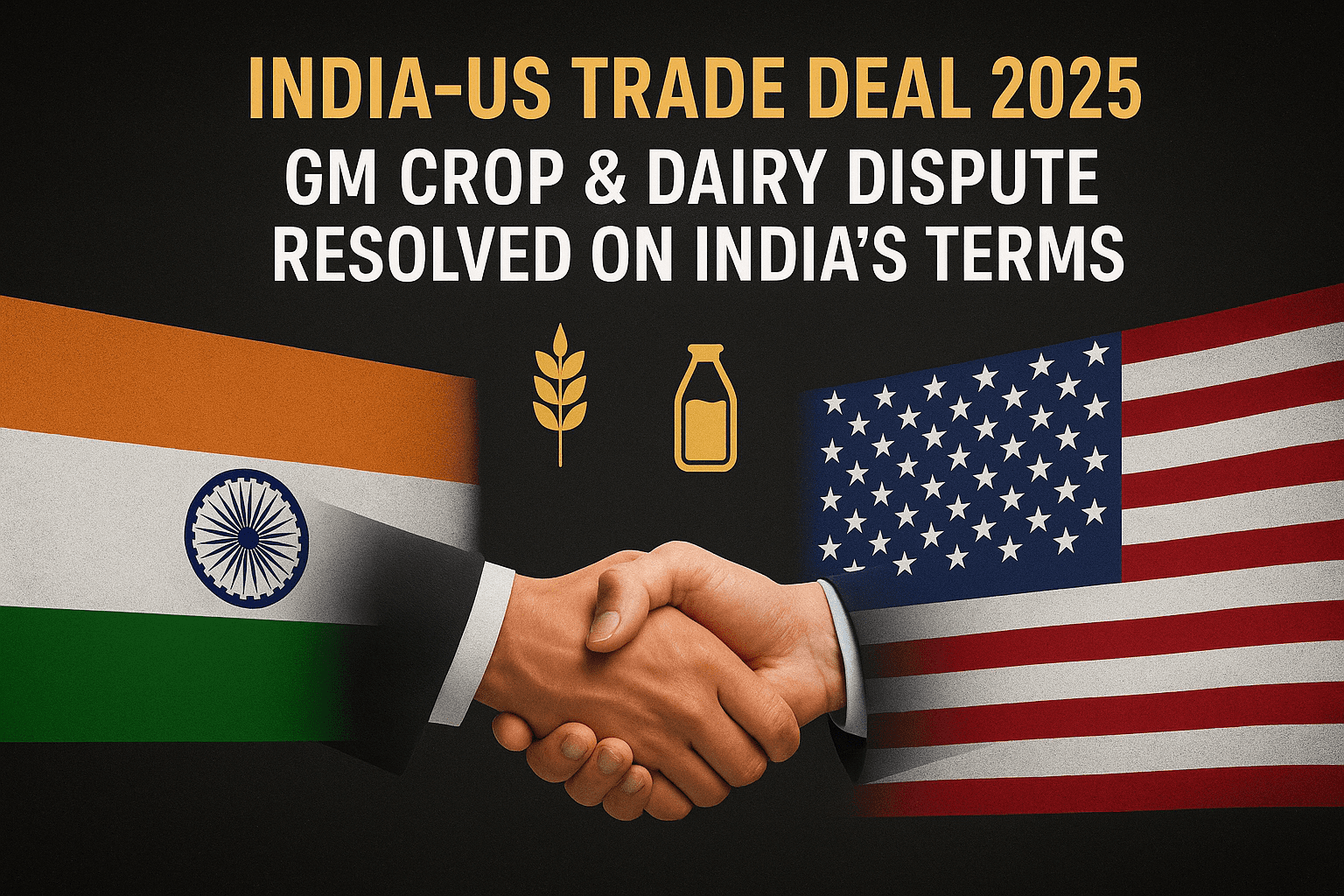
The long-stalled India–US trade deal is finally on the verge of completion — and this time, India has clearly emerged as the stronger player.
After years of wrangling over sensitive issues like genetically modified (GM) crops and dairy market access, Washington has accepted New Delhi’s firm stance on protecting its agriculture and food sovereignty.
In simple terms: India compelled the U.S. to back down, and the result is a trade pact that favours Indian interests.
This landmark moment highlights how India, once seen as a reluctant partner in global trade, has transformed into a confident negotiator — one that prioritises the livelihood of its farmers and the integrity of its food systems over foreign pressure.
🇮🇳 What Makes This Deal So Important
The India–U.S. trade relationship has always been critical. The two nations exchange goods and services worth over $190 billion annually, and both aim to double that figure soon.
However, two key issues blocked progress for years:
GM (Genetically Modified) Crops
Dairy Products Market Access
These sectors touch the heart of India’s rural economy and cultural fabric. Any compromise could have affected millions of small farmers, rural jobs, and India’s food security.
By standing firm, India ensured that the trade deal strengthens its global economic position without sacrificing its agricultural sovereignty.
🌱 What Are GM Crops — And Why Are They So Controversial?
Before understanding the dispute, let’s decode the term “GM crop”.
🧬 What Are GM Crops?
Genetically Modified (GM) crops are plants whose DNA has been altered using biotechnology to introduce new traits — like pest resistance, drought tolerance, or higher yield.
Examples include GM corn, soybeans, cotton, and canola widely grown in countries like the United States, Brazil, and Argentina.
⚠️ Why India Is Cautious About GM Crops
India’s concern with GM crops isn’t based on fear, but on long-term sustainability and farmer protection.
Here’s what drives India’s resistance:
Biosafety and Ecological Risk:
GM crops may cross-pollinate with native varieties, potentially harming biodiversity and traditional seed strains.Seed Dependence:
Most GM seeds are patented by large multinational corporations. This could make Indian farmers dependent on foreign seed companies and increase production costs.Export Risks:
India exports to markets like the European Union, which remain cautious about GM food. Accepting GM crops could hurt these exports.Farmer Protests and Public Opposition:
India has a powerful and politically sensitive farming community. Any move perceived as endangering farmers’ livelihoods can trigger widespread unrest — something the government cannot afford.Food Sovereignty:
India views food production as a matter of national security and cultural identity. Decisions about what Indians eat must be made in India, not dictated by foreign corporations.
India currently allows only one GM crop (Bt Cotton) for commercial cultivation — and has kept GM food crops strictly under regulatory scrutiny.
🇺🇸 Why the U.S. Pushed for GM Crop Access
For Washington, GM crops are a cornerstone of its agricultural exports.
Almost 90% of corn and soybeans grown in the U.S. are genetically modified, and American agribusinesses see India — a market of 1.4 billion people — as a massive opportunity.
The U.S. argued that India’s restrictions on GM products were non-tariff barriers that discriminated against American farmers.
It wanted India to open its markets to GM maize, soymeal, and processed food imports derived from genetically modified organisms.
However, India refused to budge, insisting that scientific safety, not trade pressure, should dictate policy.
🥛 The Dairy Dispute: India’s Most Sensitive Sector
Alongside GM crops, dairy products were another major sticking point in the India–U.S. negotiations.
🐄 Why Dairy Access Was Controversial
The U.S. dairy industry is highly industrialized, producing vast quantities of milk, cheese, and whey at low cost.
If these products entered India freely, they could crush India’s small dairy farmers, who produce milk on a small, family-based scale.
🕉️ Cultural and Religious Dimensions
India’s dairy sector is not just an economic activity — it’s intertwined with cultural and religious practices.
Many Indian states prohibit the use of animal rennet (an enzyme derived from cow stomachs) in dairy processing, which conflicts with U.S. dairy practices.
This created not just an economic but also a cultural barrier, as Indian consumers and religious groups resisted imports that did not meet India’s ethical and sanitary standards.
🧭 India’s Stand: Firm, Fair, and Strategic
When the talks resumed under the new trade framework in 2025, India took a calm yet uncompromising stance.
Finance Minister Nirmala Sitharaman publicly stated that agriculture and dairy are “red lines” in trade negotiations.
This made it clear that no trade agreement would come at the cost of Indian farmers.
Key Principles India Stood For:
No compromise on farmer livelihood.
GM crops allowed only after thorough safety review.
Dairy imports only if they respect India’s cultural norms.
Trade benefits must be balanced and reciprocal.
This firmness surprised Washington, which expected India to make concessions for tariff relief on other goods. Instead, India played smart — it offered access in non-sensitive sectors (like electronics and textiles) while shielding its farm economy.
 🤝 The Turning Point: How the Disputes Were Resolved
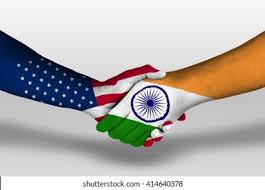
By mid-2025, reports from policy analysts indicated a breakthrough. The U.S. finally accepted India’s terms on both key disputes.
✅ On GM Crops:
The U.S. agreed that India would decide approvals based on domestic scientific evaluation — not under external pressure.
Any future access to GM imports would be limited, regulated, and phased.
India retained full control over biosafety certification and labeling.
✅ On Dairy Products:
India agreed to review specific dairy imports only if they meet vegetarian-friendly production standards.
The U.S. dropped its demand for blanket dairy market access.
Both sides agreed to cooperate on dairy technology and cold-chain infrastructure — areas where collaboration benefits both nations.
This settlement ensured that India’s core agricultural red lines remained intact, while giving Washington enough to save face.
🏆 Why This Is a Strategic Victory for India
The outcome represents a diplomatic and economic triumph for India for several reasons:
India Retained Policy Sovereignty
By refusing to be bullied on GM crops and dairy, India reaffirmed its right to craft policies aligned with national interest.Farmers’ Welfare Prioritized
Protecting small farmers and cooperative dairy producers demonstrates India’s commitment to inclusive growth.Balanced Trade Terms
India gained better access to U.S. markets for sectors like textiles, gems, and pharmaceuticals — without compromising agriculture.Setting a Global Example
India’s assertive stance shows developing nations they can negotiate with global powers from a position of confidence.Political and Cultural Integrity
The government protected not only the economy but also India’s food culture and ethical values.
🧩 What Comes Next for the India–U.S. Trade Deal
With major disputes resolved, the trade deal is expected to be finalized soon, possibly within the coming months.
Expected Features of the Final Deal:
Reduced tariffs on Indian goods like textiles, leather, gems, and electronics.
Phased review of U.S. agricultural access.
Bilateral cooperation in clean energy, digital economy, and AI-driven agriculture.
Framework for future negotiations on data and services trade.
This “Phase One” agreement could be the foundation for a comprehensive Indo–U.S. economic partnership, reshaping trade dynamics between the world’s two largest democracies.
🔍 The Broader Message: India’s Rise as a Trade Power
The India–U.S. trade deal is more than just an economic pact — it’s a symbol of India’s growing global influence.
In the past, India often faced pressure from Western economies to open its markets on their terms. But today, the story is different.
India is negotiating from strength, not submission.
By compelling even Washington to accept its position, India has shown that strategic patience and economic self-confidence can yield far better results than haste or concession.
✍️ Final Thoughts: A Deal on India’s Terms
The near-finalization of the India–U.S. trade deal 2025 proves one powerful truth — India knows where to draw the line.
By standing firm on GM crops, dairy, and agricultural sovereignty, India has achieved what many thought impossible — convincing the world’s largest economy to respect India’s domestic priorities.
The message is loud and clear:
“India will trade with the world — but on Indian terms.”
This is not just a trade win. It’s a statement of national confidence, economic maturity, and global leadership.
The coming months may witness the signing of this historic deal — one that will not only strengthen Indo–U.S. economic ties but also redefine how India engages with global powers in the years ahead.