Introduction: A Silent Test with a Loud Message
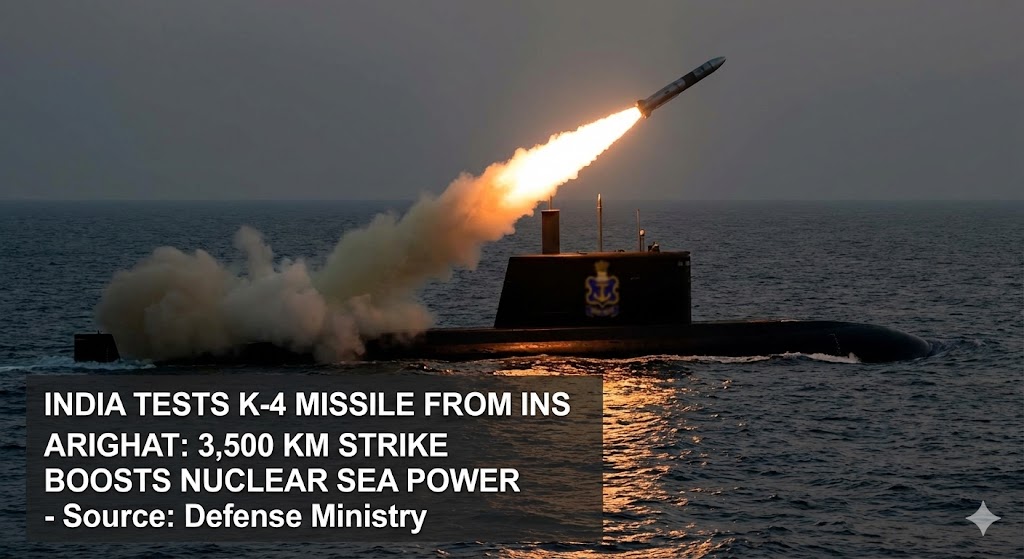
When India conducted a successful test of the K-4 submarine-launched ballistic missile from INS Arighat, there were no dramatic speeches or global headlines. Yet, in the world of geopolitics, this test spoke louder than many public announcements. With a range of around 3,500 kilometres, the K-4 missile strengthens India’s nuclear sea-based deterrence, one of the most critical elements of modern military power.
This was not a routine weapons test. It was a strategic step that reinforces India’s position as a responsible nuclear power with credible deterrence. To understand why this matters, one must look beyond the missile itself and examine how nuclear strategy, global power balance, and history come together beneath the oceans.
What the K-4 Missile Really Is
The K-4 is a submarine-launched ballistic missile (SLBM) designed to be fired from nuclear-powered submarines. Unlike land-based missiles, SLBMs are launched from underwater platforms, making them extremely difficult for adversaries to detect or destroy before launch.
With an estimated range of around 3,500 km, the K-4 allows India to strike distant targets while remaining hidden deep under the sea. This range comfortably covers key strategic regions relevant to India’s security environment. More importantly, the missile is believed to be capable of carrying nuclear warheads, making it a cornerstone of India’s second-strike capability.
INS Arighat and the Importance of Nuclear Submarines

INS Arighat is part of India’s indigenous nuclear-powered ballistic missile submarine programme. Nuclear submarines are not just ships; they are floating strategic assets. Powered by nuclear reactors, they can stay underwater for months without surfacing, unlike diesel submarines that must regularly come up for air.
This ability to remain hidden gives nuclear submarines their greatest strength: survivability. Even if an enemy were to destroy land-based missiles or air bases, submarines like INS Arighat ensure that retaliation is still possible. This is the backbone of credible nuclear deterrence.
Understanding the Nuclear Triad in Simple Terms
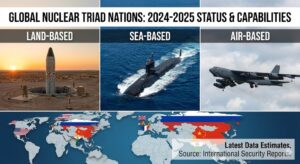
A nuclear triad refers to three ways a country can deliver nuclear weapons: from land, air, and sea. India maintains all three.
Land-based missiles offer quick response and large payloads. Air-delivered weapons provide flexibility and recall options. Sea-based systems, however, are the most secure. Submarines are difficult to track and almost impossible to neutralise completely.
The K-4 missile strengthens India’s sea leg, completing the triad in a meaningful way. Without a credible sea-based deterrent, nuclear doctrine remains incomplete.
Why Sea-Based Deterrence Is the Strongest Form of Security
History shows that the most stable nuclear deterrence systems are sea-based. During the Cold War, the United States and the Soviet Union avoided direct war largely because both sides knew that nuclear submarines would survive any first strike.
Countries like the United States, Russia, the United Kingdom, France, and China all rely heavily on nuclear submarines. India joining this group with operational SLBMs places it in a very small and powerful strategic club.
Sea-based deterrence does not encourage war. Instead, it discourages it by making the cost of aggression unacceptably high.
Strategic Signal to China in the Indo-Pacific
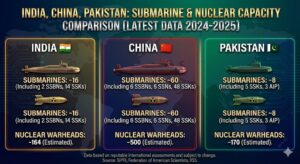
China has rapidly expanded its naval power, including nuclear submarines, in the South China Sea and the Indian Ocean region. Its Jin-class submarines carry long-range ballistic missiles and regularly patrol strategic waters.
India’s K-4 test sends a calm but firm message: India can maintain deterrence even in a maritime-focused strategic environment. The missile’s range allows India to hold key targets at risk while operating safely from its own patrol zones.
This capability helps maintain strategic balance in the Indo-Pacific, reducing the temptation for unilateral dominance.
Message to Pakistan: Stability, Not Escalation
While Pakistan often dominates discussions on South Asian security, the K-4 missile is not designed primarily for Pakistan-centric scenarios. India already has sufficient land-based systems for that purpose.
The real impact here is stability. A credible second-strike capability reduces incentives for any first-use strategy. When both sides know retaliation is assured, escalation becomes less likely.
Past crises, such as Kargil in 1999 or the Balakot episode in 2019, show that nuclear deterrence encourages restraint, even during tense situations.
Lessons from Global History
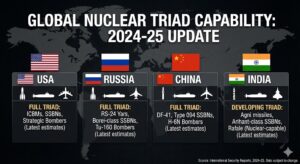
The Cold War offers clear lessons. Despite intense rivalry and ideological conflict, nuclear-armed powers avoided direct war because of mutual deterrence. Submarine-based nuclear forces played a crucial role in this balance.
Britain and France, though smaller powers, maintained global relevance largely through sea-based nuclear deterrence. Their experience shows that nuclear submarines are not about aggression, but about ensuring national survival and diplomatic leverage.
India’s K-4 test follows this proven historical logic.
Why the Timing of the Test Matters
The world today is witnessing renewed nuclear signalling. The Ukraine conflict has revived debates about nuclear use. Tensions in the Middle East and the Indo-Pacific continue to rise. Strategic uncertainty is growing.
India chose to test quietly, without rhetoric. This reflects confidence. The timing shows India strengthening deterrence without contributing to global panic or escalation.
Strategic maturity is often shown not by loud declarations, but by calm capability demonstration.
Economic and Industrial Significance of the Programme
Defence programmes like the K-4 are not only about weapons. They represent deep technological capability. Developing SLBMs requires expertise in materials science, guidance systems, propulsion, underwater launch technology, and nuclear engineering.
Such programmes create high-skill jobs, strengthen domestic industry, and reduce dependence on foreign suppliers. Over time, these capabilities spill over into civilian sectors, supporting broader economic growth.
Strategic autonomy in defence also translates into economic resilience.
India’s Nuclear Doctrine and the Role of K-4
India follows a No First Use (NFU) nuclear policy. Critics often question whether NFU is credible. In reality, second-strike capability is what makes NFU believable.
If a country can guarantee retaliation even after absorbing a strike, it does not need to strike first. The K-4 missile, deployed on submarines like INS Arighat, directly supports this doctrine.
This reinforces India’s image as a responsible nuclear power.
How the World Interprets India’s Test
International reactions to India’s test have been muted, and that itself is telling. Major powers understand the logic of deterrence. India’s test fits within accepted norms of strategic stability.
Unlike aggressive nuclear posturing seen elsewhere, India’s approach focuses on survivability and restraint. This enhances trust and strengthens India’s standing in global forums.
Responsible power behaviour matters as much as raw capability.
Challenges and Limitations Still Ahead

Despite progress, challenges remain. Maintaining continuous at-sea deterrence requires multiple submarines, trained crews, secure command-and-control systems, and constant maintenance.
Deterrence is not just about missiles. It is a complex system that must function flawlessly under extreme pressure. India will need sustained investment and careful management to ensure reliability.
Acknowledging these challenges is essential for realistic assessment.
What Has Fundamentally Changed for India
The successful K-4 test marks a shift from capability development to capability consolidation. India is no longer just building deterrence; it is operationalising it.
This strengthens India’s bargaining position in global geopolitics. Nations listen more carefully to countries that possess credible deterrence and exercise restraint.
Power, in this sense, is about stability rather than dominance.
Conclusion: Quiet Power Is the Strongest Power
India did not test the K-4 missile for headlines. It did so to ensure security, stability, and sovereignty in an uncertain world. The launch from INS Arighat reinforces a simple truth of geopolitics: peace is preserved not by weakness, but by credible deterrence.
In choosing silence over spectacle, India demonstrated strategic maturity. The real strength of this test lies not in its range or payload, but in the calm confidence it reflects.
In the long run, such quiet power shapes the world more effectively than loud declarations ever could.
To visit official website of Indian Air Force click here
Frequently Asked Questions (FAQ)
What is the K-4 missile?
The K-4 is a submarine-launched ballistic missile (SLBM) developed by India. It has an estimated range of around 3,500 kilometres and is designed to be fired from nuclear-powered submarines. Its main role is to provide India with a credible second-strike nuclear capability.
From where was the K-4 missile tested?
The K-4 missile was successfully tested from INS Arighat, India’s second nuclear-powered ballistic missile submarine. The test was conducted from the Indian Ocean, demonstrating India’s ability to launch long-range missiles from underwater platforms.
Why is INS Arighat important for India’s defence?
INS Arighat is a key part of India’s nuclear sea deterrence. Nuclear submarines can stay underwater for long periods and are difficult to detect. This makes them the most secure platform for nuclear weapons and ensures retaliation capability even in extreme situations.
What does “second-strike capability” mean?
Second-strike capability means a country can retaliate with nuclear weapons even after suffering a nuclear attack. Submarines like INS Arighat ensure this ability because they are hard to locate and destroy, making nuclear deterrence more credible and stable.
How does the K-4 missile strengthen India’s nuclear triad?
India’s nuclear triad includes land-based missiles, air-delivered weapons, and sea-based systems. The K-4 strengthens the sea-based leg, which is the most survivable part of the triad. This completes India’s deterrence structure in a meaningful way.
Is the K-4 missile aimed at any specific country?
India does not officially target any country. The K-4 missile is designed for strategic deterrence, not aggression. Its purpose is to maintain balance and prevent conflict by ensuring that no adversary can consider a nuclear first strike without consequences.
How does India’s K-4 capability compare with China and the US?
The United States and China have larger nuclear submarine fleets and longer-range missiles. However, India’s focus is not on matching numbers but on credible minimum deterrence. The K-4 test shows India is steadily building reliable and survivable nuclear capability.
Does this test violate India’s nuclear doctrine?
No. India follows a No First Use (NFU) nuclear policy. The K-4 missile supports this doctrine by strengthening second-strike capability. A strong second-strike system actually makes first use unnecessary.
Why was the K-4 test conducted quietly?
India often avoids loud announcements in strategic matters. Quiet testing reflects confidence and responsibility, signalling capability without escalating tensions or creating panic in the region.
What is the economic or technological impact of such missile programmes?
Developing missiles and nuclear submarines requires advanced engineering, materials science, and precision manufacturing. These programmes strengthen India’s defence industry, scientific capability, and strategic autonomy, with long-term spill-over benefits to civilian technology sectors.
What comes next after the K-4 missile test?
India is expected to continue expanding its nuclear submarine fleet and develop longer-range SLBMs in the future. The goal is to ensure continuous and reliable sea-based deterrence, not rapid expansion.
Why is sea-based nuclear power considered stabilising?
Sea-based nuclear forces reduce the risk of sudden escalation. Because submarines are hidden and survivable, they discourage first strikes and increase strategic stability, which ultimately lowers the chance of war.
To visit official website of Indian Navy click here
People Also Ask (PAA)
What is the range of the K-4 missile tested by India?
The K-4 submarine-launched ballistic missile has an estimated range of around 3,500 kilometres, allowing India to strike distant targets while remaining safely underwater in the Indian Ocean.
Which submarine launched the K-4 missile?
The K-4 missile was launched from INS Arighat, India’s nuclear-powered ballistic missile submarine and the second operational SSBN in India’s fleet.
Why is the K-4 missile important for India’s nuclear deterrence?
The K-4 missile strengthens India’s second-strike capability, meaning India can retaliate even after a nuclear attack. This makes India’s nuclear deterrence more credible and stable.
What does sea-based nuclear deterrence mean?
Sea-based nuclear deterrence refers to nuclear weapons deployed on submarines. These submarines are hard to detect and destroy, making them the most secure part of a country’s nuclear force.
How does the K-4 missile fit into India’s nuclear triad?
India’s nuclear triad consists of land-based missiles, air-delivered weapons, and sea-based systems. The K-4 missile strengthens the sea-based leg, completing the triad in operational terms.
Is the K-4 missile nuclear-capable?
While India does not publicly disclose warhead details, the K-4 missile is widely assessed to be nuclear-capable and designed specifically for strategic deterrence missions.
How does India’s K-4 missile compare with China’s SLBMs?
China operates longer-range SLBMs like the JL-2 and JL-3, but India’s focus is on credible minimum deterrence, not matching numbers. The K-4 significantly narrows capability gaps in the Indian Ocean region.
Does the K-4 missile test violate India’s No First Use policy?
No. India’s No First Use doctrine relies on strong second-strike capability. The K-4 missile actually supports NFU by ensuring retaliation without the need for first use.
Why was the K-4 missile test conducted quietly?
India typically avoids dramatic announcements in strategic matters. Quiet testing signals confidence, maturity, and responsibility, without escalating regional tensions.
What is the strategic message of the K-4 missile test?
The test signals that India can protect its sovereignty, deter aggression, and maintain stability in the Indo-Pacific through survivable sea-based nuclear forces.
Will India develop longer-range submarine missiles after K-4?
Yes. India is expected to develop next-generation SLBMs with longer ranges in the future to strengthen continuous at-sea deterrence.
Why are nuclear submarines more important than land-based missiles?
Land-based missiles can be targeted, but submarines can remain hidden underwater for months. This makes nuclear submarines the most reliable deterrent platform.