India’s Indigenous TAVR System: How a Made-in-India Innovation Is Rewriting the Future of Heart Care

Picture a 68-year-old retired schoolteacher from a small town in Rajasthan. He’s been struggling to climb a single flight of stairs. His chest tightens every time he walks more than a hundred meters. His cardiologist has given him the diagnosis — severe aortic stenosis, a narrowing of the heart’s main outflow valve — and the prescription: a procedure called TAVR.
The problem? The imported valve alone costs between ₹13 lakh and ₹23 lakh. His life savings total ₹3 lakh.
This is not a rare story. It is the lived reality of millions of Indians who are told they need a life-saving heart procedure — and then quietly sent home because no one can afford it.
But in March 2026, something changed. Something big.
India launched its own indigenous TAVR (Transcatheter Aortic Valve Replacement) system — and with it, the possibility that this teacher, and millions like him, might finally get the heart care they deserve.
This is not just a medical news story. This is about justice, innovation, and what happens when a nation decides to stop depending on others for the technology that keeps its people alive.
🔬 What Is TAVR? A Simple, Clear Explanation
[Internal Link: “Types of heart valve diseases” — link here]
Before we dive into India’s breakthrough, let’s understand what TAVR actually is — because the science is surprisingly accessible.
Your heart has four valves that work like doors, opening and closing with every heartbeat to keep blood flowing in the right direction. The aortic valve is arguably the most important — it sits between the heart’s main pumping chamber (left ventricle) and the aorta, the body’s largest artery.
When this valve becomes stiff, calcified, or too narrow to open properly — a condition called Aortic Stenosis — the heart has to work much harder to push blood through the narrow opening. Over time, the heart muscle weakens, and without treatment, the condition leads to heart failure, stroke, or death.
The traditional treatment was Surgical Aortic Valve Replacement (SAVR) — open-heart surgery where surgeons crack open the sternum (breastbone), place the patient on a heart-lung machine, cut out the damaged valve, and sew in a new one. It works. But for elderly or frail patients, it carries enormous risk.
TAVR changed everything.
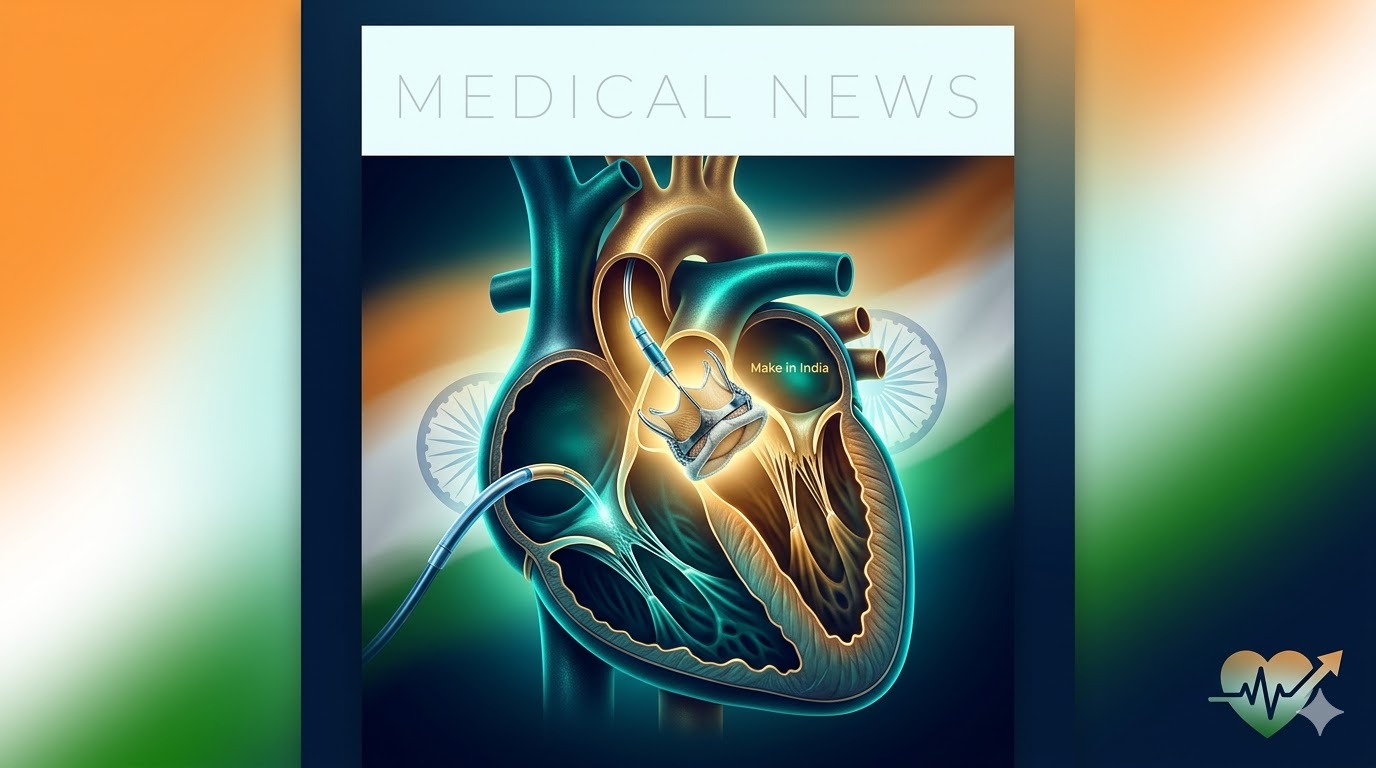
In TAVR, there is no chest-cracking. Instead, a cardiologist inserts a long, thin tube called a catheter — typically through a small incision in the groin or wrist artery — and guides it all the way to the heart. At the tip of this catheter sits a compressed, folded artificial valve. Once in position, the new valve is deployed — it expands like an umbrella inside the old, diseased valve, pushing it out of the way and immediately taking over its function.
The patient is awake or under light sedation. The procedure takes a couple of hours. Most patients go home within 2 to 3 days. Within weeks, they are back to their normal lives — breathing easier, walking further, living longer.
It sounds like science fiction. It is, in fact, the science of the present.
WHO — Cardiovascular Disease Facts
🇮🇳 The Historic Launch: India’s Own TAVR System
[External Link: Business Today launch report — anchor: “S3V Vascular Technologies TAVR launch”]
On March 12, 2026, from the city of Mysore in Karnataka, a quiet but historic announcement rippled through India’s medical and technology communities.
S3V Vascular Technologies — a Mysore-based cardiovascular medtech company — unveiled its Balloon-Expandable Transcatheter Aortic Valve Replacement (TAVR) System for preclinical evaluation. In plain terms: India had built its own heart valve replacement system and was beginning the rigorous process of testing and regulatory approval needed before it could reach patients.
Dr. Vijaya Gopal, Managing Director of S3V Vascular Technologies, stated clearly that the company’s vision was to make structural heart therapies accessible to patients across India — by developing world-class devices domestically, thereby significantly reducing costs.
Who is S3V? Founded in 2011 in Mysore, the company already has a solid portfolio of cardiovascular devices — cardiac stents, catheters, clot retrieval systems. It is not a garage startup. Its backers include some of India’s most respected names: A.M. Naik, the former chairman of Larsen & Toubro, and Madhusudan Kela, one of India’s most celebrated stock market investors. S3V has raised approximately $44.9 million in funding to date.
The company’s TAVR system is currently in the preclinical phase — meaning it is being tested in laboratory and animal models. If these results are positive and regulatory approvals from India’s CDSCO (Central Drugs Standard Control Organisation) are obtained, a commercial launch is estimated within 12 to 18 months — potentially by late 2027.
This is the beginning. But what a beginning it is.
📜 India’s Indigenous Medical Journey: A Proud History
[Internal Link: “Make in India medical device success stories” — link here]
To appreciate why this matters, you need to understand that S3V’s TAVR is not an isolated event. It is the latest chapter in India’s growing story of medical self-reliance.
The MyVal Story — India’s First TAVR Valve
Meril Life Sciences Pvt. Ltd., headquartered in Gujarat, developed MyVal — India’s first indigenously engineered balloon-expandable TAVR valve. MyVal features a cobalt-chromium alloy frame, a tri-leaflet structure made from decellularized bovine pericardium (a tissue derived from cow heart lining), and a proprietary anti-calcification treatment that extends valve longevity.
MyVal is not just a domestic achievement. It carries CE (Conformité Européenne) certification — meaning it meets European medical standards and can be used in Europe. It also received approval from India’s CDSCO. Meril became the first Indian company to enter the global TAVR market — breaking what had been an absolute monopoly held by American giants Medtronic and Edwards Lifesciences.
[External Link: Meril Life Sciences — anchor: “MyVal valve by Meril Life Sciences”]
Other Indigenous Milestones
India has a longer track record of cardiac innovation than most people realize:
- Indian cardiac surgeons pioneered low-cost rheumatic heart disease surgeries in the 1960s and 1970s
- The Hydra aortic valve, another self-expanding TAVR option, is gaining clinical ground
- India leads the world in volume of affordable coronary stent procedures
- Indian companies manufacture drug-eluting stents that are a fraction of the cost of imported equivalents
S3V’s TAVR launch, seen in this context, is not a sudden leap. It is a steady, confident climb.
PubMed Central — TAVR India Research
📊 The Numbers That Tell the Real Story
[External Link: WHO cardiovascular disease facts — anchor: “global cardiovascular disease burden”] [External Link: PubMed — TAVR in India — anchor: “clinical outcomes of TAVR in Indian patients”]
Let us be honest about the scale of the problem that indigenous TAVR is trying to solve.
Global Picture:
- Cardiovascular diseases are the world’s number one cause of death
- An estimated 17.9 million people die from CVDs every year — that’s 31% of all global deaths
- Aortic stenosis affects roughly 2–5% of adults over age 65 worldwide
India’s Burden:
- India has over 44.2 million men and 48.7 million women aged 65 or above — the primary demographic for TAVR
- India carries a particularly heavy burden of rheumatic heart disease — caused by streptococcal infections that damage heart valves, most prevalent in lower-income populations
- Aortic stenosis is significantly underdiagnosed in India because many patients either cannot afford echocardiograms or do not seek care until symptoms are severe
TAVR Adoption in India:
- Across Asia, only about 10,000 TAVR procedures have been performed — a tiny fraction compared to global numbers
- In India specifically, TAVR is available in only a handful of high-volume centers — primarily in Delhi, Mumbai, Chennai, Bangalore, and Hyderabad
- The cost barrier is the single biggest reason for low adoption
India’s Cardiovascular Devices Market:
- Valued at approximately $2.07 billion in 2024
- Projected to reach $4.58 billion by 2032, growing at a CAGR of 9.2%
- The indigenization of TAVR could capture a significant share of this market while simultaneously making the procedure affordable for Indian patients
These numbers are not abstract. They are heartbeats. Millions of them, waiting for a chance.
⚖️ TAVR vs. Open Heart Surgery: Which Is Better?
[Internal Link: “Open heart surgery recovery guide” — link here]
This is one of the most common questions patients and families ask when faced with aortic stenosis. The answer depends on the patient — but the data is increasingly clear.
| Factor | Open Heart Surgery (SAVR) | TAVR |
|---|---|---|
| Incision | Large — sternum split open | Minimal — catheter through groin or wrist |
| Anesthesia | General (fully unconscious) | Local or light sedation |
| Hospital Stay | 7–10 days | 2–3 days |
| Recovery Time | 6–8 weeks | 2–4 weeks |
| Risk for Elderly/Frail | Very high | Significantly lower |
| Suitable For | Low-risk younger patients | High-risk, elderly, frail, or inoperable |
| Imported Valve Cost (India) | ₹4–8 lakh | ₹13–23 lakh |
Landmark clinical trials have firmly established TAVR’s value:
- The PARTNER trial showed TAVR reduced deaths in inoperable patients by 20% compared to medical management alone
- The PARTNER-IIA trial proved TAVR was non-inferior to surgery in intermediate-risk patients
- The SURTAVI trial confirmed these results independently
- The PARTNER-3 trial extended TAVR’s proven safety and efficacy to low-risk patients
The FDA has approved TAVR for all surgical risk categories — from high-risk to low-risk. Globally, more than 300,000 TAVR procedures have been performed across 1,000+ centers, with excellent outcomes.
India’s medical community has been performing TAVR since around 2014, but volumes remain low due to cost and infrastructure constraints. Indigenous manufacturing directly addresses the cost barrier.
💸 The Affordability Crisis: India’s Most Urgent Healthcare Problem
[Internal Link: “Ayushman Bharat scheme eligibility and coverage” — link here] [External Link: CDSCO regulatory process — anchor: “India medical device regulatory approval”]
India spends approximately 3.9% of its GDP on health — one of the lowest ratios among major economies. More alarmingly, roughly 82% of health expenditure in India is out-of-pocket — meaning patients pay directly from their own savings.
In this context, a ₹15–23 lakh TAVR procedure is essentially unavailable to the vast majority of India’s population. Even middle-class families would be financially devastated by such a cost.
How does indigenous manufacturing change this?
When a device is manufactured in India:
- Import duties (which can be 12–20% on medical devices) disappear
- International shipping and logistics costs disappear
- Manufacturing in India’s cost environment is inherently cheaper
- Domestic competition between Indian manufacturers drives prices further down
Conservative estimates suggest a domestically manufactured TAVR valve could be offered at 40–70% lower cost than current imported valves. That could bring the valve cost down from ₹13–23 lakh to potentially ₹5–8 lakh — still significant, but dramatically more accessible.
Government Schemes That Can Amplify This Impact:
The Ayushman Bharat Pradhan Mantri Jan Arogya Yojana (PM-JAY) provides health coverage of up to ₹5 lakh per family per year to over 500 million beneficiaries. As TAVR costs fall with indigenization, the possibility of including TAVR under PM-JAY coverage becomes far more realistic.
The Production Linked Incentive (PLI) Scheme for Medical Devices under Make in India actively provides financial incentives to Indian companies manufacturing complex medical devices domestically — directly encouraging companies like S3V and Meril.
The convergence of affordable indigenous technology + government health schemes could make TAVR genuinely accessible to the Indian masses — not just the urban affluent.
Meril Life Sciences — MyVal
🔬 The Technical Edge: What Makes India’s TAVR System Distinctive?
S3V Vascular Technologies has designed its TAVR system specifically keeping the Indian patient population and procedural context in mind. Some key technical aspects of their balloon-expandable system:
Balloon-Expandable Mechanism: Unlike self-expanding valves that rely on body temperature to unfold, balloon-expandable valves are precisely deployed by inflating a balloon, giving the cardiologist exact control over the placement and expansion. This is the same approach used in Meril’s MyVal and Edwards’ SAPIEN series globally.
International Safety Standards: S3V has explicitly stated the device will meet international safety and efficacy standards — this is critical. A cheaper device is meaningless if it leaks, migrates, or fails. The rigorous preclinical testing underway is designed to ensure the device performs comparably to the best global alternatives.
Design for Indian Anatomy: Indian patients, on average, have anatomical differences from Western populations — including different aortic root dimensions and different distributions of aortic stenosis etiology. An indigenously developed device can be specifically validated for Indian patient anatomy, potentially improving outcomes.
Regulatory Pathway: The device must pass through CDSCO’s Class C (high-risk device) approval process — which includes technical documentation review, clinical investigation data, and post-market surveillance planning. This process, while rigorous, ensures patient safety.
🌍 India on the Global Medtech Map
India’s indigenous TAVR development is part of a larger global story about how emerging economies are reshaping medical technology.
For decades, the medical device industry was dominated by a handful of American and European corporations. Companies like Medtronic, Edwards Lifesciences, Abbott, and Boston Scientific controlled the world’s supply of complex cardiac devices — and priced them accordingly.
India is changing that narrative:
- Meril Life Sciences’ MyVal is CE-approved and used in European centers — an Indian company selling to Europe, not the other way around
- Medtronic’s Evolut FX+ TAVR system received CDSCO approval in 2025, bringing a top global product to India — increasing competition and awareness
- Vitaflow Liberty from MicroPort, a motorized TAVR delivery system, was launched in India in 2025 — with its first two cases performed in Tamil Nadu
- India’s cardiovascular device export market is growing as Indian manufacturers prove quality at scale
The message to the global medical industry is clear: India is no longer just a market. It is a manufacturer, an innovator, and increasingly, a global supplier.
[External Link: FDA transcatheter heart valve page — anchor: “global TAVR regulatory landscape”]
❤️ The Human Story Behind the Data
Numbers matter. But so do people.
Consider the following real-world implications of affordable indigenous TAVR:
The Elderly: India has over 100 million citizens above the age of 60. A significant proportion of them have or will develop aortic stenosis. For most, open-heart surgery is too risky. TAVR is their only realistic option — and until now, most could not afford it.
Women: Studies show women with aortic stenosis are often diagnosed later and treated less aggressively than men. Affordable TAVR could close this gender gap in cardiac care.
Rural India: TAVR is currently concentrated in a few metro hospitals. As costs fall and more centers adopt the procedure, it can gradually reach district hospitals and smaller cities.
Medical Tourism: India already attracts patients from Southeast Asia, Africa, and the Middle East for affordable cardiac surgery. Indigenous TAVR could supercharge this, bringing in patients who currently fly to Europe or the USA for their valve replacement.
FDA — TAVR approvals
⚠️ The Challenges That Remain
Honesty demands we acknowledge what still stands between today’s announcement and tomorrow’s impact.
1. Training Shortage: TAVR is a technically demanding procedure requiring specialized skills in interventional cardiology. India has a critical shortage of trained TAVR operators, particularly outside the major metros.
2. Infrastructure Gap: A TAVR procedure requires a hybrid catheterization laboratory — a specialized facility combining a surgical theater and a cath lab. Very few hospitals outside tier-1 cities have this infrastructure.
3. Insurance Penetration: Despite government schemes, private insurance coverage for TAVR remains patchy. Many insurers still classify it as an “experimental” or “non-standard” procedure.
4. Patient and Physician Awareness: Many patients — and even some general physicians — are unaware that TAVR exists, let alone that an affordable Indian version is coming. Awareness campaigns are essential.
5. Regulatory Timeline: CDSCO’s approval process for Class C high-risk devices is thorough — and appropriately so. But it takes time, and any delay in approval extends the period before patients can benefit.
These challenges are real. But they are solvable — with investment, training programs, policy support, and public awareness campaigns. None of them negate the fundamental significance of what India has achieved.
🔮 The Road Ahead: India’s Medical Future
Looking at the next decade through an analytical lens, India’s medical technology sector stands at a genuine inflection point.
The convergence of several forces is creating extraordinary momentum:
Demand-side: A rapidly aging population, rising rates of lifestyle diseases, and increasing health awareness are creating enormous demand for advanced cardiac care.
Supply-side: Companies like S3V and Meril are proving that Indian engineers and researchers can build world-class cardiac devices. The talent pool is deep and growing.
Policy-side: Make in India, PLI schemes, and Ayushman Bharat together create an unprecedented policy environment that simultaneously incentivizes domestic manufacturing and expands patient access.
Global-side: India’s growing reputation for quality medical manufacturing is opening export markets that were previously unimaginable.
By 2032, India’s cardiovascular device market is expected to be worth $4.58 billion. A thriving domestic TAVR industry could capture a substantial share of this market while serving India’s own underserved patient population.
The story being written today — by a team of engineers and cardiologists in Mysore, Karnataka — will be read in hospital wards across India and beyond, in the lives of patients who were once told there was no affordable option.
🏆 Why This Is a Truly Historic Achievement
Let us step back and appreciate the full weight of what India has accomplished.
Just a decade ago, India was almost entirely dependent on imported stents, pacemakers, and cardiac valves. The government had to repeatedly intervene to cap stent prices because imports were simply unaffordable. Indian patients died waiting for procedures that existed elsewhere.
Today:
- India manufactures its own coronary stents and exports them
- India’s first TAVR valve (MyVal) is CE-approved and sold in Europe
- India has produced its own clot retrieval systems, cardiac catheters, and now — a TAVR system
This is Atmanirbharta (self-reliance) in its most literal and most human form. It is not a political slogan. It is a 68-year-old retired teacher from Rajasthan who might, because of this innovation, live long enough to attend his granddaughter’s wedding.
India’s indigenous TAVR system is proof that medical innovation does not require a zip code in Boston or Zurich. It can grow in Mysore. It can flourish in Gujarat. It can save lives — affordable lives — across the length and breadth of this extraordinary country.
✅ Conclusion: A New Chapter for Indian Healthcare
India’s launch of an indigenous TAVR system is more than a headline. It is a statement of intent, a demonstration of capability, and a promise to millions of patients who have been left behind by the economics of imported medical technology.
With S3V Vascular Technologies’ preclinical launch and Meril Life Sciences’ already-approved MyVal in the market, India now has two homegrown players in a segment that, until recently, was entirely foreign-owned.
As preclinical trials progress, regulatory approvals come through, and commercial launch becomes reality — the question shifts from “Can India build this?” to “How quickly can India get this to every patient who needs it?”
The answer to that question will define Indian healthcare for the next generation.

Related Articles