


Introduction: When a “No IPO” Signals a Bigger Shift
At first glance, Samsung India deciding not to go for an IPO may look like routine business news. But in reality, this decision reflects a much deeper change taking place in the global economy. Today, large multinational companies are no longer guided only by stock markets. They are guided by geopolitics, supply-chain security, and long-term industrial strategy. Samsung’s choice shows that India is no longer seen just as a consumer market, but as a serious production and technology base in a changing world order.
What Samsung’s Decision Really Is
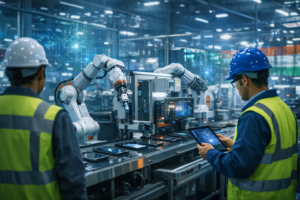
Recent business updates indicate that Samsung Electronics has no immediate plan to list its Indian operations. Instead of chasing market valuation through an IPO, the company wants to focus on expanding artificial intelligence–driven products and strengthening local manufacturing in India. This includes deeper investment in smartphones, televisions, home appliances, and AI-enabled devices that are increasingly produced within the country.
This matters because IPOs are usually used to raise capital or unlock value. Samsung already has both. Its decision shows confidence that long-term production and technology expansion in India will generate more strategic value than short-term market listing.
Why a Global Giant Can Skip an IPO Without Slowing Growth
Samsung can afford to skip an IPO because it does not need external capital to expand. Being a global technology leader with strong cash flows, it can internally fund factories, research, and supply-chain development. Avoiding an IPO also allows Samsung to operate without constant pressure from public shareholders who often expect quick returns.
Manufacturing and AI investments do not deliver results overnight. They take years of steady spending, experimentation, and learning. By staying unlisted, Samsung gains the freedom to plan long-term without worrying about quarterly stock price reactions. In today’s uncertain global environment, this flexibility is more valuable than public-market visibility.
India’s Manufacturing Policy: The Real Attraction
Samsung’s decision makes sense only when seen alongside India’s industrial policy push. The government’s Production Linked Incentive (PLI) scheme rewards companies based on how much they produce in India, not on how much they promise to invest. This approach has already started delivering results.
As of 30 September 2025, the Indian government has disbursed ₹23,946 crore under various PLI schemes. In the electronics manufacturing sector alone, cumulative production has crossed ₹9.34 lakh crore, with investments of over ₹13,759 crore and direct employment for more than 1.36 lakh people. These figures show that India is no longer experimenting with manufacturing—it is executing at scale.
Mobile Manufacturing Shows Why Companies Trust India

India’s mobile phone manufacturing growth explains why Samsung is comfortable expanding without an IPO. In FY21, India’s mobile phone production stood at around ₹2.13 lakh crore. By FY25, this figure had risen to about ₹5.25 lakh crore. Exports have grown even faster, jumping from ₹22,870 crore in FY21 to nearly ₹2 lakh crore in FY25.
Such numbers send a strong signal to global companies. They show that India can manufacture competitively, integrate into global supply chains, and export in large volumes. Samsung wants to strengthen its position inside this expanding ecosystem rather than dilute focus through a public listing.
The China+1 Strategy and India’s Rising Role
Samsung’s India focus is also shaped by global geopolitics. Over the past decade, trade wars, technology sanctions, pandemic disruptions, and shipping crises have exposed the dangers of relying on a single manufacturing base. Many global companies are now following a China+1 strategy, where they keep operations in China but add another major production hub elsewhere.
India has emerged as one of the strongest alternatives because it offers political stability, a large workforce, improving infrastructure, and a policy environment that supports manufacturing. Samsung’s decision fits into this global trend of supply-chain diversification, where economic decisions are increasingly influenced by geopolitical risk.
Why Artificial Intelligence Is Central to Samsung’s India Plan

Samsung’s focus on AI is not marketing hype; it is a clear business strategy. AI-enabled devices allow companies to charge higher prices, improve user experience, and create ecosystems that lock in customers. For Samsung, India is not just a factory location but also a growing base of engineers, developers, and technology professionals.
By combining AI development with manufacturing, Samsung is positioning India as a hub where products are not only assembled but also technologically enhanced. This approach increases the long-term value of operations in India and aligns with the country’s ambition to move up the global value chain.
What India Gains from Samsung’s Long-Term Commitment
India stands to gain in several ways from Samsung’s decision. Increased manufacturing strengthens exports and improves foreign exchange stability. A large anchor company like Samsung also attracts suppliers, logistics firms, and component manufacturers, deepening the industrial ecosystem.
Employment quality improves as AI-linked manufacturing creates demand for skilled technicians and engineers. Most importantly, such decisions boost India’s credibility as a reliable manufacturing destination. When global firms invest without seeking quick exits, it builds long-term confidence in India’s economic direction.
Risks That India Must Still Address
Despite the positive signals, risks remain. One major concern is limited value addition. If India continues to import high-end components while focusing mainly on assembly, long-term gains will be restricted. Another risk lies in policy uncertainty, as sudden tariff changes or delays in incentive payments can hurt investor confidence.
Global demand cycles also matter. Electronics demand can slow during economic downturns, affecting production plans. In addition, India faces competition from countries like Vietnam and Indonesia, which are also trying to attract China+1 investments.
What India Must Do Next to Lock in the Gains
To fully benefit from Samsung-like investments, India must focus on deeper reforms. Encouraging component manufacturing, ensuring stable trade policies, improving logistics efficiency, and aligning skill development with factory needs are essential steps. Supporting research, testing, and design capabilities will help India move beyond assembly into higher-value manufacturing.
These measures will decide whether India becomes merely a large factory floor or a true global manufacturing and technology power.
Conclusion: This Is Not About an IPO, It’s About India’s Future
Samsung skipping an IPO is not a sign of hesitation. It is a strategic decision rooted in confidence about India’s manufacturing and AI potential. The real challenge now lies with India itself. If the country can convert this trust into deeper technology capability, stronger supply chains, and policy stability, decisions like Samsung’s will mark a turning point in India’s geoeconomic rise.
In the long run, this story will be remembered not as business news, but as part of India’s transition from a market to a maker in the global economy.
To visi official website of Samsung India click here
Frequently Asked Questions (FAQ)
Why did Samsung India skip its IPO plans?
Samsung India skipped IPO plans because the company does not need external capital right now. Samsung Electronics prefers to retain full control over its India operations while focusing on long-term investments in AI technology and local manufacturing. Avoiding an IPO also allows Samsung to expand without pressure from short-term market expectations.
Does skipping an IPO mean Samsung is reducing investment in India?
No, it is the opposite. Samsung is increasing its focus on India by expanding manufacturing, strengthening supply chains, and pushing AI-enabled products. Skipping an IPO helps the company invest more freely and plan for the long term rather than managing quarterly stock-market reactions.
How important is India to Samsung’s global strategy?
India is becoming a strategic manufacturing and technology hub for Samsung. The country offers a large market, skilled workforce, supportive government policies, and growing export capability. Samsung increasingly views India as a base not just for sales, but also for production and innovation.
What role does AI play in Samsung’s India expansion?
AI is central to Samsung’s future strategy. The company is integrating artificial intelligence into smartphones, televisions, and home appliances. India provides both engineering talent and manufacturing scale, making it an ideal location to combine AI development with large-scale production.
How does India’s PLI scheme influence Samsung’s decision?
India’s Production Linked Incentive (PLI) scheme rewards companies for actual production. With nearly ₹23,946 crore already disbursed under PLI by September 2025, global firms like Samsung see India as a reliable place to manufacture competitively and at scale.
Is this decision linked to the China+1 strategy?
Yes. Many global companies are reducing dependence on China due to geopolitical risks, trade restrictions, and supply-chain disruptions. Samsung’s deeper investment in India fits into the China+1 strategy, where companies diversify manufacturing to reduce risk.
What does Samsung’s decision mean for India’s economy?
Samsung’s move supports India’s goals of increasing exports, creating skilled jobs, and strengthening industrial ecosystems. Large investments without quick exit plans improve India’s credibility as a long-term manufacturing destination.
Are there any risks for India despite this positive move?
Yes. The biggest risk is limited value addition if India remains focused mainly on assembly. Policy uncertainty, global demand slowdown, and competition from countries like Vietnam and Indonesia are other challenges India must manage carefully.
Will Samsung consider an IPO in India in the future?
Samsung has not ruled out an IPO permanently. However, any future listing will likely depend on market conditions, policy stability, and whether a public listing adds strategic value beyond what the company can already achieve privately.
What should India do to maximise benefits from such investments?
India should focus on component manufacturing, stable trade policies, faster logistics, skill development linked to factories, and support for research and design. These steps will help India move from assembly-based growth to high-value manufacturing.
To visit official website of SEBI click here
People Also Ask (PAA)
Why is Samsung not launching an IPO in India?
Samsung Electronics is not launching an IPO in India because it does not need to raise capital at this stage. The company prefers to focus on long-term investments in AI technology and manufacturing while maintaining full operational control without pressure from public markets.
Is Samsung reducing its presence in India by skipping the IPO?
No. Samsung is expanding its presence in India. Skipping the IPO allows the company to invest more aggressively in factories, supply chains, and AI-driven products without worrying about short-term stock market expectations.
How does Samsung’s decision impact India’s economy?
Samsung’s strategy supports India’s manufacturing growth, export expansion, and job creation. Large-scale investments without quick exit plans improve India’s reputation as a stable and reliable global manufacturing hub.
What is the China+1 strategy and how is Samsung involved?
The China+1 strategy is used by global companies to reduce dependence on China by adding manufacturing bases in other countries. Samsung’s increased focus on India fits this strategy as companies seek supply-chain security and geopolitical risk reduction.
Why is India becoming attractive for electronics manufacturing?
India offers policy incentives like PLI, a large skilled workforce, improving infrastructure, and growing export capability. Rising mobile phone production and exports show that India can manufacture electronics competitively at global scale.
How important is artificial intelligence in Samsung’s India strategy?
AI is central to Samsung’s growth plan. AI-enabled smartphones, TVs, and appliances provide higher margins and stronger customer engagement. India offers both engineering talent and manufacturing scale needed to support this strategy.
Does the PLI scheme really benefit companies like Samsung?
Yes. The Production Linked Incentive scheme rewards companies based on actual production. With nearly ₹24,000 crore already disbursed, it reduces cost pressures and encourages global firms to manufacture more inside India.
Will more global companies follow Samsung’s approach in India?
Very likely. When a large multinational commits long-term without an IPO exit, it signals confidence. This often encourages suppliers and other global firms to expand manufacturing and investment in the same country.
What are the risks if India focuses only on assembly work?
If India remains limited to assembly, most high-value components and intellectual property will stay abroad. To gain long-term economic power, India must expand into components, design, testing, and research.
Could Samsung launch an IPO in India later?
Samsung has not ruled it out permanently. A future IPO may happen if market conditions, valuation, or strategic needs change. For now, the company sees more value in private expansion than public listing.
How does this decision affect Indian investors?
Indian investors may not get a Samsung India IPO opportunity immediately. However, the broader market benefits through job creation, supplier growth, exports, and stronger industrial ecosystems.
Is this move more about geopolitics than business?
Yes, partly. In today’s world, business decisions are deeply linked to geopolitics. Supply-chain security, trade tensions, and technology controls strongly influence where companies choose to invest and manufacture.
Rupee vs Dollar Explained: How India Is Quietly Reducing Dollar Dependence in 2025



One thought on “Samsung India Skips IPO, Bets Big on AI & Local Manufacturing — What This Means for India’s Economy”