Introduction: A Quiet Law That Could Reshape India’s Energy Future
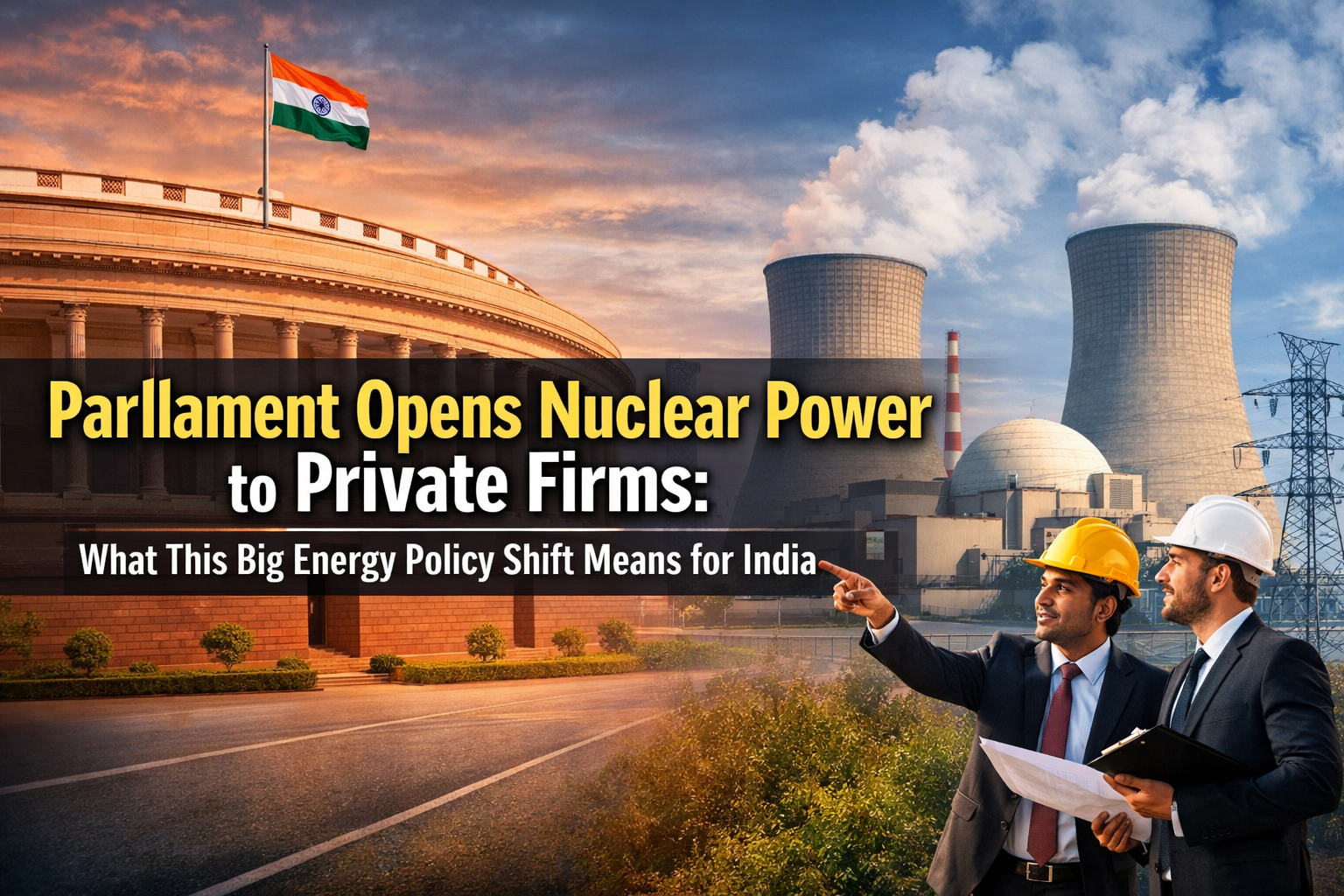
India’s Parliament has passed a landmark law allowing private companies to enter the nuclear power sector, a space that was tightly controlled by the government for decades. This decision may not create instant headlines like elections or wars, but its long-term impact could be far bigger. Nuclear energy is not just about electricity—it is about energy security, climate goals, industrial growth, and strategic autonomy.
For a country where power demand is rising fast and coal still dominates, this policy shift signals a major rethink. The government believes that without private capital, technology, and efficiency, India will struggle to scale nuclear power to meaningful levels.
What Exactly Did Parliament Approve?
The law passed by the Parliament of India opens the civil nuclear power sector to private participation under a regulated framework. Until now, nuclear power generation was almost entirely handled by the government through state-owned entities.
The new framework allows private firms to invest, build, and operate nuclear plants—subject to strict licensing, safety clearance, and regulatory oversight. The government has made it clear that nuclear safety will remain non-negotiable, and private players will not get a free hand. Instead, they will operate within a tighter and more structured rulebook.
India’s Current Nuclear Reality: The Data That Forced Change

To understand why this decision matters, one must look at the numbers. India currently operates 24 commercial nuclear reactors with an installed capacity of around 8.7 gigawatts (GW). This is less than 3% of India’s total electricity capacity, despite India being one of the world’s largest energy consumers.
The government’s near-term target is to raise nuclear capacity to 22.5 GW by 2031–32. The long-term ambition is far bigger: around 100 GW of nuclear power by 2047, when India marks 100 years of independence. Reaching that level with only public funding would be extremely slow and financially stressful.
Why Nuclear Power Matters More Than Ever

India’s electricity demand is growing at about 6–7% annually, driven by urbanisation, manufacturing, electric vehicles, and data centres. Solar and wind are expanding fast, but they are intermittent—they don’t produce power all the time.
Nuclear power provides round-the-clock, carbon-free electricity. One nuclear plant can run continuously for months, making it ideal for base-load power. For a country trying to cut emissions while keeping lights on, nuclear acts as a bridge between growth and climate responsibility.
Why Private Companies Were Kept Out for So Long
The main reason private firms stayed away from nuclear power in India was liability risk. In simple terms, companies feared unlimited financial exposure in case of an accident. Insurance costs were unclear, and long-term risks were hard to price.
Nuclear plants also require huge upfront investment, long construction timelines, and stable policy support for decades. Private capital avoids sectors where rules are uncertain. The new law tries to reduce this uncertainty by clarifying responsibilities, strengthening regulation, and aligning India closer to global nuclear practices.
What Changes for Private Companies Now
With the new framework, private firms can enter nuclear power as investors, operators, or technology partners, while following strict safety norms. The government remains the final authority on licensing and safety approvals.
This move is expected to unlock tens of billions of dollars in investment over the next two decades. It also allows Indian companies to build expertise in advanced nuclear technologies, including small modular reactors (SMRs), which are cheaper and quicker to deploy.
The Role of Government and Regulators
Even with private entry, the government is not stepping back. The Nuclear Power Corporation of India Limited will continue to play a central role in operations, partnerships, and oversight.
The law also strengthens the nuclear regulatory system by giving clearer legal backing to safety authorities. This is crucial because public trust in nuclear power depends entirely on transparent and independent regulation.
What the World’s Experience Tells India
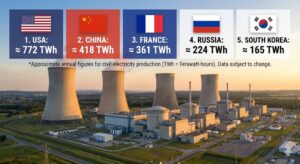
Globally, nuclear power has seen mixed results. France built a strong nuclear base with state backing and stable policy. The UK relied on private and foreign capital but faced cost overruns and delays. The UAE, a late entrant, succeeded by importing technology and enforcing strict project discipline.
The lesson for India is clear: private participation works only when rules are stable, safety is unquestionable, and financing is predictable. Without these, projects get delayed and public opposition grows.
Economic and Industrial Benefits for India
Opening nuclear power to private firms can boost India’s heavy engineering, manufacturing, and skilled employment sectors. Nuclear plants require specialised steel, turbines, control systems, and trained engineers.
If managed well, this policy can create a domestic nuclear supply chain, reduce imports, and position India as a future exporter of nuclear technology and services—especially to other developing nations.
Risks and Concerns That Cannot Be Ignored

This shift is not risk-free. Nuclear accidents, though rare, have severe consequences. Cost-cutting by private firms must never compromise safety. There is also the risk of regulatory capture, where powerful companies influence oversight bodies.
Public confidence will be tested. Any dilution of transparency or accountability can trigger protests and legal challenges. The success of this policy depends less on announcements and more on how rules are enforced on the ground.
What Happens Next: The Road Ahead
The real test begins now. Detailed rules on licensing, insurance, emergency response, and decommissioning must be drafted carefully. Pilot projects will likely be identified to test the private-public model.
Banks, insurers, regulators, and state governments all need to work in coordination. Without this, private interest may remain cautious despite legal approval.
How to Judge Success in the Next Two Years
Readers should watch a few clear signals:
• Do nuclear projects reach financial closure faster?
• Are safety audits independent and public?
• Does nuclear’s share in India’s power mix rise meaningfully?
• Is public trust maintained?
If the answer to these questions is yes, the policy will be judged a success.
Conclusion: A Strategic Bet, Not a Shortcut
Allowing private entry into nuclear power is not a quick fix—it is a long-term strategic bet. If executed well, it can strengthen India’s energy security, support climate goals, and power industrial growth.
If handled poorly, it can invite delays, distrust, and backlash. Nuclear energy demands patience, discipline, and honesty. This law gives India an opportunity—but only strong governance will decide whether it becomes a breakthrough or a burden.
To visit AERB click here
📌 Frequently Asked Questions (FAQ)
1️⃣ What does “private entry into nuclear power” mean in India?
Private entry means that private companies can now invest in, build, and operate nuclear power plants, under strict government regulation. Earlier, nuclear power generation was handled almost entirely by government-owned entities. Safety rules and licensing will still be controlled by the state.
2️⃣ Why did India open its nuclear sector to private companies now?
India’s electricity demand is rising fast, and nuclear power currently contributes less than 3% to total power generation. The government believes that without private capital, technology, and efficiency, India cannot reach its long-term target of around 100 GW nuclear capacity by 2047.
3️⃣ How much nuclear power does India currently produce?
India operates 24 nuclear reactors with an installed capacity of about 8.7 GW. This is small compared to India’s overall power capacity, which is dominated by coal, solar, and wind.
4️⃣ Will private companies compromise nuclear safety to cut costs?
According to the government, nuclear safety will remain non-negotiable. Private firms must follow strict licensing, safety audits, emergency response rules, and regulatory inspections. The nuclear regulator’s role has been strengthened to prevent cost-cutting at the expense of safety.
5️⃣ Does this mean foreign companies can run nuclear plants in India?
Foreign companies cannot freely operate nuclear plants on their own. However, they can partner with Indian firms, provide technology, finance, or equipment—subject to Indian laws, security checks, and government approvals.
6️⃣ Will electricity become cheaper because of private nuclear power?
Not immediately. Nuclear power has high initial costs, but over the long term it can provide stable and reliable electricity at predictable prices. The main benefit is energy security and clean base-load power, not short-term tariff reduction.
7️⃣ What are the risks of allowing private firms into nuclear power?
The key risks include:
Any weakening of safety enforcement
Regulatory capture by powerful companies
Public trust issues if transparency is low
Cost overruns and project delays
That is why strong regulation and public accountability will decide the success of this policy.
8️⃣ How does India’s nuclear policy compare with other countries?
Countries like France rely heavily on nuclear power with strong state control. The UK uses private and foreign investment but faces cost challenges. The UAE succeeded with strict project discipline. India is trying to balance state control with private efficiency.
9️⃣ What should readers watch next to judge if this policy works?
Key signals to watch:
How many nuclear projects reach financial closure
Whether safety audits remain transparent
Whether nuclear power’s share in India’s energy mix increases
How public confidence is maintained
🔍 Bonus SEO / PAA Questions You Can Add Later
Is nuclear power safe in India?
Can nuclear energy replace coal in India?
What is India’s nuclear energy target for 2047?
Will private nuclear plants increase electricity bills?
To visit the official website of Department of Atomic Energy click here
🔎 People Also Ask (PAA)
❓ Why is India allowing private companies into nuclear power now?
India’s power demand is growing rapidly, while nuclear energy contributes less than 3% to total electricity. The government believes private investment is needed to scale nuclear capacity, reduce pressure on public finances, and meet long-term clean energy goals.
❓ Is nuclear power safe in India?
India has operated nuclear plants for decades with a strong safety record. The government says safety rules will remain strict even after private entry, with licensing, inspections, and emergency systems controlled by regulators.
❓ How much nuclear power does India generate compared to other countries?
India’s nuclear capacity is around 8–9 GW, far lower than countries like the US, France, or China. Nuclear power forms a small part of India’s energy mix compared to coal and renewables.
❓ What is India’s nuclear power target for 2047?
India aims to reach around 100 GW of nuclear power capacity by 2047, aligned with energy security needs and climate commitments.
❓ Will private nuclear plants increase electricity prices?
In the short term, nuclear power is expensive due to high construction costs. Over the long term, it can provide stable, predictable electricity prices because fuel costs are low and plants run continuously.
❓ Can foreign companies invest in India’s nuclear power sector?
Foreign companies can participate through partnerships, technology transfer, or financing arrangements, but direct control remains tightly regulated by Indian laws and security norms.
❓ Why was nuclear power restricted to government companies earlier?
Nuclear power involves national security, safety risks, and long-term liability concerns. The sector was kept under state control to ensure accountability and public trust.
❓ How does private entry affect India’s clean energy goals?
Nuclear energy provides clean, non-intermittent power. Private participation can help India reduce dependence on coal while supporting renewable energy with stable base-load electricity.
❓ What are the biggest risks of opening nuclear power to private firms?
The main risks include safety oversight challenges, regulatory capture, cost overruns, and public opposition if transparency is reduced.
❓ What should investors and citizens watch after this law?
Key indicators include project approvals, safety audit transparency, financing clarity, and whether nuclear capacity actually increases on the ground.
📈 Extra PAA Clusters (For Future Expansion)
Policy-focused
What changes in India’s nuclear energy law?
Is India reforming nuclear liability rules?
Economy-focused
How much investment will nuclear power attract in India?
Can nuclear power support Make in India manufacturing?
Public-interest
Are nuclear plants safe for nearby populations?
How are nuclear accidents handled in India?