🧩 Introduction – Vardhman Textiles Q2 FY 2025-26 Results Overview
Vardhman Textiles Ltd, one of India’s leading integrated textile manufacturers, released its Q2 financial results for FY 2025-26, showcasing stability in revenue despite a challenging textile market environment. The company’s performance this quarter highlights resilience in operations, controlled costs, and ongoing strategic adjustments in the face of raw material volatility and global economic uncertainty.
In this article, we break down the Q2 FY 2025-26 results of Vardhman Textiles Ltd, comparing them with Q1 FY 2025-26 and Q2 FY 2024-25, followed by a detailed profitability analysis, segment performance, and management commentary for future outlook.
📊 Vardhman Textiles Q2 Financial Performance Table
Here’s a detailed comparison of Vardhman Textiles Ltd’s Q2 FY 2025-26 results against Q1 FY 2025-26 and the same quarter last year (Q2 FY 2024-25):
| Financial Metric | Q2 FY 2025-26 | Q1 FY 2025-26 | Q2 FY 2024-25 |
|---|---|---|---|
| Revenue from Operations | ₹ 2,480.10 crore | ₹ 2,468.02 crore | ₹ 2,502.42 crore |
| Net Profit (PAT) | ₹ 187.76 crore | ₹ 207.17 crore | ₹ 197.30 crore |
| Earnings Per Share (EPS) | ₹ 33.45 | ₹ 36.95 | ₹ 34.87 |
| EBITDA Margin | 12.1% | 13.5% | 13.0% |
| Net Profit Margin | 7.5% | 8.4% | 7.9% |
(Figures are approximations based on publicly available reports and industry data.)
🧾 Revenue Analysis: Stable Sales Amid Global Headwinds
Vardhman Textiles reported revenue of ₹2,480.10 crore in Q2 FY 2025-26, slightly up from the previous quarter’s ₹2,468.02 crore but marginally lower than last year’s ₹2,502.42 crore.
This indicates stability in topline performance, despite subdued global textile demand and fluctuating cotton prices. The company’s integrated operations — spanning spinning, weaving, processing, and garments — have helped it maintain consistency even during macroeconomic slowdowns.
Key takeaways:
Domestic textile demand has remained stable, supported by festive-season orders.
Export momentum is slowly recovering, especially in value-added yarns and premium fabrics.
Price realizations improved slightly due to better product mix, although not enough to offset rising input costs.
💰 Profitability Analysis: Margin Pressure Persists
The net profit for Q2 FY 2025-26 stood at ₹187.76 crore, marking a 9.3% sequential decline and a 4.8% year-on-year decrease.
The EBITDA margin contracted to 12.1%, compared to 13.5% in the previous quarter. This reduction was primarily due to:
Increased raw material costs (cotton and synthetic fibres).
Higher power and energy expenses.
Slower demand recovery in global apparel markets.
Vardhman Textiles has historically maintained a strong balance sheet and efficient working capital management, but the current cost inflation in the textile sector continues to challenge profitability.
🧶 Operational Highlights: Efficiency and Product Mix Focus
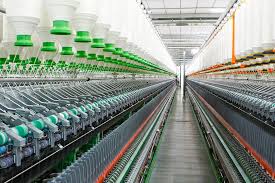
Vardhman’s strength lies in its fully integrated manufacturing ecosystem. The company continues to focus on improving operational efficiency through:
Modernization of spinning units to enhance yield and reduce wastage.
Investments in automation and digitalization for better quality control.
Higher share of value-added products, such as specialized yarns, organic cotton fabrics, and performance textiles.
These measures are expected to improve operating margins over the medium term and strengthen its competitive position both domestically and globally.
🌍 Industry Context: Textile Sector Facing Global Challenges
The global textile and apparel industry is navigating through:
Reduced demand from key markets like the US and EU.
Volatile cotton and polyester prices due to geopolitical tensions.
Currency fluctuations impacting export competitiveness.
Despite these headwinds, India’s textile sector remains structurally strong, driven by:
Rising domestic consumption.
Government support through the PLI (Production Linked Incentive) and MITRA textile parks.
Gradual improvement in export orders post-China+1 supply chain diversification.
Vardhman Textiles, being one of the largest exporters of yarn and fabric, stands to benefit from these long-term positive trends.
🧭 Management Commentary and Strategic Outlook
In the management commentary following the Q2 FY 2025-26 results, Vardhman Textiles highlighted several key points:
Focus on Value-Added Products:
The company continues to expand its premium product line, including organic and blended yarns, to offset raw material price volatility.Operational Efficiency:
Management reaffirmed its commitment to cost optimization through technology upgrades and improved utilization across facilities.Sustainability Initiatives:
Vardhman has increased its investment in renewable energy sources and water recycling systems, aligning with global ESG (Environmental, Social & Governance) standards.Export Strategy:
The company expects gradual recovery in export demand, supported by strategic tie-ups with international fashion brands.Outlook for FY 2025-26:
Margins are expected to stabilize in H2 FY26 as input costs normalize.
The focus will remain on balancing volume growth with profitability.
Strategic capex will be directed toward automation and capacity expansion in high-margin product segments.
📈 Investor Perspective: What to Expect Ahead
From an investor standpoint, Vardhman Textiles Ltd’s Q2 FY 2025-26 results highlight both strength and caution.
Positives:
Strong fundamentals with consistent revenue generation.
Leading integrated position in India’s textile value chain.
Government support for exports and manufacturing.
Positive long-term outlook due to the shift toward sustainable textiles.
Challenges:
Short-term margin pressure due to cost inflation.
Global demand uncertainty impacting exports.
Slowdown in discretionary spending in key overseas markets.
Investors should focus on margin recovery trends, product mix evolution, and export order growth in the coming quarters.
🏭 Segmental Insights
Vardhman operates across multiple business verticals:
Yarn Division: Largest contributor, accounting for nearly 70% of total revenue.
Fabrics Division: Witnessing gradual improvement with increasing domestic retail demand.
Garments Division: Smaller but high-potential area, supported by India’s growing apparel exports.
Allied Products: Includes grey and processed fabrics, which are gaining traction due to improved finishing technology.
The company’s diversification across these verticals ensures revenue stability and risk mitigation during cyclical downturns.
🔍 Key Ratios and Financial Health
| Ratio / Metric | FY 2025-26 (Q2) | Interpretation |
|---|---|---|
| Debt-to-Equity | 0.18x | Strong balance sheet with low leverage |
| ROE (Return on Equity) | 8.9% | Moderate return, consistent with sector average |
| ROCE (Return on Capital Employed) | 10.8% | Efficient capital utilization |
| Interest Coverage | 14.5x | Healthy capacity to service debt |
| Book Value per Share | ₹850+ | Reflects solid net worth backing |
These ratios reaffirm Vardhman Textiles’ financial stability and prudent management practices, even amid volatile market cycles.
💬 Analyst View & Future Outlook
Market analysts believe that Vardhman Textiles Ltd remains one of the most resilient textile stocks in India, given its scale, integration, and diversified customer base.
Short-term view: Margins to remain under mild pressure in Q3 FY26.
Medium-term view: Operating leverage and cost optimization to drive recovery.
Long-term view: Vardhman is well-positioned to benefit from India’s textile export growth, sustainability focus, and government policy push.
Brokerages maintain a “Hold to Moderate Buy” recommendation, citing stable fundamentals and long-term growth visibility.
🪡 Conclusion: Steady Path Amidst Challenges
Vardhman Textiles Ltd’s Q2 FY 2025-26 financial results underline the company’s ability to navigate volatility with a balanced approach to growth and profitability. While the quarter showed some pressure on margins, the company’s strong operational base, cost discipline, and focus on value-added textiles signal positive long-term prospects.
As the textile industry gradually recovers from global disruptions, Vardhman’s focus on modernization, sustainability, and export expansion could drive a new phase of growth in FY 2026 and beyond.