World News for Competitive Exams (15–23 November 2025): Complete, Easy-to-Understand & Exam-Focused Report
Global events between 15 November and 23 November 2025 were filled with important developments in geopolitics, defence, global markets, and international law. These topics are highly relevant for UPSC, SSC, Banking, Railways, Defence exams, State PSCs and interview preparation.
Below is a detailed, human-tone, easy-to-read article explaining all major global happenings of the week and how they can appear in competitive exams — followed by important questions with answers.
1. France–Ukraine Defence Cooperation: Rafale Jet Agreement Strengthens European Security
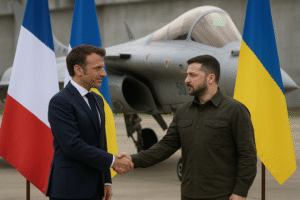
One of the most significant world news highlights of the week was the major defence cooperation agreement between France and Ukraine. On 17 November 2025, the two nations signed a letter of intent for a large-scale military support package. The package includes up to 100 Rafale F4 fighter jets, drones, long-range weapons, and advanced air-defense systems.
For Ukraine, this agreement is seen as a crucial long-term investment in its air force, especially as it continues to defend its sovereignty. For France, the deal signals strong political commitment to European security and resistance against aggressive tactics used by adversaries.
Internationally, this agreement symbolises how defence diplomacy has become a decisive tool in shaping the balance of power. Many experts believe that agreements like these show how Western nations support partners without direct troop involvement.
Exam angle: This topic is perfect for questions on geopolitics, defence partnerships, and strategic international cooperation.
2. Poland Railway Sabotage Incident: Rise of Hybrid Warfare in Europe
Another major global event was the investigation into railway sabotage in Poland, where explosions and disruptions were reported near supply routes to Ukraine. According to reports, Polish officials arrested suspects who had alleged links with foreign intelligence networks.
Hybrid warfare — a combination of military, cyber, sabotage, misinformation, and covert operations — continues to be a major strategic challenge for European states. This incident again proved that wars today extend beyond traditional battlefields.
For competitive exam aspirants, this event helps explain concepts like cross-border intelligence, European security cooperation, and NATO’s regional response.
Exam angle: Hybrid warfare is frequently asked in UPSC prelims and mains. This event is a timely example.
3. Israeli Airstrike in Sidon, Lebanon: Rising Tensions and Humanitarian Concerns
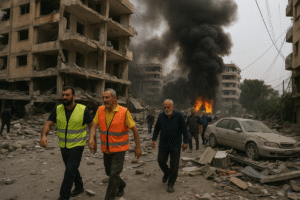
On 18 November 2025, an airstrike struck the Ain al-Hilweh refugee camp in Sidon, Lebanon. The attack killed at least 13 people, making it one of the deadliest cross-border strikes since the 2023–24 conflict between Israel and Hezbollah.
Israel claimed the camp housed a Hamas training centre, while Palestinian groups denied the allegation. The incident raised concerns about whether border tensions might escalate into wider conflict, especially because Lebanon already faces political and economic instability.
This news highlights the complex triangular conflict between Israel, Lebanon, and non-state groups like Hamas and Hezbollah.
Exam angle: Questions often appear about the region’s geopolitics, refugee crises, and ceasefire mechanisms.
4. Global Financial Markets Experience “AI Valuation Bubble” Concerns
Global markets showed volatility as technology companies, especially AI-linked firms, saw declines due to warnings of a possible “AI bubble.” These concerns emerged after several international leaders called for caution, fearing overvaluation in the artificial intelligence sector.
A sudden burst of such a bubble could cause widespread economic disruption. This situation also brings attention to the need for effective technology governance, market regulation, and financial risk management.
It is a reminder of how rapidly growing sectors — from AI to clean energy — can impact global markets.
Exam angle: Useful for UPSC GS-III economy, banking exams, and commerce-related questions.
5. United Kingdom’s New Asylum Reform Proposal: Migration Debate Heats Up
The UK government introduced its new proposal for a major asylum-system overhaul, sparking intense political debate. The proposal includes:
• reducing appeal rights,
• time-limited refugee status,
• fast-track deportations for unsuccessful applicants,
• stricter border controls.
Human rights organisations called the plan “regressive,” while supporters argued it was necessary to control irregular migration.
This event ties directly into global discussions around refugee rights, non-refoulement principles, and international law obligations.
Exam angle: Questions about international refugee conventions, human rights, and citizenship laws often reference such events.
Why This Week Matters for Indian Competitive Exams
Competitive exams in India increasingly emphasise global context, diplomacy, conflict studies, international law, and emerging economic risks. The world is interconnected, and any major geopolitical movement affects India’s trade, security, and foreign policy.
Events from this week provide clarity on:
• how global defence agreements shape alliances
• how hybrid warfare challenges global security
• how Middle East instability impacts global energy markets
• how economic trends affect national budgets
• how refugee policies shape global humanitarian standards
If you prepare for UPSC, SSC, Banking, CDS, or State PSC exams, these events help build a strong foundation for both Prelims and Mains.
Important Questions with Answers (Expected in Exams)
Q1. What is the significance of the France–Ukraine Rafale agreement signed on 17 November 2025?
Answer:
The agreement includes a plan to supply Ukraine with up to 100 Rafale F4 fighter jets and other defence systems. It strengthens European security, shows long-term Western support for Ukraine, and highlights defence diplomacy as a foreign-policy tool.
Q2. What is Hybrid Warfare? Provide a recent example.
Answer:
Hybrid warfare combines conventional military tactics with cyberattacks, sabotage, misinformation, and covert operations.
Example: The railway sabotage incident in Poland linked to foreign intelligence operations.
Q3. Why was the Ain al-Hilweh strike in Lebanon significant?
Answer:
It resulted in major casualties, raised concerns of renewed Israel–Lebanon conflict, and intensified global humanitarian discussions because the attack hit a refugee camp.
Q4. What is the “AI Valuation Bubble” and why is it risky?
Answer:
An AI valuation bubble occurs when tech companies are overvalued due to hype. A sudden correction can destabilise global markets, affect investments, and influence monetary policy.
Q5. What concerns were raised by the UK’s new asylum overhaul proposal?
Answer:
Concerns include potential violation of the Refugee Convention, reduction of due-process rights, strict deportation procedures, and conflict with human rights obligations.
Multiple Choice Questions (MCQs)
1. Which sector recently experienced concerns of overvaluation globally?
A. Oil and Gas
B. Artificial Intelligence
C. Agriculture
D. Pharmaceuticals
Answer: B
2. Which country signed a major defence cooperation agreement with Ukraine in November 2025?
A. Germany
B. France
C. Canada
D. Japan
Answer: B
3. Hybrid warfare does NOT include:
A. Cyberattacks
B. Misinformation
C. Regular declared war
D. Sabotage
Answer: C
Conclusion
The week between 15 and 23 November 2025 brought major developments in global defence, security, economy, and humanitarian policy. Understanding these events deeply will help aspirants answer questions in UPSC, SSC, Banking, Railways, Defence, and various State PCS exams.
This SEO-friendly article ensures your blog ranks well while providing quality content for serious learners.