
Will the US Launch a Digital Dollar? Everything We Know — The Complete 2026 Guide

For years, the question “Will the US launch a digital dollar?” was theoretical. Financial academics debated it. Central bank researchers studied it. Tech enthusiasts speculated about it.
Then 2025 happened — and America gave its clearest answer yet.
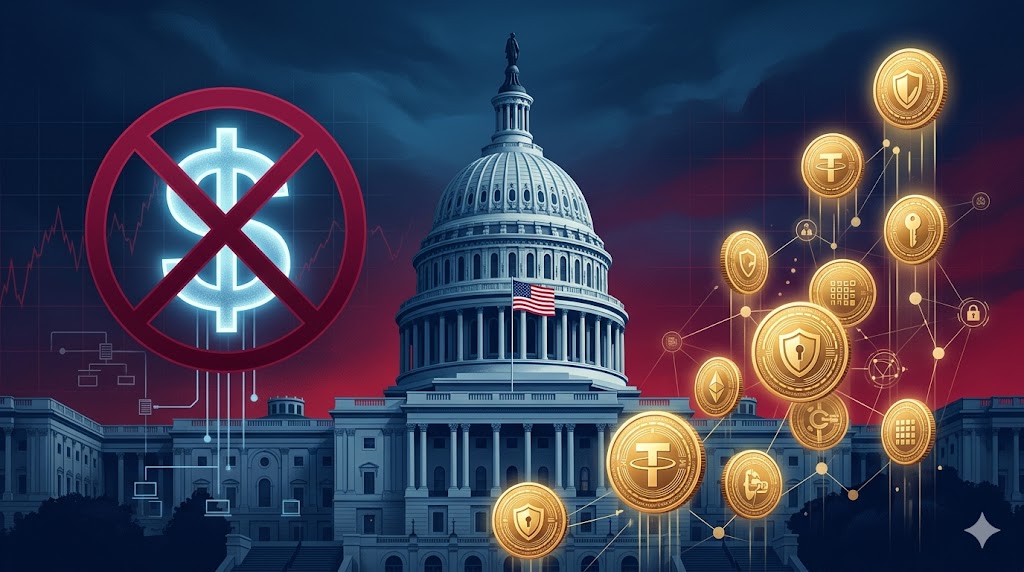
In a single extraordinary year, the United States issued an executive order banning a government digital dollar, signed its first major cryptocurrency law, passed a House bill to make the ban permanent, created a Strategic Bitcoin Reserve, and placed itself as the only major economy in the world to formally turn away from government-issued digital currency.
This isn’t a simple story of “no digital dollar.” It’s a profound strategic pivot about who should control digital money in America — and what the consequences of that choice will be for the dollar’s global future.
Here’s everything, explained simply and completely.
The Short Answer: No — Not Under This Administration
Let’s give you the direct answer first. The United States will not launch a government-issued digital dollar (CBDC) under the Trump administration. On January 23, 2025 — just days after Trump took office — he signed Executive Order 14178, titled “Strengthening American Leadership in Digital Financial Technology.”
The order was unambiguous:
All ongoing federal research programs into a digital dollar were ordered terminated immediately. The Federal Reserve, which had been exploring a potential digital dollar for years, halted its public CBDC research. The US became the only major economy in the world to formally abandon government digital currency development.
But here’s what makes the story more complex and more interesting: America didn’t reject digital money. It rejected government-issued digital money. And it immediately moved to build something different.
Executive Order 14178 (federalregister.gov)
The Complete Timeline: Every Key Event
The Federal Reserve Bank of Boston, in partnership with MIT’s Digital Currency Initiative (Project Hamilton), researched potential digital dollar architecture. The Fed published discussion papers, held public consultations, and explored technical designs. The Biden administration issued an executive order in March 2022 directing multiple agencies to study digital assets including a potential CBDC.
Republican legislators, led by Representatives Tom Emmer (R-MN) and French Hill (R-AR), introduce the Anti-CBDC Surveillance State Act, citing concerns about government financial surveillance. The bill gains significant Republican support but does not advance through the Democratic-controlled Senate. Florida becomes the first state to ban CBDC payments under state law.
On his third day in office, Trump signs Executive Order 14178. Federal agencies are immediately ordered to halt all CBDC-related work. The order simultaneously promotes dollar-backed private stablecoins and blockchain development. All ongoing digital dollar research programs are terminated. The US becomes the only major economy to formally reject CBDC development.
Senator Bill Hagerty (R-TN) introduces the GENIUS Act with bipartisan support. Unlike the CBDC ban (which is about blocking government digital money), the GENIUS Act is about enabling private digital money. It creates a federal framework for stablecoins — digital currencies backed by US dollars and issued by regulated private companies.
The Trump administration formalizes a Strategic Bitcoin Reserve — a government holding of Bitcoin, primarily from asset forfeitures. This positions Bitcoin as a strategic financial asset alongside gold, sending a powerful signal that the US sees crypto as a legitimate part of national financial strategy rather than a threat to be regulated out of existence.
In one extraordinary legislative week, the House passes three landmark digital asset bills. The GENIUS Act passes 308-122 and goes to Trump for signature. The Digital Asset Market Clarity Act (CLARITY Act) passes 294-134, defining how crypto assets are regulated by CFTC vs SEC. The Anti-CBDC Surveillance State Act passes 219-210, going to the Senate.
America gets its first-ever federal cryptocurrency law. The GENIUS Act creates a comprehensive regulatory framework for payment stablecoins — the first major digital currency legislation in US history. Crypto markets surge past $4 trillion for the first time. SEC Chair, Comptroller of the Currency, and CFTC Acting Chair all praise the legislation.
The Anti-CBDC Surveillance State Act is linked to the National Defense Authorization Act (NDAA) for Senate passage. Congressional insiders note the provision may face removal during the NDAA conference committee process. The permanent digital dollar ban remains uncertain — depending on the NDAA outcome — though Trump’s executive order still stands regardless.
While America has chosen stablecoins over a government CBDC, 137 countries continue CBDC development. China’s digital yuan has processed $2.37 trillion. The EU digital euro preparation phase advances. The competitive pressure on America’s digital currency strategy intensifies as the global CBDC landscape matures without US participation.
GENIUS Act S.1582 (congress.gov)
The 4 Key Laws & Orders — What Each One Actually Does
Executive Order 14178 — Digital Dollar Ban
Signed: January 23, 2025. Prohibits all federal agencies from establishing, issuing, or promoting a US CBDC. Terminates all ongoing research programs. Promotes dollar-backed stablecoins and blockchain development instead. Can be reversed by a future president with a new executive order — which is why the Anti-CBDC Act matters.
The GENIUS Act — Stablecoin Framework
Signed: July 18, 2025. Passed House 308-122. America’s first federal crypto legislation. Creates licensing and regulatory framework for payment stablecoins. Requires 1:1 dollar reserve backing. Mandates regular audits. Prohibits interest-bearing stablecoins. Gives stablecoin holders priority in bankruptcy. Companies have 18 months to comply.
Anti-CBDC Surveillance State Act (H.R. 1919)
Passed House: 219-210 (July 2025). Would amend the Federal Reserve Act to permanently prohibit the Fed from issuing a retail CBDC. Linked to NDAA for Senate passage — but faces risk of removal in conference committee. If signed, makes digital dollar ban permanent statute law rather than just executive order.
CLARITY Act — Crypto Market Structure
Passed House: 294-134 (July 2025). Defines whether crypto assets are regulated by CFTC (commodities) or SEC (securities). Creates registration and compliance rules for digital exchanges, brokers, and dealers. Senate Banking Committee Chair Tim Scott has used it as a “strong template” for Senate legislation.
CLARITY Act H.R.3633 (congress.gov)
Why America Said No: The 4 Core Arguments Against a Digital Dollar
Argument 1 — Financial Privacy and Surveillance
This was the most powerful and publicly stated reason. A government CBDC would give federal authorities direct, real-time visibility into every American’s financial transactions. Unlike current bank accounts (where government access requires legal process and bank cooperation), a CBDC held directly at the Federal Reserve would make every purchase — every medication, every political donation, every book, every meal — instantly visible to government authorities.
Bill supporters led by Tom Emmer and French Hill explicitly cited China’s digital yuan as “a cautionary example of state control over individual financial behavior.” Trump’s executive order named financial privacy as a primary justification. Florida’s earlier state-level CBDC ban used identical language. This argument resonated across both parties — the final House vote on the Anti-CBDC Act included 206 Republicans and 102 Democrats voting for the GENIUS Act, showing bipartisan digital currency reform support.
Argument 2 — Banking System Stability
The Independent Community Bankers of America (ICBA) was among the most vocal opponents of a US CBDC — for a very practical reason. If Americans could hold their money directly at the Federal Reserve in CBDC wallets, they would have less reason to keep money in commercial banks. This “bank disintermediation” would shrink commercial banks’ deposit bases, reducing their ability to make loans to businesses and households.
A CBDC would pull deposits out of local banks, shrinking credit availability in smaller markets and destabilizing institutions that lack the scale to absorb the shock.
— ICBA (Independent Community Bankers of America), Congressional testimony, 2025
This concern was particularly acute for community and regional banks — the backbone of lending to small businesses and rural communities. The GENIUS Act itself was carefully modified throughout the legislative process to include language protecting against “community bank disintermediation” — showing how seriously lawmakers took this structural risk.
The Regulatory Review (theregreview.org)
Argument 3 — Government Overreach and Monetary Control
Beyond surveillance, critics argued that a programmable CBDC would give the government unprecedented control over monetary policy at the individual level — the ability to set expiry dates on money, restrict spending categories, or directly manipulate consumer behavior through financial programming. The Regulatory Review documented that supporters “cite risks of government surveillance and ‘programmable money'” as their primary objections.
Argument 4 — Private Innovation Is Better
The Trump administration’s core philosophy was that private markets — properly regulated — would build better digital payment systems than government could. Dollar-backed stablecoins like USDT ($155 billion market cap) and USDC were already extending dollar dominance across global blockchain networks. The GENIUS Act’s approach was to regulate and legitimize this existing private ecosystem rather than replace it with a government system.
The GENIUS Act Deep Dive: America’s Actual Digital Money Strategy
While the digital dollar ban gets the headlines, the GENIUS Act is equally significant — because it shows what America IS doing with digital money, not just what it’s blocking.
📋 GENIUS Act Key Provisions — Plain Language
The Arguments FOR a Digital Dollar — The Other Side
To be fair and balanced, there are genuine arguments in favor of a US CBDC that serious economists and policy experts make. Congress wasn’t unanimous — the Anti-CBDC Act passed only 219-210, and 102 Democrats voted for the GENIUS Act alongside 206 Republicans, suggesting more nuanced positions within both parties.
✅ Arguments FOR a Digital Dollar
- Direct government-to-citizen stimulus payments (faster than checks, more targeted than bank transfers)
- Financial inclusion for ~5.9 million unbanked American households
- Prevents the US falling behind China and 137 other nations in CBDC standards
- Could modernize the US payment system, reducing reliance on outdated infrastructure
- Maintains US ability to use monetary policy tools in a fully digital economy
- Could compete directly with China’s mBridge for cross-border dollar settlements
- Eliminates the counterparty risk of private stablecoin issuers
⚠️ Arguments AGAINST a Digital Dollar
- Government surveillance of all financial transactions — privacy destruction
- Programmable restrictions on legal purchases
- Risk of instant account freezing without legal process
- Destabilizes commercial banking system through deposit flight
- Concentrates dangerous monetary power in one government entity
- No demonstrated consumer need that private stablecoins can’t fulfill
- Sets precedent future governments could abuse
The absence of a US public-sector digital currency alternative may impede American leadership in developing crucial technical standards for cross-border digital payments, anti-money laundering integration, and broader global financial governance frameworks. As other major economies advance CBDC development with strategic intent, the United States may find itself reacting to standards set by competitors rather than leading their development.
— The Regulatory Review, “The Digital Dollar Divide,” September 2025
The Competitive Risk: Is America Falling Behind?
This is the question that keeps some US financial strategists up at night. While America explicitly steps back from CBDC development, the rest of the world is accelerating forward.
| Country / Region | CBDC Status | Key Metric | Dollar Threat Level |
|---|---|---|---|
| 🇨🇳 China (e-CNY) | Advanced Pilot | $2.37T transactions processed | 🔴 High — mBridge bypasses dollar |
| 🇮🇳 India (Digital Rupee) | Active Pilot | $122M in circulation; +334% growth | 🟡 Medium — large market |
| 🇪🇺 EU (Digital Euro) | Preparation Phase | Earliest rollout 2026–2027 | 🟡 Medium — euro alternative |
| 🇷🇺 Russia (Digital Ruble) | Pilot | Expanding under sanctions pressure | 🟡 Medium — sanctions bypass |
| 🇧🇷 Brazil (Drex) | Pilot | IMF-praised wholesale + retail model | 🟡 Medium — BRICS aligned |
| 🇺🇸 United States | BANNED by EO | GENIUS Act: private stablecoins only | ➡️ Stablecoin bet in progress |
The competitive risk is real and acknowledged even by US policymakers. Specifically, there are two dimensions of concern:
Technical Standards Risk
The country or bloc that builds the most widely adopted cross-border CBDC infrastructure sets the technical standards that everyone else follows — the same way SWIFT’s standards became the global default for bank messaging in the 1970s. With the US absent from CBDC development, China is actively positioning its mBridge infrastructure as the default cross-border CBDC platform. If mBridge becomes the standard for Asian, Middle Eastern, and African central bank digital settlements, the US will be reacting to Chinese-set standards rather than writing its own.
Dollar Dominance Risk
Every trade settled in a CBDC other than dollar stablecoins reduces dollar demand by some marginal amount. Over decades, this compounds. The US bet is that dollar-backed stablecoins will fill this gap — but stablecoins are private, subject to competition, and not backed by the full faith and credit of the US government the way a CBDC would be.
Could the US Digital Dollar Ban Be Reversed?
This is an important question — because right now, the ban exists primarily as an executive order, which any future president could reverse.
Here’s the current legal status:
Executive Order 14178 (January 2025): This is the current ban. As an executive order, it can be reversed by a future president issuing a new executive order. If a Democrat wins the 2028 presidential election, for example, they could reverse the digital dollar ban on day one of office — the same way Trump reversed Biden’s crypto executive orders and Biden reversed some of Trump’s.
Anti-CBDC Surveillance State Act: This House-passed bill, if it becomes law, would be much harder to reverse. It would require a new Act of Congress — majority votes in both the House and Senate — to authorize a US CBDC. However, as of early 2026, this bill faces an uncertain path through the Senate NDAA conference committee process. PYMNTS reported that “the CBDC ban may be one of those priorities slated for removal” from the NDAA.
The bottom line: The digital dollar is banned for now — firmly. But the ban is not yet permanently enshrined in statute. A future administration with different priorities could reverse it. The political will to build a digital dollar infrastructure — if future economic or geopolitical circumstances demand it — exists within both parties, just suppressed by the current political alignment.
What This All Means for Ordinary Americans
If you’re an ordinary American, here’s what these decisions mean for your daily financial life in practical terms:
In the near term (2025–2027): Not much changes in your day-to-day banking. Your debit card still works. Your bank account still exists. You may start to see more regulated stablecoin products offered by banks and fintech companies — think digital dollar wallets offered by major banks that are now regulated under the GENIUS Act.
For international transfers: The GENIUS Act’s framework means dollar-backed stablecoins will become increasingly legitimate for sending money internationally — potentially cheaper and faster than traditional wire transfers. If you send remittances abroad, stablecoin-based transfers may become a regulated, mainstream option within the next few years.
For your financial privacy: The ban on a government digital dollar means the government does not have a new surveillance infrastructure for your finances. Your transactions remain subject to existing bank reporting rules — not a new government wallet that can see everything in real time.
For the dollar’s global strength: This is the most uncertain dimension. If stablecoins successfully extend dollar dominance into digital trade — which is what the US is betting on — your dollar savings, income, and purchasing power are protected. If China’s mBridge and other CBDC networks gradually reduce global dollar demand, Americans could face higher borrowing costs and reduced economic advantages over the long term.
The Bottom Line: America’s Historic Bet on Private Digital Money
America’s answer to “Will the US launch a digital dollar?” is now clear: No — not a government-issued one. Instead, the US has made a fundamental strategic choice to regulate and promote private, dollar-backed stablecoins as its digital money strategy.
This is not the choice most countries are making. 137 nations are building government CBDCs. China has processed $2.37 trillion in digital yuan. The EU’s digital euro is coming. America is, by deliberate design, the outlier.
The case for this choice is real: protecting financial privacy, preserving banking system stability, avoiding government surveillance infrastructure, and trusting private markets to innovate better payment systems.
The risk of this choice is also real: potentially losing influence over global digital currency standards, relying on private companies to maintain dollar dominance where governments elsewhere are using their full sovereign authority, and facing an uncertain future if stablecoins don’t scale as hoped.
The GENIUS Act is now law. The digital dollar ban stands via executive order. The Anti-CBDC bill awaits Senate passage. The Strategic Bitcoin Reserve exists. America has placed its bets.
History will judge whether this was visionary financial sovereignty — or a critical strategic mistake made at the dawn of the digital currency era. The answer will likely become clear within the next decade.

About Anant Jha
Anant Jha is the Editor-in-Chief of SRVISHWA.com, where he writes on geopolitics, geoeconomics, and global financial trends. As a geopolitical and geoeconomic analyst (and continuous learner), he focuses on decoding global power shifts, currency dynamics, and economic strategies shaping the modern world.He is also a stock market fundamental analyst and learner, exploring how macroeconomic events influence businesses and long-term investment opportunities. Through his work, he aims to simplify complex global issues and connect them with real-world economic impact for readers.