1. Introduction: Why Chips Are the “New Oil” and Why This Issue Dominates Geopolitics
In the 20th century, global power revolved around oil. Countries that controlled oil reserves shaped wars, alliances, and economic systems. In the 21st century, semiconductors—commonly called chips—have taken that role. Today, chips are embedded in everything: smartphones, cars, fighter jets, satellites, artificial intelligence systems, medical equipment, and financial markets. Without semiconductors, modern economies simply cannot function.
This is why chips are often described as the “new oil.” Like oil, they are strategic, scarce, and unevenly distributed across the world. But chips are even more powerful than oil because they determine not just energy security, but technological, military, and economic leadership. Control over advanced chips means control over innovation itself.
This issue dominates geopolitics because the global semiconductor supply chain is fragile and concentrated. A handful of countries and companies control the most advanced technologies. As the rivalry between the US and China intensifies, chips have become a tool of pressure, leverage, and strategic containment. For India, this global chip conflict is no longer distant—it directly affects economic strategy, industrial policy, and national security.
2. Importance of Semiconductors in Modern Power
Semiconductors are at the heart of modern power across multiple domains. In artificial intelligence, advanced chips are required to train large AI models and run high-performance computing systems. Without cutting-edge chips, AI progress slows dramatically. This matters because AI is now central to productivity growth, defense planning, cyber warfare, and surveillance.
In the military sector, semiconductors power precision-guided missiles, fighter aircraft avionics, drones, radar systems, and encrypted communication networks. Modern warfare depends on real-time data processing, which requires high-performance chips. Countries that lack access to advanced semiconductors risk falling behind militarily.
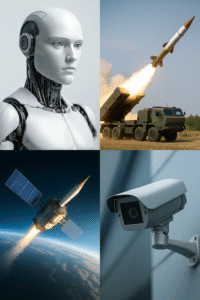
Space and satellite systems—used for navigation, weather forecasting, communication, and intelligence—also depend heavily on chips. Surveillance technologies, including facial recognition and data analytics, rely on powerful processors.
This is why many strategists argue that chip dominance increasingly equals global dominance. A nation that leads in semiconductors can shape technological standards, military balance, and global economic growth. The semiconductor race is therefore not just an industrial competition—it is a contest for global leadership.
3. US Export Controls Explained Simply
US export controls on semiconductors can sound complicated, but the core idea is simple: restrict China’s access to the most advanced chips and the tools needed to make them. The goal is to slow China’s progress in AI, supercomputing, and advanced military technologies.
What exactly is banned? China faces restrictions on importing advanced AI chips, high-end GPUs, and sophisticated semiconductor manufacturing equipment, especially tools required to produce chips at very small nanometer nodes. Restrictions also apply to software used for chip design and, in some cases, to US citizens working with Chinese chip firms.
Several global companies are directly affected. Nvidia, a leader in AI chips, has had to modify and redesign products to comply with US rules. ASML, the Dutch firm that produces essential lithography machines, faces limits on selling its most advanced equipment to China. TSMC, the world’s most advanced chip manufacturer, must follow US regulations when supplying Chinese firms.
These controls do not block all chip trade with China, but they target the most strategic technologies that drive future innovation and military capability.
4. Impact on China’s Tech Industry
The immediate impact on China’s tech industry has been disruption and uncertainty. Advanced AI development depends heavily on high-performance chips, and restrictions have made access more difficult and expensive. This raises concerns about whether China’s AI development could slow in the short to medium term.
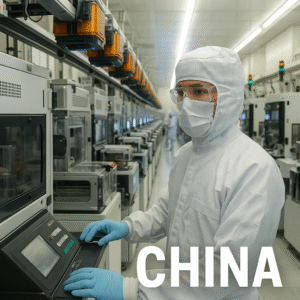
China’s response has been aggressive domestic investment. Beijing is pouring billions into local semiconductor firms, research labs, and talent development. Progress has been made in producing mature and mid-level chips, but matching global leaders at the cutting edge remains extremely difficult. Advanced chipmaking requires decades of experience, complex ecosystems, and highly specialized equipment.
In the long term, there are innovation risks. Reduced access to global collaboration and advanced tools may slow breakthroughs. However, prolonged pressure could also push China toward alternative technologies and self-reliance. The outcome is uncertain, but China’s tech industry is being reshaped in fundamental ways by the chip conflict.
5. Impact on the Global Chip Market
The semiconductor war affects the entire global market, not just the US and China. Export controls and supply chain shifts have led to price volatility, especially for advanced chips used in AI and data centers. When supply tightens, prices rise, impacting industries worldwide.
Supply shortages ripple across sectors. Smartphones face higher component costs, electric vehicles (EVs) experience production delays due to chip shortages, and data centers require massive volumes of high-performance processors to support cloud computing and AI workloads.
Governments are responding by subsidizing domestic chip manufacturing, but building advanced fabrication plants takes years. Until new capacity comes online, the global chip market remains vulnerable to geopolitical shocks rather than purely economic forces.
6. Taiwan’s Strategic Importance
Taiwan sits at the center of the global semiconductor ecosystem. It is home to TSMC, which manufactures the majority of the world’s most advanced chips. This makes Taiwan economically indispensable and geopolitically critical.
Any disruption in Taiwan—whether due to conflict, blockade, or instability—would send shockwaves through the global economy. Entire industries, from consumer electronics to defense systems, depend on Taiwanese chips.
 This concentration of production makes Taiwan a major geopolitical flashpoint. The risk of escalation in the region represents one of the biggest tail risks facing global markets. For India and other economies, Taiwan’s stability is not a regional issue—it is a global economic concern.
7. How the Tech War Impacts Stock Markets
Financial markets react quickly to developments in the semiconductor war. Semiconductor stocks often see sharp moves following policy announcements, export controls, or geopolitical tensions. Companies involved in chip design, manufacturing, and equipment face both risks and opportunities.
AI companies are especially exposed because their growth depends on access to advanced chips. Any supply constraint can affect valuations. Cloud computing firms also feel the impact, as data center expansion relies heavily on high-performance processors.
At the same time, government incentives for domestic chip production can boost certain stocks. For investors, semiconductor geopolitics has become a critical factor in evaluating tech companies, increasing volatility across global markets.
To visit official website of NVIDIA click here
8. Could This Trigger a Global Tech Cold War?
Many analysts believe the world is moving toward a global tech cold war. The US and its allies form one technology bloc, while China and its partners form another. Each bloc develops its own supply chains, standards, and ecosystems.
This could lead to “digital iron curtains,” where data, technology, and platforms are restricted across political lines. While this reduces dependency, it also increases costs and reduces efficiency. Innovation may slow as collaboration declines.
Such fragmentation would fundamentally alter globalization, replacing open technology flows with politically aligned networks.
9. What Comes Next? Role and Impact on India
Further restrictions are likely. Governments may expand controls to include AI software, cloud services, and emerging technologies. Discussions around global regulation of AI chips—especially those with military applications—are gaining momentum.
For India, this moment presents both challenges and opportunities. India currently imports most of its chips, making it vulnerable to global disruptions. However, global supply chain diversification creates an opening. India is positioning itself as an alternative manufacturing hub through policy incentives, infrastructure investment, and partnerships with global firms.
India’s role could grow in chip design, assembly, testing, and eventually fabrication, though achieving scale will take time. Strategically, stronger semiconductor capabilities enhance India’s economic resilience and national security. The chip war has made semiconductor self-reliance a priority for India’s long-term growth.
10. Conclusion: Why This Battle Will Shape the Next Decade
The global semiconductor war is not a short-term dispute. It is a defining struggle that will shape technology, markets, and geopolitics over the next decade. Chips have become the foundation of modern power, making control over them a strategic priority for nations.
Tread about Decoupling from China? The Real Story Behind US Supply Chain Strategy and India’s Rising Role click here
For India, this is a critical moment. While risks from global disruptions remain, the shift in supply chains offers a chance to strengthen domestic capabilities and global relevance.
One thing is clear: the battle over semiconductors will decide who leads the world in the digital age—and which countries successfully adapt to this new era of technological geopolitics.