Vande Bharat Sleeper Train: How India’s First Overnight Vande Bharat Is Reshaping Rail Travel and the Economy

1. The Introduction: Beyond the Flag-off
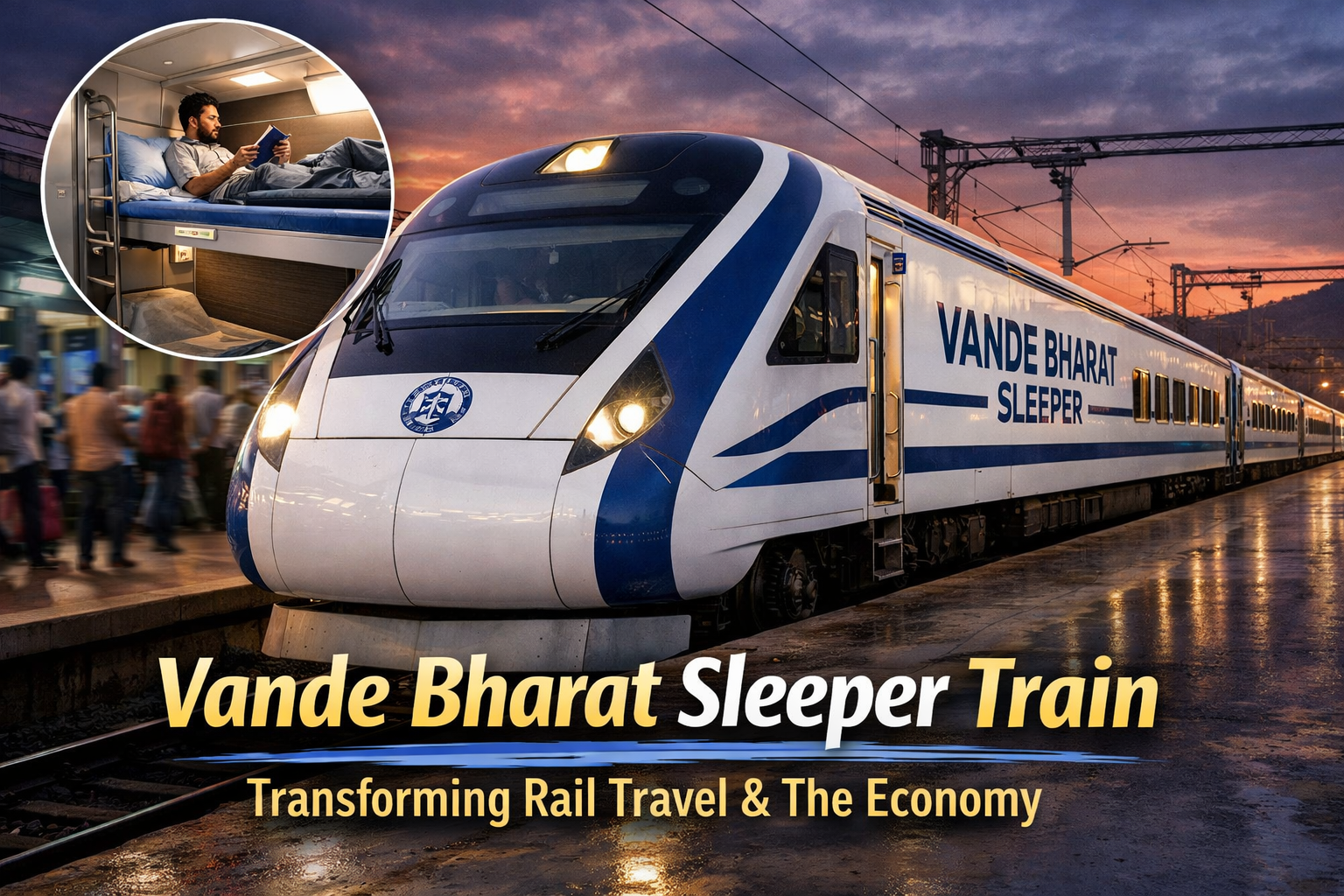
On January 17, 2026, Indian Railways flagged off something far more important than a new train. The launch of the Howrah–Guwahati Vande Bharat Sleeper marked a quiet but decisive shift in how India thinks about distance, time, and economic integration. This is the 165th Vande Bharat train, but it is the first one designed for long-distance overnight travel. That distinction matters.
Until now, the Vande Bharat story was largely about fast, comfortable day journeys between major cities. The sleeper version changes the game. It signals a move from short inter-city convenience to long-haul economic connectivity. In simple terms, Indian Railways is no longer positioning itself only as a subsidized social service. It is stepping into the role of a premium mobility provider that can compete directly with domestic airlines on important routes.
For a country aiming to reach a $7 trillion economy within the next decade, infrastructure is not just supportive—it is multiplicative. Every hour saved, every region better connected, and every logistics bottleneck removed increases the speed at which capital, labour, and ideas circulate. In this context, the North-East of India is no longer a distant frontier. Under the Act East policy, it is becoming a gateway—economically, strategically, and culturally. The Howrah–Guwahati Vande Bharat Sleeper is a steel-and-electric expression of that shift.
Indian Railways – Official Source
2. Geoeconomic Analysis: Bridging the “Chicken’s Neck”

The Howrah–Kamakhya corridor covers roughly 958 kilometres. For decades, this route has been both vital and vulnerable. It passes through the Siliguri Corridor, often called the “Chicken’s Neck,” a narrow stretch of land that connects the North-East to the rest of India. Any disruption here—natural, political, or logistical—has outsized consequences.
Traditionally, trains like the Saraighat Express take more than 17 hours to complete this journey. Delays are common, and average speeds are low due to congestion and sectional limits. The Vande Bharat Sleeper cuts this travel time to around 14 hours. On paper, three hours may not sound dramatic. In economic terms, it is.
Time is not just comfort; it is cost. For a trader transporting time-sensitive goods, for a professional travelling between Kolkata and Guwahati, or for a tourist choosing between rail and air, those three hours translate into higher productivity and better planning certainty. Faster overnight travel also means passengers arrive rested and ready to work, not exhausted.

The regional impact goes deeper. Strengthening this corridor reduces India’s overdependence on a single narrow land route by improving rail reliability and capacity. It integrates the North-East’s key economic sectors—tea, timber-based products, agri-processing, and tourism—more tightly with mainland markets. Better rail connectivity lowers logistics costs, improves price realization for producers, and makes the region more attractive for private investment. Over time, this changes the economic geography of eastern India.
Ministry of Railways – Policy & Financial Direction
3. Business and Financial Lens: Reading the Railway P&L

From a financial perspective, the Vande Bharat Sleeper is a deliberate response to Indian Railways’ long-standing profitability challenge. For FY 2025–26, the operating ratio of Indian Railways is estimated at around 98.4%. This means that for every ₹100 earned, nearly ₹98 goes toward operating expenses. That leaves very little room for reinvestment.
The sleeper Vande Bharat targets the “missing middle” of Indian travellers. Fares on the Howrah–Guwahati route are expected to range between ₹2,300 and ₹3,600, depending on class. This is significantly higher than traditional sleeper or 3AC fares, but still competitive compared to airline tickets, which often fluctuate sharply due to dynamic pricing.
Crucially, this train follows a no RAC and no waitlist policy. Every ticket sold guarantees a confirmed berth. From a brand and revenue perspective, this matters. It protects the premium positioning of the Vande Bharat name and ensures a consistent customer experience. For Indian Railways, it also simplifies yield management and reduces operational uncertainty.
Early data from the broader Vande Bharat fleet shows average occupancies exceeding 100% on several routes, thanks to high demand and fast turnaround. These trains are capital-intensive assets, but they are designed for rapid amortization through high utilization and premium pricing. Over time, a larger share of such services can materially improve the Railways’ financial health.
4. Technical and Structural Fundamentals

One reason the Vande Bharat platform matters is that it is not just faster—it is structurally different. These trains use Electric Multiple Unit (EMU) technology rather than traditional locomotive-hauled coaches. This allows for quicker acceleration and deceleration, which is especially valuable on routes with multiple stops or speed restrictions.
Safety is another key pillar. The integration of Kavach 4.0, India’s indigenous automatic train protection system, significantly reduces the risk of collisions and overspeeding. For passengers, this builds trust. For policymakers and long-term investors, it signals that India is serious about modern rail safety standards.
Maintenance is also evolving. Indian Railways is increasingly using AI-based predictive maintenance systems to monitor components in real time. Instead of fixing things after they break, engineers can intervene before failures occur. This reduces downtime, improves punctuality, and increases the effective utilization of expensive rolling stock. Over a 20–30 year asset life, these gains compound.
Importantly, much of this technology is domestically developed. Under the broader Atmanirbhar Bharat push, the Vande Bharat program has helped build local capabilities in design, manufacturing, and systems integration. That reduces import dependence and keeps more value within the Indian economy.
National Rail Plan 2030 – Long-Term Vision
5. Geopolitical Implications: The Act East Gateway

Infrastructure is never just economic; it is strategic. The Howrah–Guwahati Vande Bharat Sleeper should be seen as a precursor to deeper connectivity toward India’s eastern borders. Ongoing projects aim to extend broad-gauge rail links closer to the Myanmar border, particularly toward Moreh.
The logic is simple. You cannot meaningfully “Act East” if your internal logistics are slow and unreliable. Faster, more predictable rail links turn policy intent into physical capability. They connect industrial corridors, ports, and border trade points into a single network.
This train also aligns with the Gati Shakti National Master Plan, which aims to integrate digital planning with physical infrastructure. Data-driven route planning, multimodal integration, and synchronized project execution are central to this vision. The Vande Bharat Sleeper is one of the most visible outcomes of that approach—where policy, technology, and execution converge.
6. Fundamental Analyst’s SWOT Snapshot

From an analytical standpoint, the strengths of the Vande Bharat Sleeper are clear. It offers a design speed capability of up to 160 kmph, modern interiors, and indigenous technology. It has the potential to replace short-haul flights on busy corridors, especially where airport congestion and last-mile travel add hidden costs.
Opportunities are significant. Rising incomes, growing business travel, and demand for reliable overnight connectivity create a large addressable market. If track upgrades keep pace, journey times could reduce further.
There are weaknesses to acknowledge. Capital expenditure is high compared to conventional LHB coaches, and network-wide track congestion still limits average speeds. Sectional upgrades take time and coordination.
Threats remain external. Competing priorities within Indian Railways, delays in infrastructure modernization, or aggressive pricing by airlines could affect long-term returns. Execution, as always, is the deciding factor.
7. Conclusion: The “Execution Hub” Narrative
The Howrah–Guwahati Vande Bharat Sleeper is not just a new train. It represents an “execution hub” moment for Indian Railways. Much like the first iPhone changed perceptions of what a phone could be, this service changes how people think about overnight rail travel in India.
The narrative is shifting—from aging infrastructure and chronic delays to premium execution and customer-centric design. If Indian Railways can scale this model while steadily upgrading tracks and signaling, it can reclaim market share from aviation on several key routes.
The larger question for travellers and policymakers alike is this: Is a ₹3,600 fare justified for a comfortable, reliable 14-hour overnight journey that saves time, reduces stress, and connects regions more deeply? Or will airlines continue to dominate long-distance travel? The answer will shape not just transport choices, but India’s economic map in the years ahead.
❓ Frequently Asked Questions (FAQ)
What is the Vande Bharat Sleeper Train?
The Vande Bharat Sleeper Train is India’s first long-distance, overnight version of the Vande Bharat platform. Unlike earlier Vande Bharat trains designed for day travel, this variant offers full sleeper berths, modern interiors, and faster journey times for overnight routes.
Which route does the Vande Bharat Sleeper operate on first?
The first Vande Bharat Sleeper operates on the Howrah–Guwahati route, covering around 958 km. This corridor connects eastern India with the North-East and passes through the strategically important Siliguri Corridor.
How long does the Howrah–Guwahati Vande Bharat Sleeper take?
The Vande Bharat Sleeper completes the journey in around 14 hours, compared to 17+ hours taken by traditional long-distance trains on the same route.
What is the fare of the Vande Bharat Sleeper Train?
Ticket prices are expected to range between ₹2,300 and ₹3,600, depending on the class of travel. The pricing targets passengers who want airline-like comfort without unpredictable airfares.
Is the Vande Bharat Sleeper cheaper than flights?
In many cases, yes. While flights are faster in air time, airport travel, security checks, and fare volatility often increase the total cost and stress. The Vande Bharat Sleeper offers a fixed, predictable fare with overnight comfort and city-centre to city-centre travel.
Does the Vande Bharat Sleeper have RAC or waitlist?
No. The Vande Bharat Sleeper follows a No RAC and No Waitlist policy. Every confirmed ticket guarantees a berth, ensuring a premium and predictable travel experience.
What makes the Vande Bharat Sleeper technologically different?
The train uses EMU (Electric Multiple Unit) technology, allowing faster acceleration and smoother braking. It is also equipped with Kavach 4.0, India’s indigenous automatic train protection system, and AI-based predictive maintenance to reduce delays and breakdowns.
Is the Vande Bharat Sleeper made in India?
Yes. The Vande Bharat Sleeper is largely indigenously designed and manufactured under the Atmanirbhar Bharat initiative, reducing import dependence and strengthening domestic rail manufacturing capabilities.
How does this train help India’s economy?
By reducing travel time, improving comfort, and strengthening connectivity to the North-East, the Vande Bharat Sleeper increases productivity, lowers logistics risk, and supports regional industries like tourism, tea, and trade. Infrastructure upgrades like this act as economic multipliers.
Will more Vande Bharat Sleeper trains be launched?
Yes. Indian Railways plans to deploy more Vande Bharat Sleeper trains on other long-distance, high-demand routes, especially where overnight rail travel can compete effectively with short-haul flights.
Is the Vande Bharat Sleeper safe for overnight travel?
Yes. With modern crash-resistant design, automatic safety systems, and real-time monitoring, the Vande Bharat Sleeper meets much higher safety standards than conventional long-distance trains.
🔍 People Also Ask (PAA)
Is the Vande Bharat Sleeper faster than normal trains?
Yes. The Vande Bharat Sleeper reduces travel time by around 3 hours on the Howrah–Guwahati route compared to conventional long-distance trains. Faster acceleration, better scheduling, and fewer operational delays make it significantly quicker.
Can Vande Bharat Sleeper replace short-haul flights in India?
On busy routes under 1,000 km, the Vande Bharat Sleeper can effectively compete with flights. While planes are faster in air time, rail offers city-centre travel, fixed pricing, overnight comfort, and lower overall travel fatigue.
Why is the Howrah–Guwahati route strategically important?
This route passes through the Siliguri Corridor, India’s only land connection to the North-East. Strengthening rail connectivity here reduces logistical risk and integrates the North-East more deeply into India’s economic and strategic framework.
What type of passengers is the Vande Bharat Sleeper designed for?
It targets business travellers, professionals, government officials, and tourists who value comfort, reliability, and predictable pricing more than the cheapest fare or the shortest air time.
Does the Vande Bharat Sleeper help Indian Railways financially?
Yes. Premium fares, high occupancy, and the absence of RAC or waitlists help improve revenue per train. This model supports Indian Railways’ efforts to improve its operating ratio and reduce dependence on budgetary support.
What is Kavach 4.0 and why does it matter?
Kavach 4.0 is India’s indigenous automatic train protection system. It helps prevent collisions, overspeeding, and signal-passing errors, significantly improving passenger safety—especially on high-speed and overnight routes.
Is Vande Bharat Sleeper part of the Act East policy?
Indirectly, yes. Faster and more reliable rail connectivity to the North-East strengthens India’s ability to execute the Act East policy by improving internal logistics before expanding cross-border trade and connectivity.
Will Vande Bharat Sleeper fares increase in the future?
Fares may rise gradually with inflation and service upgrades, but Indian Railways is expected to maintain price stability compared to airlines, which use dynamic pricing models.
How is Vande Bharat Sleeper different from Rajdhani or Duronto trains?
Unlike Rajdhani or Duronto trains, the Vande Bharat Sleeper uses EMU technology, offers modern interiors, faster acceleration, improved safety systems, and a strictly premium, no-RAC travel experience.
Is the Vande Bharat Sleeper suitable for families and senior citizens?
Yes. The train’s smoother ride, modern amenities, confirmed berths, and improved safety systems make it particularly suitable for families and elderly passengers.

Related Articles