How U.S. Sanctions Shape Global Trade and Currency Power


Every government in the world today operates under the shadow of a single, uncomfortable reality: the United States can, at any moment, cut off your country’s access to the global financial system, freeze your foreign exchange reserves, and make it nearly impossible for your banks to conduct international business. This is not hyperbole. It is the documented, operational reality of American sanctions power — the most expansive and consequential application of economic pressure in the history of international relations.
Understanding how U.S. sanctions actually work, what they achieve, what they cost, and — most critically — what long-term consequences they carry for the sustainability of American monetary and financial dominance is no longer a specialist concern reserved for diplomats and trade lawyers. For investors, business leaders, policymakers, and anyone trying to make sense of where the global economy is heading, the sanctions question is central. It sits at the intersection of U.S. foreign policy, dollar reserve currency status, global trade architecture, and the accelerating push by BRICS and other nations to build financial systems that Washington cannot reach.
This data-driven analysis examines all of it with clarity and precision — the mechanics, the recent history, the documented economic impacts, and the honest assessment of whether this strategy, despite its enormous short-term power, remains sustainable as a long-term instrument of American financial statecraft. The answer, as the data increasingly shows, is more complicated than Washington’s official position acknowledges.
How U.S. Sanctions Actually Work — The Financial Architecture of Coercion
Before examining their economic impact, it is worth understanding precisely how U.S. sanctions operate — because their effectiveness derives not from American military or economic size alone, but from a structural feature of the global financial system that most people never think about: the dollar clearing system.
Almost every significant international financial transaction — regardless of the currencies involved — passes at some point through a U.S. dollar-denominated clearing process. When a German bank pays a Turkish supplier, that transaction typically clears through a U.S. correspondent bank. When a Japanese company buys Malaysian palm oil, the pricing, invoicing, and settlement almost certainly involves dollars at some stage. This means that the U.S. Treasury’s Office of Foreign Assets Control (OFAC) — the agency that administers sanctions — effectively sits at the center of the global financial plumbing. If OFAC designates an individual, company, or country as a sanctioned party, any U.S. bank, company, or financial institution — and any foreign bank with U.S. operations — is prohibited from processing their transactions.
The genius of this system, from Washington’s perspective, is that it does not require military force. It does not even require the direct participation of the sanctioned nation’s trading partners. Because global banks overwhelmingly prefer to maintain access to U.S. markets over the revenue from any individual sanctioned client, foreign banks voluntarily comply with OFAC designations — a phenomenon known as “over-compliance” — effectively extending American financial jurisdiction far beyond U.S. borders. This is sometimes called the “weaponization of the dollar” — a loaded but accurate description of how a neutral monetary infrastructure was converted into a coercive foreign policy tool.
Understanding these four mechanisms — primary sanctions, secondary sanctions, SWIFT disconnection, and asset freezes — is essential for a data-driven analysis of their economic impact. Each operates through a different channel, produces different economic effects, and carries different risks for the sustainability of American financial power. The most consequential, as recent history shows, is the asset freeze — because it directly converts dollar reserves from a safe store of value into a political hostage.
The Real Economic Impact of Sanctions — What the Data Actually Shows
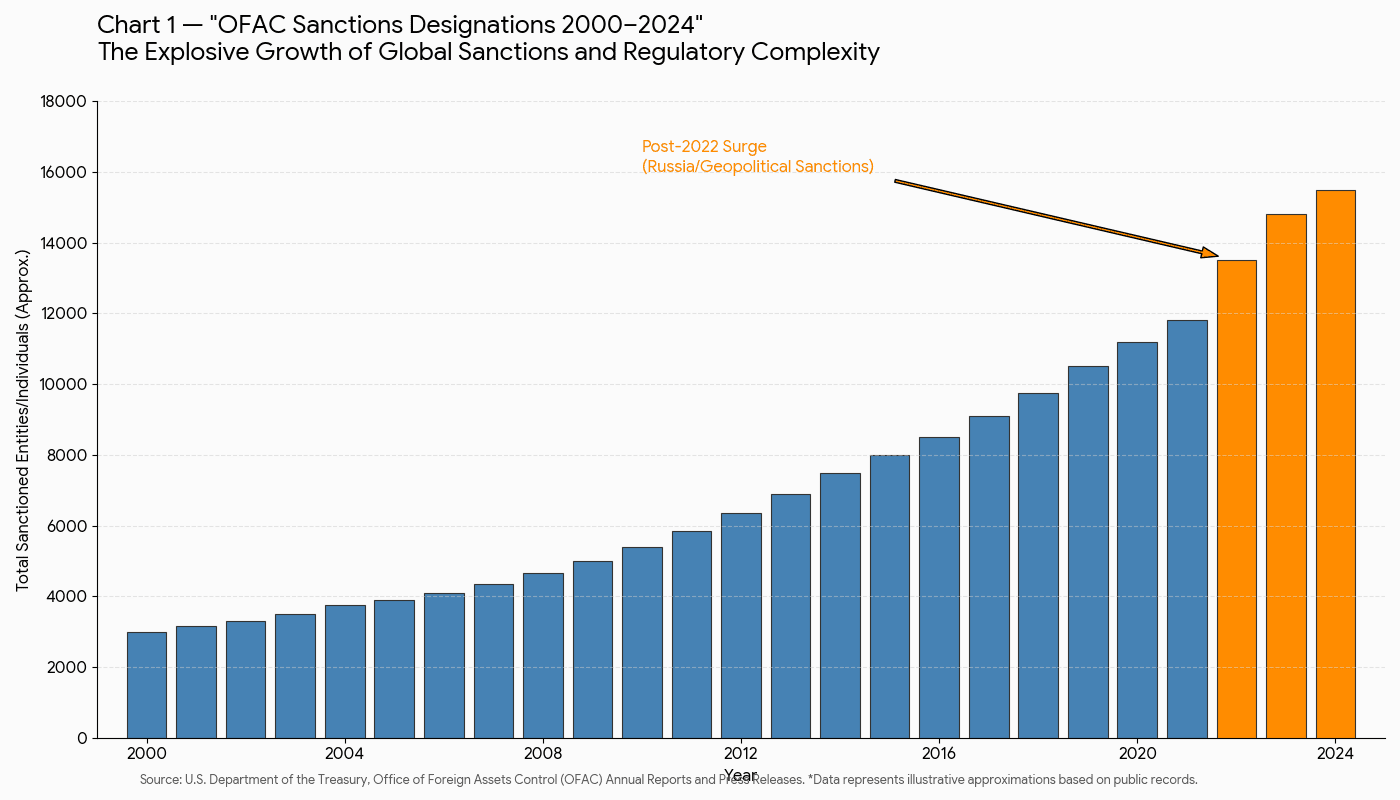
There is a significant gap between the stated objectives of U.S. sanctions policy and what the empirical data shows about their outcomes. A data-driven analysis of sanctions effectiveness across the major programs of the past two decades reveals a consistent pattern: sanctions impose real economic pain on targeted populations in the short term, but they rarely achieve their stated strategic objectives — and they consistently produce unintended consequences that erode the very financial leverage they were designed to project.
The academic literature on this is unambiguous. A 2019 study by the Peterson Institute for International Economics examined 174 sanction episodes between 1950 and 2016 and found that sanctions achieved their primary policy objective in only 34% of cases — and those successes were predominantly in minor disputes between close allies, not major geopolitical confrontations. Against adversarial great powers and mid-sized nations with strong state capacity — think Russia, Iran, China, Venezuela, and Cuba — the record of coercive success is considerably weaker.
The targeted nations do suffer real economic disruption. Iran’s economy contracted by approximately 6% in the first year of renewed maximum-pressure sanctions in 2018–2019. Russia’s economy contracted by 2.1% in 2022 following the Ukraine-related sanctions package, though it rebounded to 3.6% growth in 2023 — significantly outperforming Western forecasts of a 15% collapse. Venezuela’s economy contracted catastrophically under combined sanctions and mismanagement. But in each case, the economic pressure did not produce the strategic capitulation that Washington sought. Governments adapted, found alternative trade routes, built parallel financial infrastructure, and — critically — used the sanctions as a nationalist rallying point domestically.
| Country | Key Sanctions Applied | Initial GDP Impact | Strategic Objective | Outcome |
|---|---|---|---|---|
| 🇮🇷 Iran | SWIFT removal, oil embargo, asset freeze | −6% (2019) | Nuclear program halt | Objective Not Met |
| 🇷🇺 Russia | $300B asset freeze, SWIFT partial removal, export controls | −2.1% (2022) | Halt Ukraine invasion | Objective Not Met |
| 🇨🇺 Cuba | Full embargo 1962–present | Chronic suppression | Regime change | 63 Years — Not Met |
| 🇰🇵 N. Korea | Maximum pressure, financial isolation | Severe | Nuclear disarmament | N. Korea now nuclear |
| 🇻🇪 Venezuela | Oil sector, individual, financial sanctions | −35% cumulative | Democratic transition | Partial — Ongoing |
| 🇷🇸 Serbia (1990s) | Full UN sanctions | −30%+ (1991–95) | End Yugoslav wars | Partially Achieved |
| 🇿🇦 South Africa | Arms embargo, financial pressure | Significant | End apartheid | Significant Contribution |
Sanctions work best against smaller, highly trade-dependent economies with limited geopolitical alternatives. Against large, resource-rich nations with strong state capacity and powerful alternative partners — the exact profile of Russia, China, and Iran — the data consistently shows that sanctions impose pain without producing strategic compliance. The costs of this asymmetry, however, are not borne only by the targeted nation.
Three Defining Sanctions Episodes — Lessons the Data Teaches
Abstract statistics become meaningful when grounded in specific historical cases. The three sanction episodes below represent the most consequential — and most instructive — applications of American financial coercion in the modern era. Each tells a distinct story about what sanctions achieve, what they cost, and what they unintentionally set in motion.
Case Study 01
Iran (2012 & 2018) — The Unintended Inventor of Sanctions Evasion Infrastructure
Iran was the laboratory in which the modern sanctions-evasion toolkit was developed, refined, and ultimately exported to every other sanctioned nation. When Iran was disconnected from SWIFT in 2012 — the first sovereign nation to face this measure — it was expected to capitulate rapidly. Instead, Iran built direct bilateral barter and currency-swap arrangements with China, Turkey, Iraq, and India. It developed gold-for-oil exchange mechanisms. It created Iran’s own Financial Messaging System (SEPAM) as a SWIFT alternative. It connected with Russia’s SPFS payment network.
By the time maximum-pressure sanctions were renewed in 2018 under the Trump administration, Iran had already built an extensive sanctions-evasion ecosystem that reduced its SWIFT dependency from critical to manageable. The sanctions hurt Iran’s economy severely — inflation exceeded 40% and the rial collapsed — but the government survived, the nuclear program continued, and Iran became the world’s foremost exporter of sanctions-evasion knowledge and infrastructure to Russia, Venezuela, North Korea, and others. Washington’s pressure inadvertently created a global service industry for financial isolation resistance.
Case Study 02
Russia (2022) — The $300 Billion Mistake That Changed the World
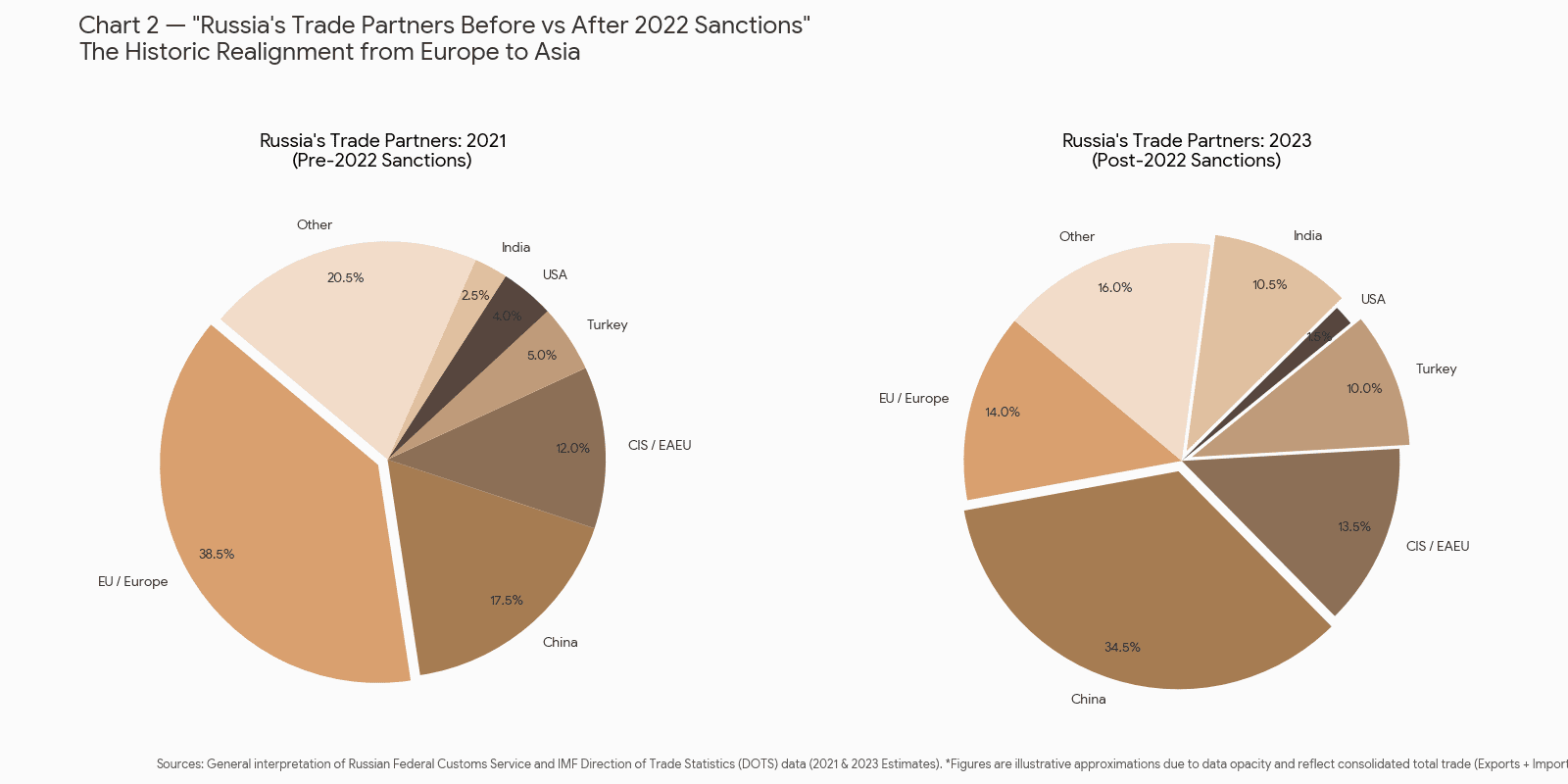
The February 2022 freezing of approximately $300 billion in Russian central bank reserves held in Western financial institutions will likely be recorded by historians as the single most consequential unintended consequence in the history of monetary sanctions policy. It was not the sanctions themselves that produced this effect — it was what they communicated to every other government on earth: that dollar reserves held in Western institutions are not sovereign property but conditional deposits, subject to seizure if Washington’s geopolitical preferences are violated.
The response was immediate and measurable. In the twelve months following the Russian asset freeze, central bank gold purchases globally hit their highest level since records began in 1950. India accelerated rupee-denominated trade with multiple partners. China intensified yuan internationalization efforts. Saudi Arabia opened serious discussions about yuan oil pricing. Brazil and Argentina signed yuan trade agreements. The BRICS New Development Bank announced expanded local-currency lending. None of these nations considered themselves adversaries of the United States — but all of them concluded that prudent self-interest required reducing their exposure to dollar-denominated asset risk. One policy decision in February 2022 did more to accelerate de-dollarization than a decade of Chinese financial diplomacy.
Case Study 03
China (Technology Sanctions 2018–Present) — The Limits of Technological Coercion
The U.S. campaign to restrict China’s access to advanced semiconductor technology — beginning with the Entity List designation of Huawei in 2018 and culminating in the comprehensive export control package of October 2022 — represents the most ambitious and highest-stakes application of technology-sector sanctions in history. The explicit goal was to prevent China from developing the domestic semiconductor capacity needed for advanced AI, military applications, and next-generation telecommunications.
The data-driven analysis of results is mixed at best. Huawei’s 2023 release of the Mate 60 Pro — containing a domestically produced 7-nanometer chip despite export controls theoretically making this impossible — demonstrated that the restrictions had delayed but not prevented Chinese progress. China’s semiconductor industry investment surged to over $150 billion in state subsidies following the 2022 restrictions. SMIC, China’s leading chipmaker, expanded capacity aggressively. Meanwhile, American semiconductor equipment companies — Applied Materials, Lam Research, KLA — lost billions in Chinese revenue, and the global chip industry faced supply chain disruptions that contributed to the 2021–2022 semiconductor shortage affecting the entire global economy. The sanctions cost was shared between the target and the imposer in ways the original architects did not fully anticipate.
Sanctions are the most powerful economic weapon ever invented. They are also the most reliably self-defeating when applied to large economies with strong partners — because they answer the question every targeted nation was afraid to ask: can we actually survive without the dollar system? The answer, it turns out, is increasingly yes.
— GeoEcon Insider Analysis
Is U.S. Monetary Expansion Sustainable? A Data-Driven Assessment
This is the most important question in global finance today — and it is one that most mainstream analysis carefully avoids answering directly. The question of whether U.S. monetary expansion is sustainable is not an ideological one. It is a mathematical and structural one, and a data-driven analysis of the key indicators produces a picture that warrants serious attention.
Sanctions policy and monetary sustainability are more deeply connected than they initially appear. The effectiveness of sanctions depends fundamentally on global willingness to use the dollar as the dominant medium of international trade and finance. That willingness, in turn, depends on trust in American fiscal management, confidence in the political neutrality of dollar-denominated institutions, and the absence of credible alternatives. All three of these foundations are currently under structural pressure — not from external attack, but from domestic policy choices.
The data-driven analysis of this scorecard points to a structural tension that is difficult to resolve within the current policy framework. The United States is simultaneously expanding its sanctions program — adding more entities, more countries, and more enforcement mechanisms — while the fiscal foundations that give dollar-denominated instruments their attractiveness are deteriorating. When a creditor nation runs $1.5–2 trillion annual deficits and its interest payments exceed its defense budget, questions about fiscal sustainability are not alarmist. They are actuarial.
The relevant historical comparison is the United Kingdom’s experience in the mid-20th century. Britain maintained the pound sterling as the world’s primary reserve currency well into the 1950s, sustained by the residual trust and infrastructure of the British Empire even as British economic power declined relative to the United States. The pound did not lose reserve status in a single crisis — it lost it gradually, through a series of fiscal overextensions, devaluations, and geopolitical retreats that collectively eroded the global confidence that reserve currency status requires. The data-driven analysis of current U.S. fiscal and monetary trajectories raises uncomfortable parallels that serious analysts can no longer dismiss.
The correct question is not “will the dollar collapse?” — it almost certainly will not in the near term. The correct question is: “Is U.S. monetary expansion sustainable at its current trajectory, and does the sanctions program accelerate or slow the structural erosion of dollar dominance?” The data-driven answer to the second question is: it accelerates it — by making the case for dollar alternatives undeniable to even the most dollar-friendly foreign governments.
How Sanctions Reroute Global Trade — The Hidden Geography of Financial Coercion
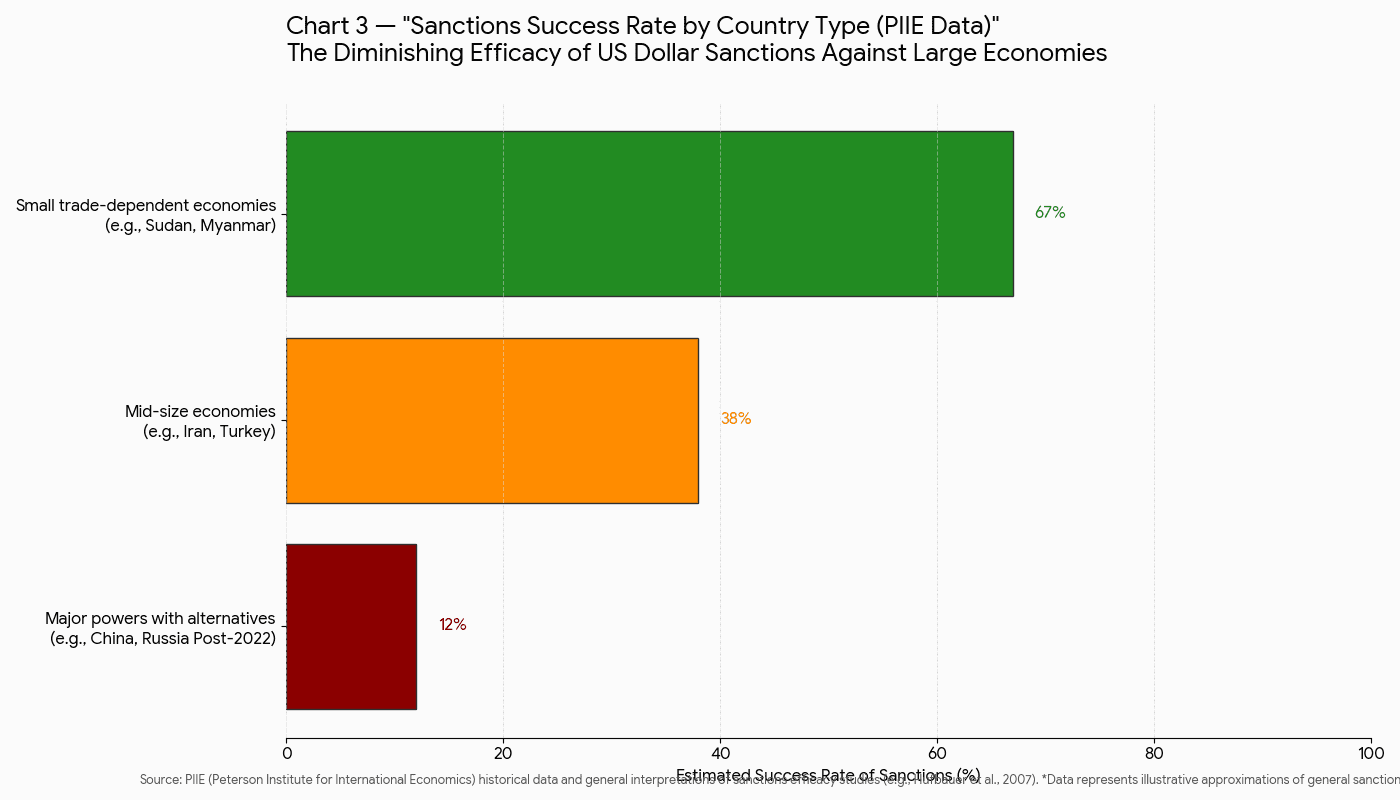
One of the most consistently underappreciated economic impacts of sanctions is how dramatically they reshape the physical geography of global trade. When the United States closes one trade door through sanctions, the global economy does not simply contract — it reroutes, often through intermediary nations that benefit enormously from the arbitrage between sanctioned and non-sanctioned markets.
Russia’s 2022 sanctions package provides the clearest and most documented example. Following the imposition of Western sanctions, Russian oil — which previously sold to European refineries — was redirected to India, China, Turkey, and the UAE at discounts of $20–30 per barrel below market prices. India’s oil import bill actually fell in 2022–2023, despite global oil price spikes, because it was buying discounted Russian crude. India’s oil trade with Russia increased from essentially zero to over $40 billion annually in less than 18 months. China’s discounted Russian energy imports similarly provided a significant industrial competitiveness advantage precisely when European manufacturers were facing energy cost crises. The sanctions meant to pressure Russia inadvertently subsidized its two most important strategic rivals and penalized the Western bloc’s own industrial base.
Turkey, often described by analysts as a “sanctions hub,” expanded its trade with Russia dramatically after 2022 — re-exporting European and American goods into Russia through Turkish intermediaries at elevated prices, while importing Russian gas at discounted rates and re-selling refined products to European markets. This triangular trade arrangement enriched Turkey at the expense of the intended sanctions regime, illustrating a fundamental limitation of unilateral Western sanctions: in a world of 195 nations, the majority of which have not signed on to the American sanctions framework, enforcement gaps are structural and inevitable.
For investors and businesses, this trade rerouting creates both risks and opportunities. Supply chains that were optimized for pre-sanctions geography must be reconfigured — at substantial cost. New intermediary hubs — Dubai, Istanbul, Singapore, Mumbai — gain importance as the connective tissue of the bifurcated global trade system. Commodity pricing becomes more complex as the same barrel of oil can trade at five different prices depending on who is buying it and through which channel. A genuinely data-driven analysis of investment risk in this environment requires understanding sanctions geography as a core variable — not a footnote.
Sanctions and Currency Power — The Paradox at the Heart of American Financial Strategy
Here is the central paradox of American sanctions strategy, stated as clearly as a data-driven analysis allows: the tool that most directly expresses American currency power is simultaneously the tool most responsible for eroding it. Understanding this paradox is not anti-American analysis — it is the honest conclusion that flows from examining the data without ideological interference.
Dollar hegemony rests on two foundations. The first is utility — the dollar is useful because everyone uses it, and everyone uses it because it is useful. This is the network effect that makes reserve currency status so self-reinforcing and so durable. The second foundation is trust — specifically, the trust that the dollar system is a neutral utility accessible to all participants on equal terms, not a political instrument deployed selectively against those who displease Washington. The first foundation remains strong. The second is visibly weakening.
Every time the United States deploys dollar-system infrastructure as a weapon — freezing reserves, removing nations from SWIFT, imposing secondary sanctions on third-country banks — it provides evidence that the second foundation is conditional rather than absolute. And in geopolitics, as in finance, conditional guarantees are worth less than unconditional ones. A reserve currency that can be weaponized is a reserve currency that rational actors have an incentive to reduce their exposure to — not out of hostility to America, but out of prudent risk management. This is precisely what the data shows global central banks doing: reducing dollar reserve share, buying gold, and building alternative payment infrastructure as a hedge, not an attack.
The 2026 outlook for currency power is therefore one of managed complexity rather than dramatic crisis. The dollar will not lose its reserve status by 2026. But by 2026, the structural erosion will be more advanced, more institutionally embedded, and harder to reverse than it is today. The mBridge multi-central-bank digital currency platform — connecting China, UAE, Saudi Arabia, Thailand, and others — is expected to reach commercial-scale operation by 2026. BRICS payment infrastructure will be more mature. Central bank gold allocations will be higher. And each of these developments will further validate the strategic logic of dollar diversification, creating a reinforcing cycle that the United States can slow but not stop — not through sanctions, which accelerate the cycle, and not through financial innovation alone, which cannot substitute for the fiscal credibility that underpins lasting monetary trust.
For a comprehensive understanding of how this monetary transformation connects to the broader de-dollarization story, read our detailed analysis in De-Dollarization: Why Countries Are Moving Away from the Dollar. For the geopolitical context of the sanctions strategy, see U.S. vs China Economy: Who Will Dominate by 2030? and our complete breakdown of The Petrodollar System and Its Structural Vulnerabilities.
Related Articles

Related Articles