
US–China Trade Tensions Return to Center Stage: What It Means for Global Markets and India in 2025
1. Introduction: Why US–China Trade Tensions Are Back in Focus in 2025
The US–China trade relationship has once again moved to the center of global attention, and in 2025 it is no longer just a headline issue—it is a market-moving force. Over the past few months, statements from Washington and Beijing, new tariff threats, tighter technology controls, and aggressive industrial policies have reminded investors that the world’s two largest economies are still locked in strategic competition. This time, however, the stakes are much higher.
Unlike earlier phases of the trade war, today’s conflict goes beyond tariffs on goods. It includes technology restrictions, supply chain realignment, currency pressures, and geopolitical signaling. Financial markets are reacting not just to policy announcements, but to the long-term implications for growth, inflation, and capital flows.
From an Indian perspective, this renewed tension matters deeply. India is no longer a passive observer. It is being seen as an alternative manufacturing base, a strategic partner for the US, and a large domestic market capable of absorbing global shocks. At the same time, India remains exposed to global volatility through foreign institutional investors (FIIs), exports, oil prices, and currency movements.
In 2025, US–China trade tensions are not a temporary storm. They are shaping a new economic order, and investors—both global and Indian—must understand the full picture to navigate markets wisely.
2. A Short History of US–China Trade Conflict
The roots of the current trade tensions go back to the late 2010s, when the US accused China of unfair trade practices, intellectual property violations, and excessive state subsidies. During the Trump administration, the US imposed tariffs on hundreds of billions of dollars’ worth of Chinese goods. China retaliated with tariffs on American exports, especially agricultural products. Markets reacted sharply, with frequent spikes in volatility whenever new tariffs were announced.
When the Biden administration took office, many expected a rollback of these measures. Instead, most Trump-era tariffs remained in place. While the tone shifted from confrontation to coordination with allies, the core policy—strategic competition with China—continued. Technology restrictions on semiconductors, artificial intelligence, and advanced manufacturing became even tighter.
Key industries were hit hard during earlier phases. US farmers faced reduced exports to China. Chinese electronics manufacturers struggled with higher costs and restricted access to advanced chips. Global steel and aluminum markets experienced price swings due to tariffs and counter-tariffs.
In 2025, the conflict is entering a new phase. It is less about correcting trade imbalances and more about controlling future technologies, supply chains, and global influence. This makes the current situation structurally different—and potentially longer-lasting—than previous trade wars.
3. Immediate Impact on Global Stock Markets
Global stock markets tend to react instantly to any escalation in US–China tensions, and 2025 is no exception. In the US, indices like the Dow Jones, S&P 500, and Nasdaq show mixed reactions. Large multinational companies with deep exposure to China often see their stocks fall, while domestically focused firms sometimes benefit. The technology-heavy Nasdaq is especially sensitive because of its reliance on global supply chains and Chinese manufacturing.
Asian markets are even more directly impacted. Chinese stock indices typically react negatively to trade restrictions and export controls, as these measures directly affect corporate earnings and economic growth. Hong Kong’s markets act as a bridge between global capital and China, making them particularly volatile during periods of uncertainty.
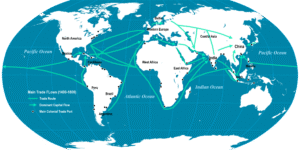
Japan and South Korea, which are deeply integrated into global manufacturing networks, also feel the pressure. Any disruption in US–China trade affects their exports, especially in electronics and automobiles.
For India, the impact is complex. Indian stock markets often see short-term volatility due to FII outflows when global risk appetite declines. However, sectors linked to domestic consumption and manufacturing sometimes attract long-term interest as investors look for alternatives to China.
4. Sector-Wise Winners and Losers
Trade tensions do not affect all sectors equally. Technology and semiconductors are at the heart of the conflict. US restrictions on advanced chip exports to China have reshaped the global semiconductor industry. Companies outside China that can supply chips, equipment, or design services often benefit. India’s semiconductor ambitions, while still in early stages, gain strategic importance in this environment.
Energy and commodities also react strongly. Trade tensions can slow global growth, reducing demand for oil and industrial metals. At the same time, geopolitical risks often push up prices of safe-haven commodities like gold. For India, higher oil prices are a concern due to import dependence, while stable commodity prices support industrial growth.
Manufacturing and logistics are seeing long-term shifts. Companies are diversifying supply chains away from China to reduce risk. This benefits countries like India, Vietnam, and Mexico. Indian manufacturing sectors such as electronics assembly, pharmaceuticals, and auto components are attracting global interest.
Consumer goods and retail face mixed outcomes. Higher tariffs increase costs, which can hurt profit margins or lead to higher prices for consumers. Indian consumer-focused companies, however, are relatively insulated because of strong domestic demand.
5. Impact on Emerging Markets
Emerging markets are often the most vulnerable during global trade conflicts. When uncertainty rises, global investors tend to move money back to safe assets in developed markets. This leads to capital outflows, currency depreciation, and stock market volatility in emerging economies.
Currency volatility is a major issue. Trade tensions strengthen the US dollar as a safe haven, putting pressure on emerging market currencies, including the Indian rupee. A weaker rupee can increase import costs but also make exports more competitive.
India and Vietnam are closely watched because they are seen as alternatives to China in global supply chains. Vietnam has already benefited significantly from manufacturing relocation, while India offers scale, a large workforce, and a growing domestic market. However, India’s success depends on policy stability, infrastructure development, and ease of doing business.
6. Institutional Investor Strategy During Trade Wars
Official website of Shanghai Stock Exchange click here
Institutional investors, including hedge funds and FIIs, adopt cautious strategies during trade wars. They often reduce exposure to high-risk assets and shift toward defensive sectors such as healthcare, utilities, and consumer staples.
Growth assets, especially technology stocks with global exposure, tend to see increased volatility. Investors closely track policy signals from governments to adjust their positions quickly.
Gold and bonds play a crucial role in these periods. Gold is viewed as a hedge against geopolitical risk and currency volatility. Government bonds, particularly US Treasuries, attract inflows as investors seek safety. For Indian markets, this often means short-term FII outflows from equities and increased demand for debt instruments.
7. Long-Term Market Outlook: Can Markets Adapt Permanently?
One key question is whether markets can permanently adapt to ongoing US–China tensions. Over time, markets do adjust. Companies diversify supply chains, governments redesign trade policies, and investors price in geopolitical risk.
However, volatility may become the “new normal.” Sudden policy announcements, sanctions, or diplomatic escalations can trigger sharp market reactions. For India, this means balancing long-term growth optimism with short-term global risks.
The positive side is that India’s structural growth story—driven by demographics, digitalization, and domestic consumption—remains intact. If managed well, global realignments could strengthen India’s position in the world economy.
8. Expert Opinions and Forecasts
Market strategists are divided in their outlook. Bullish experts argue that markets have already priced in much of the trade risk and that diversification away from China creates new opportunities for emerging markets like India. They believe global growth will adjust rather than collapse.
Bearish voices warn that prolonged trade tensions could lead to slower global growth, higher inflation, and repeated market shocks. They point out that geopolitical risk is harder to predict and manage than economic cycles.
Official website of Dow Jones click here
Most experts agree on one point: geopolitical awareness is now essential for investors. Ignoring US–China dynamics is no longer an option.
9. What Retail Investors Should Do
For retail investors, the key lesson is risk management. Overreacting to headlines can lead to poor decisions. Instead, investors should focus on diversification across sectors and asset classes.
Indian investors may consider balancing equity exposure with debt, gold, and other defensive assets. Focusing on companies with strong balance sheets, domestic demand, and limited dependence on exports can reduce risk.
Systematic investment approaches, such as SIPs, help smooth out volatility over time. Staying informed—but not panicked—is crucial in a geopolitically charged market environment.
10. Conclusion: Why Geopolitics and Markets Are Now Inseparable
The return of US–China trade tensions in 2025 marks a defining moment for global markets. This is no longer just a trade dispute; it is a contest over economic leadership, technology, and influence. Markets are responding accordingly, with increased volatility and sector-specific shifts.
From India’s perspective, this period brings both risks and opportunities. While global uncertainty can trigger short-term volatility, India’s growing role in global supply chains and strong domestic fundamentals offer long-term potential.
The big picture is clear: geopolitics and markets are now inseparable. Investors who understand this connection—and position themselves thoughtfully—will be better prepared for the complex, interconnected world of modern finance.






1 thought on “US–China Trade War 2025: Global Stock Market Impact, Sector Winners & What It Means for Indian Investors”