1. Introduction: The Fourth Winter of Discontent
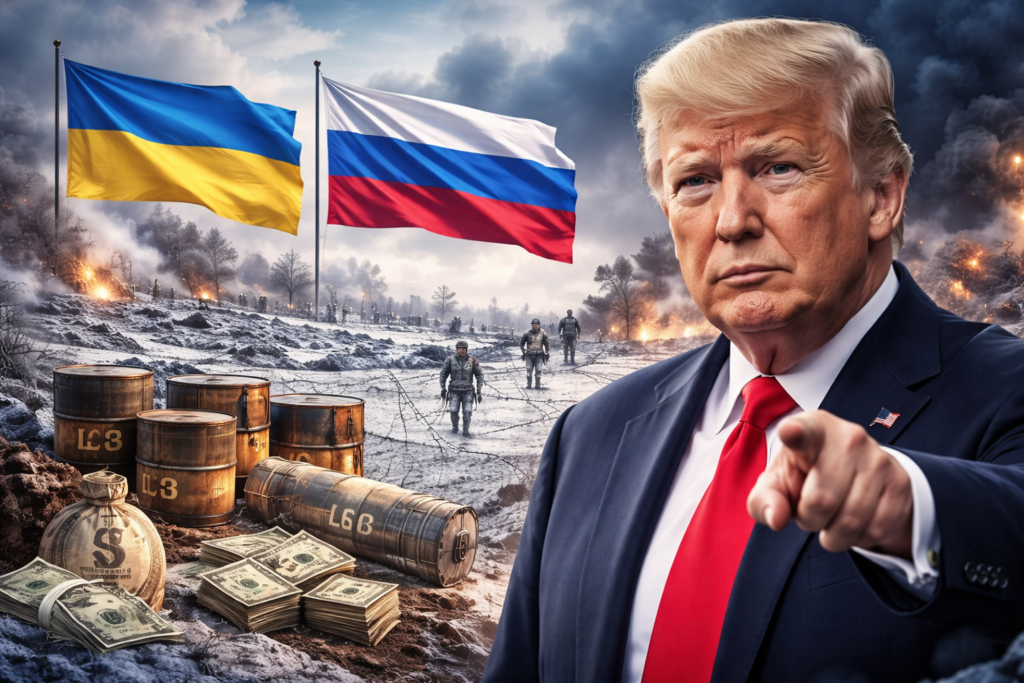
As of January 1, 2026, winter has returned to eastern Ukraine. Snow blankets the trenches of the Donbas, but what stands out is not movement—it is the lack of it. For nearly 18 months, the frontline has barely shifted. This war is no longer about dramatic advances or sudden collapses. It has become a slow, grinding conflict where the real battle is not for land, but for the terms of a future settlement.
This is where the “Trump factor” enters. Under the earlier administration of Joe Biden, the United States followed an “as long as it takes” approach, focused on weakening Russia strategically over time. In contrast, the return of Donald Trump has brought a sharp shift. Trump’s instinct is transactional. He wants a deal—fast—even if that deal is imperfect.
The core reality is this: the Ukraine war is moving toward what analysts call “Koreanization.” Like the Korean War, it may end not with a peace treaty, but with a heavily armed ceasefire line, frozen in place, accepted reluctantly by all sides.
U.S. Department of State – Foreign Policy & Ukraine
2. Real-Time Status: The Math of the Stalemate (2026 Data)
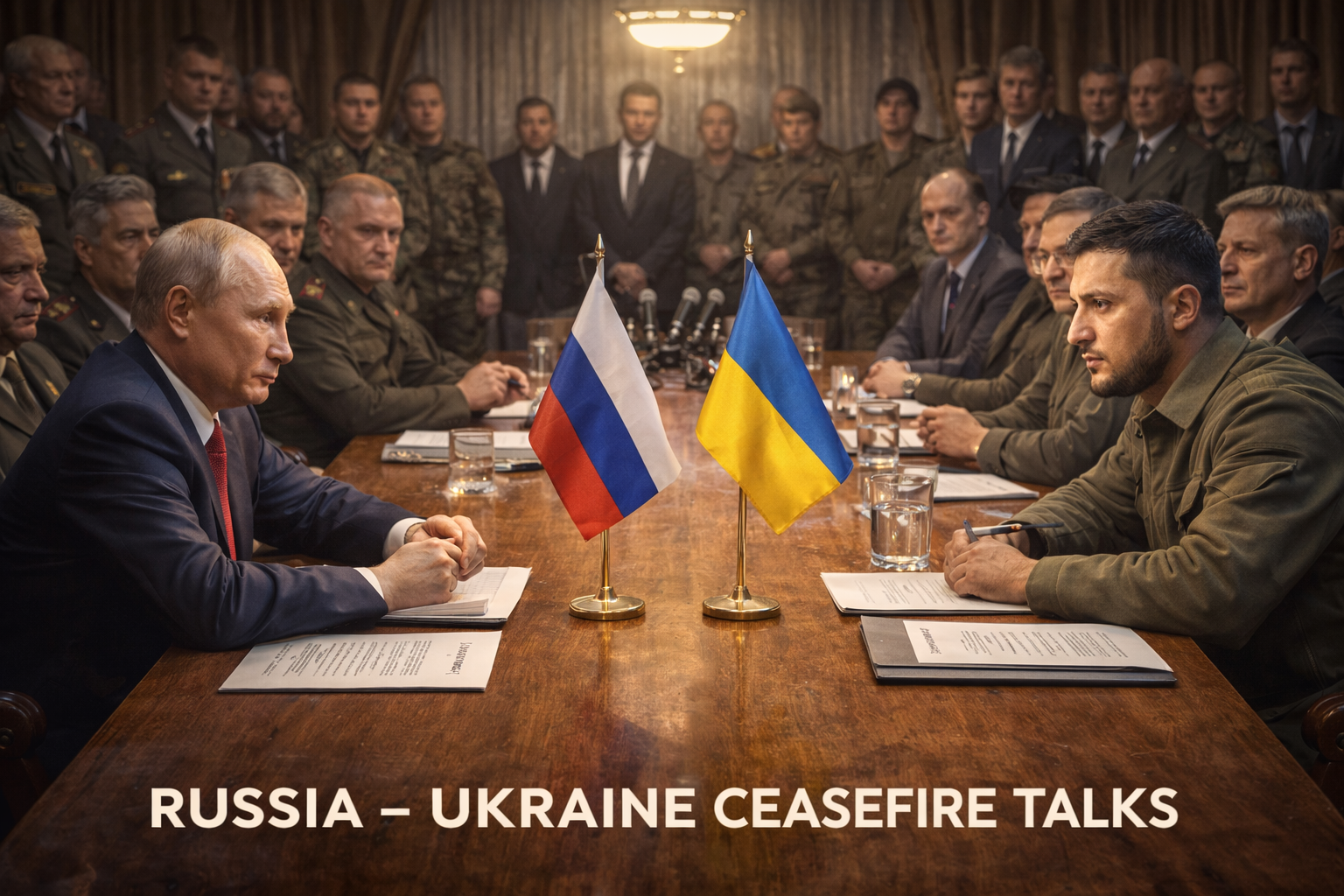
The stalemate is not ideological; it is mathematical. Modern war is about production, logistics, and endurance. On this front, both sides are running into hard limits.
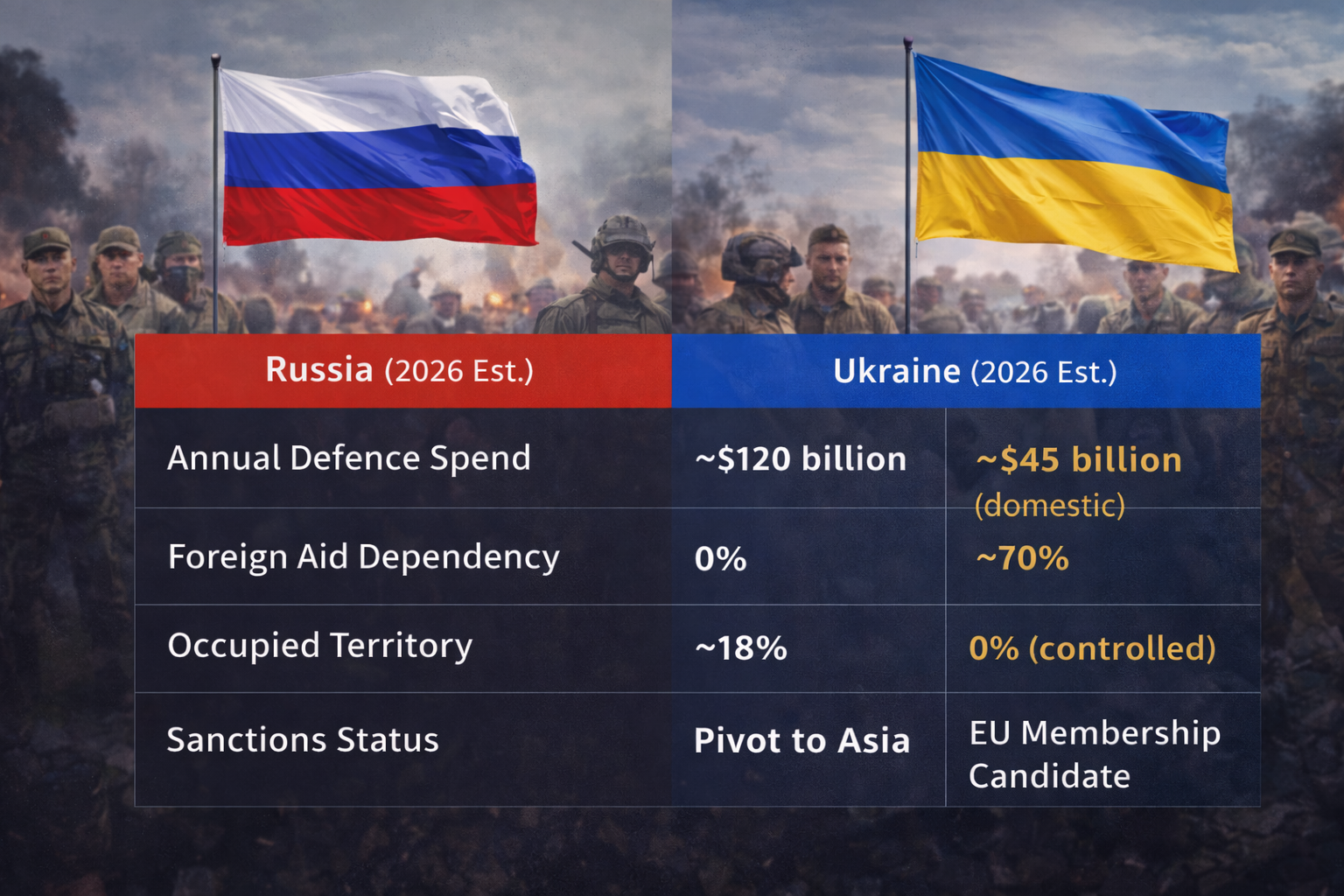
Russia has shifted fully into a war economy. By 2025, Moscow was spending an estimated 7–8% of GDP on defence, roughly $120 billion annually. Ammunition factories operate around the clock, and military production has been redirected from civilian industry. Russia fires more artillery shells per month than most NATO countries can produce in a year.
Ukraine, meanwhile, depends heavily on Western supply chains. While Ukrainian forces have shown tactical skill, they face a constant shortage of ammunition and air defence interceptors. Western defence industries, especially in Europe, have struggled to scale production quickly due to labour shortages, energy costs, and regulatory delays.
The human cost is staggering. By early 2026, combined casualties—killed and wounded—are estimated to have crossed 1 million. This number includes soldiers on both sides and civilians caught in missile strikes. The war’s social damage will last generations.
Economically, Ukraine survives only because of external support. Western aid—military, financial, and humanitarian—now exceeds $150 billion annually. This support keeps the government functioning, but private investment remains frozen. No serious investor commits capital when missiles can strike power plants overnight.
Russia’s economy, despite sanctions, has shown resilience. Growth in 2025 was supported by energy exports and expanded trade with the Global South, especially India, China, and parts of Africa and Latin America. Sanctions have hurt, but they have not collapsed the Russian state.
3. The Sticking Points: Why a Deal Is So Hard to Close
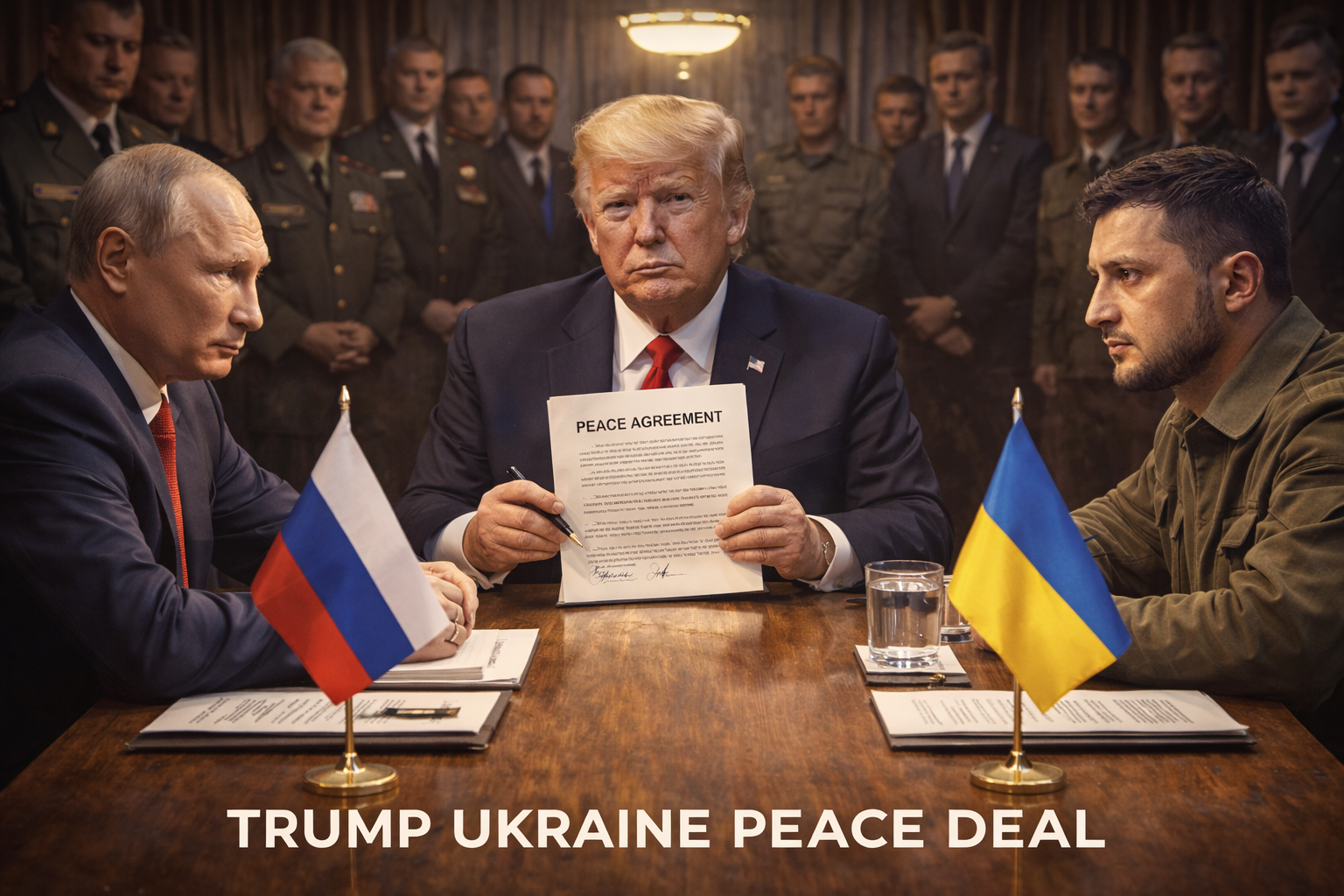
Despite quiet diplomacy, two major obstacles continue to block any final agreement. These issues are not small details; they go to the heart of sovereignty and security.
A. The Territorial Dilemma
Russia currently controls roughly 18% of Ukrainian territory, including large parts of eastern and southern Ukraine. Kyiv demands a return to its 1991 internationally recognised borders. Moscow insists on accepting what it calls “territorial realities.”
The compromise being discussed behind closed doors is strategic ambiguity. Under this model, Ukraine would not legally give up land. Instead, territories would be treated as under “temporary administration,” similar to long-term disputes elsewhere in the world. This avoids formal surrender while freezing the conflict.
For Ukraine, this is politically painful. For Russia, it falls short of full recognition. But it may be the only middle ground both sides can accept without total humiliation.
official website of the President of Ukraine
B. Security Guarantees and the NATO Problem
Ukraine wants full NATO protection, especially Article 5, which treats an attack on one member as an attack on all. For Russia, NATO expansion remains a red line that justified the war in the first place.
Trump’s reported solution avoids direct NATO membership. Instead, it focuses on a “European buffer”. Under this idea, European forces—not American troops—would monitor a ceasefire line. The US would continue supplying Ukraine with advanced weapons, similar to how it supports Israel, without formal alliance guarantees.
This shifts responsibility to Europe while keeping Washington one step removed.
4. Geoeconomic Evaluation: Sanctions as a Bargaining Chip
Sanctions are powerful tools—but blunt ones. History shows they are easy to impose and extremely difficult to lift. In the 1990s, post-Soviet Russia suffered long-term economic damage partly because sanctions outlasted political conditions.
Trump appears to view sanctions differently. For him, they are bargaining chips. The idea is simple: offer partial relief on energy and financial sanctions in exchange for a ceasefire.
This raises a critical economic question. If Russia re-enters European energy markets—through repaired pipelines or new contracts—what happens to the US LNG industry, which expanded rapidly after 2022? American gas exporters have benefited enormously from Europe’s break with Russian gas. A reversal would reshape global energy markets and pricing power.
Thus, peace in Ukraine is not just about guns and borders—it is about pipelines, shipping routes, and long-term energy contracts.
U.S. Treasury Department’s Office of Foreign Assets Control (OFAC).
5. Historical Parallel: The 1953 Korean Armistice
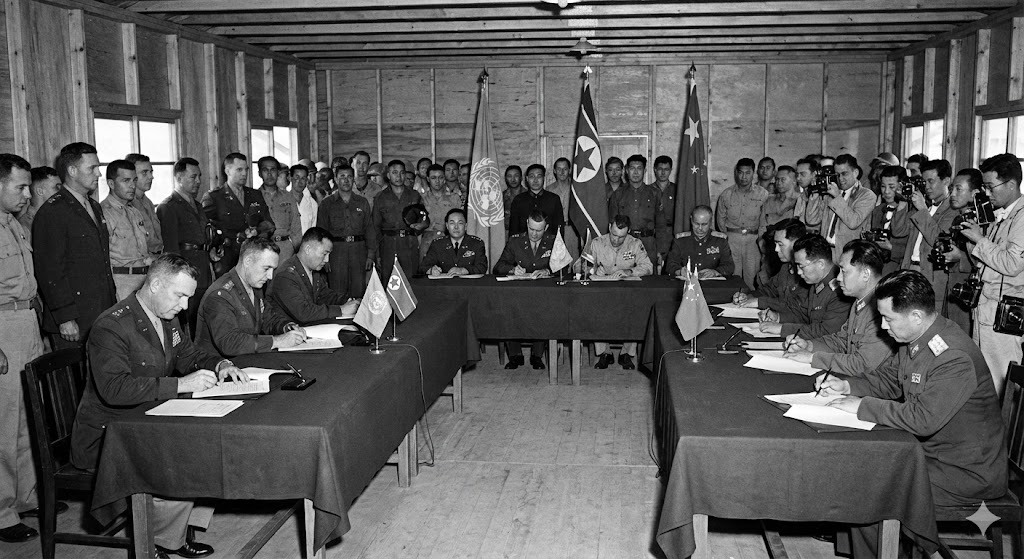
The strongest parallel to today’s Ukraine is Korea in 1953. That war ended not with peace, but with an armistice. Technically, North and South Korea are still at war.
Yet South Korea went on to become a global economic powerhouse. The lesson is uncomfortable but clear: a country can thrive without justice, if it has stability.
The question is whether Ukraine can follow a similar path. Can it become a “West Germany” or “South Korea” of Eastern Europe—integrated with Western markets, protected by deterrence, while parts of its territory remain occupied?
This is the logic of functional peace. It accepts tragedy but prioritises survival and growth.
6. Europe’s Strategic Autonomy Crisis
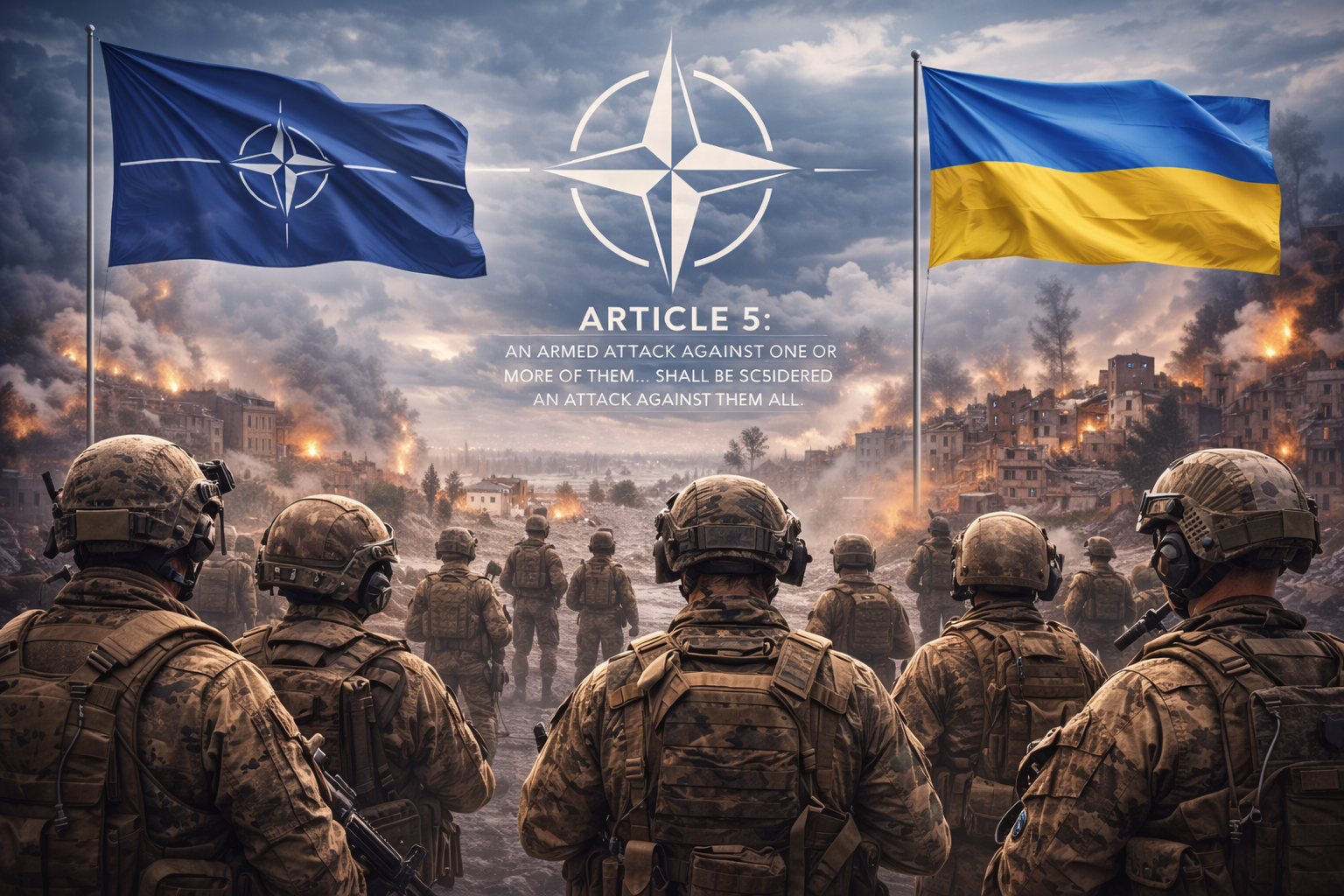
Trump’s approach has forced Europe into a difficult position. Countries like France, Poland, and Germany must decide whether they can sustain Ukraine’s defence if US enthusiasm declines.
If Europe funds the war alone, defence spending will rise sharply. This means higher debt, tighter budgets, and political backlash at home. The euro could face pressure as fiscal deficits expand to support rearmament.
The war has exposed Europe’s long-standing weakness: dependence on US security guarantees without matching military capacity. Strategic autonomy is no longer a slogan; it is a financial and political challenge.
7. Risks: The Black Swan Scenarios
Several risks could derail any deal.
First, Kyiv’s internal politics. President Volodymyr Zelenskyy faces immense pressure. A deal seen as surrender could trigger protests, political instability, or even military defiance.
Second, the “salami slicing” risk. Critics fear Russia could use a ceasefire to rebuild its forces and launch a new offensive in a few years. This fear is rooted in history and cannot be dismissed lightly.
Frozen conflicts can remain stable for decades—or explode suddenly.
8. Conclusion: A Peace of Necessity, Not Justice
By 2026, the world is tired. Ukraine is exhausted. Russia is entrenched. Europe is strained. The United States is transactional.
Any Trump-brokered deal will not be about justice, international law, or moral victory. It will be about necessity. It will freeze the front, manage escalation, and shift the conflict from the battlefield to balance sheets and budgets.
The uncomfortable truth of geopolitics is this: stalemates are often the most stable outcomes when total victory is impossible. They are tragic, imperfect, and deeply unfair—but they prevent even worse disasters.
For readers, the key takeaway is simple. The Ukraine war is no longer about who wins the next village. It is about who can live with the least bad outcome—and how the global economy reshapes itself around that frozen line.
official communications from the Ministry of Foreign Affairs of the Russian Federation.
Frequently Asked Questions (FAQ)
1. Why is the Ukraine war expected to stall in 2026?
By 2026, both Russia and Ukraine face limits in manpower, weapons supply, and economic endurance. The frontline has barely moved for over a year, turning the conflict into a war of attrition rather than territorial expansion. This makes a frozen conflict more likely than a decisive victory.
2. What does a “frozen conflict” mean in the Ukraine war?
A frozen conflict means active fighting stops without a final peace treaty. Borders remain disputed, troops stay deployed, and tensions continue, but large-scale battles pause. The Korean Peninsula after 1953 is a common example.
3. What is Trump’s proposed Ukraine peace deal?
Trump’s approach focuses on achieving a ceasefire quickly through negotiation rather than long-term military escalation. It reportedly includes freezing current battle lines, limiting NATO expansion, shifting security responsibility to Europe, and using sanctions relief as leverage.
4. Will Ukraine give up territory under a peace deal?
Ukraine officially insists on its 1991 borders. However, a possible compromise discussed is “strategic ambiguity,” where Ukraine does not legally surrender land but accepts temporary loss of control under international monitoring.
5. Why is NATO membership such a big issue?
Ukraine wants NATO’s Article 5 protection, which guarantees collective defense. Russia sees NATO expansion as a major security threat. This clash makes full NATO membership one of the hardest issues to resolve in negotiations.
6. What are “security guarantees” for Ukraine?
Security guarantees mean promises to protect Ukraine from future attacks. Instead of NATO membership, proposals include European peacekeeping forces, long-term arms support, and intelligence sharing backed by the US and EU.
7. How do sanctions affect peace talks?
Sanctions are a major bargaining tool. Russia wants relief from energy and financial sanctions, while Western countries use sanctions as leverage to push Moscow toward negotiations. Lifting sanctions too fast, however, faces political resistance in Europe and the US.
8. How has Russia survived economically despite sanctions?
Russia has redirected trade toward Asia, the Middle East, and the Global South. Energy exports to countries like China and India, along with a war-focused economy, have helped cushion the impact of Western sanctions.
9. Why is Ukraine so dependent on foreign aid?
Ukraine’s economy has been heavily damaged by the war. Infrastructure destruction, security risks, and population displacement have frozen private investment. As a result, Ukraine relies on Western aid for government spending, defence, and basic services.
10. What role does Europe play in a potential deal?
Europe faces a major choice: either fund Ukraine’s defence independently or align with a US-brokered deal. Increased defence spending could strain European budgets and currencies, especially if US support decreases.
11. Can a frozen conflict still allow Ukraine to grow economically?
Yes, but under strict conditions. Like South Korea after 1953, Ukraine could rebuild if it secures stability, Western market access, and strong security arrangements, even without full territorial control.
12. What are the biggest risks after a ceasefire?
The main risks include:
Political backlash inside Ukraine
Russia using the pause to rebuild its military
Weak enforcement of ceasefire terms
Reduced Western attention over time
Frozen conflicts remain fragile.
13. Will global energy markets change if peace talks succeed?
Yes. Any easing of sanctions could allow Russian energy back into Europe, affecting gas prices, oil markets, and US LNG exports. Energy geopolitics is a major hidden factor behind peace negotiations.
14. Is a Trump-brokered deal likely to be permanent?
Unlikely. Most analysts see it as a pause, not a final solution. The deal would aim to stop large-scale fighting, not resolve all disputes permanently.
15. What is the key takeaway for readers?
The Ukraine war in 2026 is less about victory and more about managing exhaustion. A frozen front may not be just, but it could be the most stable outcome when no side can win outright.
People Also Ask (PAA)
What is meant by a “frozen front” in the Ukraine war?
A frozen front means active fighting slows or stops, but there is no final peace treaty. Troops remain deployed, borders stay disputed, and tensions continue. The conflict is paused, not solved.
Why is the Ukraine war expected to reach a stalemate in 2026?
By 2026, neither side has the military or economic capacity to achieve total victory. Russia has manpower and production limits, while Ukraine depends heavily on foreign aid. This balance makes prolonged stalemate more likely than decisive success.
What is Trump’s approach to ending the Ukraine war?
Donald Trump is expected to push for a fast, negotiated settlement rather than long-term military escalation. His approach focuses on freezing current battle lines, limiting US involvement, and using sanctions as bargaining tools.
Will Ukraine lose territory under a peace deal?
Ukraine officially rejects giving up any land. However, some proposals suggest “strategic ambiguity,” where Ukraine does not legally surrender territory but accepts temporary loss of control to stop fighting.
Why is NATO membership the biggest obstacle to peace?
Ukraine wants NATO’s collective defence protection. Russia considers NATO expansion near its borders a major security threat. This clash makes NATO membership one of the hardest issues to resolve in negotiations.
What are NATO-style security guarantees for Ukraine?
Security guarantees could include long-term weapons supplies, intelligence sharing, training, and European peacekeeping forces, even without formal NATO membership. These guarantees aim to deter future attacks.
How does this conflict resemble the Korean War armistice?
Like the 1953 Korean Armistice, a Ukraine ceasefire may stop fighting without a peace treaty. Korea remained technically at war but achieved economic growth. Ukraine could follow a similar “functional peace” model.
How is Russia sustaining its economy despite sanctions?
Russia has redirected energy and commodity exports toward Asia, the Middle East, and the Global South. Higher defence spending and state control have also helped stabilise its economy despite sanctions.
Why is Ukraine so dependent on foreign aid?
Ukraine has suffered massive infrastructure damage and security risks. Private investment has collapsed, forcing the government to rely on Western aid for defence, salaries, and essential services.
How do sanctions influence peace negotiations?
Sanctions are leverage. Western countries use them to pressure Russia into talks, while Russia seeks partial relief, especially in energy and finance. Lifting sanctions too quickly remains politically sensitive.
What role does Europe play if the US steps back?
Europe may need to fund more of Ukraine’s defence and security. This could increase government debt, pressure the euro, and force difficult political choices across EU countries.
Could Russia attack again after a ceasefire?
This is a major concern. Critics fear Russia could use a ceasefire to rebuild forces and restart the war later. This risk is why strong monitoring and security guarantees are seen as essential.
How would a Ukraine ceasefire affect global energy markets?
Any easing of sanctions could allow Russian energy back into Europe, lowering prices and reducing demand for US LNG. Energy markets are a key but often hidden part of peace talks.
Is a Trump-brokered deal likely to bring permanent peace?
Most experts believe it would bring stability, not final peace. It would aim to stop large-scale fighting, not fully resolve territorial and security disputes.
What is the main takeaway for readers?
The Ukraine war in 2026 is about managing exhaustion, not achieving victory. A frozen conflict may be unfair, but it could be the most stable outcome when no side can win completely.
📊 Infographic 1: Ukraine War Status at a Glance (2026)
| Indicator | Situation in 2026 |
|---|---|
| Frontline Movement | Mostly unchanged for ~18 months |
| Nature of War | Attrition & defence |
| Likely Outcome | Frozen conflict |
| Diplomatic Phase | Ceasefire talks, not peace |
📌 Message: The war has shifted from battlefield gains to negotiation endurance.
⚔️ Infographic 2: Military Balance — The Math of Stalemate
| Metric | Russia | Ukraine |
|---|---|---|
| Defence Spending | ~$120B (7–8% of GDP) | ~$45B (domestic) |
| Ammo Production | High, domestic | Dependent on allies |
| War Economy | Fully mobilised | Limited |
| Air Defence | Domestic systems | Western-supplied |
📌 Message: Production capacity matters more than battlefield bravery.
🧍 Infographic 3: Human Cost of the War
| Category | Estimated Impact |
|---|---|
| Total Casualties (Killed + Wounded) | 1 million+ |
| Civilian Displacement | Millions |
| Infrastructure Damage | Severe |
| Long-Term Trauma | Generational |
📌 Message: Even a frozen war leaves permanent scars.
💰 Infographic 4: Economic Reality Check (2026)
| Indicator | Russia | Ukraine |
|---|---|---|
| GDP Growth Driver | Global South trade | Foreign aid |
| Annual External Support | 0% | $150B+ |
| Private Investment | Redirected | Frozen |
| Energy Exports | Ongoing | Destroyed capacity |
📌 Message: One economy adapts; the other survives.
🧭 Infographic 5: The Two Deal-Breakers
| Issue | Ukraine Position | Russia Position |
|---|---|---|
| Territory | 1991 borders | “Territorial realities” |
| NATO | Full membership | Absolute red line |
📌 Message: Peace fails where core demands clash.
🛡️ Infographic 6: Trump’s “Grand Bargain” Concept
| Element | Proposed Approach |
|---|---|
| US Role | Broker, not guarantor |
| Security Model | European buffer forces |
| Arms Support | “Israel-style” aid |
| NATO Membership | Deferred |
📌 Message: Deal over doctrine.
⛽ Infographic 7: Sanctions as a Geoeconomic Tool
| Factor | Impact |
|---|---|
| Sanctions | Negotiation leverage |
| Energy Relief | Possible carrot |
| EU Gas Market | Potential Russian return |
| US LNG Exports | Risk of market loss |
📌 Message: Peace reshapes energy markets.
🌏 Infographic 8: Historical Parallel — Korea 1953
| Comparison | Korea | Ukraine (Possible) |
|---|---|---|
| Peace Treaty | None | Unlikely |
| Border Status | Frozen | Frozen |
| Economic Outcome | Global powerhouse | Conditional recovery |
| Security | Heavy militarisation | Heavy militarisation |
📌 Message: Frozen wars can still allow growth.
🇪🇺 Infographic 9: Europe’s Strategic Dilemma
| Question | Consequence |
|---|---|
| Fund war alone? | Higher debt |
| Follow US lead? | Reduced autonomy |
| Rearm quickly? | Budget stress |
| Delay decisions? | Security risk |
📌 Message: Europe must choose between cost and control.
⚠️ Infographic 10: Black Swan Risks
| Risk | Why It Matters |
|---|---|
| Kyiv political backlash | Deal rejection |
| Russian regrouping | Future attack |
| NATO fractures | Alliance strain |
| Global distraction | Reduced deterrence |
📌 Message: Frozen conflicts are never risk-free.