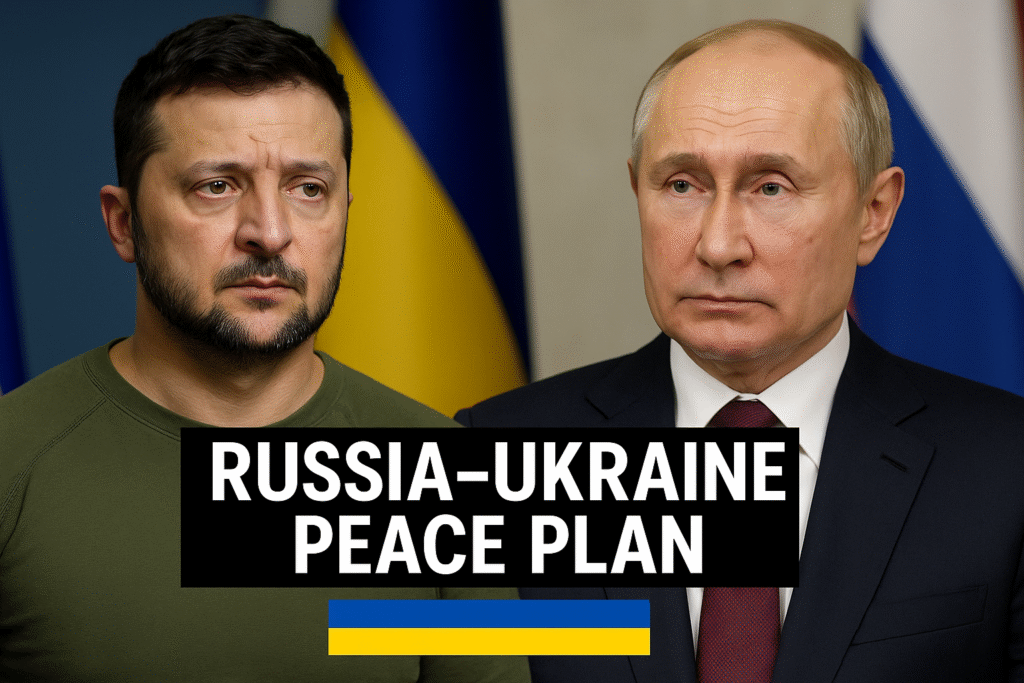
Trump’s Russia–Ukraine Peace Plan Explained: Main Points, Reactions, India’s Stand & Chances of Peace
The Russia–Ukraine war has shaped global politics, energy markets, defence spending, food prices, and the balance of power for more than three years. In November 2025, former U.S. President Donald Trump proposed a 28-point peace plan aimed at stopping the war and restructuring the security architecture of Eastern Europe. The plan instantly became a hot topic worldwide — praised by some as a “bold step” and criticised by others as “rewarding aggression.”
In this SEO-friendly and simple explanation, we break down what the peace plan contains, how Ukraine and Russia reacted, what other countries said, India’s position, and whether this peace roadmap can actually bring peace and stability to the region.
Main Points of Trump’s 28-Point Russia–Ukraine Peace Plan
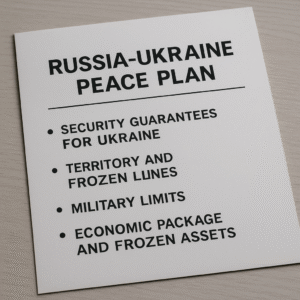
Trump’s peace plan attempts to mix territorial arrangements, security guarantees, military limits, and economic reconstruction. The plan aims to create a framework where both sides stop fighting and the region enters a monitored peace phase.
One of the biggest features is the proposal for security guarantees for Ukraine. This includes a NATO-style pledge that the U.S. and its partners would respond if Russia again invades Ukraine. However, the same plan also says Ukraine would be barred from joining NATO — a condition that directly aligns with Russia’s demands. This creates a controversial mix of protection and restriction.
The plan also talks about freezing the current territorial lines, meaning areas like Crimea and parts of Donetsk and Luhansk would be considered under Russian control. Meanwhile, other disputed regions like Kherson and Zaporizhzhia could become buffer zones or demilitarized regions monitored by international forces.
Militarily, Ukraine would have to reduce the size of its armed forces and limit missile deployment. Economically, the plan includes a major reconstruction package worth $100–200 billion, possibly using frozen Russian assets. Additionally, Russia would be gradually reintegrated into global trade systems if it complies with the terms. Such a deal could reshape Europe’s security, which is why the plan is so heavily debated.
Ukraine’s Reaction and the Reasons Behind It
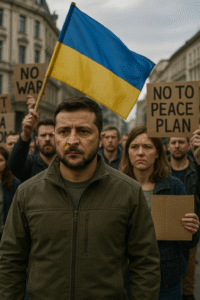
Ukraine reacted cautiously and critically to the plan. President Volodymyr Zelensky said the proposal puts Kyiv in a position where it must choose between “protecting dignity or protecting a strategic partnership.”
The first and biggest issue is territorial integrity. For many Ukrainians, accepting Russian control over Crimea and parts of Donbas is politically impossible. More than 80% of Ukrainians, according to domestic polls in 2024 and 2025, oppose giving away territory for peace. This is why Kyiv sees the plan as leaning too close to Russian interests.
Secondly, Ukraine is worried about the conditional nature of security guarantees. A guarantee that becomes invalid if Ukraine strikes Russian territory makes Kyiv feel vulnerable. Ukraine wants unconditional, NATO-level protection; otherwise, the guarantees become symbolic.
Lastly, domestic politics plays a huge role. After years of war and sacrifice, any leader agreeing to large territorial losses risks losing public support and triggering unrest. Zelensky must balance diplomacy with national morale — something this plan does not fully address.
Russia’s Reaction and Why Moscow Finds the Plan Attractive
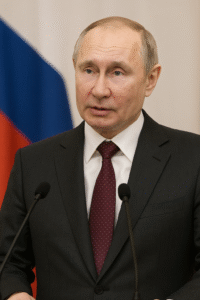
Russia responded far more positively. The Kremlin said the peace plan contains “serious and thoughtful ideas.” The biggest reason behind Russia’s favourable response is that several points directly align with Moscow’s long-standing demands.
For example, the clause that Ukraine must never join NATO is a major Russian security goal. This gives Russia assurance that NATO forces will not move closer to its borders.
The territorial arrangements also work in Russia’s favour. Even though the plan does not officially “recognize” the annexed regions, freezing the lines effectively acknowledges current Russian control. This is a strategic win for Moscow without additional fighting.
Another attractive element for Russia is sanctions relief. The plan hints that if Russia complies, Western nations could gradually lift economic restrictions. For Russia, whose economy has taken hits due to sanctions, reintegration into global markets is a powerful incentive.
However, Russia still wants clearer written guarantees and faster timelines for sanctions removal, which means Moscow supports the plan in principle but will negotiate for stronger wording.
Reactions of Various Countries and Their Reasons
1. Europe (Germany, France, U.K.)
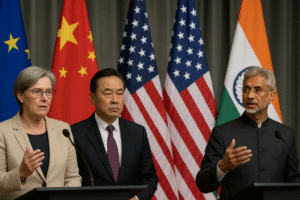
Major European countries reacted cautiously. They believe the plan gives Russia too many concessions while undermining the principle that borders cannot be changed by force. European nations fear that if Russia gets rewarded, similar conflicts could emerge in other parts of Europe.
2. The United States
The U.S. administration itself defended the plan as a “realistic roadmap.” It argues that years of war have not produced a decisive victory for either side, and a compromise may be the only way to stop further loss of life.
3. NATO Countries
NATO as a bloc has not endorsed the plan. Many members want Ukraine to be part of the decision-making process and insist that Kyiv must not be pressured into a deal it considers unfair.
4. China
China welcomed the idea of ceasefire discussions but stressed that “sovereignty of all nations must be respected.” Beijing supports peace efforts because prolonged war disrupts global trade, energy prices, and supply chains — all important for China’s economy.
5. Developing Nations
Countries in Asia, Africa, and Latin America express hope for an early end to the war. Many are concerned about rising food and fertilizer prices caused by the conflict.
India’s Stand on the Russia-Ukraine Peace Plan
India took a balanced and diplomatic approach. New Delhi said it supports dialogue and peaceful negotiations and hopes both parties seriously evaluate the peace plan. India’s foreign minister held discussions with Ukrainian officials and reaffirmed support for an “early end to hostilities.”
India’s position is shaped by three key factors:
Strategic partnership with Russia, especially in defence and energy.
Growing ties with the West, including the U.S. and Europe.
Principle-based diplomacy, which promotes respect for sovereignty and international law.
India also wants stability in the region because disruptions in oil and food supply directly affect Indian inflation, trade routes, and economic planning.
How Much Possibility of Acceptance?
The chances of immediate acceptance are low in the short term, but negotiations may continue.
Ukraine’s primary objections — territorial concessions and conditional guarantees — are not minor issues. Unless these points are revised, Kyiv may not accept the plan.
Russia is more open to the plan, but even Moscow wants more concrete sanctions relief. Meanwhile, European countries want to rework the entire document to make it more balanced.
Therefore, the plan may become a starting point for future negotiations but is unlikely to be accepted in its current form.
Analysis: Can This Plan Bring Peace and Stability?
Whether the plan can bring peace depends on how much the proposal is modified. If the plan is restructured to offer:
stronger and unconditional security guarantees for Ukraine,
a fairer approach to territorial issues,
and a credible, enforceable monitoring mechanism,
then it can open the door to a long-term ceasefire.
A positive outcome would stabilize Eastern Europe, reduce global energy prices, improve grain exports from Ukraine, and lower global inflation. Millions of displaced people could return home, and reconstruction work could begin.
However, if the plan is forced on Ukraine without addressing its core concerns, the result may be a fragile ceasefire or frozen conflict — similar to those seen in Georgia, Moldova, and other post-Soviet regions. This would reduce violence but not guarantee long-term stability.
Conclusion
Trump’s Russia–Ukraine peace plan is one of the most detailed proposals since the war began. It tries to balance military, political, and economic factors, but its current structure leans closer to Russia’s strategic interests, making Ukraine cautious.
Globally, reactions are mixed, and India has maintained its traditional diplomatic neutrality while supporting peace efforts. Whether this plan ends the war depends on how much the U.S., Europe, Russia, and Ukraine are willing to compromise.
Real peace will require strong guarantees, fair terms, and international cooperation — not just a quick deal.