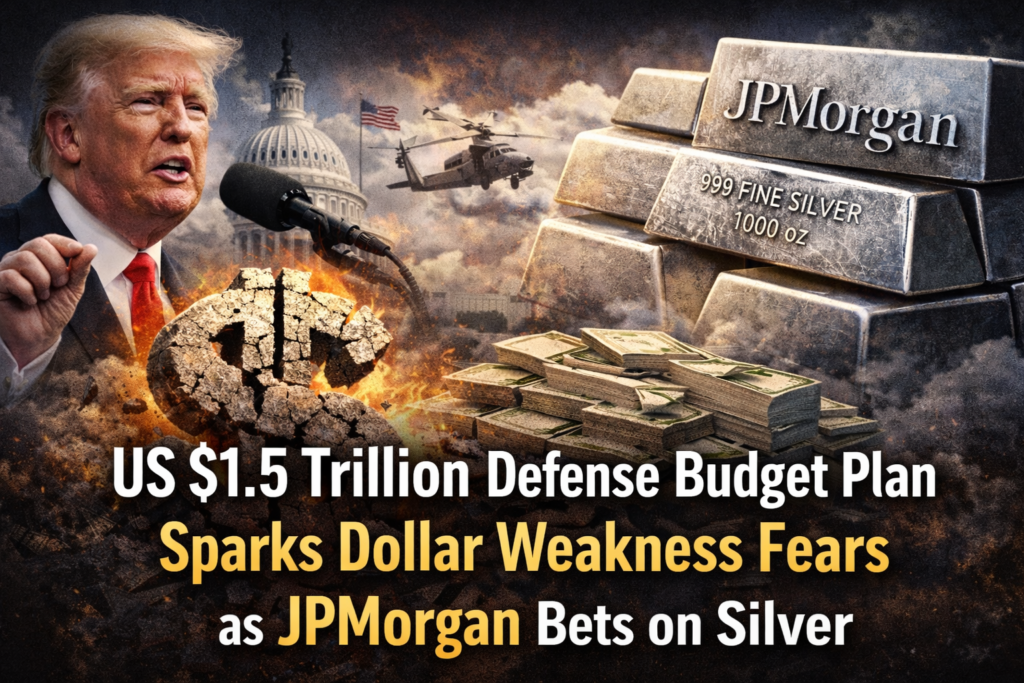
For decades, the United States has enjoyed a unique privilege: it could spend more than any other country, borrow endlessly, and still keep its currency strong. That privilege came from the US dollar’s status as the world’s reserve currency. But in 2026, that old equation is starting to crack.
When Donald Trump talks about pushing US defence spending toward $1.5 trillion, this is not just a military story. It is a financial, geopolitical, and currency story. Behind the speeches and headlines lies a deeper question: Can the US still afford global dominance without weakening its own money?
This article explains why rising defence spending, silver hoarding by big banks, treaty withdrawals, and ballooning debt are all connected — and why the US dollar may be paying the hidden price.
1.The “Impossible Trinity” of 2026
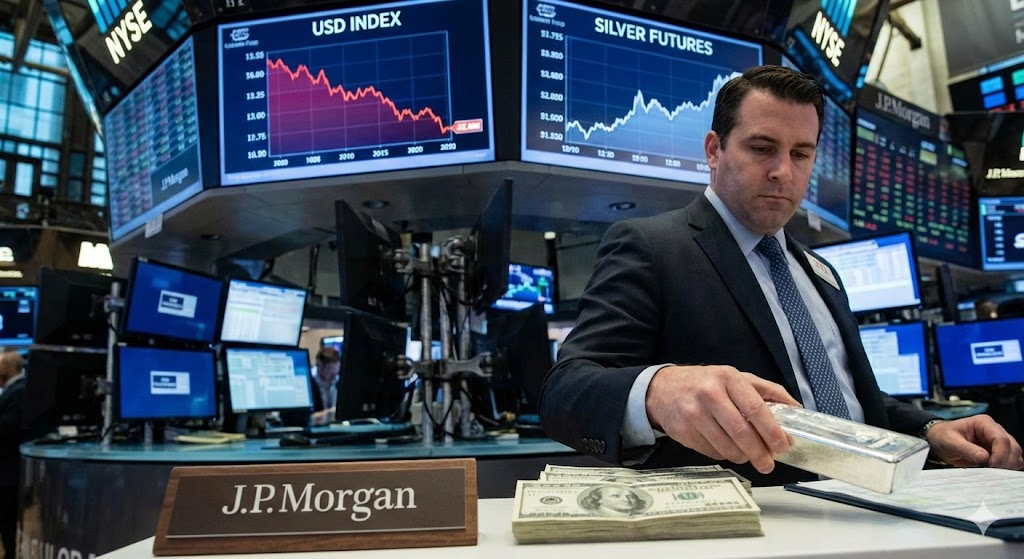
The US is walking into what economists quietly call an impossible trinity. In simple words, a country cannot enjoy all three at the same time:
• Massive military spending
• Large tax cuts and fiscal freedom
• Stable debt and strong currency
Something always breaks.
In 2026, proposed US defence spending for FY 2027 is being discussed near $1.5 trillion, up from about $901 billion in FY 2026. That is not a small increase — it is a jump of nearly 50% in just one budget cycle.
At the same time, US national debt has already crossed $38.5 trillion, according to Treasury data. Based on current borrowing speed, analysts expect it to approach $40 trillion by late 2026.
This creates a simple problem that no political speech can hide:
If spending rises sharply and revenues don’t rise at the same speed, debt explodes. And when debt explodes, currencies eventually weaken.
History shows this pattern again and again — from post-war Britain to late-stage Roman coin debasement. The US is not immune just because it prints the reserve currency.
US National Debt Data (Official Source)
2. The Silver Signal: Why JPMorgan Is Pivoting
One of the quietest but most important signals in finance does not come from politicians. It comes from banks.
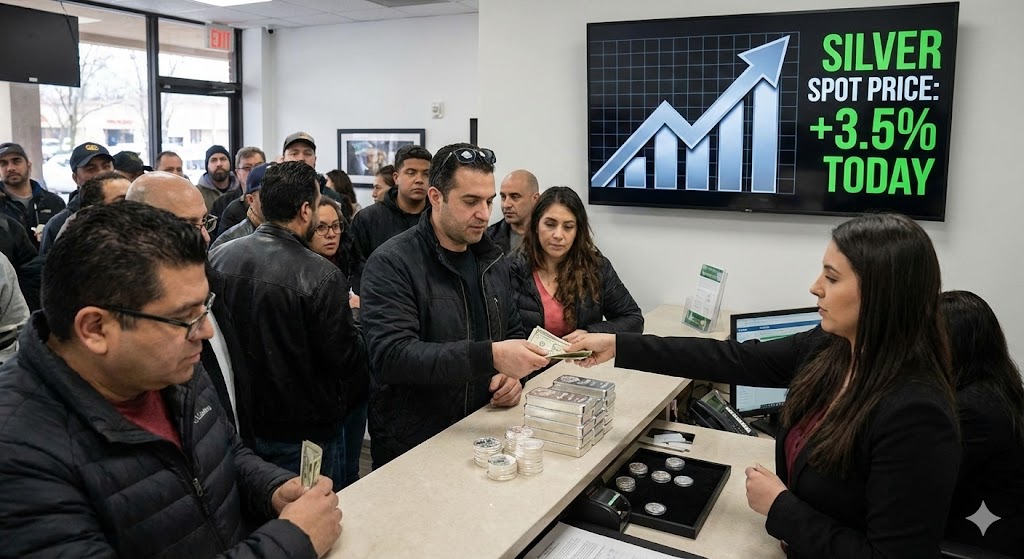
In early 2026, reports from futures markets and warehouse data showed that JPMorgan Chase significantly increased physical silver deliveries on COMEX. This is important because JPMorgan has historically been a paper trader in silver, not a long-term physical hoarder.
Silver prices have already surged roughly 140%+ over the last two years, driven by industrial demand, green tech, and — most importantly — monetary hedging.
When the world’s largest commercial bank shifts from trading contracts to taking physical metal, it sends a message: trust in paper value is weakening.
Silver is often called “poor man’s gold,” but in reality, it is a currency hedge. Banks and institutions buy it when they expect:
• Persistent inflation
• Currency debasement
• Rising fiscal stress
This behaviour fits perfectly with fears that future US deficits will be monetized rather than controlled.
JPMorgan & Silver Market Activity
3. The Green Exit: Fiscal Space or Strategic Escape?
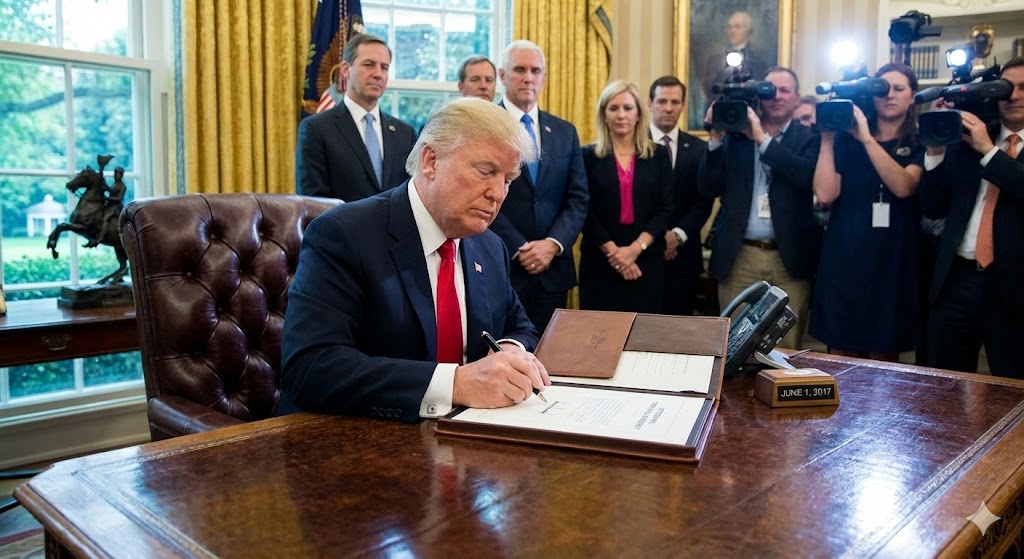
In January 2026, the Trump camp signaled withdrawal from dozens of international commitments, including climate-linked agreements such as the UNFCCC and scientific cooperation tied to the IPCC.
Publicly, this was framed as ideological opposition to climate regulations. But geopolitically, the logic runs deeper.
Climate treaties come with financial obligations — climate finance, technology transfers, carbon compliance costs, and restrictions on fossil fuel expansion. Exiting these frameworks removes billions of dollars in future commitments and frees domestic energy production.
In simple terms:
More oil, more gas, fewer rules, more revenue.
This is not about climate denial alone. It is about creating fiscal room to fund defence without raising taxes — even if it means long-term environmental and diplomatic costs.
4. The Math Problem: Tariffs vs. $1.5 Trillion Reality
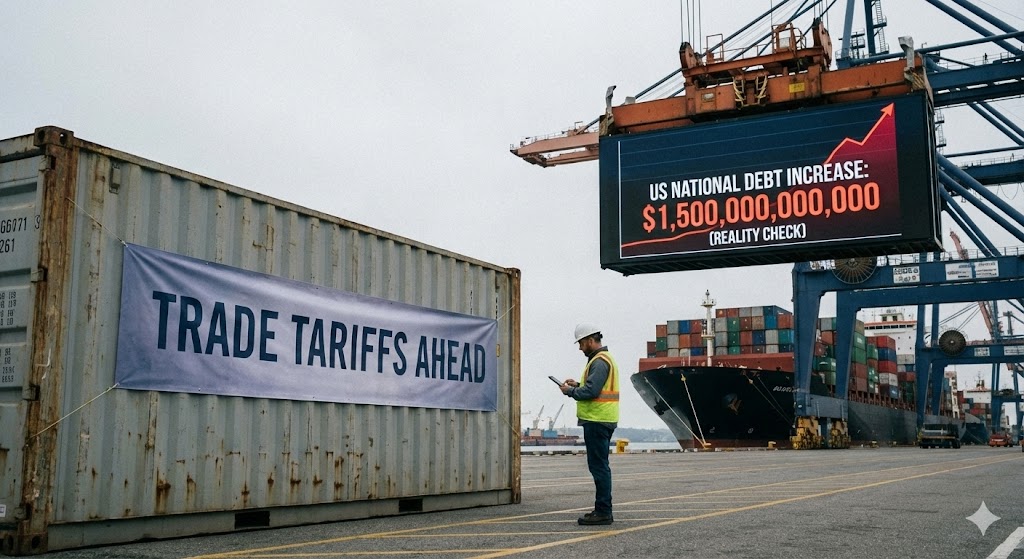
Trump has repeatedly argued that tariffs can fund military expansion. In 2025, US tariff revenues stood near $288 billion, driven largely by China-linked trade restrictions.
Even if tariffs increased aggressively, covering a $600 billion jump in defence spending alone would require tariff income to double or triple — something that risks freezing global trade.
Higher tariffs reduce imports. Reduced imports reduce tariff revenue. This is the paradox policymakers often ignore.
If tariff income falls short, the only option left is bond issuance. And here lies the real danger.
Over $9–10 trillion in US Treasury debt is expected to roll over in the next few years. If global investors begin to fear dollar weakness, demand for those bonds falls — forcing higher yields or central bank intervention.
Both outcomes hurt the dollar.
US Defense Budget Numbers (Authoritative)
5. The “Weak Dollar” Narrative: A Global Rebalancing
In 2025–26, assets told a story that headlines tried to ignore.
Gold and silver massively outperformed US equities in real terms. Even when the S&P 500 rose, its gains lagged behind inflation-adjusted precious metals.
Investor Ray Dalio repeatedly warned that reserve currency cycles end not with collapse, but with slow confidence erosion.
For countries like India, this shift matters deeply. A weaker dollar reduces import stress, strengthens local currency trade, and accelerates de-dollarization — already visible in oil trade, defense deals, and bilateral settlements.
The Global South is no longer waiting for permission to diversify away from the dollar.
Conclusion: The Quiet End of the Old Order
The $1.5 trillion defence dream is not just about tanks, jets, or deterrence. It is about choices.
The US appears to be choosing hard power over fiscal discipline, strategic dominance over currency purity, and short-term control over long-term trust.
That does not mean the dollar will collapse tomorrow. But it does mean the era of unquestioned dollar supremacy is slowly fading.
For investors, silver and gold are no longer commodities — they are thermometers. And right now, they are telling us the dollar has a fever.
Frequently Asked Questions (FAQ)
1. Why is the US planning a $1.5 trillion defense budget?
The proposed $1.5 trillion defense budget reflects America’s push to maintain military dominance amid rising global tensions. Leaders linked to Donald Trump argue that higher spending is needed to counter China, Russia, and emerging security threats. However, such a sharp increase also puts pressure on government finances already stretched by record debt.
2. How does higher defense spending affect the US dollar?
When defense spending rises without matching revenue, the US must borrow more money. This increases national debt and often leads to more bond issuance or money creation. Over time, this can weaken the US dollar, especially if investors begin to doubt America’s ability to control its deficits.
3. Why is JPMorgan buying large quantities of silver?
Reports in 2026 suggest JPMorgan Chase has shifted toward physical silver holdings. Silver is widely seen as a hedge against inflation and currency weakness. When large institutions move into physical assets instead of paper contracts, it often signals concern about long-term fiat currency stability.
4. What does silver price growth indicate about the economy?
Rising silver prices usually indicate inflation fears, currency debasement concerns, or growing industrial demand. In recent years, silver has benefited from all three — especially as governments worldwide increase spending and debt. Strong silver demand often appears before broader financial stress becomes visible.
5. Why is the US exiting environmental and climate treaties?
Exiting climate and environmental treaties reduces financial obligations and regulatory limits on energy production. This allows the US to increase oil and gas output, generate more revenue, and reduce short-term fiscal pressure. However, this strategy may come at long-term environmental and diplomatic costs.
6. Can tariffs realistically fund a $1.5 trillion defense budget?
Tariffs alone are unlikely to fund such a large defense budget. US tariff revenue is currently far below what would be needed to cover the increase. Raising tariffs too aggressively could slow global trade, reduce imports, and ultimately lower tariff income rather than increase it.
7. What happens if tariffs and taxes fail to cover defense spending?
If revenues fall short, the US Treasury must issue more debt. With trillions of dollars already rolling over in coming years, weak demand for US bonds could push interest rates higher or force monetary intervention — both of which increase pressure on the dollar.
8. How does a weaker US dollar affect India and emerging markets?
A weaker dollar often benefits countries like India by reducing import costs, especially for oil. It also encourages trade in local currencies and accelerates de-dollarization, giving emerging economies greater financial independence.
9. Is the US dollar in danger of collapsing?
A sudden collapse is unlikely. However, gradual erosion of trust is more realistic. Reserve currencies usually lose dominance slowly as alternatives grow. Rising debt, fiscal stress, and institutional hedging suggest the dollar may face long-term weakening rather than immediate failure.
10. Should investors watch gold and silver closely in 2026?
Yes. Gold and silver act as financial stress indicators. When governments increase debt and spending aggressively, precious metals often rise first. They should be viewed not just as commodities, but as signals of currency and macroeconomic health.
People Also Ask (PAA)
Is the US defense budget really going to reach $1.5 trillion?
While $1.5 trillion is not yet officially approved, proposals and political statements linked to Donald Trump indicate a strong push toward a massive increase in US military spending for FY 2027. Even if the final number is lower, the direction clearly points to record-level defense expenditure.
How does military spending impact the US national debt?
Military spending is one of the largest components of the US federal budget. When defense costs rise faster than tax revenue, the government borrows more. This directly adds to the national debt, which has already crossed historic levels and continues to grow rapidly.
Why are banks and institutions buying silver in large quantities?
Large institutions buy silver when they expect inflation, currency weakening, or financial instability. Physical silver offers protection against paper currency risks. Recent activity involving JPMorgan Chase has drawn attention because institutional moves often happen before broader market shifts.
Does rising silver price mean the dollar is weakening?
Not always, but there is a strong historical relationship. When silver prices rise sharply over a short period, it often reflects declining confidence in fiat currencies like the US dollar, especially during times of high debt and aggressive government spending.
Can tariffs realistically solve America’s budget problem?
Tariffs generate revenue, but they also reduce trade volumes. If tariffs rise too much, imports fall and revenue declines. Because of this trade-off, tariffs alone cannot realistically fund a massive defense budget without damaging global trade and economic growth.
Why is the US withdrawing from climate and environmental treaties?
Withdrawing from climate treaties reduces regulatory and financial obligations. This allows greater domestic energy production and lower compliance costs. From a fiscal perspective, it creates short-term budget flexibility, even though it may increase long-term environmental and diplomatic risks.
What does a weaker US dollar mean for global markets?
A weaker dollar shifts global capital flows. Commodity prices often rise, emerging market currencies strengthen, and trade patterns adjust. Countries begin reducing dependence on dollar-based trade and reserves, accelerating de-dollarization trends.
How does US dollar weakness affect India specifically?
For India, a weaker dollar can reduce import costs, especially for oil and commodities. It also supports local-currency trade agreements and strengthens India’s position in a multipolar financial system.
Is de-dollarization actually happening or just a theory?
De-dollarization is gradual but real. More countries are settling trade in local currencies, increasing gold reserves, and reducing exposure to US assets. While the dollar remains dominant, its share in global reserves has been slowly declining.
Should common investors pay attention to silver and gold now?
Yes. Silver and gold often act as early warning indicators. When governments increase debt and geopolitical risks rise, these metals usually respond first. Investors watch them not for short-term trading alone, but for signals about long-term currency health.
Why are precious metals rising while stock markets remain strong?
This happens when asset prices rise due to liquidity rather than real economic strength. Stocks may climb in nominal terms, but precious metals rising simultaneously often indicate inflation-adjusted weakness and declining purchasing power of money.