1. The Hook: A Dawn of Uncertainty
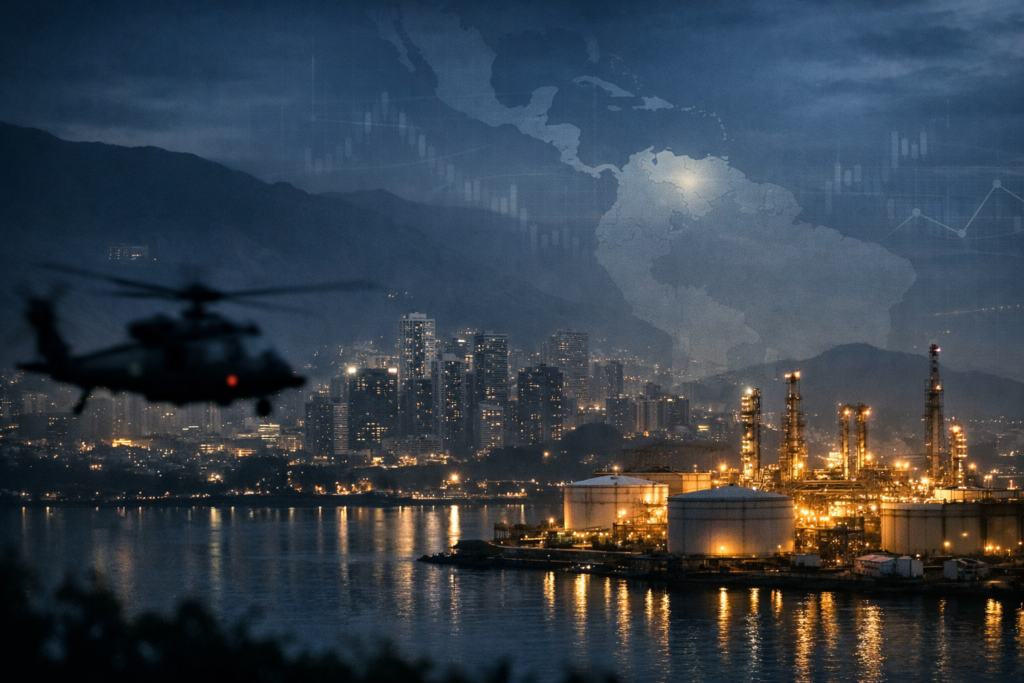
At exactly 02:00 a.m. Venezuelan time (VET), the silence of Caracas is imagined to break. In this scenario, explosions ripple across key military and logistical sites, with reports centered on Fort Tiuna, the heart of Venezuela’s armed forces, and Higuerote Airport, a strategic coastal airstrip east of the capital. Power outages follow. Mobile networks falter. Rumors spread faster than facts.
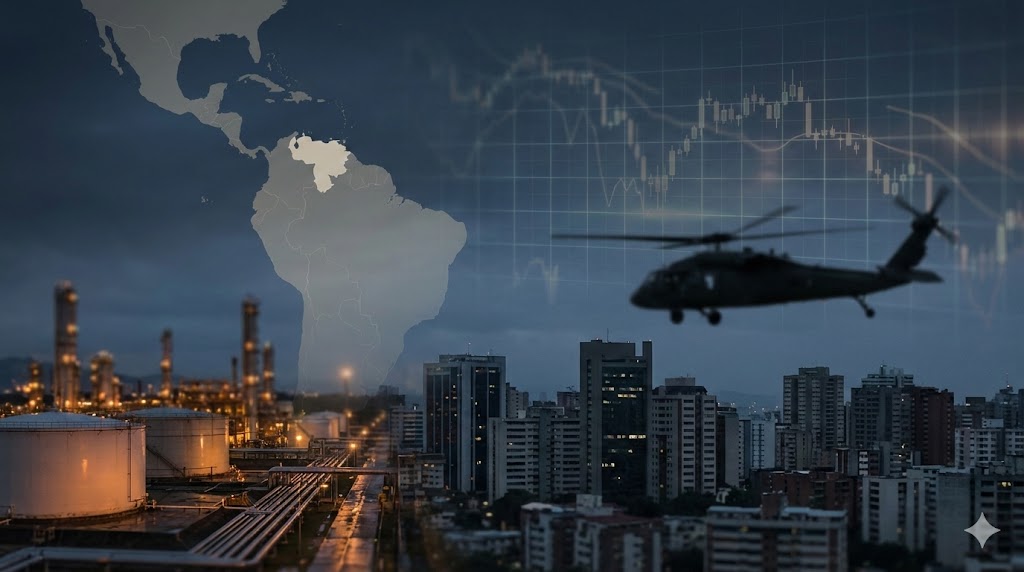
In this hypothetical chain of events, a statement appears on Truth Social from Donald Trump, claiming that Venezuelan President Nicolás Maduro and First Lady Cilia Flores have been captured during a U.S.-led special forces operation referred to as “Operation Southern Spear.”
Within hours, Caracas declares a “State of External Commotion.” Borders tighten. Flights are suspended. Regional capitals begin emergency consultations.
Whether or not such an operation ever occurs, this scenario exposes something deeper: how fragile Venezuela’s political order is, and how fast Latin America’s balance of power could shift if Caracas falls.
2. Tactical Overview: What “Operation Southern Spear” Would Look Like
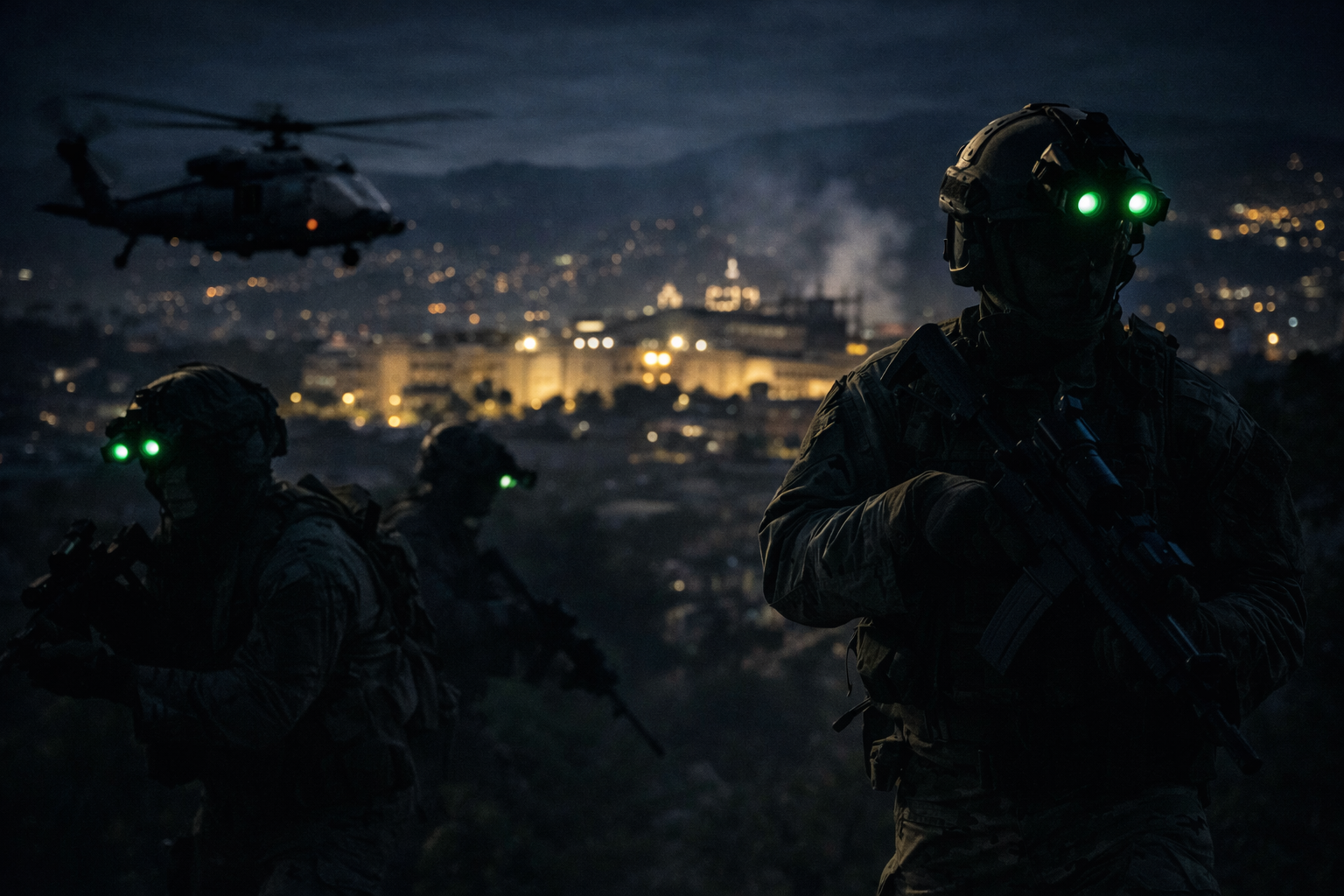
In military terms, a hypothetical operation of this scale would not resemble a conventional invasion. It would be short, surgical, intelligence-heavy, and designed to decapitate leadership rather than occupy territory.
2. U.S. Department of Justice – Narcotics & Rewards Program
Target Geography
Caracas: Fort Tiuna (command and control), Miraflores perimeter
Miranda & Aragua states: Rapid-reaction units, radar sites
La Guaira coast: Ports and naval logistics
Higuerote Airport: Air mobility and extraction corridor
Such coordination would likely fall under Joint Special Operations Command, supported by elite aviation assets like the 160th Special Operations Aviation Regiment (SOAR).
The Pretext
The logic often cited in Washington policy circles includes:
A $50 million U.S. reward on Maduro under narco-terrorism charges
Years of maritime interdictions against alleged drug-trafficking routes
Claims that Venezuela functions as a narco-state hub linking Latin America, West Africa, and Europe
This is not new. It is the culmination of pressure built since 2017, intensified by sanctions, oil embargoes, and diplomatic isolation.
1. U.S. Department of State – Venezuela Policy
3. Geoeconomic Impact: The Oil & Market Shock
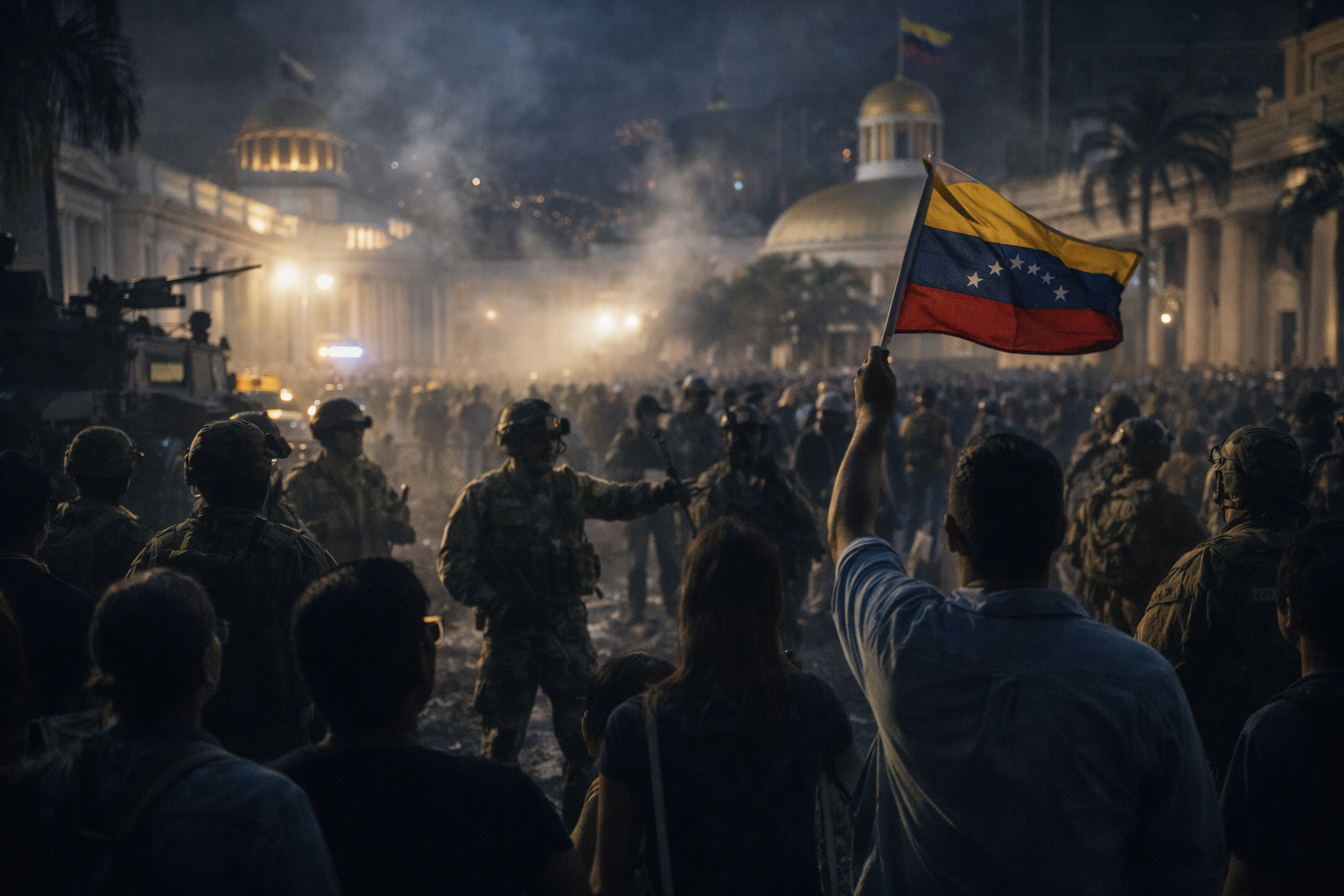
Even the possibility of a sudden regime change in Venezuela carries massive market consequences. Venezuela is not just another troubled state—it sits on the world’s largest proven oil reserves, according to OPEC data.
3. OPEC – Venezuela Oil Reserves Data
Immediate Market Logic
| Asset / Market | Pre-Scenario Level | Expected Reaction |
|---|---|---|
| Brent Crude | ~$60 per barrel | Spike toward $75–80 due to uncertainty |
| Gold | Already elevated | Further safe-haven inflows |
| Venezuela Sovereign Debt | Defaulted | Speculative rally on regime-change hopes |
| Latin American Equities | Mixed | Short-term selloff, selective rebound |
Even though Venezuela’s oil output is currently below 900,000 barrels/day (far from its 1998 peak of 3.2 million), markets price future optionality, not present reality.
Why This Matters Globally
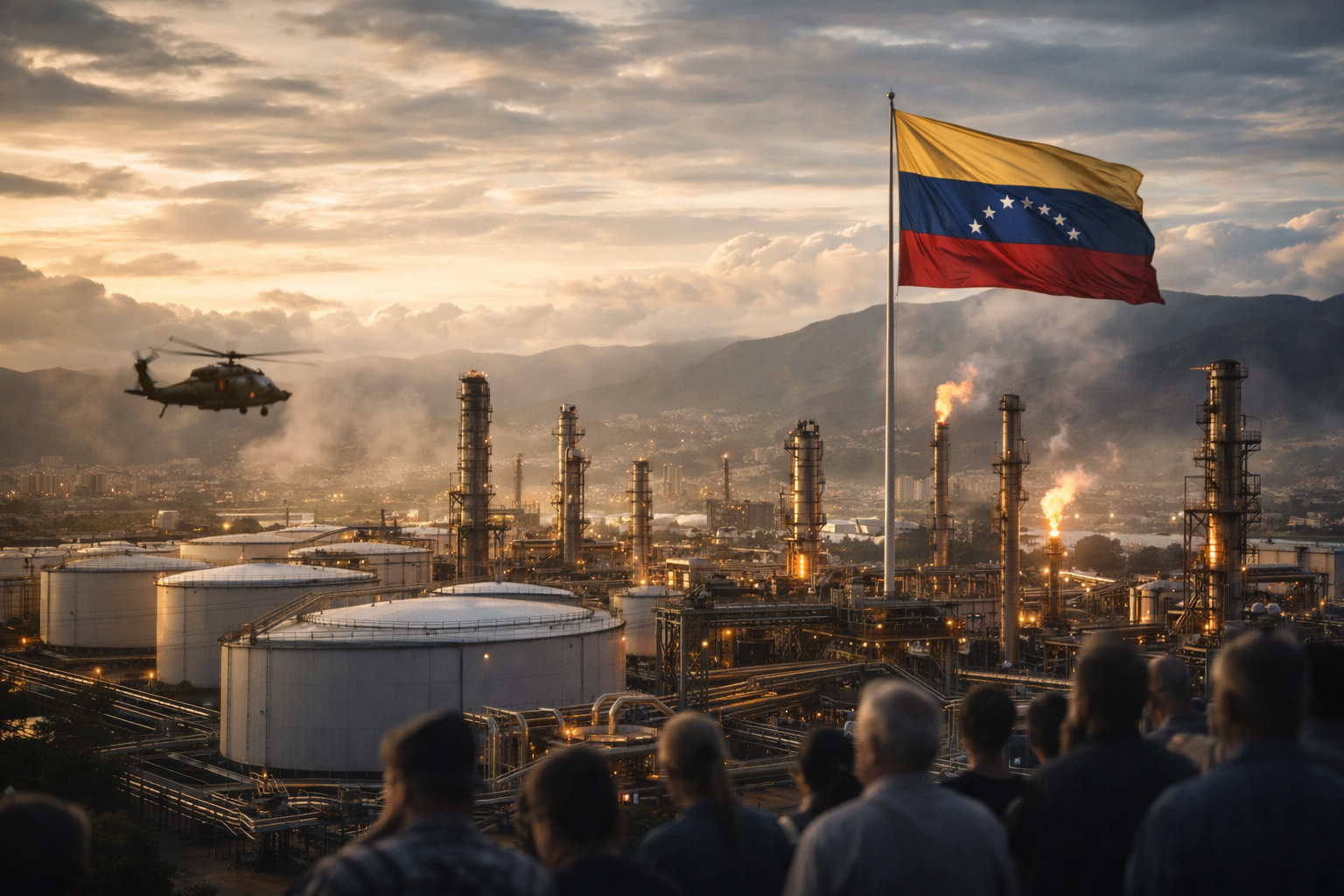
The U.S. is actively diversifying energy supply away from the Middle East and Russia
A post-sanctions Venezuela could become a Western-aligned energy buffer
Global energy transition plans still rely on oil stability, not oil disappearance
In simple terms: who controls Caracas influences oil psychology worldwide.
U.S. Energy Information Administration (EIA) – Venezuela Country Profile
4. The Global Chessboard: Reactions & Repercussions
A Caracas shockwave would not stay in the Americas. It would split the world along geopolitical fault lines.
Russia & Iran
Moscow has consistently viewed Venezuela as its primary strategic foothold in the Caribbean—a symbolic counterweight to NATO’s presence near Russia’s borders. Any U.S.-led intervention would be framed by Russia and Iran as a violation of sovereignty, not because of Maduro himself, but because of precedent.
Lose Venezuela, and Russia loses:
A military logistics partner
An intelligence listening post
A symbolic challenge to U.S. hemispheric dominance
Regional Anxiety
Colombia, Brazil, and Caribbean nations would immediately worry about:
Refugee flows (already over 7 million Venezuelans abroad)
Cross-border armed groups
Collapse of food and fuel supply chains
Calls for an emergency UN Security Council session would be inevitable.
Europe’s Position
European leaders, including figures like Kaja Kallas, have consistently favored managed political transitions over military solutions. The EU’s priority would be:
Preventing civil war
Protecting humanitarian corridors
Avoiding a Libya-style state collapse
5. Strategic Forecast: Three Scenarios for the Next 48 Hours
Scenario 1: The “Guaidó Redux”
A U.S.-recognized transitional civilian council is announced within days. This scenario only works if:
The Bolivarian National Armed Forces (FANB) switch allegiance
Oil workers resume operations
Food and fuel distribution stabilizes quickly
This is the cleanest outcome, but also the hardest to achieve.
Scenario 2: Insurgency & Fragmentation
Even if leadership is removed, pro-government militias (Colectivos) and loyalist units could:
Retreat into jungle regions
Control neighborhoods
Disrupt infrastructure
This leads to a slow-burning civil conflict, similar to post-2003 Iraq—but without reconstruction funding.
Scenario 3: Negotiated Exile
Back-channel diplomacy results in Maduro being:
Sent to a third country
Shielded from U.S. courts
Removed quietly to avoid bloodshed
This option, while controversial, has historical precedent and often prevents urban warfare.
6. Conclusion: A New Era for the Monroe Doctrine?
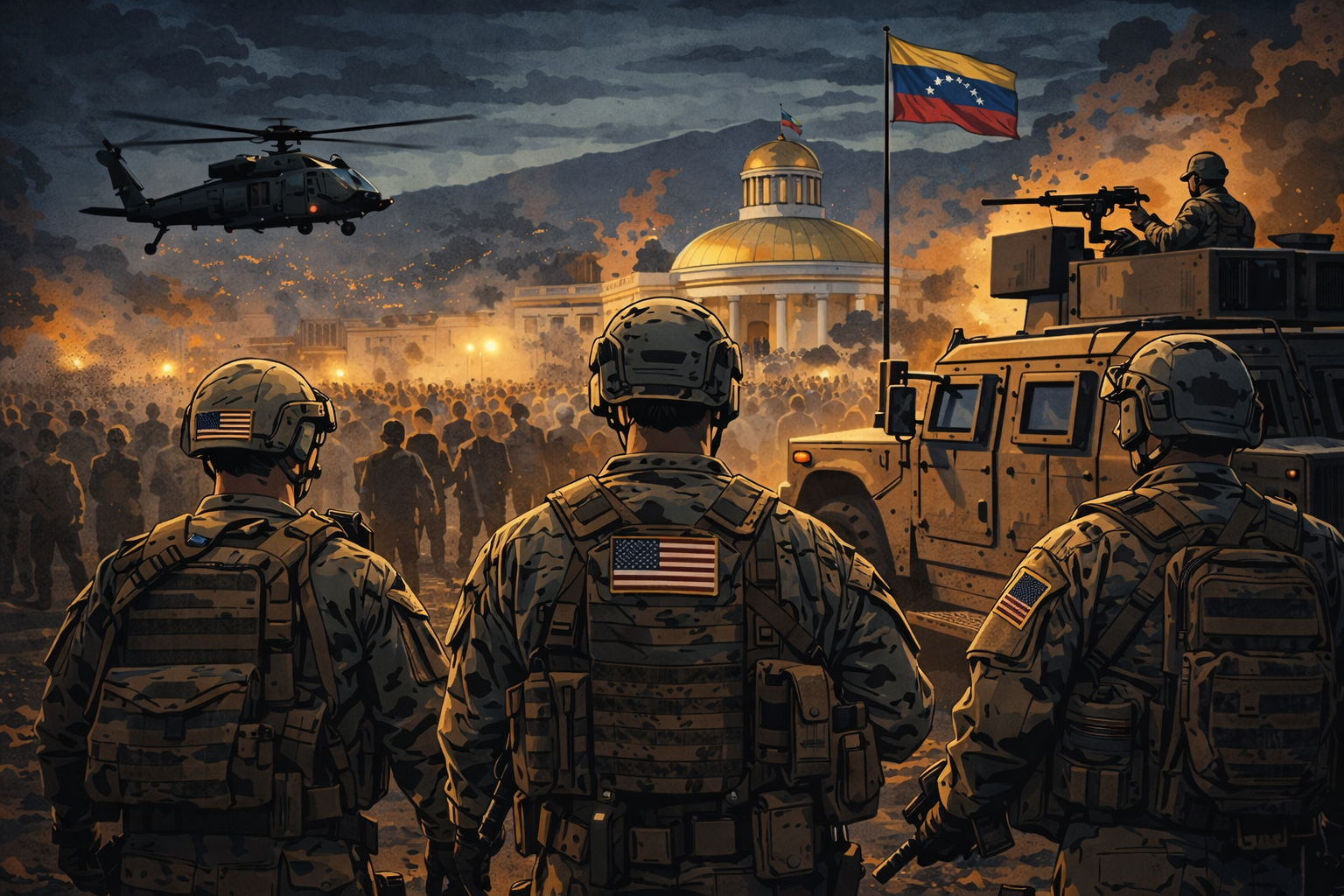
Whether or not “Operation Southern Spear” ever becomes real, the idea behind it reflects something undeniable:
The Monroe Doctrine never disappeared—it went dormant.
Today, it is being rewritten for:
Energy security
Supply-chain control
Great-power competition
Venezuela sits at the crossroads of oil, ideology, and influence. The fall—or survival—of Caracas will shape not just one nation’s future, but Latin America’s economic alignment for decades.
Final Thought:
The world would not be watching the capture of a leader—it would be watching the restructuring of an entire continent’s economic destiny.
❓ Frequently Asked Questions (FAQ)
1. What does “The Fall of Caracas” mean in geopolitical terms?
“The Fall of Caracas” is a phrase used to describe a potential collapse or change of political power in Venezuela’s capital. In geopolitics, the capital city represents control over the state, military command, and economic institutions. Any major shift in Caracas would signal a national power transition, not just a local event.
2. Is “Operation Southern Spear” a confirmed military operation?
No. “Operation Southern Spear” is used in this article as a hypothetical or analytical scenario, based on past U.S. military doctrines and regional pressure strategies. It helps explain how a leadership-focused operation could look, not to confirm that such an operation has taken place.
3. Why is Venezuela so important to global oil markets?
Venezuela holds the largest proven oil reserves in the world, even larger than Saudi Arabia. Although current production is low due to sanctions and underinvestment, any political change could:
Bring foreign investment back
Increase oil exports over time
Affect global oil prices due to future supply expectations
Markets react to possibility, not just current output.
4. Would a regime change immediately reduce oil prices?
Not immediately. In the short term, uncertainty usually pushes oil prices higher. Only after political stability, sanctions relief, and production recovery would prices begin to stabilize. This process could take months or years, not weeks.
5. How could Venezuela’s crisis affect Latin America?
A major political shock in Venezuela could:
Increase refugee flows to Colombia, Brazil, and the Caribbean
Raise regional security concerns
Force neighboring governments to take diplomatic sides
Latin America is deeply interconnected through migration, trade, and energy routes.
6. Why do Russia and Iran support Venezuela’s current system?
Russia and Iran see Venezuela as:
A strategic partner near the United States
A symbol of resistance against Western influence
A geopolitical foothold in the Western Hemisphere
Their support is driven more by global power balance than domestic Venezuelan politics.
7. What is the Monroe Doctrine, and why is it relevant again?
The Monroe Doctrine is a long-standing U.S. policy that opposes external powers interfering in the Americas. In modern terms, it has evolved into:
Energy security strategy
Supply-chain protection
Limiting rival powers’ influence in the region
Venezuela sits at the center of this renewed strategic focus.
8. Could Venezuela face a civil conflict after a power change?
Yes, this is one of the biggest risks. Even if leadership changes, loyal armed groups or military factions may resist. History shows that removing a leader does not automatically create stability. Institutions and economic recovery matter just as much.
9. What would be the best outcome for ordinary Venezuelans?
The most positive outcome would include:
Peaceful political transition
Restoration of basic services (fuel, food, electricity)
Gradual return of jobs and investment
Reduced migration pressure
Stability, not ideology, is the key factor for everyday life.
10. Why should global investors care about Venezuela?
Because Venezuela sits at the intersection of:
Energy markets
Emerging market risk
U.S.–Russia rivalry
Commodity price volatility
Even indirect exposure can affect oil prices, inflation, and global portfolios.
🔎 People Also Ask
What is Operation Southern Spear?
Operation Southern Spear is a hypothetical geopolitical scenario used to explain how a leadership-focused intervention in Venezuela could unfold. It is not an officially confirmed military operation.
Is the U.S. planning a regime change in Venezuela?
There is no official confirmation of a planned regime change. However, years of sanctions, diplomatic pressure, and legal actions against Venezuelan leadership show that the U.S. continues to pursue political and economic pressure, not open war.
Why does Venezuela matter so much to the U.S.?
Venezuela matters because it has:
The world’s largest proven oil reserves
Strategic location in the Western Hemisphere
Strong ties with Russia and Iran, which concerns U.S. policymakers
How would Venezuela regime change affect oil prices?
In the short term, oil prices usually rise due to uncertainty. Over the long term, if sanctions are lifted and production recovers, Venezuela could increase supply, which may help stabilize prices.
Can Venezuela recover its oil industry quickly?
No. Venezuela’s oil sector needs:
Billions of dollars in investment
Skilled workforce return
Infrastructure repair
Recovery would likely take 3–5 years, even under a stable government.
What happens if Venezuela’s military does not support a transition?
If the military remains divided, Venezuela could face:
Prolonged instability
Armed resistance
Economic collapse continuing
Military unity is the key deciding factor in any transition.
How could this impact Latin America?
A major political shift in Venezuela could:
Increase migration to Colombia and Brazil
Create regional security risks
Force Latin American countries to choose sides diplomatically
Why do Russia and Iran support Venezuela?
Russia and Iran view Venezuela as:
A strategic partner near the U.S.
A counterbalance to Western influence
A symbol of resistance against sanctions
Their support is geopolitical, not ideological.
Is this related to the Monroe Doctrine?
Yes. Many analysts see renewed U.S. focus on Venezuela as a modern interpretation of the Monroe Doctrine, aimed at limiting external powers’ influence in the Americas.
What should investors watch next?
Investors should track:
Oil price volatility
Sanctions policy changes
Diplomatic signals from Washington and Europe
Stability of Venezuela’s armed forces
These factors shape both risk and opportunity.
📊 Infographic Table 1: Key Events Timeline (Scenario Overview)
| Time (VET) | Event | Why It Matters |
|---|---|---|
| 02:00 AM | Explosions reported near Caracas military sites | Signals a leadership-focused operation |
| 03:00 AM | Power & mobile disruptions | Limits coordination of state forces |
| 04:30 AM | Reports of leadership capture (unverified) | Triggers political shock |
| Morning | State of External Commotion declared | Legal basis for emergency powers |
| 24–48 hrs | Global diplomatic reactions | Determines escalation or restraint |
🛢️ Infographic Table 2: Venezuela Oil Reality vs Global Impact
| Metric | Data (Latest Estimates) | Why It Matters |
|---|---|---|
| Proven Oil Reserves | ~300 billion barrels (largest globally) | Long-term energy leverage |
| Current Production | ~850,000–900,000 bpd | Much lower than historical peak |
| Peak Production (1998) | ~3.2 million bpd | Shows recovery potential |
| Share of Global Supply | ~1% today | Psychological impact > volume |
| Sanctions Impact | Severe underinvestment | Explains fragile output |
💰 Infographic Table 3: Market Reaction Snapshot
| Asset / Market | Before Scenario | Expected Short-Term Reaction |
|---|---|---|
| Brent Crude Oil | ~$60 per barrel | Spike toward $75–80 |
| Gold | Elevated | Further safe-haven buying |
| Latin America Stocks | Stable to mixed | Risk-off selling |
| Venezuela Bonds | Defaulted | Speculative bounce |
| USD Index | Neutral | Short-term strength |
🌍 Infographic Table 4: Global Power Positions
| Actor | Position | Strategic Reason |
|---|---|---|
| United States | Pressure for transition | Energy security + regional dominance |
| Russia | Condemns intervention | Caribbean foothold |
| Iran | Supports sovereignty narrative | Anti-U.S. alignment |
| EU | Calls for restraint | Stability & humanitarian focus |
| Latin America | Divided | Refugees & spillover fears |
⚔️ Infographic Table 5: Possible 48-Hour Outcomes
| Scenario | Description | Risk Level |
|---|---|---|
| Transitional Government | Military switches sides | Medium |
| Internal Conflict | Armed groups resist | High |
| Negotiated Exit | Leadership exiled | Low–Medium |
🧭 Infographic Table 6: Why This Matters Beyond Venezuela
| Area | Impact |
|---|---|
| Global Oil Prices | Higher volatility |
| U.S. Foreign Policy | Monroe Doctrine revival |
| Latin America | Political realignment |
| Emerging Markets | Higher risk premium |
| Energy Transition | Short-term slowdown |
NAVI World 2026 Explained: Geopolitical De-Risking, Trade Wars & India’s Economic Strategy