Tata Elxsi Q3 FY26 Results Explained: Profit Fall, Margin Surge & Valuation Outlook

1. Executive Summary: The “Divergent” Quarter
The Q3 FY26 results of Tata Elxsi tell a story that goes far beyond the headline number. On the surface, investors saw a sharp sequential drop of nearly 30% in reported net profit, which immediately triggered concern and short-term selling pressure. But when we step back and read the balance sheet like a fundamental analyst, a very different picture emerges. This was not a quarter of operational weakness. Instead, it was a quarter where execution strength collided with a sudden policy change.
Tata Elxsi actually improved its core operating performance. Revenue grew steadily, margins expanded meaningfully, and adjusted profit rose at a healthy double-digit pace. The apparent contradiction—higher margins but lower net profit—confused many retail investors. The answer lies in a one-time statutory adjustment linked to India’s new labour framework, not in a slowdown of business demand.
Tata Elxsi Official Q3 FY26 Results
This quarter also coincided with a seasonal lull for the Indian IT sector. December quarters often see furloughs, fewer billing days, and cautious client spending. Despite these typical headwinds, Tata Elxsi expanded its EBITDA margin to 23.3%, which is an exceptional outcome in the current global environment. From an expert lens, Q3 FY26 was not a warning sign. It was a stress test—and Tata Elxsi passed it comfortably at the operating level.
2. The Hard Numbers: Q3 FY26 vs. Q2 FY26
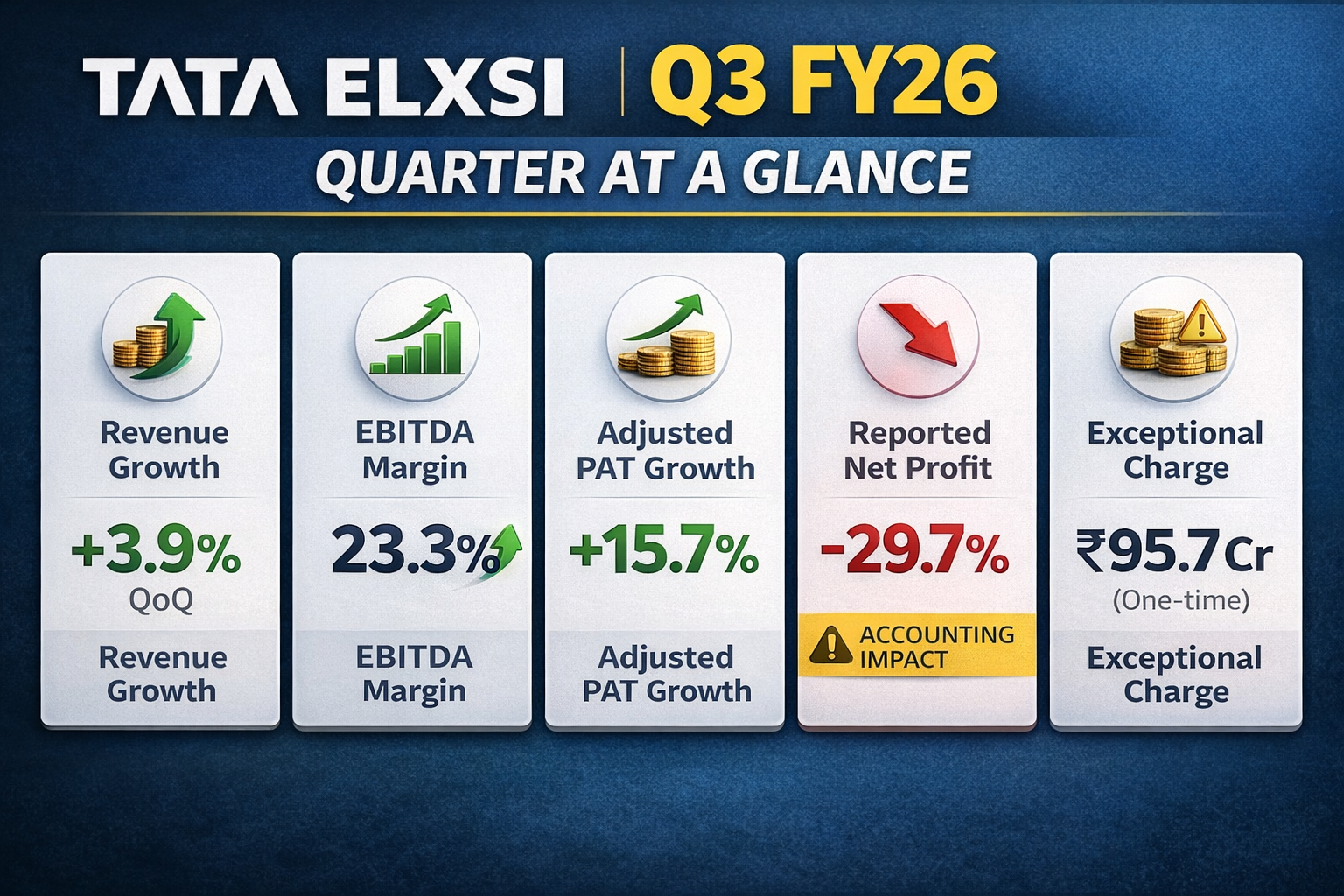
Before interpreting narratives, it is important to look calmly at the numbers. A clean comparison between Q3 FY26 and Q2 FY26 highlights where the real strength lies.
| Metric | Q3 FY26 (Actual) | Q2 FY26 (Previous) | Change (%) |
|---|---|---|---|
| Revenue from Operations | ₹953.5 Cr | ₹918.1 Cr | +3.9% QoQ |
| EBITDA Margin | 23.3% | 21.1% | +220 bps |
| Adjusted PAT (Normalised) | ₹179.1 Cr | ₹154.8 Cr | +15.7% |
| Reported Net Profit | ₹108.9 Cr | ₹154.8 Cr | -29.7% |
| Exceptional Item | ₹95.7 Cr | NIL | — |
Revenue growth of nearly 4% quarter-on-quarter may look modest, but in a global IT environment marked by delayed decision-making and geopolitical tension, it is a solid outcome. More important is the margin expansion. A 220 basis-point jump in EBITDA margin in a single quarter reflects strong cost control, better utilization, and improved project mix.
The adjusted profit growth of 15.7% clearly shows that the core business is growing faster than revenue, which is exactly what long-term investors want to see. The only negative number—reported net profit—is entirely explained by a one-off exceptional charge. Ignoring this context would be a classic mistake of confusing accounting noise with economic reality.
3. The “Elephant in the Room”: The ₹95.7 Crore Exceptional Charge
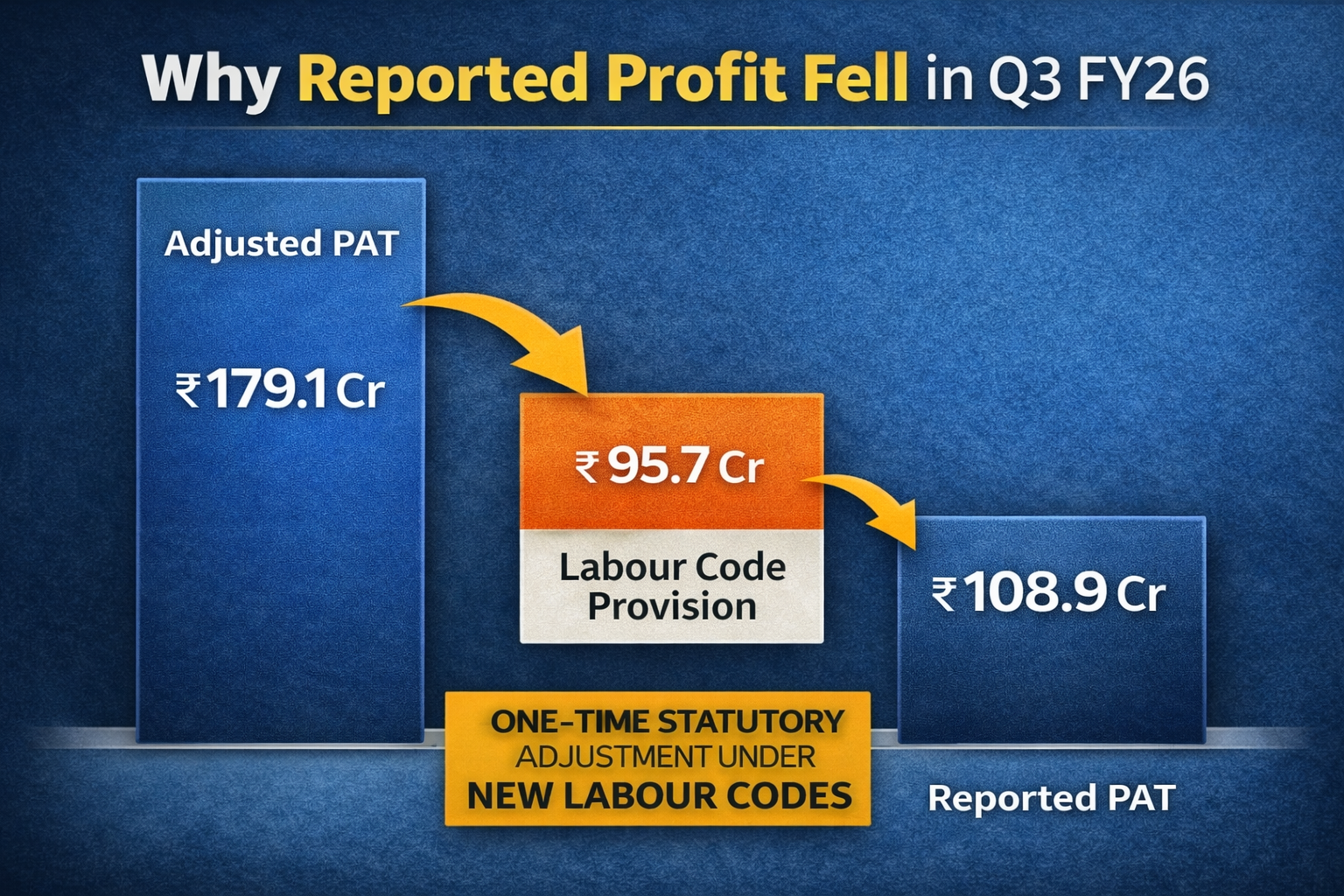
The biggest talking point of the quarter was the ₹95.7 crore exceptional charge that dragged down reported net profit. This charge is linked to India’s New National Labour Codes, which became effective from November 21, 2025. These reforms aim to standardize wages, social security, and employee benefits across sectors, especially for large employers.
For Tata Elxsi, the immediate impact was a one-time provision for enhanced employee-related benefits, including gratuity and social security adjustments. From a policy perspective, this is not a penalty or a fine. It is an accounting recognition of future obligations that already existed in substance but were not fully recognized under earlier frameworks.
The key question investors must ask is whether this is a recurring risk. The answer is largely no. This was a catch-up adjustment, not a new quarterly expense. Once provided for, the base resets. Future quarters may see slightly higher steady-state employee costs, but nothing close to this magnitude.
This is why institutional investors and “smart money” focus on adjusted profit and cash flows. They understand that reported PAT in this quarter is distorted. The 15.7% growth in normalized PAT is the real signal. It shows that demand, pricing, and execution remain intact.
New Labour Codes – Government of India
4. Segmental Deep Dive: Where Is the Alpha?
A. Transportation: The Growth Engine
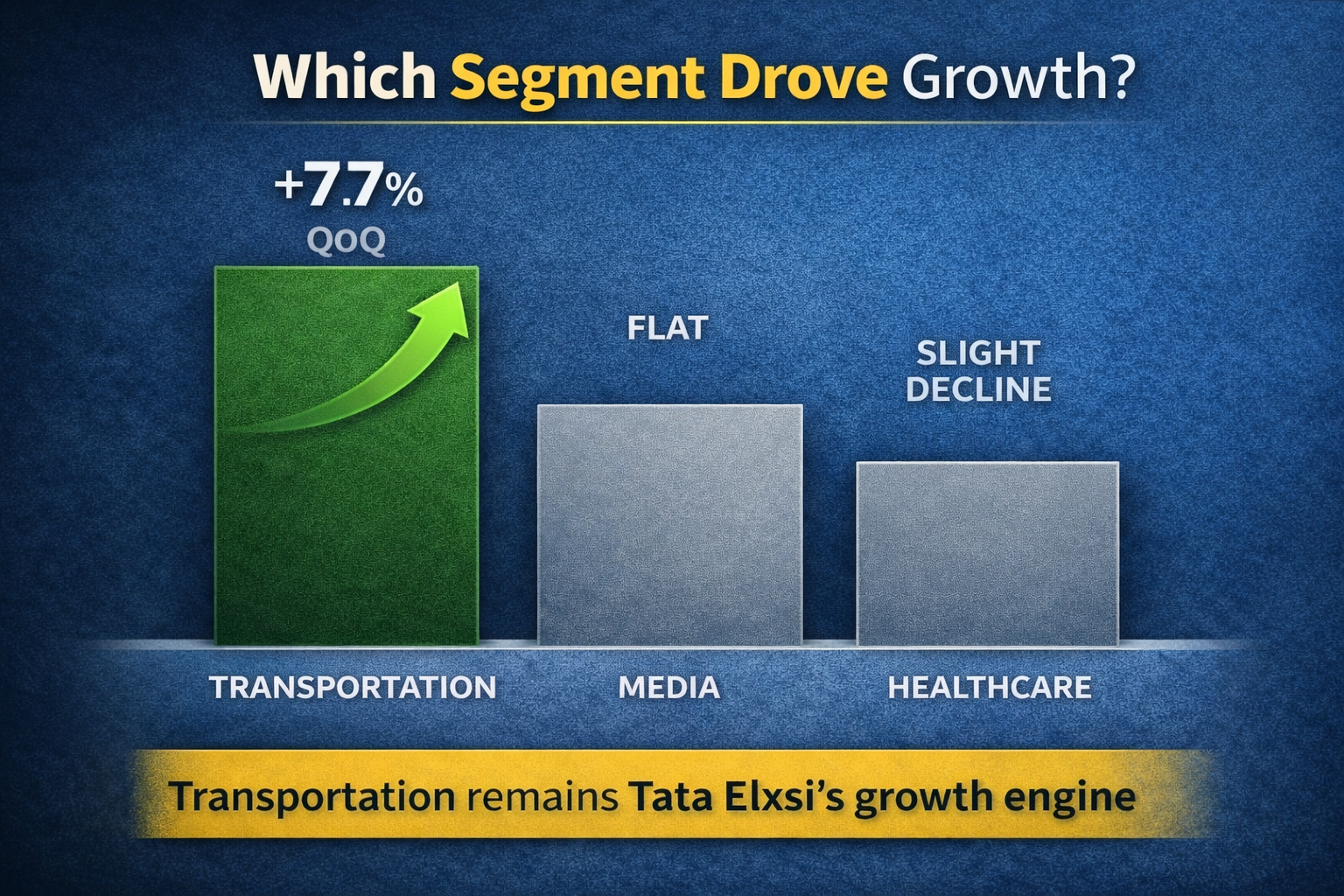
The transportation vertical was the standout performer in Q3 FY26, posting 7.7% quarter-on-quarter growth. This segment continues to benefit from the global shift toward Software Defined Vehicles (SDVs), electric mobility, and advanced driver assistance systems.
Global OEMs are no longer treating software as a support function. It has become the core of vehicle differentiation. Tata Elxsi sits at the intersection of design, embedded systems, and digital engineering, which gives it a strategic advantage. During the quarter, work normalized with several global automotive clients after earlier supply-chain disruptions.
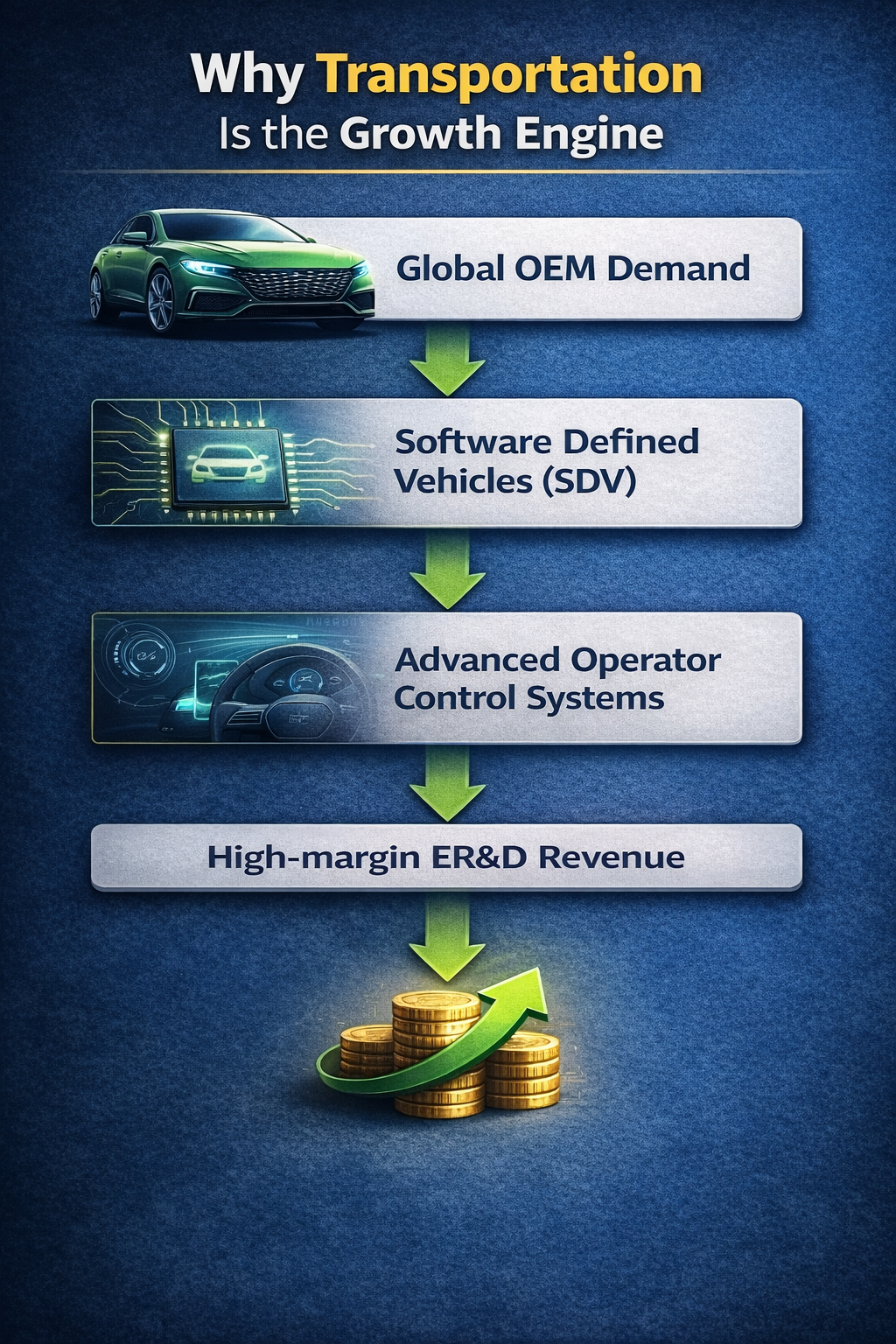
A notable real-time win was a new engagement with a US-based off-highway OEM. The deal focuses on advanced operator control systems, a niche but high-value area where reliability and safety are critical. Such contracts are sticky, long-term, and margin-accretive, reinforcing the quality of Tata Elxsi’s transportation revenue.
B. Media & Healthcare: The Seasonal Laggards
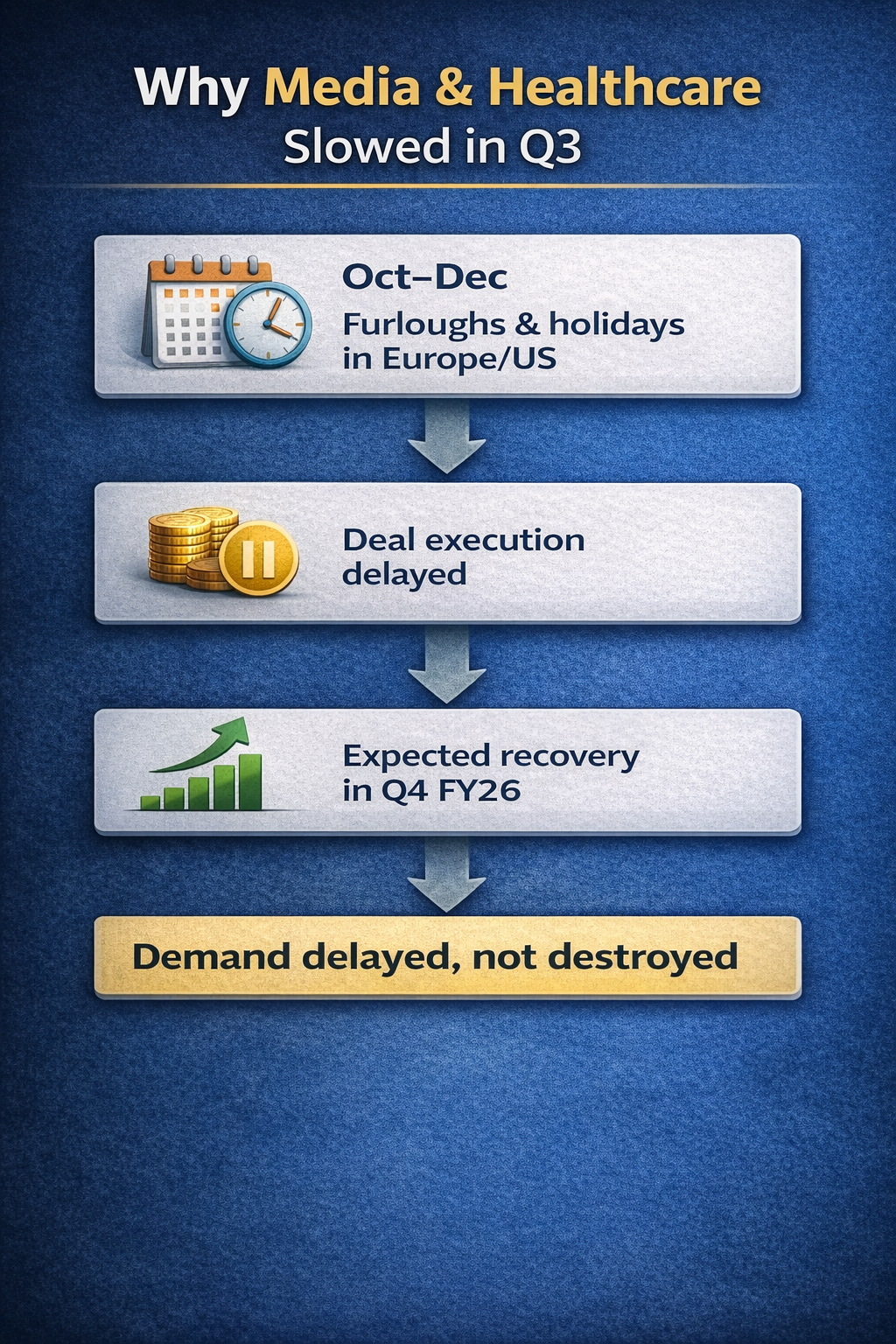
Media and Healthcare, traditionally strong segments for Tata Elxsi, saw softer performance this quarter. The reasons are largely seasonal and geographical. In Europe and the US, year-end furloughs and extended holidays delayed project ramp-ups and decision-making. Some deals slipped into Q4 rather than being cancelled.
However, the underlying pipeline remains strong. The bright spot was a multi-year, multi-million euro Gen AI deal with a European MedTech leader. This project focuses on automating regulatory workflows using artificial intelligence. In highly regulated industries like healthcare, such solutions are mission-critical, not discretionary. This reinforces management’s confidence that both segments will rebound in Q4 FY26.
HCL Tech Q3 FY26 Results Explained: ER&D Growth, AI Push & Profit Dip Decoded
5. Geopolitical & Geoeconomic Overlay
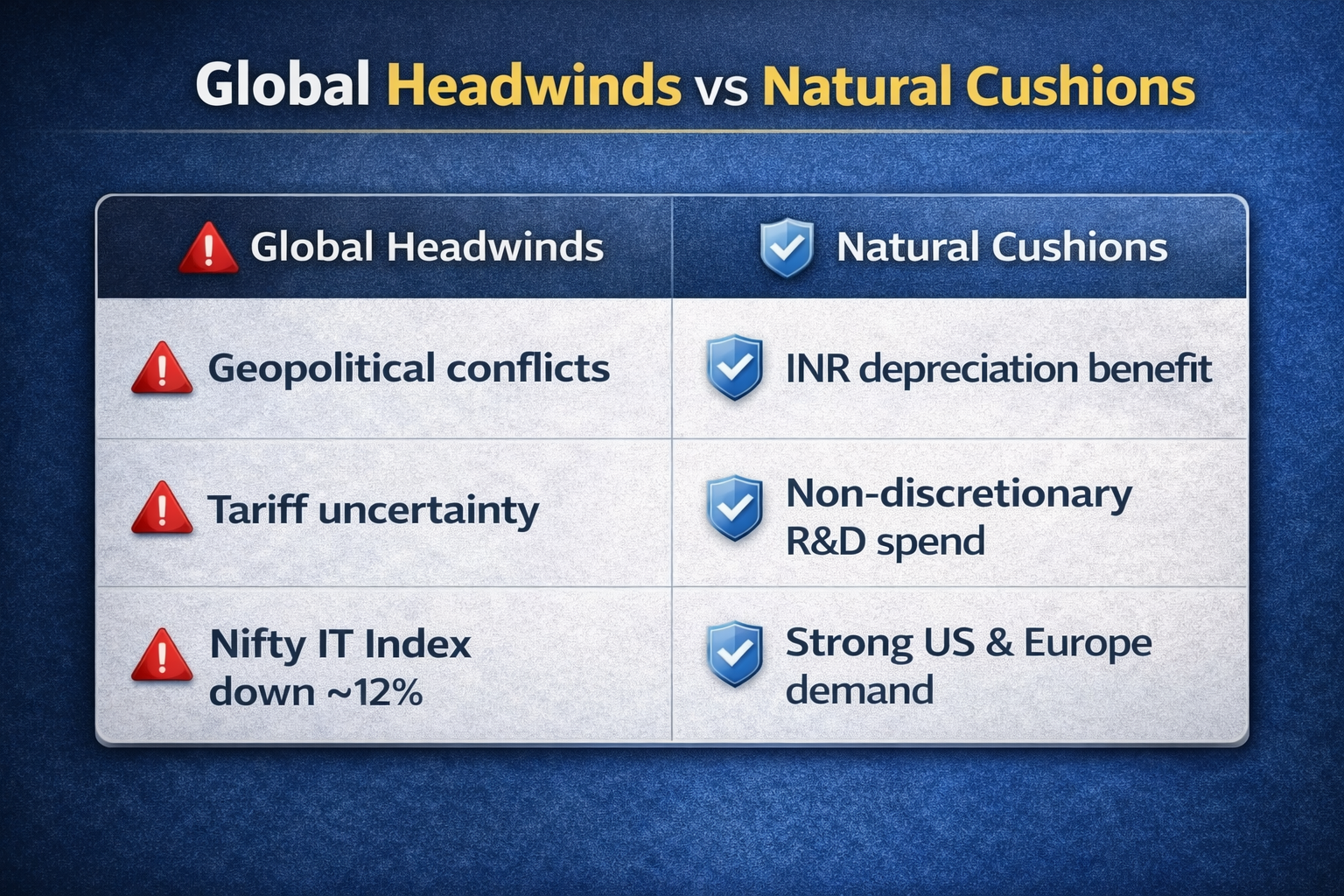
No analysis of an export-oriented IT company is complete without acknowledging the global backdrop. Q3 FY26 unfolded amid persistent geopolitical stress. The Russia–Ukraine conflict remains unresolved, tensions around Taiwan continue to create uncertainty in Asia, and the threat of fresh US tariffs has kept global corporations cautious.
These factors have weighed on Indian IT stocks as a group. The Nifty IT Index has declined by roughly 12% over the past year, reflecting concerns about global tech spending. Tata Elxsi’s performance must be viewed against this weak sectoral sentiment.
On the positive side, currency dynamics provided a natural hedge. The depreciation of the Indian rupee against the US dollar improved realization for export-heavy ER&D firms. This currency cushion helped protect margins even as clients negotiated harder on pricing.
Geographically, Europe and the US led growth during the quarter. This is important because it shows that R&D spending in the West remains non-discretionary. Even in uncertain times, companies continue to invest in engineering, safety, and compliance-driven innovation.
Nifty IT Index Performance (NSE India)
6. Fundamental Valuation: Is It “Too Expensive”?
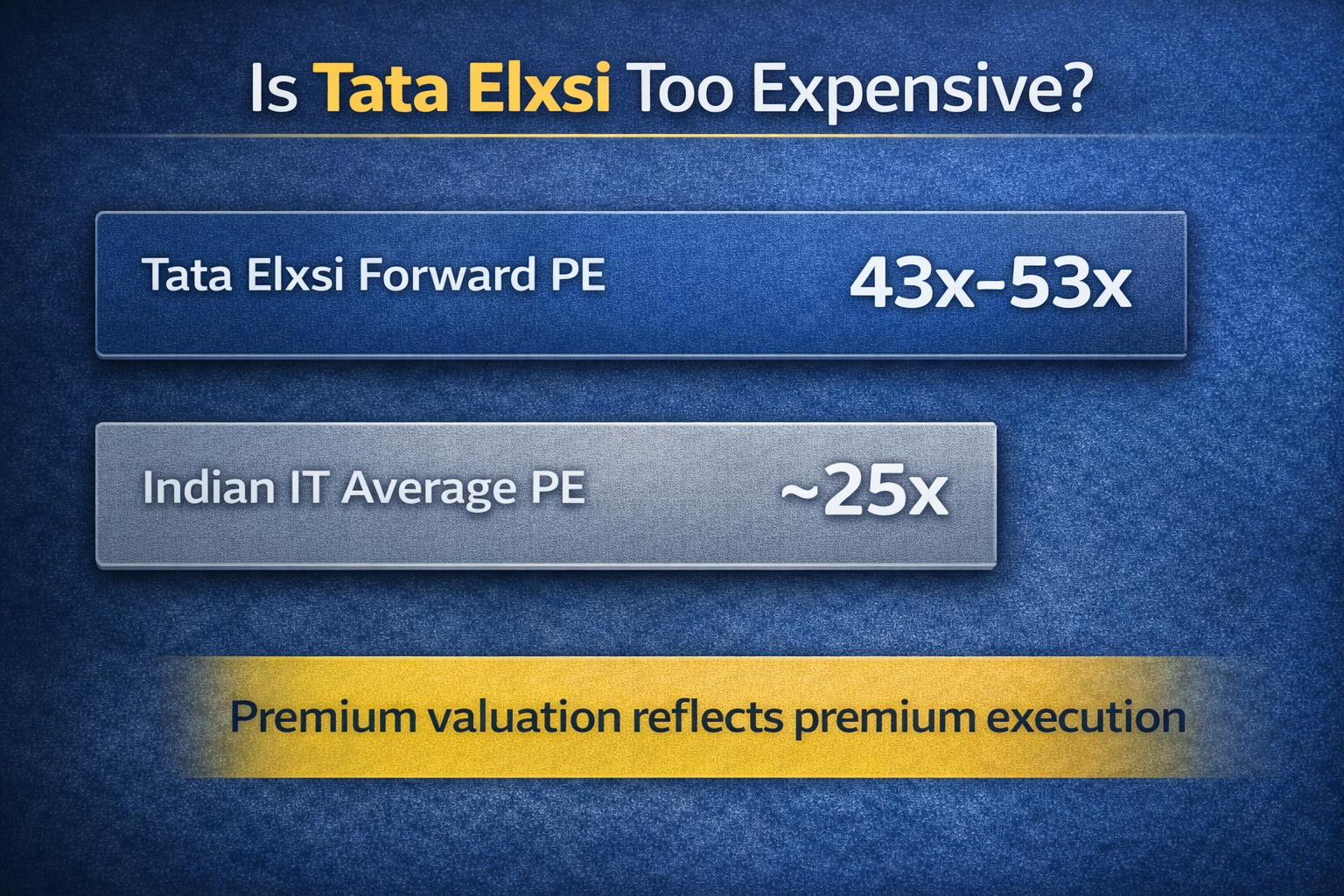
Tata Elxsi has always commanded a premium valuation, and Q3 FY26 does not change that. The stock currently trades at around 43x to 53x forward earnings, depending on whether one looks at reported or adjusted numbers. This is expensive by traditional metrics.
Brokerage opinions reflect this tension. While management remains optimistic about long-term growth, Motilal Oswal has maintained a ‘Sell’ rating with a target price of ₹4,700. The concern is not about quality, but about valuation comfort and uneven near-term visibility.
That said, valuation must be balanced with execution. EBIT margin expanded to 20.9%, up 242 basis points, which is a strong indicator of operational excellence. High utilization, strong project mix, and pricing discipline justify at least part of the premium. For long-term investors, the question is not whether the stock is cheap, but whether its quality and growth durability justify paying up.
TCS Q3 FY26 Results Explained: AI Revenue, Dividend Shock & What It Means for India
7. The Road Ahead: Q4 FY26 Outlook
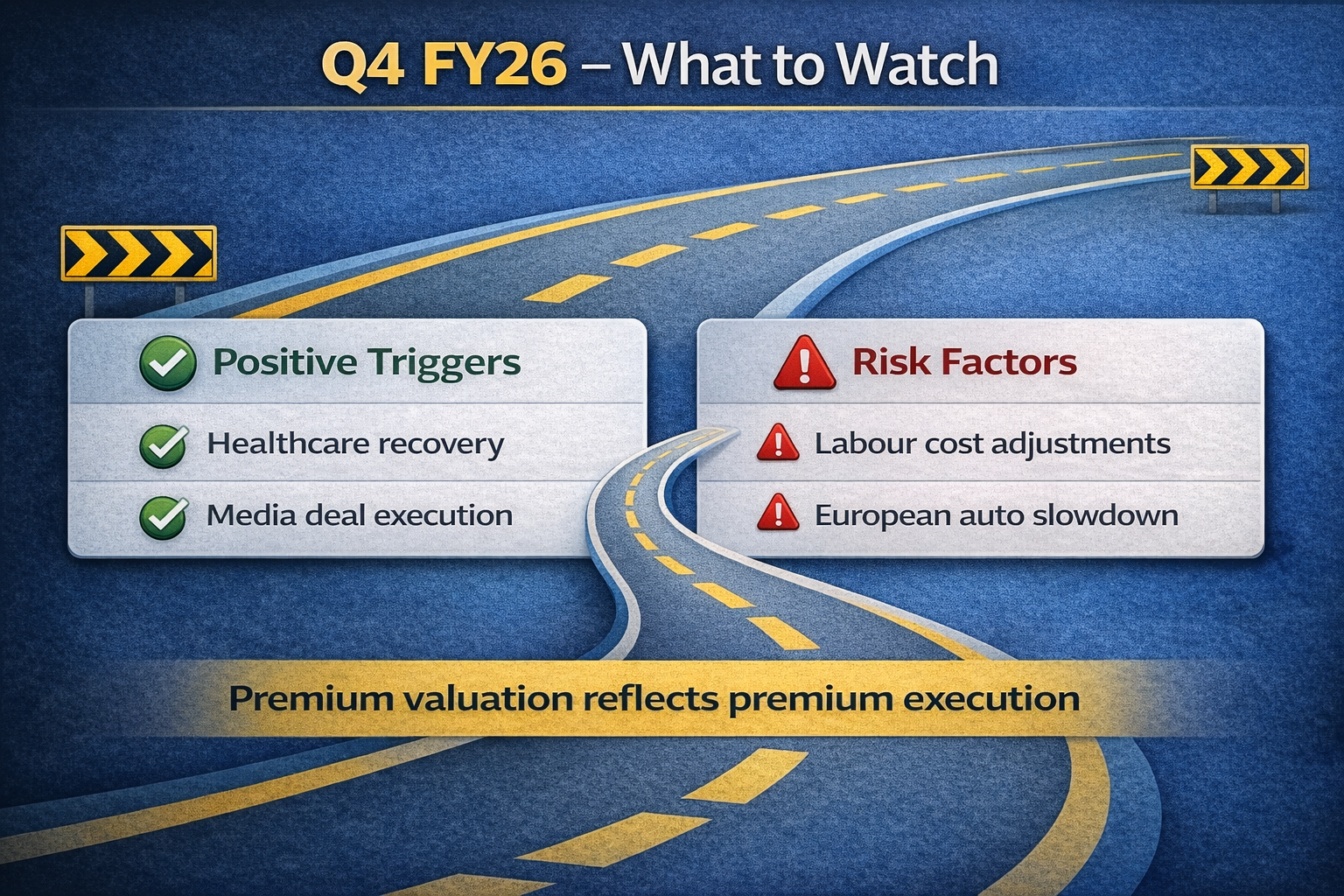
Management commentary for Q4 FY26 is cautiously optimistic. CEO Manoj Raghavan has expressed confidence in a recovery in both Healthcare and Media as delayed deals move into execution. The order book remains healthy, and client conversations have not indicated any structural slowdown.
A major strategic focus area is artificial intelligence. Tata Elxsi continues to invest in Gen AI-powered engineering solutions and its NEURON platform for 5G automation. These platforms aim to move the company up the value chain, from project-based services to reusable, IP-led offerings.
The key risks to monitor include any further labour-related statutory costs and a sharper-than-expected slowdown in the European automotive market. However, these are risks of degree, not direction. The company’s balance sheet strength and diversified client base provide a margin of safety.
8. Conclusion: The Analyst’s Verdict
Q3 FY26 was not a weak quarter for Tata Elxsi. It was a misunderstood one. The sharp drop in reported net profit was the result of a one-time policy-driven accounting adjustment, not a deterioration in business fundamentals. Beneath that noise, the company delivered revenue growth, significant margin expansion, and strong adjusted profit growth.
Tata Elxsi remains a high-quality, high-cost stock. Its strengths lie in deep engineering expertise, long-term client relationships, and exposure to non-discretionary R&D spending. The valuation leaves little room for error, but the operational core is stronger than ever.
For investors navigating a volatile market, the lesson is simple and timeless: look at the EBITDA, not just the PAT. That is where the true story of this quarter resides.
INR–USD Exchange Rate (RBI Reference Rates)
❓ FAQs
1. Why did Tata Elxsi’s profit fall in Q3 FY26?
Tata Elxsi’s reported net profit fell due to a one-time ₹95.7 crore exceptional charge related to India’s new labour codes. This was an accounting adjustment, not an operational slowdown.
2. What is Tata Elxsi’s EBITDA margin in Q3 FY26?
Tata Elxsi reported an EBITDA margin of 23.3%, up 220 basis points quarter-on-quarter, indicating strong cost control and high utilization despite global uncertainty.
3. Is Tata Elxsi’s Q3 FY26 profit decline a long-term concern?
No. The profit decline is non-recurring. Adjusted profit actually grew 15.7% QoQ, showing that the core business remains strong.
4. Which segment performed best for Tata Elxsi in Q3 FY26?
The Transportation segment was the top performer, growing 7.7% QoQ, driven by software-defined vehicles (SDV) and advanced automotive engineering projects.
5. How did the new labour codes impact Tata Elxsi?
The new labour codes required Tata Elxsi to make a one-time provision for employee benefits, impacting reported profit but improving long-term compliance and transparency.
6. Is Tata Elxsi stock overvalued in FY26?
Tata Elxsi trades at 43x–53x forward P/E, which is higher than the IT sector average. The valuation reflects premium margins, but limits short-term upside.
7. What is Tata Elxsi’s outlook for Q4 FY26?
Management expects recovery in Healthcare and Media segments, continued growth in Transportation, and rising contribution from Gen AI and 5G automation projects.
🔍 PEOPLE ALSO ASK (PAA)
Why did Tata Elxsi report lower profit despite higher margins?
Because the company absorbed a one-time statutory charge linked to labour reforms, which reduced reported profit but did not affect operating performance.
Is Tata Elxsi a good long-term investment after Q3 FY26 results?
Tata Elxsi remains a high-quality ER&D company with strong margins, but high valuation means it suits long-term investors rather than short-term traders.
What is the difference between adjusted PAT and reported PAT?
Adjusted PAT excludes one-time or exceptional items, while reported PAT includes them. In Q3 FY26, adjusted PAT showed real business growth.
How is Tata Elxsi different from other IT companies?
Tata Elxsi focuses on engineering R&D, automotive software, and design-led innovation, unlike traditional IT services that depend on discretionary spending.
Will Tata Elxsi benefit from a weak rupee?
Yes. A depreciating rupee improves margins for export-oriented ER&D firms like Tata Elxsi, especially with strong US and European exposure.