I. Introduction: The ‘Calm Before the Earnings’ Storm
As January 2026 begins, India’s stock market feels unusually quiet. After touching record highs in late 2025, the market has entered a clear wait-and-watch phase. On January 5, 2026, the Sensex closed lower by 322 points at 85,439, while the Nifty slipped below the 26,300 level. For a market that looked unstoppable just weeks ago, this pause has raised an important question among investors: Is this the beginning of fatigue, or just a breather before the next leg up?
The answer lies not in global headlines, but in corporate balance sheets. Despite global noise—from geopolitical tensions to shocks in oil-producing regions—Indian markets have largely ignored short-term fear. Investors have chosen to discount external disruptions and instead focus on what really matters right now: the Q3 FY26 earnings season, which begins this week.
Valuations are already demanding. At around 21 times forward earnings, the Nifty is no longer cheap. To move decisively toward the much-discussed 30,000 mark, profits must justify prices. In simple terms, the market is asking companies a direct question: Are you actually earning what we have priced in?
In this earnings season, three companies stand out as market direction-setters—Tata Consultancy Services, ICICI Bank, and Reliance Industries. Together, they represent IT, banking, and energy/consumer tech—the three pillars of the Indian equity story.
II. Sectoral Deep-Dive: The ‘Big Three’ Previews
1. TCS and the IT Rebound (Results: January 12)
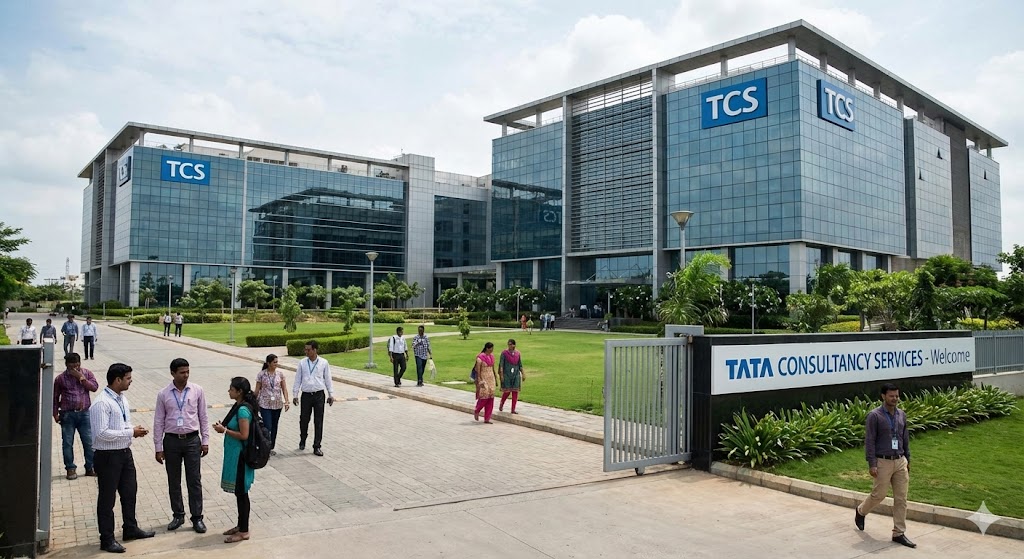
The Indian IT sector has been under pressure for most of 2024 and early 2025. Global clients cut discretionary spending, and fears of a US slowdown hurt sentiment. But as Q3 results approach, the mood around large IT companies has shifted from pessimism to cautious optimism.
For TCS, analysts expect sequential revenue growth of around 0.3% to 0.5%. That may sound modest, but in the current global environment, even small growth is meaningful. The key positive is margins. Despite wage pressures and currency volatility, TCS is expected to maintain operating margins close to 24.7%, showing strong cost control.
Geopolitics has not disappeared. The US has once again talked about tariffs and stricter trade rules. Yet, large Indian IT firms have learned to operate in uncertainty. The real growth driver now is AI-led digital transformation. Banks, retailers, and healthcare firms globally are investing in automation, data analytics, and cloud migration. These are not optional projects anymore; they are survival tools.
Another crucial signal will be dividends. Any interim dividend announcement by TCS will send a strong message of confidence, especially to retail investors. In a flat market, cash returns matter. A stable TCS result will not create fireworks, but it will reassure the market that India’s IT engine is not broken—just recalibrating.
2. ICICI Bank and Financial Fortitude (Results: January 17)
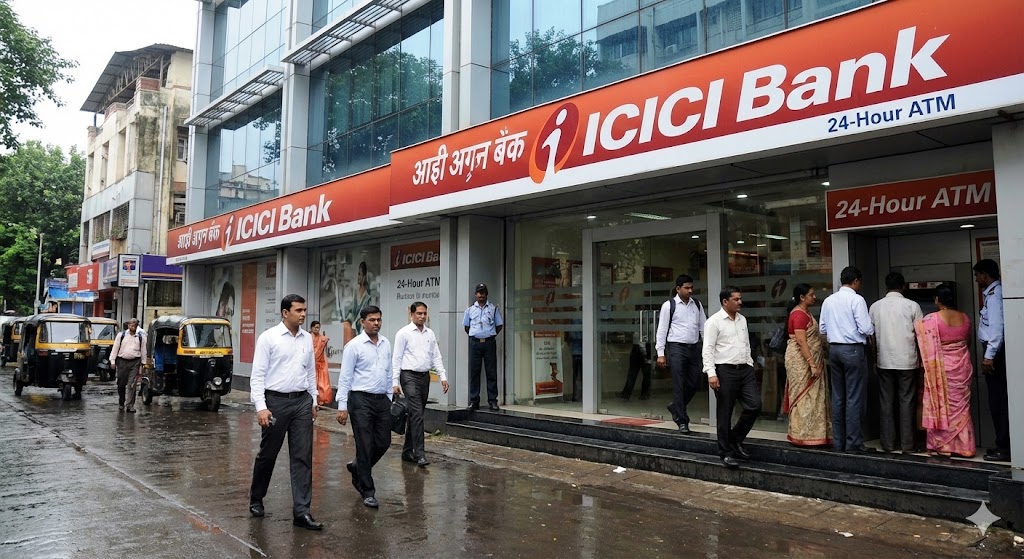
If one sector has consistently surprised on the upside in recent years, it is banking. Among private lenders, ICICI Bank has emerged as a clear structural winner. For Q3 FY26, the market expects 12–14% year-on-year earnings growth, supported by healthy loan expansion and stable asset quality.
The contrast with peers is important. While some large banks are facing liquidity and deposit growth challenges, ICICI Bank enters 2026 with one of the cleanest balance sheets in the system. Gross NPAs are near multi-year lows, and credit costs remain under control.
The most closely watched number will be Net Interest Margins (NIMs). With the Reserve Bank of India adopting a slightly dovish stance toward the end of 2025, investors want to see whether lower funding pressure is translating into stable margins. Even a small improvement in NIMs can significantly boost profitability for a bank of ICICI’s size.
Retail credit—home loans, auto loans, and personal finance—continues to grow steadily. Corporate lending, once seen as risky, is now returning in a disciplined way. This balanced growth is why many analysts see ICICI Bank as a core holding for 2026, not just a short-term trade.
If ICICI delivers on expectations, it will reinforce the idea that India’s credit cycle is still alive, and that banks can support higher index levels without taking reckless risks.
3. Reliance Industries: The Energy–Tech Pivot
Reliance Industries is not just another index heavyweight; it is often described as a market within the market. Its Q3 results will be studied less for short-term numbers and more for strategic direction.
Investors will focus on two areas: New Energy and Jio’s subscriber growth. Reliance has committed massive capital to green energy—solar modules, battery storage, and hydrogen. While this segment is still in investment mode, any clarity on timelines or partnerships can reshape long-term valuations.
On the traditional side, geopolitics has created an unusual advantage. With disruptions in certain oil-producing regions, global crude grades are shifting. Reliance’s complex refining capabilities allow it to process heavy and discounted crude that many refineries cannot handle. This flexibility can actually protect refining margins, even in volatile oil markets.
The biggest potential trigger remains corporate actions. Any update—positive or negative—on the IPO plans of Jio or Reliance Retail will have an outsized impact on sentiment. Even without an IPO announcement, strong cash flows from telecom and retail will reassure investors that Reliance’s diversification strategy is working.
In many ways, Reliance represents India’s future economy: energy, digital, and consumer platforms under one roof. A stable Q3 performance here could act as a multiplier for the entire index.
III. The Geoeconomic Shadow: Why ‘Flat’ Is the New ‘Bullish’

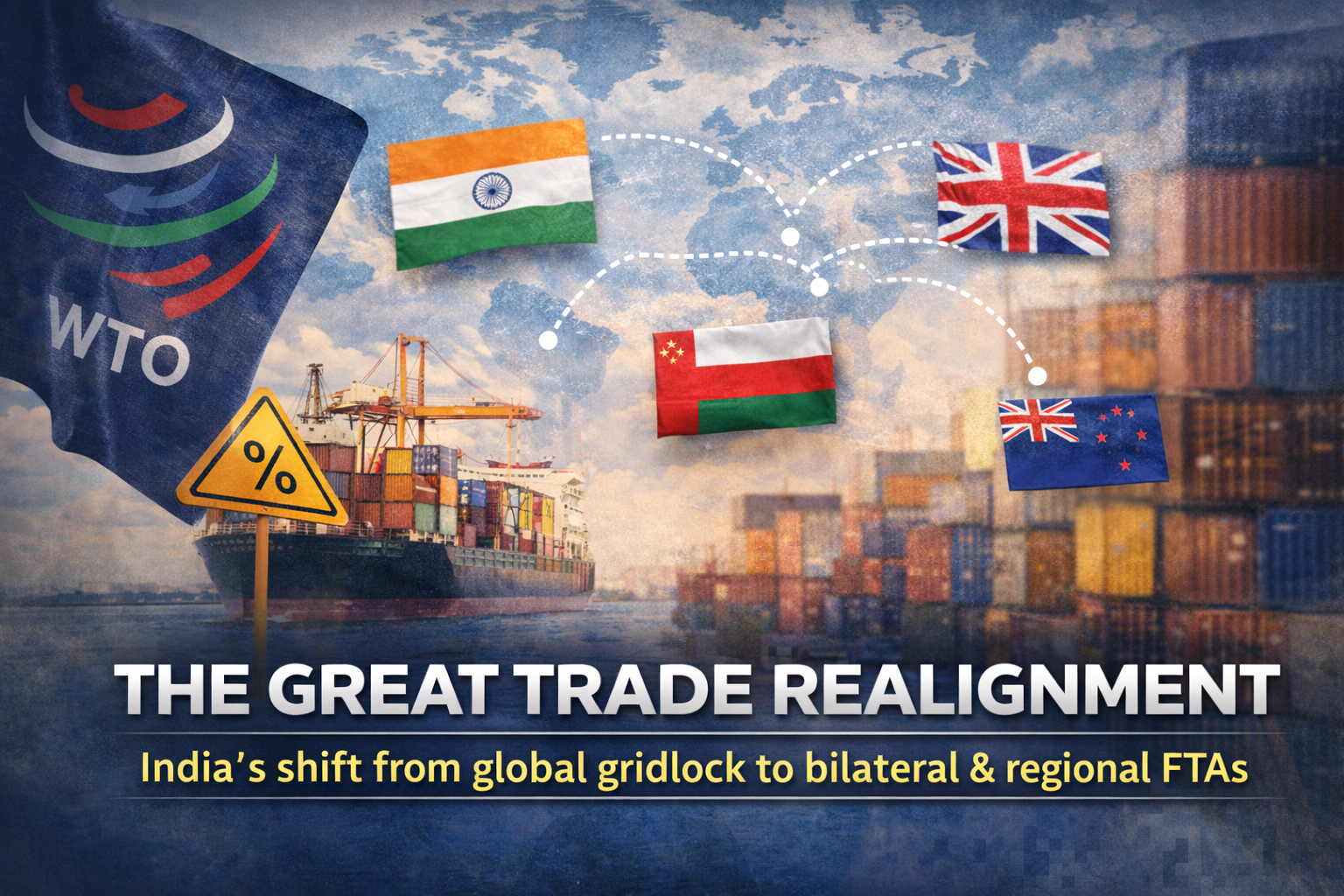
At first glance, a flat or mildly negative market looks uninspiring. But context matters. Globally, uncertainty is high. The US has renewed tariff threats of up to 50% on select imports. Technology supply chains are being redrawn, and India has been excluded from the first round of the “Pax Silica” semiconductor alliance.
Ministry of Commerce & Industry (India)
In earlier cycles, such news would have triggered sharp corrections. This time, the market reaction has been muted. That itself is a signal of strength.
One reason is Domestic Institutional Investors (DIIs). Over the last two years, domestic flows through mutual funds, pension funds, and insurance companies have become the market’s backbone. Even when Foreign Portfolio Investors turn cautious, DIIs have absorbed selling pressure.
Another reason is asset allocation. With gold trading above $4,400 per ounce, risk-averse investors globally are parking money in safe havens. The fact that Indian equities are not collapsing under this pressure shows confidence in domestic growth and earnings visibility.
In short, “flat” does not mean weak. It means the market is waiting for confirmation. Earnings—not headlines—will decide the next move.
World Trade Organization (WTO) (contextual reference)
IV. Q3 Earnings Watchlist: At a Glance
| Company | Result Date | Key Metric to Watch | Analyst Sentiment |
|---|---|---|---|
| TCS | Jan 12, 2026 | AI deal wins & dividend | 🟨 Neutral–Positive |
| ICICI Bank | Jan 17, 2026 | Loan growth & NIMs | 🟩 Bullish |
| Reliance Industries | Mid-Jan 2026 | New Energy capex & IPO cues | 🟩 Bullish |
| HDFC Bank | Jan 17, 2026 | Deposit growth | 🟨 Cautious |
This table highlights why not all large caps are equal this season. Selectivity matters.
V. Conclusion: A Stock-Picker’s Market
The message from January 2026 is clear. This is not a runaway rally where everything goes up together. It is a stock-picker’s market, where quality, visibility, and execution will be rewarded.
If TCS shows stable margins, ICICI Bank delivers clean growth, and Reliance maintains strategic clarity, the foundation for Nifty 30,000 will be firmly in place. But if earnings disappoint, valuations will correct—quietly, not dramatically.
The flat opening days of 2026 are not a warning sign. They are a sign of maturity. The market is no longer chasing every headline. It is waiting for proof.
As one seasoned investor put it:
“Don’t trade the headlines of Caracas; trade the balance sheets of Mumbai.”
The Q3 verdict will decide whether that patience is rewarded.
❓ Frequently Asked Questions (FAQ)
1. What are Free Trade Agreements (FTAs)?
Free Trade Agreements are deals between two or more countries to reduce or remove import duties, simplify regulations, and improve market access. FTAs make exports cheaper and more competitive in partner countries.
2. Why is India focusing more on FTAs in 2026?
Global trade through platforms like the WTO has slowed due to political disagreements. India is using FTAs to secure faster, direct access to key markets without waiting for global consensus.
3. How do FTAs protect India during global tariff wars?
FTAs create duty-free or low-duty trade corridors. Even if tariffs rise globally, Indian exporters using FTAs can continue trading with partner countries at lower costs.
4. Which countries are most important in India’s new FTA strategy?
The UK, Oman, New Zealand, and EFTA countries are central to India’s 2026 trade strategy. These regions offer stable demand, investment, and long-term strategic balance.
5. What is special about the India–UK trade deal?
The India–UK CETA offers duty-free access to 99% of Indian exports and includes professional mobility. It is one of India’s most comprehensive trade agreements so far.
6. Why did India exclude dairy products from the New Zealand FTA?
India excluded dairy to protect millions of small farmers. This reflects a balanced approach where India opens competitive sectors while safeguarding sensitive domestic industries.
7. How does the Oman CEPA help Indian exporters?
The Oman CEPA gives Indian companies easier access to Gulf markets, especially for petroleum products, engineering goods, pharmaceuticals, and AYUSH-based wellness exports.
8. What is the role of AYUSH in India’s trade agreements?
For the first time, traditional Indian medicine like Ayurveda is included in a trade pact. This allows India to export healthcare and wellness services as part of its economic strategy.
9. Why are India–US trade talks stalled?
Talks are stalled due to disagreements over tariffs and India’s purchase of Russian oil. India prioritises energy security, while the US links trade concessions to geopolitical alignment.
10. Did the US trade dispute impact Indian markets?
Yes, geopolitical friction contributed to significant FPI outflows in 2025. However, India’s diversified trade strategy and strong domestic demand helped reduce long-term impact.
11. How do FTAs benefit Indian MSMEs?
FTAs reduce tariffs and compliance costs, making it easier for small and medium businesses to export goods and services directly to global markets.
12. Can India grow without relying heavily on the US market?
India’s 2026 strategy shows that growth is possible through diversified markets in Europe, the Gulf, and Oceania. This reduces dependence on any single trade partner.
13. What does this mean for “Viksit Bharat”?
FTAs support the Viksit Bharat vision by boosting exports, attracting investment, creating jobs, and maintaining strategic independence in a fragmented global economy.
14. Will India sign more FTAs after 2026?
Experts expect India to continue selective trade deals, focusing on regions that offer investment, technology, and long-term stability rather than short-term gains.
15. Are FTAs always beneficial?
FTAs work best when negotiated carefully. India’s recent deals show a shift toward smart, balanced agreements rather than opening all sectors without safeguards.
🔍 People Also Ask
Why is India signing more FTAs instead of relying on the WTO?
The WTO process has slowed due to disagreements among major economies. India is using FTAs to gain faster market access, reduce tariffs, and avoid delays caused by global consensus rules.
How do FTAs help Indian exporters during tariff wars?
FTAs provide duty-free or low-duty access to partner countries. This protects Indian exporters from sudden tariff hikes and keeps their products competitive in key markets.
Which Indian sectors benefit the most from new FTAs?
Textiles, IT services, pharmaceuticals, engineering goods, leather products, and MSMEs benefit the most due to lower tariffs and easier regulatory access.
What makes the India–UK trade deal different from past agreements?
The India–UK deal combines goods, services, and professional mobility. It also focuses on cultural and skill-based exports, making it more comprehensive than earlier FTAs.
Why did India protect the dairy sector in trade deals?
Dairy supports millions of small farmers. India excluded it to prevent market disruption, showing that trade openness does not come at the cost of rural livelihoods.
How does the Oman CEPA support India’s Gulf strategy?
The Oman CEPA improves access for Indian energy, engineering, and pharmaceutical exports while strengthening India’s economic presence in West Asia.
What is AYUSH and why is it included in trade agreements?
AYUSH includes Ayurveda and traditional medicine systems. Its inclusion allows India to export wellness services and products as part of its economic diplomacy.
Why are India–US trade relations under pressure?
Disagreements over tariffs and India’s purchase of Russian oil have slowed negotiations. India prioritises energy security, while the US links trade to strategic alignment.
Did US tariffs hurt India’s economy in 2025?
US tariffs contributed to foreign investor outflows, but India’s diversified trade strategy and domestic demand helped limit long-term damage.
Can FTAs reduce India’s dependence on any single country?
Yes. By spreading trade across Europe, the Gulf, and Oceania, India lowers risk and avoids over-reliance on one major economy.
Are FTAs good for Indian MSMEs?
FTAs help MSMEs by reducing export costs, simplifying rules, and opening direct access to international buyers.
Is India becoming protectionist or open in trade policy?
India is following a balanced approach—open in competitive sectors and protective where domestic livelihoods could be affected.
Will India sign more FTAs after 2026?
Experts expect India to pursue selective FTAs focused on investment, technology transfer, and long-term stability rather than broad, risky agreements.
How do FTAs support the “Viksit Bharat” vision?
FTAs boost exports, attract foreign investment, create jobs, and strengthen India’s strategic autonomy in a fragmented global economy.
Can FTAs fully replace US market access for India?
FTAs cannot replace the US market entirely, but they reduce dependence and give India stronger negotiating power globally.