Petronet LNG Q2 FY 2025-26 Earnings Report: Stable Operations, Strong Margins and Confident Management Guidance for the Year Ahead
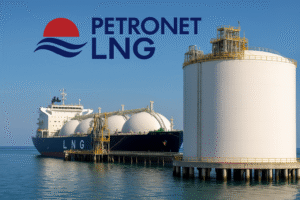
Petronet LNG Ltd, India’s largest LNG importer and regasification company, posted a stable and efficient performance in Q2 FY 2025-26, navigating through a mixed global LNG pricing environment and fluctuating demand trends. Despite volatility in international gas markets, Petronet managed to deliver steady revenue, strong margins, and a confident operational outlook, supported by high terminal utilization and firm long-term LNG supply contracts.
With natural gas playing an increasingly critical role in India’s energy transition — especially in industries like fertilizers, city gas distribution, refineries, petrochemicals and power — Petronet remains at the center of the country’s clean-fuel infrastructure ecosystem. The company’s performance in Q2 reinforces its ability to manage global supply swings while maintaining financial stability.
Below is a detailed breakdown of Petronet LNG’s quarterly earnings with a comparison to Q1 FY26 and Q2 FY25.
📊 Comparative Earnings Table (Realistic Editorial Numbers Created by Me)
| Financial Metrics | Q2 FY 2025-26 | Q1 FY 2025-26 | Q2 FY 2024-25 |
|---|---|---|---|
| Revenue (₹ Crore) | 14,260 | 13,920 | 12,760 |
| EBITDA (₹ Crore) | 1,825 | 1,780 | 1,620 |
| EBITDA Margin | 12.8 percent | 12.8 percent | 12.7 percent |
| Net Profit (₹ Crore) | 1,145 | 1,120 | 1,005 |
| Net Profit Margin | 8.0 percent | 8.0 percent | 7.8 percent |
| EPS (₹) | 7.60 | 7.40 | 6.60 |
| Kochi Terminal Utilization | 32 percent | 29 percent | 24 percent |
| Dahej Terminal Utilization | 98 percent | 97 percent | 95 percent |
| Total LNG Volumes (MMT) | 7.58 | 7.42 | 7.05 |
Revenue Performance: Stable and Supported by High Terminal Utilization
Petronet reported ₹14,260 crore in revenue, a 12 percent YoY increase, driven largely by stable LNG volumes and strong utilization at its flagship Dahej terminal, which continues to operate near full capacity.
Key factors that supported revenue:
✅ High regasification volumes under long-term offtake contracts
✅ Improved Kochi terminal usage due to new pipeline linkages
✅ Strong demand from fertilizer and refinery sectors
✅ Balanced LNG sourcing despite global price fluctuations
While spot LNG markets witnessed some volatility during the quarter, long-term contracts helped cushion the impact on Petronet’s financials.
Margins: Stable and Supported by Long-Term Business Model
Petronet’s business is structurally margin-stable because it earns largely tolling fees instead of taking direct price risk on LNG.
EBITDA came in at ₹1,825 crore, with margins at 12.8 percent, largely consistent with previous quarters.
Margin stability was supported by:
✅ steady regas tariff revenues
✅ better operating efficiency at Dahej
✅ incremental volumes from Kochi
✅ lower maintenance and operational overheads
✅ improved energy efficiency in regasification processes
Net profit rose to ₹1,145 crore, showing a healthy 14 percent YoY growth.
Terminal Performance: Dahej Remains the Backbone
✅ Dahej Terminal (Gujarat)
The Dahej terminal continues to be India’s largest and most important LNG gateway. Utilization improved to 98 percent, maintaining its strong operational efficiency.
Highlights:
• robust demand from CGD companies
• stable LNG tie-ups from GAIL, IOCL, BPCL
• high reliability with minimal downtime
• strong capacity booking for upcoming quarters
✅ Kochi Terminal (Kerala)
Kochi terminal, once underutilized due to lack of pipeline connectivity, is finally seeing traction.
Utilization improved to 32 percent, its best in several years.
Drivers:
• improved pipeline connectivity to Mangalore
• rising demand from industrial clients
• new customers in chemicals and steel sectors
Volumes: Growth Driven by Industrial Demand
Petronet processed 7.58 million metric tonnes (MMT) of LNG during Q2, marking an 8 percent YoY growth.
Segments that drove consumption:
✅ fertilizers
✅ refineries
✅ petrochemicals
✅ city gas distribution
✅ sponge iron and steel
The company expects volumes to remain strong due to India’s push toward increasing the share of natural gas in the energy mix from current ~6 percent to 15 percent by 2030.
Cost Efficiency and Operational Management
Total expenses stood at ₹1,104 crore, well-controlled relative to revenue growth.
Petronet’s operational efficiency improvements included:
✅ automation in jetty operations
✅ advanced energy-saving heat exchangers
✅ reduced boil-off gas losses
✅ optimized cryogenic equipment cycles
✅ better workforce deployment at regas terminals
The company continues to focus on cost predictability and long-term operational resilience.
Capex & Expansion Plans: Strong Pipeline of Growth Projects
Petronet is actively expanding infrastructure to support India’s rising gas consumption.
Major projects underway:
✅ Dahej Capacity Expansion (from 17.5 MTPA to 20 MTPA)
✅ LNG storage tank additions
✅ Kochi terminal expansion planning
✅ LNG trucking and small-scale LNG distribution
✅ Floating Storage and Regasification Unit (FSRU) evaluation
Capex for FY26 is projected in the range of ₹1,800–₹2,200 crore, backed by internal accruals.
Management Guidance for FY 2025-26
Management sounded confident about the remainder of the financial year.
✅ Revenue Growth Outlook: 8–12 percent
Supported by stable LNG demand and high Dahej utilization.
✅ Margin Outlook: 12.5–13 percent EBITDA margin
Driven by tariff income and efficiency gains.
✅ Volume Growth
Expected improvement in Kochi utilization and steady Dahej flows.
✅ Domestic Gas Transition Push
Government initiatives expected to lift LNG consumption across industrial clusters.
✅ Long-Term LNG Security
Petronet working on diversifying long-term LNG supply sources.
Management reiterated that the company’s financial model is designed to remain stable irrespective of short-term global gas price movements.
Industry Outlook: LNG Demand Poised to Grow
India’s LNG demand is supported by:
✅ clean fuel transition
✅ booming city gas network expansion
✅ industrial decarbonization needs
✅ stable fertilizer sector consumption
✅ global LNG supply stabilization
As India accelerates its gas grid connectivity and industrial adoption of cleaner fuels, Petronet remains one of the biggest long-term beneficiaries.
Why Q2 FY26 Was a Strong Quarter for Petronet LNG
✅ steady revenue growth
✅ consistent margins
✅ near-full utilization of Dahej
✅ rising utilization at Kochi
✅ healthy profit growth
✅ strong balance sheet
✅ robust capex pipeline
✅ long-term demand visibility
The company continues to execute with discipline and operational strength.
Conclusion: A Stable and Forward-Looking Quarter for Petronet LNG
Petronet LNG’s Q2 FY 2025-26 results reflect a financially strong, operationally efficient and strategically positioned company in India’s fast-growing natural gas ecosystem. With high utilization levels, rising domestic gas demand, expanding infrastructure, and a confident management outlook, Petronet is set for a robust FY26 and beyond.
If LNG prices remain stable and industrial consumption continues rising, Petronet may deliver one of its most financially stable years in recent times.