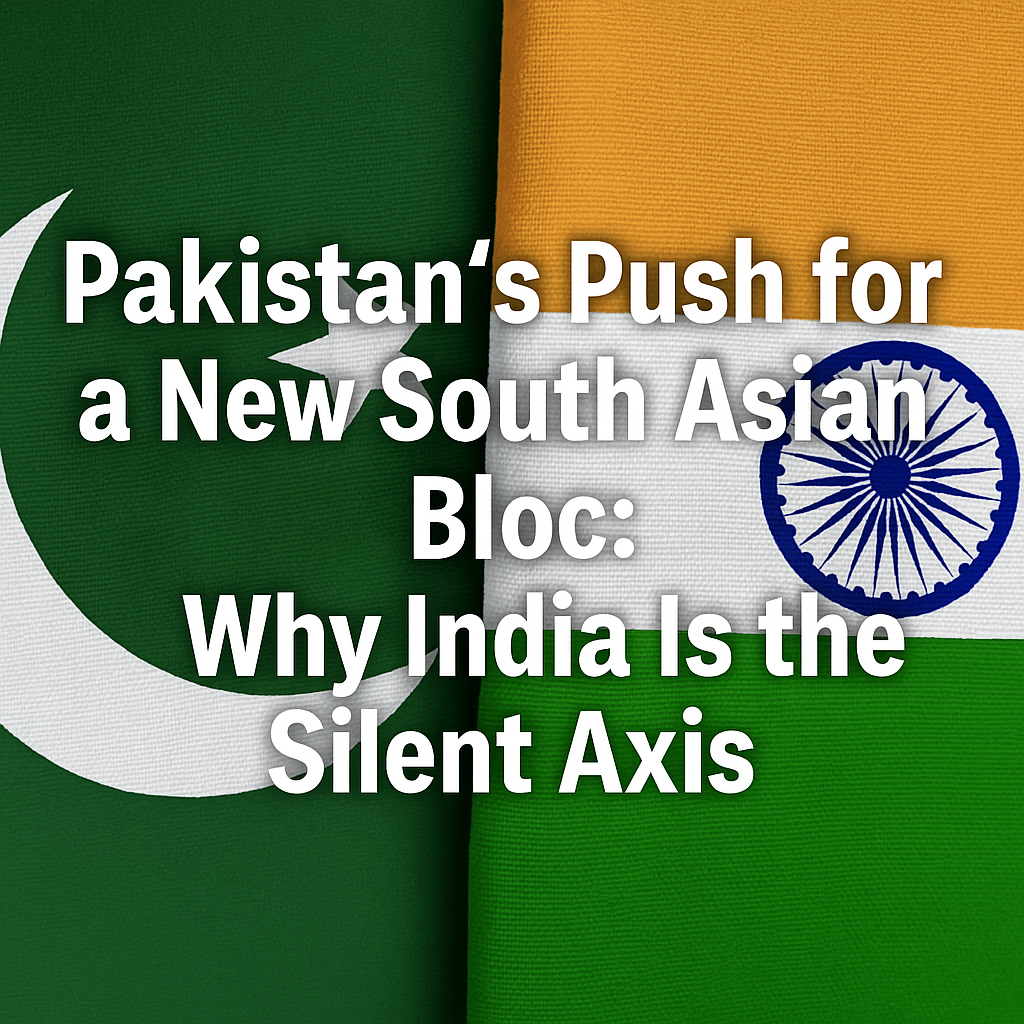
Pakistan’s Push for a New South Asian Bloc: Why India Is the Silent Axis of the Region
South Asia is once again witnessing a familiar diplomatic pattern: Pakistan calling for a new regional or Islamic-leaning bloc, and India choosing not to respond loudly—if at all. On the surface, Islamabad’s proposal sounds ambitious and cooperative, wrapped in phrases like “regional connectivity,” “economic integration,” and “shared civilizational values.” But beneath the rhetoric lies a deeper strategic reality: India no longer needs to react for South Asia to move. Its silence is not weakness; it is leverage.
This article breaks down Pakistan’s renewed push, India’s deliberate absence, the hard economic math behind regional power, and what this quiet shift means for the future of South Asia.
Background: What Is Pakistan Proposing?
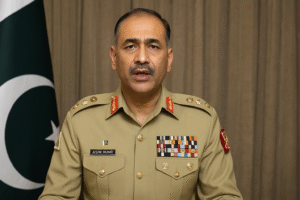
Pakistan has recently revived calls for a new South Asian or Islamic-leaning regional bloc, positioning it as an alternative framework for cooperation amid the continued paralysis of SAARC. Senior Pakistani officials and diplomats have spoken about the need for “revitalized regional cooperation,” “economic connectivity across South Asia,” and “collective development among Muslim-majority nations.” The language is deliberately soft and inclusive, aimed at international audiences as much as regional ones.
This proposal comes at a time when Pakistan finds itself diplomatically constrained. SAARC has been effectively dormant since 2016, largely due to India’s refusal to participate after repeated cross-border terror incidents. Pakistan’s bilateral relationship with India remains frozen, while its economy struggles under high debt, low foreign exchange reserves, and IMF conditionalities. In this context, the idea of a new bloc serves multiple purposes: it signals diplomatic activity, attempts to counter narratives of isolation, and seeks to reinsert Pakistan into regional discussions where India is central.
However, there is a critical limitation. Any South Asian bloc—formal or informal—requires India’s participation to be viable. India accounts for nearly 75% of South Asia’s GDP and population. Without India, such initiatives risk becoming symbolic talking points rather than operational frameworks. This is why Pakistan’s proposal is viewed by many analysts as aspirational rhetoric rather than executable strategy.
India’s Strategic Absence: Intentional, Not Accidental
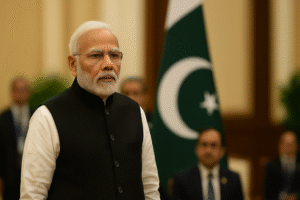
India’s response to Pakistan’s proposal has been strikingly minimal. There has been no sharp rebuttal, no counter-proposal, and no diplomatic escalation. This silence is not accidental—it reflects a conscious shift in India’s foreign policy doctrine over the past decade.
New Delhi has moved away from geography-bound regionalism toward issue-based and interest-driven coalitions. Instead of investing diplomatic capital in SAARC, where progress is routinely stalled by political tensions, India has focused on platforms that deliver tangible outcomes. BIMSTEC connects India with Southeast Asia while bypassing Pakistan entirely. The QUAD aligns India with the US, Japan, and Australia on security and technology. I2U2 links India with Israel, the UAE, and the US around economic and innovation-led cooperation.
This approach reflects India’s assessment that regional leadership does not require constant engagement with every neighbor, especially when security concerns remain unresolved. By not reacting to Pakistan’s proposal, India avoids legitimizing it. Silence, in this context, becomes a strategic signal: India will engage where conditions align with its interests, not where narratives demand attention.
India’s Economic Gravity vs Pakistan’s Political Signaling
The most important reason India remains the silent axis of South Asia is simple: economic gravity. India’s GDP stands at over $3.5 trillion, compared to Pakistan’s roughly $340 billion. India is the largest trading partner for several South Asian countries, including Bangladesh, Nepal, Bhutan, and Sri Lanka. Its infrastructure projects—from ports to power grids—shape regional connectivity far more than any proposed bloc.
Foreign direct investment, supply chains, tourism flows, and remittances all gravitate toward India. For example, India-Bangladesh trade has crossed $18 billion annually, while India-Sri Lanka investment and energy cooperation are expanding rapidly. These are not headline-driven alliances; they are transaction-based, durable relationships.
In contrast, Pakistan’s proposal relies heavily on political messaging rather than economic capacity. Without capital, market access, or security guarantees, a new bloc lacks the tools needed for real integration. This is why analysts describe Islamabad’s move as narrative-building—aimed at projecting relevance—rather than execution-focused diplomacy. In South Asia today, economics, not slogans, defines leadership.
To visit Ministry of External Affair click here
Recent India-Side Signals: Silence as Strategic Confidence
India’s Ministry of External Affairs has consistently emphasized one phrase when discussing regional cooperation: “connectivity without terrorism.” This condition is not new, but its repetition underscores India’s confidence in its current trajectory. New Delhi does not feel compelled to chase regional leadership through formal blocs; it already exercises influence through bilateralism and minilateral frameworks.
Recent developments reinforce this point. India-Bangladesh relations have deepened across trade, rail connectivity, and energy sharing. India-Sri Lanka ties have been reset through debt restructuring support, renewable energy projects, and port investments. Even Nepal and Bhutan increasingly view India as an indispensable economic partner despite political fluctuations.
Notably, India’s silence on Pakistan’s proposal has been interpreted by diplomats as a sign of strength rather than indifference. When a state feels secure in its regional role, it does not need to dominate every conversation. Instead, it allows outcomes to speak. In this case, India’s expanding footprint across South Asia speaks louder than any formal statement.
What This Means for South Asia’s Future
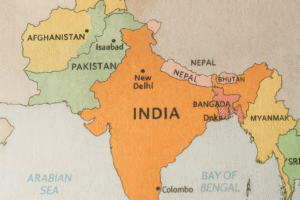
The larger implication of Pakistan’s push—and India’s silence—is the emergence of fragmented regionalism in South Asia. Instead of one overarching bloc like SAARC, the region is moving toward multiple overlapping arrangements: bilateral partnerships, sub-regional initiatives, and issue-specific coalitions.
India is becoming the de facto anchor of South Asia, not through formal leadership declarations, but through economic scale, infrastructure integration, and diplomatic bandwidth. Smaller neighbors increasingly engage India directly rather than through multilateral platforms that include Pakistan. This does not mean Pakistan is irrelevant—but it does mean that its ability to shape regional architecture is constrained by economic and strategic realities.
From a high-CPM geopolitical perspective, this shift matters. It reflects how power in the 21st century is exercised quietly, through markets and networks rather than speeches and summits. Pakistan’s proposal highlights its desire to reframe regional dynamics; India’s silence highlights its confidence that those dynamics already favor it.
Conclusion: Silence as Power
Pakistan’s renewed call for a South Asian or Islamic-leaning bloc is best understood as a diplomatic signal rather than a structural breakthrough. India’s refusal to engage publicly is not a snub—it is a statement of strategic maturity. In today’s South Asia, the country that sets trade flows, investment patterns, and connectivity routes does not need to dominate the narrative.
To visit official website of Pakistan’s Ministry of Foreign Affairs click here
India has become the silent axis around which the region turns. Whether through BIMSTEC, bilateral trade, or global coalitions, New Delhi is shaping outcomes without reacting to every proposal. For South Asia’s future, this means fewer grand blocs and more practical partnerships—and a region where power is exercised less loudly, but far more effectively.
Frequently Asked Questions (FAQ)
1. What exactly is Pakistan proposing with this new bloc?
Pakistan is advocating for a renewed South Asian or Islamic-leaning regional bloc focused on economic cooperation, connectivity, and shared cultural ties. However, the proposal lacks clear institutional structure, funding mechanisms, or defined leadership, making it more symbolic than operational.
2. Why is India described as the “silent axis” of South Asia?
India is called the silent axis because regional trade, investment, infrastructure, and connectivity increasingly revolve around it—without India needing to formally lead or respond to every initiative. Its economic size and diplomatic reach naturally anchor South Asia.
3. How does India’s economy influence regional diplomacy?
India’s GDP, trade volume, and investment capacity far exceed those of its neighbors. Countries like Bangladesh, Sri Lanka, Nepal, and Bhutan depend heavily on economic engagement with India, making New Delhi indispensable to regional stability and growth.
4. Is Pakistan’s proposal driven more by politics than economics?
Yes. Analysts widely view Pakistan’s push as political signaling aimed at projecting relevance rather than a plan backed by economic strength, capital flows, or regional trust. Without India’s participation, execution remains unlikely.
5. How is India engaging with South Asia without formal blocs?
India is strengthening bilateral ties through trade agreements, energy cooperation, infrastructure projects, and debt support. This bilateral-first approach allows faster results compared to multilateral forums hindered by political disagreements.
6. What does this mean for the future of South Asia?
South Asia is moving toward fragmented regionalism, where cooperation happens through multiple overlapping partnerships rather than one single bloc. India is emerging as the natural anchor, while formal regional institutions lose relevance.
7. Does India’s silence mean disengagement from the region?
No. India is deeply engaged economically and diplomatically, but selectively. Silence here reflects confidence and strategic clarity, not withdrawal.