Introduction
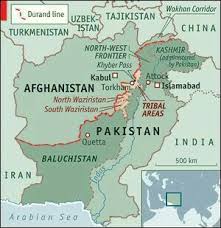
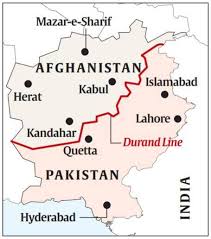
The Pakistan–Afghanistan border dispute, centered around the Durand Line, remains one of South Asia’s oldest and most complex geopolitical fault lines. From colonial-era agreements to modern-day cross-border conflicts, the issue is deeply rooted in history, shaped by global power struggles, and intertwined with regional rivalries — particularly those involving India, the U.S., China, and Russia.
This article explores the dispute in 11 key parts — from historical background to the present — followed by a detailed timeline (1893–2025), and concludes with an India-focused analysis on how New Delhi can safeguard its interests while supporting Afghan sovereignty.
1️⃣ Historical Background: The Birth of the Durand Line (1893)
The origins of the Pakistan–Afghanistan border dispute trace back to 1893, when Sir Mortimer Durand, representing British India, and Amir Abdur Rahman Khan of Afghanistan signed an agreement demarcating a 2,640 km frontier. This “Durand Line Agreement” divided tribal Pashtun and Baloch communities between British India and Afghanistan.
While Britain viewed it as a legitimate international boundary, Afghan leaders saw it as an imposed colonial border. The division ignored tribal, ethnic, and cultural ties — a legacy that continues to fuel resentment even after 130 years.
2️⃣ Situation at the Time of Partition (1947)
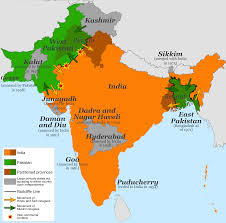
When British India was partitioned in August 1947, Pakistan inherited the Durand Line as its western frontier. However, Afghanistan refused to recognize the border and was the only nation to vote against Pakistan’s entry into the United Nations, citing unresolved issues regarding Pashtun territories.
This early diplomatic hostility set the tone for decades of mistrust. Tribal areas on both sides continued cross-border movement freely, making enforcement and political control nearly impossible.
3️⃣ How Border Disputes Re-Emerged After 1947
Post-independence, Pakistan and Afghanistan clashed over the Pashtunistan movement, which sought an independent state for ethnic Pashtuns living along the border. In 1949, Afghanistan declared all previous treaties with British India “null and void,” effectively rejecting the Durand Line.
From 1949–1963, border skirmishes, propaganda wars, and trade blockades became common. Though relations normalized briefly in the 1960s, the issue never disappeared — it only went dormant until new global powers reignited it.
4️⃣ The Role of the Soviet Union (USSR)
The Cold War transformed the border from a local dispute into a global flashpoint.
In 1979, the Soviet Union invaded Afghanistan, prompting Pakistan to become the frontline state for U.S.-backed Afghan resistance fighters (the Mujahideen).
Pakistan, with massive U.S. and Saudi funding, hosted over 3 million Afghan refugees and served as the logistical base for the war. The border became a battlefield — not just militarily, but ideologically.
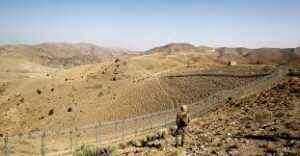
Moscow’s invasion militarized the entire Durand Line and cemented Pakistan’s long-term involvement in Afghan affairs.
5️⃣ The Role of the United States
For Washington, the Soviet invasion was an opportunity to bleed its rival. Through Operation Cyclone, the CIA funneled billions of dollars in weapons and training via Pakistan’s Inter-Services Intelligence (ISI).
During the 1980s, Pakistan emerged as the “gateway to jihad,” while the U.S. viewed it as a necessary ally. But after the Soviet withdrawal and America’s disengagement in the 1990s, Afghanistan descended into chaos — paving the way for a new force to emerge: the Taliban.
6️⃣ The Emergence of the Taliban and Pakistan’s Role
The Taliban arose in Kandahar (1994), born from Afghan refugees, Islamic seminaries, and disillusioned Mujahideen fighters. Pakistan’s ISI provided critical support — arms, intelligence, and funding — seeing the Taliban as a path to secure “strategic depth” in Afghanistan.
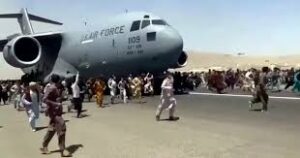
By 1996, the Taliban captured Kabul, and Pakistan (along with Saudi Arabia and the UAE) recognized their regime. Islamabad hoped for a stable, friendly government that would end Pashtun nationalism. Instead, the relationship became complex and volatile.
7️⃣ Why the Taliban Grew to Hate Pakistan
Despite Pakistani backing, many Taliban factions distrust Islamabad.
Reasons include:
Pakistan’s post-9/11 cooperation with the U.S., which led to arrests and drone strikes on Taliban figures.
The perception that Pakistan treats Afghanistan as a satellite, not an equal.
Ethnic and tribal tensions — especially among Afghan Pashtuns who see the Durand Line as an “artificial cut.”
Clashes with the Tehrik-i-Taliban Pakistan (TTP), who share ideology but not allegiance, blurring loyalties on both sides.
The result: an uneasy “love-hate” relationship that frequently erupts into border clashes and diplomatic insults.
8️⃣ Geopolitical Issues Shaping the Conflict
The border dispute sits at the crossroads of South and Central Asia’s geopolitics:
Pakistan’s “Strategic Depth” Doctrine: Seeks a friendly regime in Kabul to counter India’s influence.
India–Pakistan Rivalry: Afghanistan often becomes a proxy stage for Indo-Pak competition.
China and Russia: Both seek stability to prevent extremist spillover and protect trade routes under the Belt and Road Initiative (BRI).
Terrorism and Narcotics: The porous frontier facilitates both cross-border terrorism and the opium trade, threatening all neighboring states.
Thus, what began as a colonial miscalculation has evolved into a geopolitical chessboard involving five major powers.
9️⃣ The Current Situation (2024–2025)
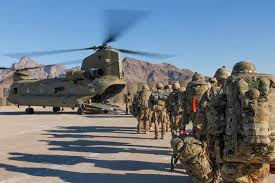
Since the Taliban’s return to power in August 2021, Pakistan-Afghanistan relations have sharply deteriorated.
Repeated border clashes at Torkham and Spin Boldak, mutual airstrikes, and the presence of TTP sanctuaries inside Afghanistan have led to hundreds of casualties.
In 2025, multiple skirmishes forced Pakistan to close key border crossings. Qatar and Saudi Arabia have offered mediation, while China continues talks for economic projects. However, Afghanistan’s mistrust of Pakistan has deepened, and India’s re-engagement through humanitarian and diplomatic channels is reshaping regional balances.
🔟 India’s Role in the Afghanistan–Pakistan Context
India has consistently maintained a developmental and diplomatic approach toward Afghanistan:
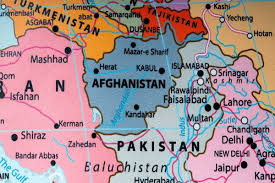
Between 2001 and 2021, India invested over $3 billion in infrastructure, including the Afghan Parliament building, Salma Dam (Herat), and Zaranj–Delaram Highway.
Post-2021, India resumed humanitarian aid, reopened its Kabul mission, and kept diplomatic communication lines open without officially recognizing the Taliban regime.
India’s goal is clear:
✅ Prevent Afghanistan from becoming a terror hub;
✅ Support Afghan sovereignty;
✅ Counter Pakistan’s influence through economic and cultural engagement.
1️⃣1️⃣ What India Should Do – The Strategic View Forward
Deepen Development Projects: Expand education, healthcare, and infrastructure assistance to maintain goodwill among Afghans.
Engage Diplomatically (Cautiously): Continue dialogue with the Taliban to ensure Afghan soil isn’t used for anti-India activities.
Strengthen Regional Partnerships: Coordinate with Iran, Russia, and Central Asian nations on trade and counterterrorism.
Balance Soft Power with Security: Use intelligence cooperation while avoiding military entanglement.
Champion Afghan Sovereignty at Global Platforms: India should advocate for an independent Afghanistan free from external interference — including Pakistan’s.
📜 Timeline of Major Events (1893–2025)
| Year / Period | Event / Incident | Details & Significance |
|---|---|---|
| 1893 | Durand Line Agreement | Signed between Sir Mortimer Durand (British India) and Amir Abdur Rahman Khan (Afghanistan). Divided Pashtun areas between two empires. |
| 1919 | Third Anglo–Afghan War & Treaty of Rawalpindi | Afghanistan gained full sovereignty; the Durand Line reaffirmed but remained contested. |
| 1947 | Partition of India; Creation of Pakistan | Afghanistan refused to recognize Pakistan’s borders and voted against its UN entry. |
| 1949–1955 | Pashtunistan Movement | Afghanistan declared Durand Line treaties void; early cross-border clashes began. |
| 1961–1963 | Diplomatic Breakdown | Pakistan closed borders; relations restored via Iran’s mediation. |
| 1979 | Soviet Invasion of Afghanistan | Pakistan became frontline U.S. ally; millions of Afghan refugees crossed into Pakistan. |
| 1980s | Cold War Proxy War | CIA and ISI coordinated Mujahideen resistance; region became center of global jihad. |
| 1994–1996 | Rise of the Taliban | Taliban captured Kandahar and Kabul with Pakistan’s backing. |
| 2001 | 9/11 & U.S. Invasion | Pakistan joined U.S. War on Terror; tensions with Taliban resurfaced. |
| 2007–2014 | TTP Insurgency | Cross-border terrorism rose; Pakistan began fencing Durand Line. |
| 2017–2020 | Border Fencing Project | Pakistan fenced 90% of the border, sparking Afghan protests. |
| 2021 | Taliban Takeover | U.S. withdrawal and Taliban return reshaped regional equations. |
| 2022–2023 | Escalating Border Clashes | Torkham and Spin Boldak shut repeatedly; accusations of airstrikes. |
| 2024 | China & Russia Step In | China negotiates BRI projects; Russia hosts regional talks. |
| 2025 | Ongoing Tensions & Mediation | Saudi, Qatar attempt mediation; India expands humanitarian role. |
🧭 Conclusion: India and Afghanistan – Partners in Stability
The Pakistan–Afghanistan border dispute is not merely a line on a map — it’s a legacy of colonial boundaries, Cold War politics, and modern terrorism.
For lasting peace, Afghanistan must be sovereign, stable, and economically independent, while India should continue to play the role of a constructive development partner.
A strong India–Afghanistan partnership serves both nations and the wider region — ensuring that no external power, including Pakistan, can exploit instability for its strategic depth.
The future of the Durand Line may remain disputed, but the future of regional peace lies in cooperation, not confrontation.
Note; to get information in detail about all of these issues mentioned above please visit my website again , soon i will let you know by explaining all these points.