1. The Executive Summary (The Macro Hook)
Ola Electric’s Q3 FY26 results, released on February 13, 2026, mark the most difficult phase in the company’s short listed history. Once seen as India’s electric mobility champion, the company is now facing a serious test of survival. The headline number shows a consolidated net loss of ₹487 crore. Technically, this is slightly better than the ₹564 crore loss reported in Q3 FY25. But the real shock is in revenue. Revenue from operations collapsed 55% year-on-year to ₹470 crore, compared to ₹1,045 crore last year.
That is not a slowdown. That is a collapse.
The stock is trading near all-time lows around ₹31. Market share has fallen to below 6% in January 2026, while legacy players like TVS Motor and Bajaj Auto have steadily captured market share. The narrative has clearly shifted from “hyper-growth startup” to “survival mode.”
What this quarter tells us is simple: Indian consumers care more about service reliability and trust than flashy features.
Ola Electric Q3 FY26 earnings report
2. Financial Dashboard: The Growth Trap in Numbers
Let us look at the numbers calmly.
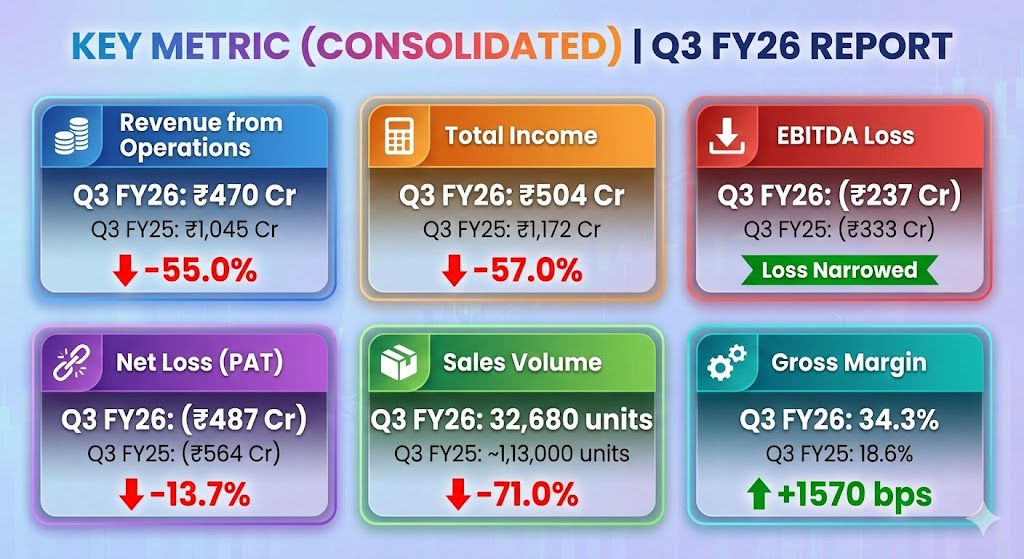
Revenue from operations came in at ₹470 crore, down 55%. Total income declined 57% to ₹504 crore. Sales volume crashed 71% to just 32,680 units in the quarter. For comparison, in FY25, Ola was selling around 1,13,000 units in the same quarter. That is a dramatic decline.
EBITDA loss narrowed to ₹237 crore from ₹333 crore last year. Net loss reduced to ₹487 crore from ₹564 crore. At first glance, narrowing losses look positive. But when revenue collapses faster than expenses, the story becomes worrying.
The only bright spot is gross margin. It improved sharply to 34.3%, compared to 18.6% last year. That is a 1,570 basis point expansion. This means Ola is finally making better margin per scooter sold. But margins without volumes do not build a sustainable business.
This is what analysts call a “growth trap.” The company improved efficiency, but demand disappeared.
3. Fundamental Breakdown: The Good, the Bad, and the Ugly
A. The Good: Gross Margin Expansion
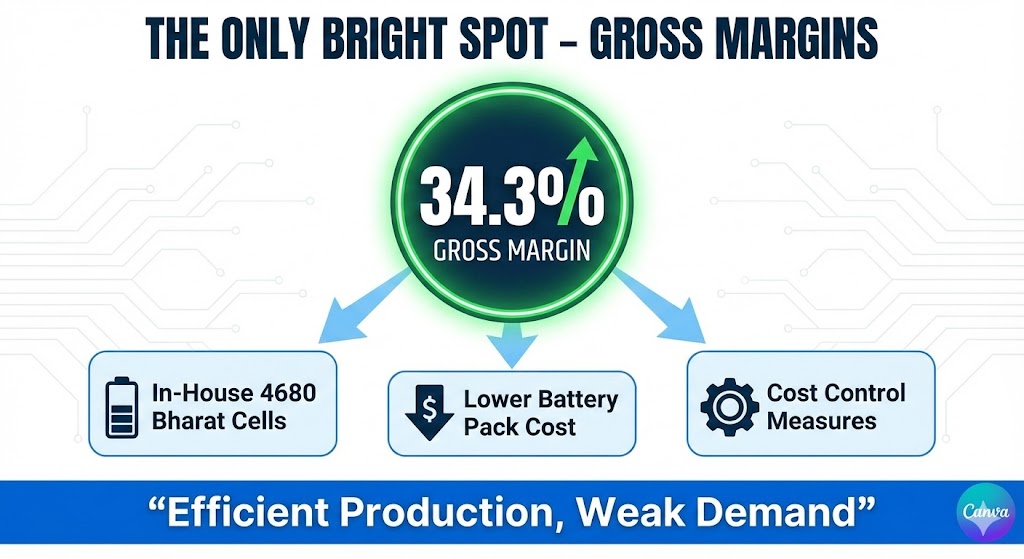
Gross margin at 34.3% is impressive for an EV manufacturer. This improvement came largely due to internal battery cell manufacturing and better cost control. Ola has invested heavily in its 4680 Bharat Cells technology, reducing battery pack costs significantly.
Battery cost is the single largest component in an electric scooter. Lower battery cost directly improves gross margin. In theory, this positions Ola strongly for the future.
If volumes were stable at earlier levels, this quarter could have been celebrated as a turning point toward profitability. But margin efficiency only works when demand is healthy. High margins on falling volumes are like running a highly efficient factory that nobody buys from.
Vahan EV registration data
B. The Bad: The Demand Vacuum
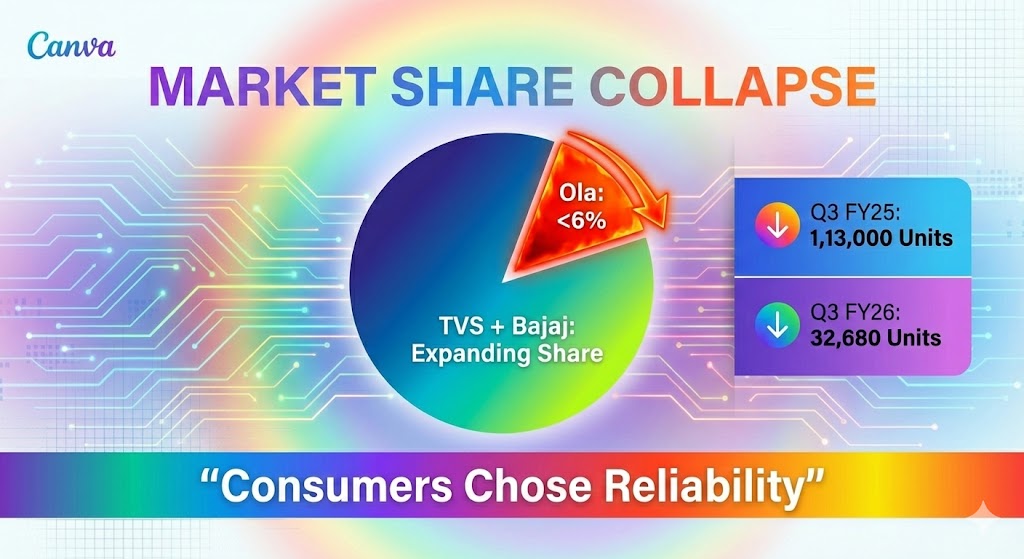
The most alarming number is the volume drop. Deliveries fell to 32,680 units in Q3 FY26. There was a time when Ola sold this number in one month.
What happened?
The answer lies in trust. Thousands of customer complaints about service delays, spare parts shortages, and battery issues created a negative perception. Even though the company claims service backlog is now down to 7 days, the damage to brand trust has already been done.
Meanwhile, competitors like TVS iQube and Bajaj Chetak steadily built reputation. They may not offer the highest top speed or biggest display screens, but they offer reliability. Indian consumers, especially in two-wheelers, prioritize durability and service network.
In January 2026, Ola’s market share dropped to single digits, below 6%. That is a dramatic fall for a company that once dominated the electric scooter segment.
The consumer has voted with their wallet.
C. The Ugly: Operating De-Leverage
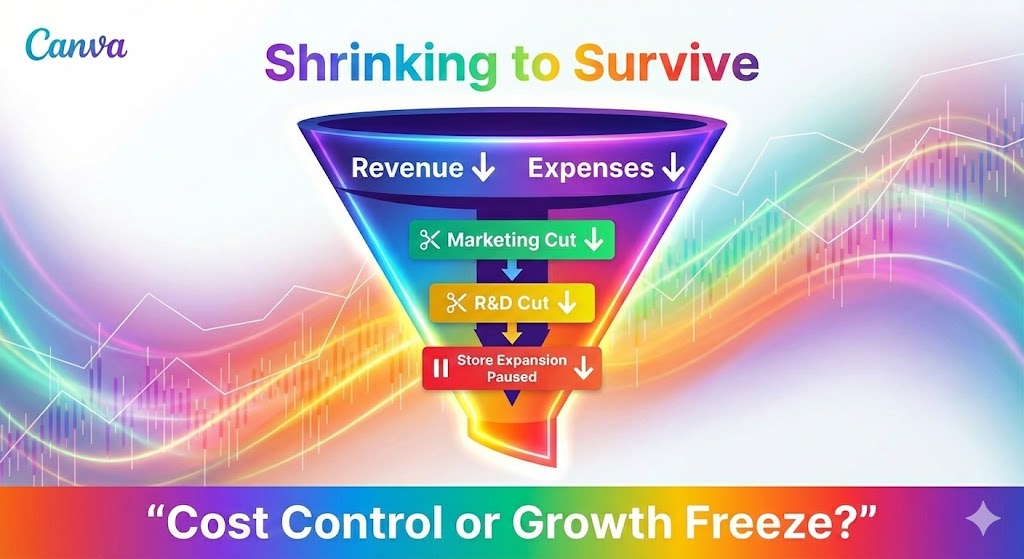
Ola reduced total expenses by 51% to ₹741 crore. This includes cuts in marketing, R&D, and store expansion.
Cost cutting is necessary in a crisis. But for a company that went public as a growth story, shrinking operations to narrow losses sends a negative signal. Growth companies are expected to expand aggressively and capture market share. When they start cutting deeply, it indicates management does not see immediate recovery.
Operating de-leverage happens when fixed costs remain high while revenue shrinks. Even though expenses were reduced, the company still reported significant losses. With lower volumes, factory utilization drops. Under-utilized capacity increases per-unit cost over time.
This is where investors become cautious. Cutting too much can slow innovation and reduce long-term competitiveness.
4. Policy & Market Context: The Subsidy Hangover
The broader EV market context also matters. The government’s FAME subsidy program supported electric vehicle adoption for years. But in 2026, subsidy rules were tightened. Incentives became lower and more performance-linked.
For companies that relied on aggressive pricing supported by subsidies, this created pricing pressure. Ola positioned itself as a high-feature, competitive-price brand. With reduced subsidy support, sticker prices effectively increased for consumers.
At the same time, regulatory scrutiny increased. The Central Consumer Protection Authority investigated thousands of service-related complaints. Even if the situation improved later, negative headlines linger in public memory.
Brand perception in mobility is everything. Buying a scooter is not like buying a smartphone. It is a daily-use transportation decision involving safety and reliability.
The subsidy-driven hyper-growth phase of EV adoption is ending. Now the market demands sustainable operations and customer satisfaction.
Central Consumer Protection Authority investigation
5. Risk Factors: The Cash Burn Watch
One of the most critical questions is cash runway. With revenue at ₹470 crore and net loss at ₹487 crore, the company is effectively losing roughly ₹1 for every ₹1 earned. That is not sustainable in the long run.
While Ola still has cash reserves from earlier funding and IPO proceeds, persistent losses will eventually require fresh capital. If volumes do not recover to at least 20,000 units per month consistently, the company may need to raise funds in FY27.
Raising capital at current low share price levels would mean dilution for existing shareholders. A “down round” could further hurt investor confidence.
Another risk is competitive pressure. Legacy players have deep distribution networks, strong balance sheets, and decades of manufacturing experience. They can afford to operate at thinner margins temporarily to capture market share.
For Ola, the window to regain leadership is narrowing.
6. Conclusion: A Value Trap or a Turnaround Story?
At ₹31 per share, the stock looks cheap compared to its IPO price. Many retail investors may feel tempted to buy at these lower levels. But cheap does not automatically mean value.
Without volume recovery, improved gross margins do not matter. A company cannot survive on efficiency alone if demand is weak.
For investors, the prudent approach is patience. Wait for two consecutive quarters of volume growth. Wait for market share stabilization above 10%. Wait for clear signs that service trust has returned.
Ola Electric is no longer the market leader. It is currently a niche player trying to rebuild trust.
The EV industry in India still has long-term potential. Urban pollution concerns, rising fuel prices, and government electrification goals will continue to support EV demand. But leadership in this industry will belong to companies that combine innovation with reliability.
Right now, Ola’s biggest challenge is not technology. It is credibility.
Until the company repairs its trust deficit, improved margins remain a footnote.
For now, caution is wiser than optimism.
✅ FAQ
1. Why did Ola Electric revenue fall in Q3 FY26?
Revenue fell 55% due to a sharp decline in sales volumes and loss of market share to competitors like TVS and Bajaj.
2. Is Ola Electric still losing money?
Yes, the company reported a net loss of ₹487 crore in Q3 FY26 despite improved gross margins.
3. What is Ola Electric’s current market share?
As of January 2026, Ola’s market share dropped below 6% in the electric two-wheeler segment.
4. Why did gross margins improve?
Margins improved due to in-house battery cell manufacturing and cost control measures.
5. Is Ola Electric stock a good buy now?
Investors should wait for consistent volume recovery and improved market share before considering entry.
6. How does FAME subsidy affect Ola Electric?
Reduced government subsidies increased effective scooter prices, impacting demand.
7. Who are Ola Electric’s main competitors?
TVS Motor (iQube) and Bajaj Auto (Chetak) are currently gaining market share.