Why Education Has Suddenly Become a Geopolitical Issue
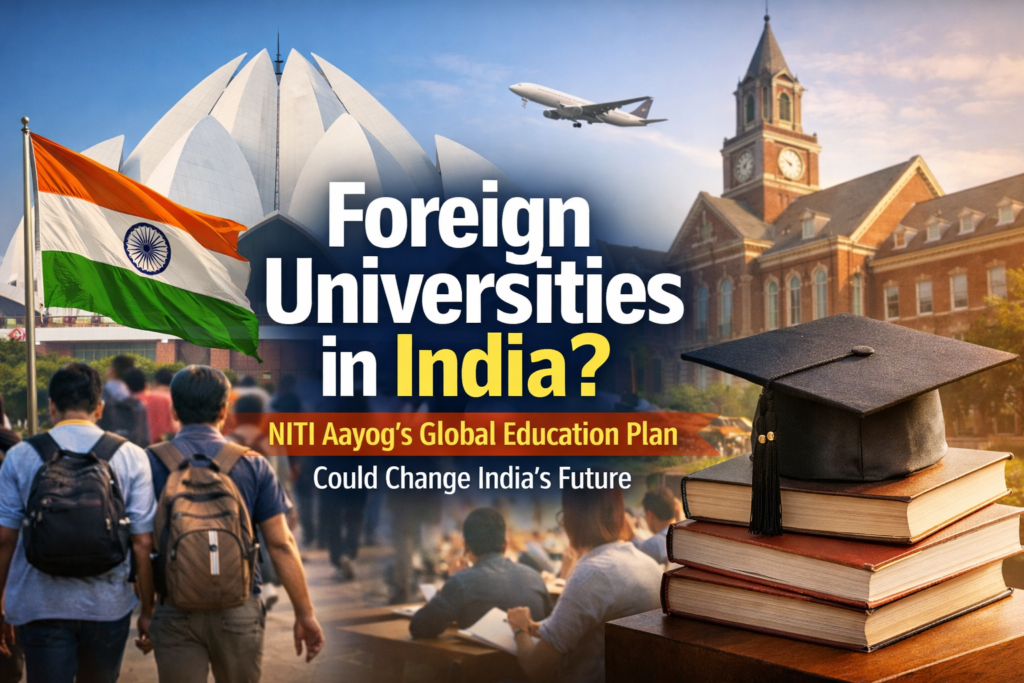
Education in India was once seen mainly as a personal ladder to a better job. Today, it has become something much bigger. In the modern world, education decides which country leads in technology, innovation, defence research, and economic growth. This is why the international education roadmap released by NITI Aayog matters far beyond classrooms and campuses. It signals that India now sees education as a tool of national power, not just social development.
Countries like the United States, China, and the United Kingdom use universities to attract global talent and influence future leaders. India, with the world’s largest youth population, can no longer afford to stay out of this competition. The roadmap raises an important question for every Indian: can India move from exporting students to attracting global minds?
What Exactly Has NITI Aayog Proposed?
The roadmap proposes opening Indian higher education to deeper global engagement, but without giving up national control. It allows top foreign universities to open campuses or operate in partnership with Indian institutions. It also promotes joint degree programmes, shared research, and easier movement of students and faculty across borders.
Importantly, this does not mean foreign universities can enter India without regulation. Indian laws, academic oversight, and national priorities will still apply. The aim is not to surrender India’s education system, but to strengthen it through selective global collaboration.
Why India Needs This Shift Right Now
India sends more students abroad than almost any other country. More than 1.3 million Indian students currently study overseas, and Indian families spend over $25 billion every year on foreign education. This is not only a financial drain, but also a loss of talent at a crucial stage of life.
At the same time, global competition for skilled people is increasing. Countries are using education to attract researchers, entrepreneurs, and innovators. If India does not upgrade its education ecosystem now, it risks falling behind in technology, research, and global influence.
From Nalanda to the Modern World: What Changed?
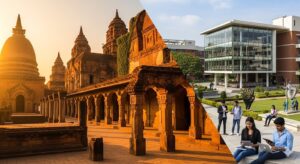
India was once a global education destination. Ancient universities like Nalanda attracted students from across Asia. Colonial disruption and later policy priorities broke that continuity. After independence, India focused on producing administrators and professionals rather than building globally competitive research institutions.
Today, the world has come full circle. Knowledge once again defines power. The NITI Aayog roadmap is an attempt to reconnect India with its historical role as a centre of learning, adapted to modern global realities.
Foreign Universities in India: Opportunity or Threat?

The idea of foreign universities in India creates mixed reactions. On one hand, it can reduce brain drain and provide global-quality education at lower cost. On the other, there is fear of commercialisation and inequality.
The truth lies in balance. If India allows only high-quality institutions aligned with national priorities, the benefits can outweigh the risks. Strong regulation and careful selection are the key. The goal is quality, not quantity.
Education as Soft Power: Why the World Is Watching India
Education creates long-term influence. Students educated in a country often carry its values, networks, and goodwill throughout their lives. The US, UK, and China have understood this well.
India has unique advantages: English proficiency, cultural openness, democratic credibility, and a vast intellectual tradition. If India becomes a global education hub, it will gain not just revenue but lasting soft power.
What This Means for Indian Students and Parents

For Indian families, this roadmap could be transformative. It offers access to international education without the high cost and emotional stress of studying abroad. It also broadens options beyond traditional fields like engineering and medicine.
Students can gain global exposure while staying rooted in Indian society. This reduces migration pressure and keeps talent connected to the country.
Impact on Indian Universities and Teachers
Indian universities will face greater competition, and that is healthy. Exposure to global standards will push institutions to improve teaching quality, research output, and campus governance.
Teachers and researchers will gain opportunities to collaborate globally, bringing new ideas and methods into Indian classrooms. Over time, this can lift the entire education ecosystem.
From Brain Drain to Brain Gain
For decades, India lost talent permanently as students settled abroad. The new strategy aims to create brain circulation instead. Students may study or work abroad, but they remain connected to India, while foreign students and faculty come here.
This two-way flow strengthens innovation and reduces dependency on foreign systems.
Concerns from a National Perspective
There are genuine concerns that must be addressed. Education should not become accessible only to the rich. Rural and small-town students must benefit, not be excluded. Indian cultural and academic values must be protected.
These risks are real, but they can be managed through smart policy design and strict oversight.
How This Fits India’s Larger Global Strategy
India wants to lead the Global South, shape technology standards, and maintain strategic autonomy. None of this is possible without strong universities and research institutions.
Education is the foundation on which economic strength, diplomatic influence, and national security rest.
What Success Would Look Like in the Next 10 Years
Success would mean Indian universities rising in global rankings, foreign students choosing India, and research solving real-world problems. It would mean India becoming a producer of knowledge, not just manpower.
This is not about copying Western models, but building Indian excellence with global relevance.
What Happens If India Fails to Act
If India delays or fails, brain drain will continue, education costs abroad will rise further, and India will remain dependent on foreign knowledge systems. In geopolitics, inaction often carries the highest cost.
Conclusion: A Civilisational Opportunity, Not Just a Reform
NITI Aayog’s international education roadmap is more than a policy document. It is a statement of intent. It reflects India’s confidence that it can engage the world without losing itself.
Nations that shape minds shape history. India now has a chance to do both—if it acts wisely.
To visit official website of NITI Aayog click here
Frequently Asked Questions (FAQ)
1️⃣ What is NITI Aayog’s international education roadmap?
It is a policy plan to open India’s higher education system to the world by allowing foreign universities, joint degrees, global research partnerships, and easier student and faculty movement.
2️⃣ Will foreign universities really open campuses in India?
Yes, but only selected and high-quality foreign universities will be allowed, under strict Indian regulations. India will retain full control over rules, curriculum standards, and approvals.
3️⃣ Why does India want foreign universities now?
Because India sends over 1.3 million students abroad every year, spending billions of dollars. Bringing global education to India reduces brain drain and keeps talent and money at home.
4️⃣ Will this make education cheaper for Indian students?
In many cases, yes. Studying at a foreign university campus in India will cost much less than studying abroad, without visa costs or living expenses overseas.
5️⃣ Does this mean Indian universities will lose importance?
No. Indian universities are expected to benefit through partnerships, competition, better research exposure, and improved global rankings.
6️⃣ How will this help India in global geopolitics?
Education builds long-term influence. Countries that educate global students shape future leaders. This policy strengthens India’s soft power and global standing.
7️⃣ Is this policy linked to stopping brain drain?
Yes. The goal is to convert brain drain into brain circulation—where talent moves both ways and remains connected to India.
8️⃣ Are there risks in allowing foreign universities in India?
Yes. Risks include commercialisation and inequality. That is why strong regulation, limited entry, and alignment with national interest are essential.
9️⃣ Will rural and middle-class students benefit from this reform?
If implemented properly, yes. More education options in India can reduce dependence on expensive foreign degrees and widen access over time.
🔟 How does this fit with India’s long-term national strategy?
Strong education systems support innovation, economic growth, defence research, and global leadership. This reform supports India’s ambition to become a knowledge power.
1️⃣1️⃣ Is this policy already active or still a proposal?
It is a roadmap and policy direction. Implementation will happen in phases after regulatory approvals and institutional readiness.
1️⃣2️⃣ What should students and parents watch for next?
Announcements on which foreign universities are approved, fee structures, admission rules, and partnerships with Indian institutions.
To visit official website of Ministry of Education click here
People Also Ask (PAA)
What is NITI Aayog’s international education roadmap?
It is a policy plan to globalise India’s higher education by allowing foreign universities, promoting joint degrees, and increasing student and faculty mobility.
Will foreign universities be allowed to open campuses in India?
Yes, selected foreign universities may open campuses or partner with Indian institutions under strict regulations set by Indian authorities.
Why does India want foreign universities in its education system?
India wants to reduce brain drain, retain talent, improve education quality, and become a global knowledge hub.
How many Indian students study abroad every year?
More than 1.3 million Indian students study abroad annually, making India one of the largest sources of international students globally.
Will studying in India become cheaper because of this policy?
In many cases, yes. Foreign university campuses in India can offer global degrees at lower cost than studying overseas.
How will this policy affect Indian universities?
Indian universities may benefit from partnerships, higher competition, better research collaboration, and improved global standards.
Is this policy meant to stop brain drain from India?
The goal is not to stop movement but to shift from brain drain to brain circulation, where talent flows both ways and stays connected to India.
How does education policy connect to geopolitics?
Education builds long-term influence. Countries that educate global students shape future leaders, alliances, and global narratives.
Are there risks in allowing foreign universities into India?
Yes. Risks include commercialisation and inequality, which is why strict regulation and careful selection are crucial.
Will rural and middle-class students benefit from this reform?
If implemented well, the policy can expand access to quality education and reduce dependence on expensive foreign degrees.
When will this education roadmap be implemented?
Implementation will happen gradually after approvals, regulations, and agreements with selected foreign universities.
How does this fit into India’s long-term development strategy?
Strong education systems support innovation, economic growth, global influence, and India’s ambition to become a knowledge power.